


For all of the things that have gone wrong for the Mets season—and if we want to talk about anything else, let’s just leave it at that, lest we spend 1000 words outlining the various failures—the promotion and performance of both Carson Benge and A.J. Ewing has been a bright spot. And in a season with very few bright spots of any sort just yet, it’s worth noting just how bright.
Let’s just set some baselines to begin. 113 rookies have collected a hit thus far in 2026, and of those 113, Benge has the
sixth most hits with 79, and Ewing ranks 25th with 41. 21 of Benge’s and 12 of Ewings hits have been for extra bases. Benge has 11 stolen bases, Ewing eight. Both have played above average outfield defense. Both were highly regarded prospects going into this season (#2 and #6, respectively, on the Amazin’ Avenue Prospect List).
Benge was being discussed for an Opening Day assignment as early as David Stearns’s post-season press conference in 2025, but it was still something of a surprise to see him make the roster out of spring training. He came out of the gate hot with a home run on Opening Day, but shortly thereafter fell into a slump that saw him make some silly defensive miscues while his batting average fell below .200 until May 6th.
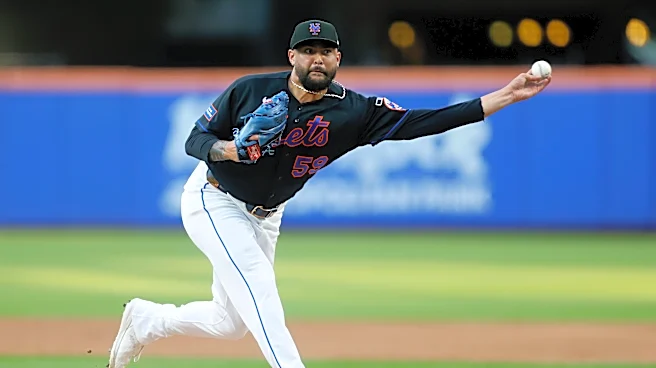
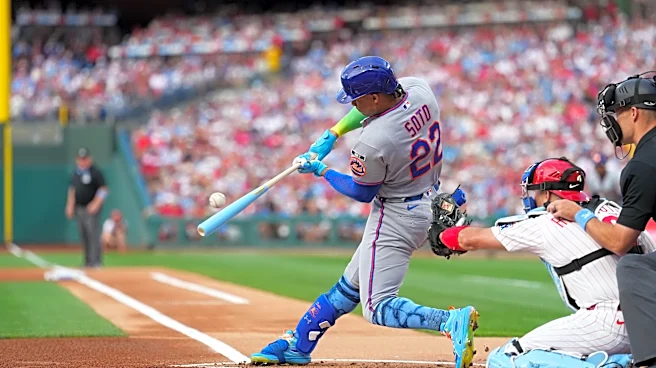
Since then, Benge has been remarkably consistent at the plate. On June 6th, his batting average reached its highpoint for the season thus far at .265. It has not dropped more than 12 points since then, remaining on or around .257. All of this is worth 1.4 bWAR thus far in 2026, which puts him fifth on the club behind Juan Soto, Clay Holmes, Huascar Brazobán, and Luke Weaver.
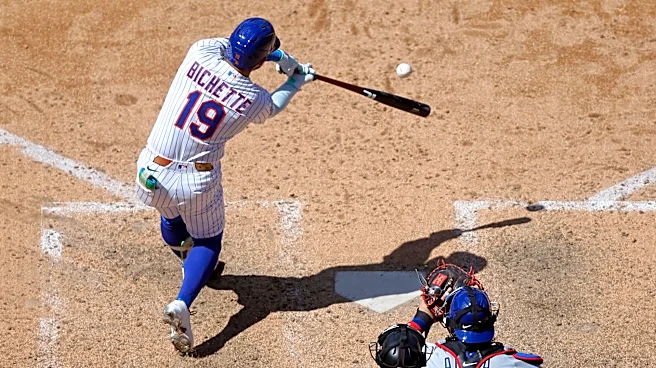
More important than any one stat in his rookie season is the fact that Benge looks so comfortable in the big leagues. He is still learning the league, but hasn’t had a spell since he found his footing where he looked totally lost at the plate. For context, since May 13, Benge has had a higher batting average, on-base percentage, and slugging percentage than Bo Bichette, a former All-Star who is making $42 million a year.
That isn’t to say that at the end of the season, Bichette will still be looking at Benge ahead of him in these statistics, but it’s more of a statement of just how good Benge has been at adjusting. Bichette is in the coldest stretch of his career, but it would’ve been insane to predict that Benge would be a more productive hitter halfway through the year than Bichette.
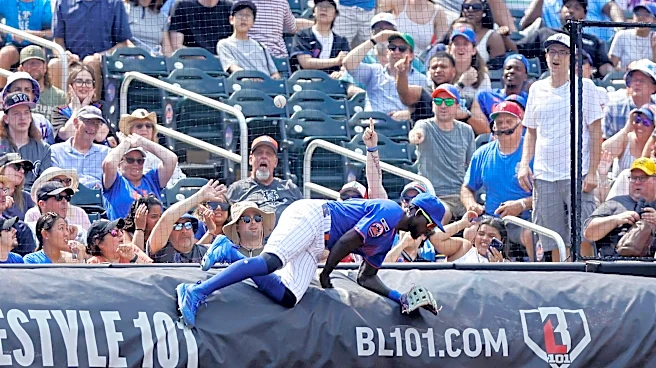
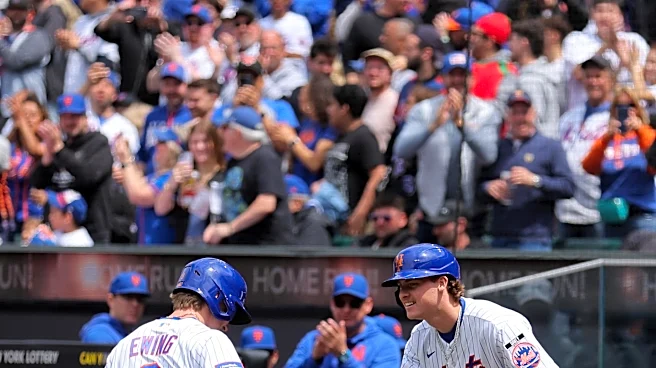
Ewing’s season started later than Benge’s, but he’s been just as impressive, if in slightly different ways. For Ewing, the story has been his defense, which at times has been flashy, but more often than not has simply been solid. He’s currently at one defensive run saved and one out above average for the season, but like with Benge, it is more telling how at home he looks in the outfield than what the stat line says at this point in his career.
Offensively, Ewing didn’t have the big dip in productivity that Benge did yet, and so his slash line of .275/.363/.416 has been more or less in line all season, though his slugging has seen a surge sine mid-June. He’ put up 1.2 bWAR, placing him fifth on the club, just behind Benge. Like both so many regular players and specifically rookies, Ewing is a prone to the strikeout, but it doesn’t look like he’s striking out always trying to hit a home run to win a ballgame. While both will obviously get amped up sometimes, both Benge and Ewing exhibit a level of cool that belies their ages.
Even if both go on long skids for the rest of the season, the Ewing and Benge experiments have worked out thus far. Things are going to get interesting if and when Tyrone Taylor, Luis Robert Jr. and Jorge Polanco return to the club, as Polanco will likely need to DH, forcing Soto to play the field, while Robert and Taylor each make the other somewhat redundant with the kids on the roster.
But unfortunately for Taylor and Robert, it seems like the dye has been cast and Ewing and Benge are not just the outfielders of tomorrow, but the outfielders of today. It is a little too early to start chatter calling them the outfield equivalent of David Wright and José Reyes, but it has been a long time since two Mets’ position player rookies have come up playing next to each other with skills on both sides of the ball and have the chance to do so for a long, long time.