





For quite a long time (or maybe it’s just felt incredibly long to me), it’s felt like Roma’s season was collapsing under the weight of its own contradictions. Como, an opportunistic and annoyingly resilient side backed by the richest owners in Italy, seemed poised to turn Roma’s recent stumbles into something more permanent. And yet, the door to salvation has cracked back open just a smidge. Como has faltered, capped by a loss to Sassuolo, and we now return to our regularly scheduled programming:
table-watching.
The thing about the final gasps of a season is that momentum doesn’t build in this setting. Instead, it feels like there’s just a limited amount of hope allotted, and when one side loses that hope, another side inevitably gains it. With that in mind, Roma gaining a touch of a reprieve doesn’t feel earned, but inherited; still, the opportunity is real. With Roma sitting just ahead of Atalanta and still within reach of the top four, as Juventus occupy that tenuous final Champions League place, the math has simplified. Win, and the conversation changes. Lose, and the death spiral becomes just a bit more permanent. The margins are that thin and the stakes are that blunt.
If Roma is, in any meaningful sense, the team it once hinted at being earlier this season, then this is where that Real Roma needs to stand up (to paraphrase one Marshall Mathers). They will only be able to do this through execution. Whatever belief once surrounded this side has eroded, and it’s been replaced by a more familiar uncertainty and a sense of doom about the club’s long-term potential. The table offers them one last invitation to change the script: step into the fight with Juventus, or drift out of it. Will they lose themselves in the music the moment they want it? Will they never let it go?
What to Watch For

Can We Get Wesley and Pisilli Back?
If Roma wants to get a win out of this one, they’re going to need two of the only players in the squad who consistently make things happen without needing the entire system to click first. Wesley is still dealing with a hamstring issue and looks unlikely to be risked, while Niccolò Pisilli is stuck in that late-test limbo with an ankle problem. Even if one of them makes the bench, it’s hard to see either being close to 100 percent. That’s a problem, because Roma don’t exactly have redundancy in those roles. Wesley gives you directness that no one else in this side really offers right now, while Pisilli’s value is different but just as important. He speeds things up. He plays forward. He turns stagnant possession into something that at least resembles intent, which has been in short supply since the long-term injuries to Matias Soulé and Paulo Dybala neutered Roma’s creative power.
Against an Atalanta side that will be out for blood and a chance to get into Europe themselves, those skills are not optional. You’re not going to slowly work your way through them over 90 minutes. You need players who can break structure, who can create something out of nothing when the game starts to tilt. Without Wesley and Pisilli, Roma can still compete. But they start to look a lot more like a team hoping the match comes to them, instead of one capable of taking it.

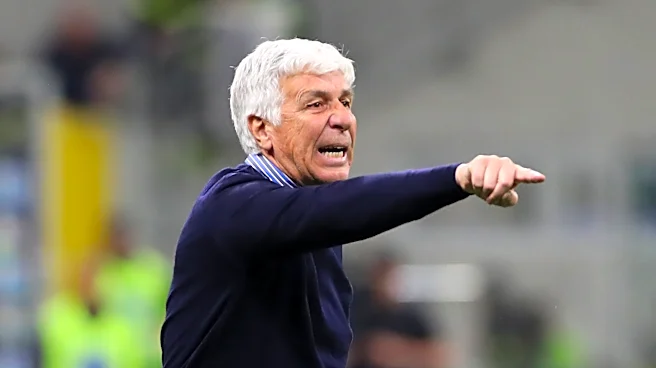
Can Gasperini End the Drama with A Win Against His Prior Employer?
The most annoying part of the past few weeks of Roman drama is that this didn’t have to be a storyline. Not like this.
Instead, Roma head into one of the biggest matches of their season with the focus split between the pitch and a very public fracture between Gian Piero Gasperini and Claudio Ranieri. What started as a disagreement over squad decisions and messaging has spilled out into the open, culminating in Gasperini visibly emotional in his pre-match press conference after allegedly being caught off guard by Ranieri’s comments. That’s where things stand now: there’s tension, there’s noise, and we now have a match that suddenly feels like it’s carrying more than just three points.
Ignore the drama, because reality is simpler than that. This spat between Ranieri and Gasperini, two icons of Italian football, shouldn’t be resolved in press conferences or clarified through intermediaries. Roma didn’t bring Gasperini in to navigate internal power struggles. They brought him in because of what he did at Atalanta: nine years of turning a club without traditional resources into one of the most consistent sides in Italy and a regular presence in the Champions League. He built something there out of parts most managers wouldn’t have known how to use. That’s the résumé with Atalanta, and that’s the project with Roma.
This is the moment where that résumé has to translate. Not eventually, not over the course of a long rebuild—now. Because whatever tension exists, whatever frustration is bubbling underneath the surface, it all looks very different if Roma walk off the pitch tomorrow with three points. Win, and the noise quiets for the moment. Win, and the idea behind the hire starts to feel real again. Lose, and everything just gets louder. Nobody wants that. Nobody needs that. Certainly not me, because I want to get back to podcasting happy.