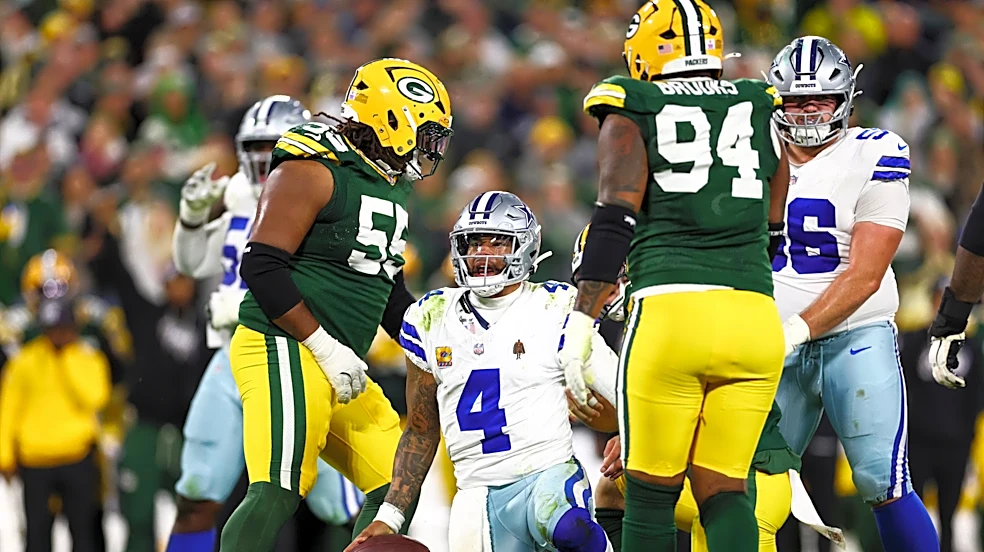



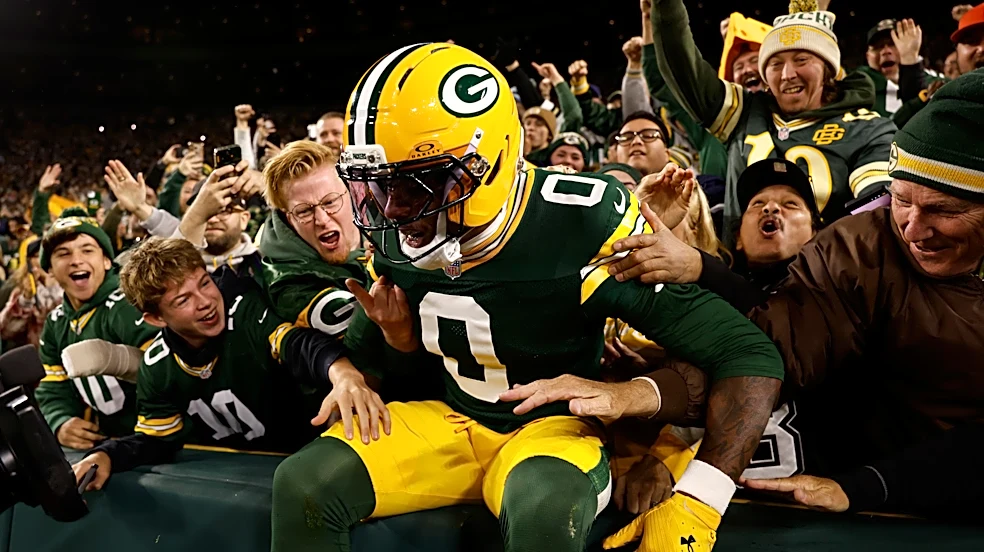
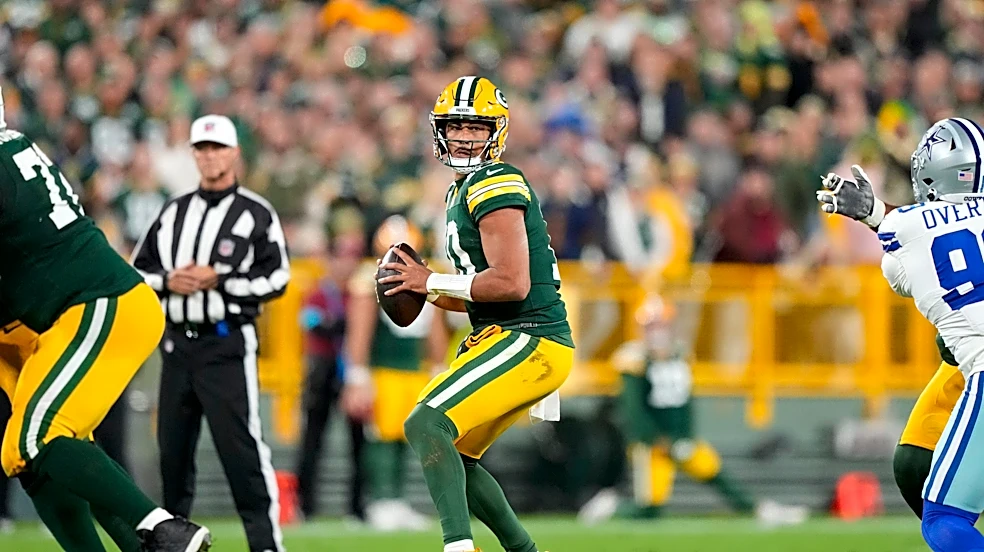

In the last article, we broke down Evan Williams’ interception against the Dallas Cowboys. That play set the tone, but it was only the opening chapter of a long night for Dak Prescott. By halftime, Green Bay led 17-0, and Prescott had been picked off twice.
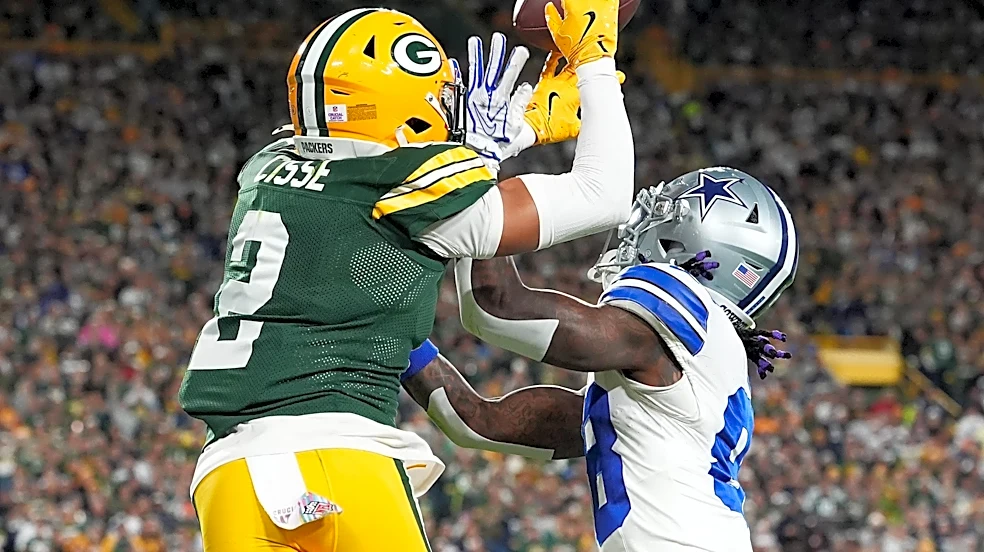
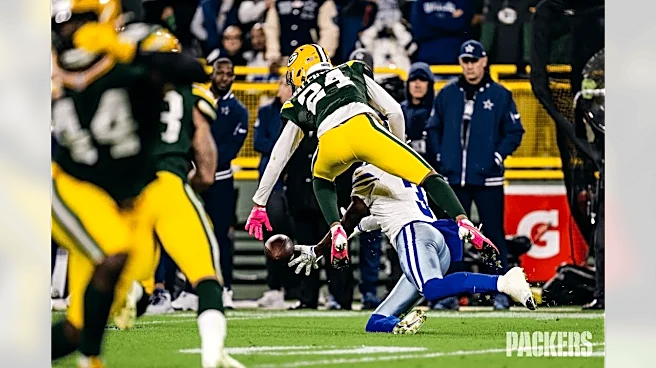
The second interception wasn’t a product of disguise so much as bad luck. Dallas was driving inside the Green Bay 30 when CeeDee Lamb lost his footing on a route, leaving the ball for rookie Brandon Cisse, who came away with the first interception of his career.
Still, it fit the larger pattern. The Cowboys could move the ball in spurts, but every time they got close, something went wrong. And Gannon kept the pressure on in the second half, and the same theme kept showing up on tape: the look before the snap rarely matched what happened after it.

From the above pressure package disguise, he shifted the defense into at least four different coverage rotations that the Cowboys were unable to decipher. Each of those above presents the same or similar pre-snap alignments. And each one has a different rotation behind and different zone droppers.
After halftime, Gannon went back to what was working. On a third-and-7 in the third quarter, Green Bay lined up six defenders across the line, and Dallas set its protection to account for that front. Then Williams started walking down late in the play clock.
Prescott saw it with roughly three seconds left, too late to reset the protection. The math was simple and bad for Dallas: four rushers coming off the weak side, three blockers to meet them. Prescott knew the ball had to come out immediately.
It never had a chance to. The rush got home almost at once, and the quick throws Prescott was counting on weren’t there either. Behind the pressure, Green Bay dropped three players into the short zones, one of them traveling all the way across from the other side of the formation to plug a throwing lane.
Pressure Dallas couldn’t block plus coverage it didn’t expect left Prescott with nothing, and the Cowboys punted. Few third-down calls are cleaner. The defense had the play beaten at the snap.
Gannon’s creativity showed up on a drive in the fourth quarter. With Green Bay up 20-7 and Dallas needing to stay within striking distance, he called three straight plays that looked identical before the snap and played three different coverages after it. The sequence ended with the Cowboys running a fourth-down play that had little chance to succeed.
It began on 2nd-and-7. The picture was a cover-0 pressure look: a loaded front, with four defenders in off coverage but sitting inside and off anywhere from press coverage to 10 yards. Green Bay had already brought real zero blitzes from that alignment earlier in the night, so Dallas had to respect it every time.
On 2nd-and-7, the Packers showed it and then backed out into cover-4. The Cowboys had nothing designed to attack quarters and settled for 5 yards, making it 3rd-and-2.
On third down, the look was identical, but this time the blitz was real. Green Bay sent everyone with no help behind it and got a rusher through untouched. Prescott was forced to throw before he could set, and the pass sailed incomplete.
Once again the heat arrived so quickly that Dak had almost no time to deliver an accurate ball, and the pass fell incomplete.
That set up 4th-and-2, and Dallas tried to take the blitz out of the equation by rolling Prescott out to his left. It’s a sensible answer to a zero blitz, because it moves the launch point away from free rushers. But Gannon had a counter.
Green Bay didn’t rush extra at all and sat in cover-3. A rollout only gives the quarterback half the field, so once the first option to the left was covered, Prescott had nowhere else to look. He tried to force it, and the underneath defender knocked it away. Dallas called a play built to beat pressure, and Green Bay didn’t send any.
Instead, the Packers dropped into cover-3. The downside of a sprint-out is that it eliminates half the field, and if the first read on a throw to the left isn’t there, there’s very little left to work with. Prescott tried to squeeze the ball in quickly, knowing his options were limited, and the underneath defender broke it up.
Had Dallas known before the snap that cover-3 was coming, it almost certainly wouldn’t have called that play. That’s the true value of disguise. It keeps an offense from getting into its best call against what the defense is actually running. Green Bay added another field goal early in the fourth quarter to take a 23-7 lead not long after.
The fourth coverage came on the very next Dallas drive. Same alignment, but this time the Packers rotated into cover-2. The corner at the top of the screen squatted on the short route because he knew he had a safety over the top.
Prescott was a beat late recognizing it and nearly threw his third interception of the night. A hitch to the outside is about the worst throw you can make against a cover-2 corner, and it’s a throw Prescott likely never attempts if he reads the coverage before the snap.
Prescott didn’t diagnose it fast enough and nearly threw a third interception. If he had known cover-2 was coming, he wouldn’t have thrown an outside hitch into a cloud corner, and he might have checked to a different play at the line.
Dallas eventually got on the board late, with Prescott finding his receiver for a 6-yard touchdown pass with 44 seconds remaining, but a two-point try to Lamb fell incomplete and Green Bay recovered the onside kick.
The final box score, with Prescott completing 34 passes for 258 yards, one touchdown and two interceptions, doesn’t capture how often the Cowboys were out of sorts. They ran too many non-competitive plays in critical moments, and that was the difference in the game. The loss dropped Dallas to 2-4, while Green Bay improved to 4-2.
The Packers’ defense is rolling, and it’s doing so without Micah Parsons, who still hasn’t returned. The next test is a big one: Green Bay visits the NFC North rival Detroit Lions and a dangerous offense in Week 7.