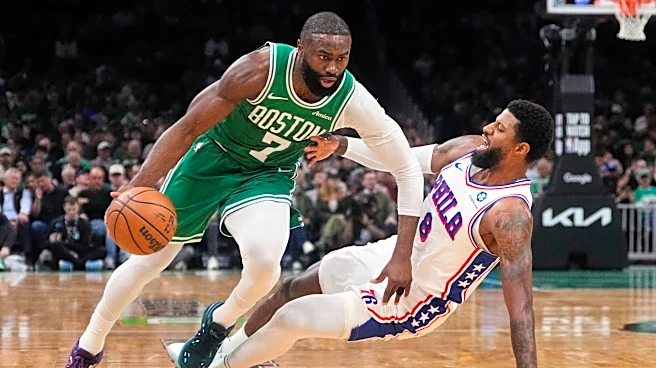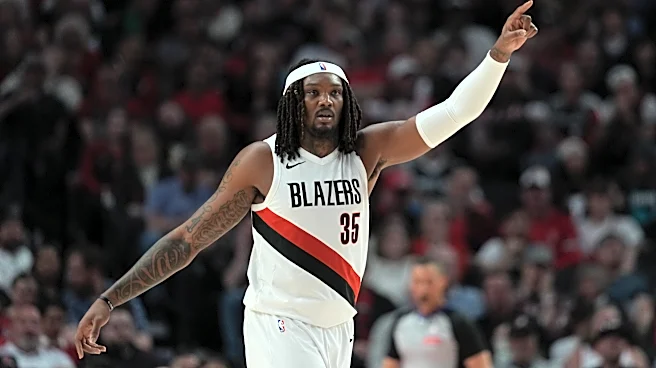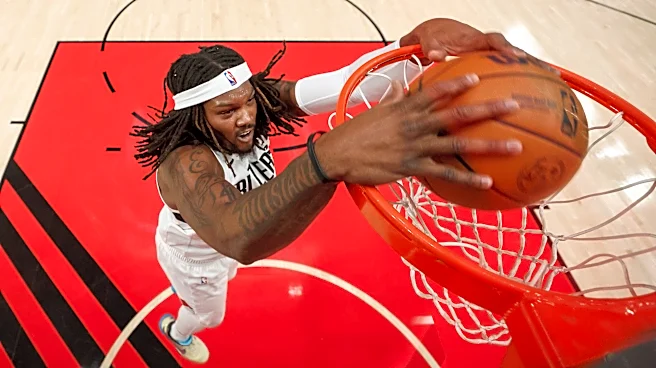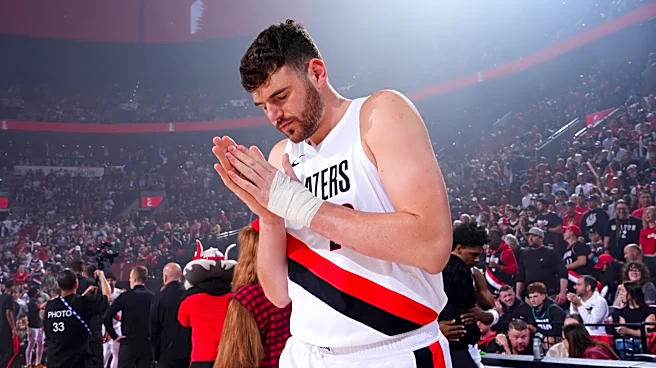




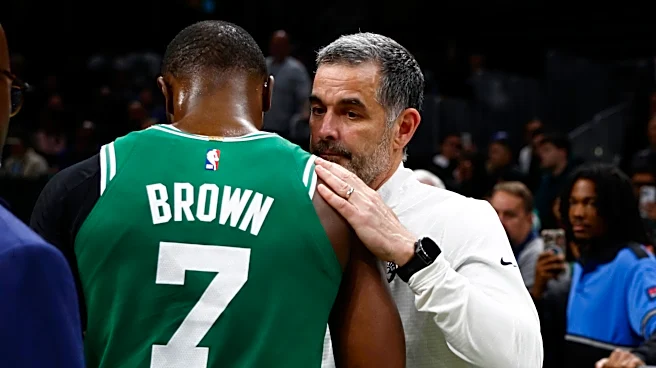
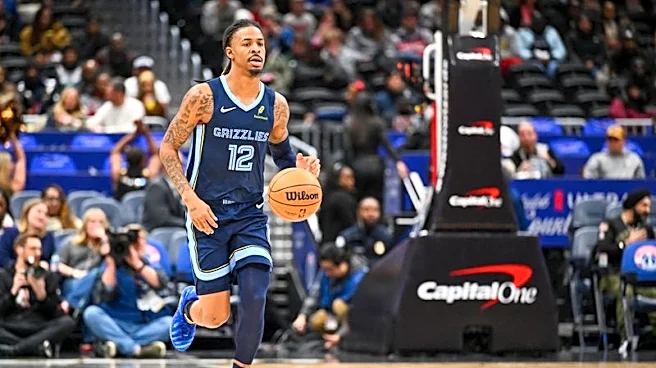


The Portland Trail Blazers have made tons of decisions this week regarding their current roster and future direction. They traded for Ja Morant, apparently ended up passing on Boston Celtics star Jaylen Brown (who got traded for a price you have to click through to cart to see), agreed to a single-year deal with center Branden Carlson, and re-signed center Robert Williams III to a contract that is largely non-guaranteed, based on his health and ability to serve.
The questions pouring into the Blazer’s
Edge Mailbag right now are legion, particularly regarding Morant and Brown. Whether they’re favorable or critical, they basically amount to one thing: What, exactly, are the Blazers doing?
There’s not a firm answer to that, of course. Only the Blazers themselves know. But we can look at the moves of the last few days and follow the pattern. After marinating on this for a bit, I think it’s fair to talk about it.
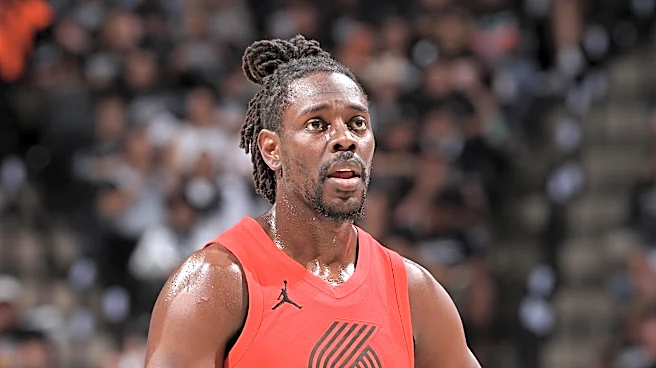
One of the linchpin questions—reflected a few times in the Mailbag—is why the Blazers would trade for Morant instead of Brown. Brown is clearly the superior player. He was an All-NBA Team nominee last season. He’s known for defense, not just scoring. He’s been an NBA champion. He carried the Celtics when Jayson Tatum was injured. Meanwhile Morant barely played, isn’t known for defense, and can’t hold a candle to Brown’s accomplishments.
Two answers come to the forefront.
First, even though Brown went cheaply (Paul George, a couple of first-rounders, and a couple more second-rounders), he did cost something. Morant cost the Blazers nothing but contracts they wanted to give up anyway. No picks were involved.
Second, and this is just as critical, Brown’s contract was far more expensive than Morant’s. He’s scheduled to make $60 million per year instead of $40 million. And underline this: Morant’s contract expires in 2028. Brown’s runs through 2029.
How important is that? If you look at Portland’s salary structure right now, apparently very.
Real Talk: The Blazers have exactly two fully-guaranteed contracts that extend beyond 2028 right now: Shaedon Sharpe and Toumani Camara. Williams is technically signed through 2029 but the last year of his contract is completely non-guaranteed. If he plays fewer than 50 games in a season, the Blazers can release him and his salary obligation. Yang Hansen has a rookie-scale team option for that year.
Together, Sharpe and Camara will be owed around $44 million in 2028-29. That’s the only unbreakable salary commitment the team has, against a cap that’s projected to reach $182 million.
That makes you think. Maybe the theme for this offseason for the Blazers should be: “Take a swing at something, commit to nothing.”
Morant is a flashy acquisition. If he regains his early-career form he’ll be a steal. (Side Note: he’ll also need to fit in, not simply leeching production and touches from teammates who otherwise would have excelled.) If that happens, it’s a huge bonus.
But if it doesn’t work out that way, well, he’s still a huge name and a huge swing. It shows the team and the fan base that the Blazers are trying. They brought in someone during Damian Lillard’s last hurrah, during Deni Avdija’s ascending seasons. They committed to making the team better. And now…? Morant carries an expiring contract next season, opportune to be traded. Or, if not, his contract runs out—along with practically everybody else’s—the year after, leaving the Blazers a fresh start with their own draft picks, one from the Orlando Magic, and the pick and swaps from the Milwaukee Bucks, none of which were lost in any of these deals, including the big swing.
None of those things would be true with Jaylen Brown. The Blazers would owe him $65 million in salary in 2028-29. They’d be short several draft picks they traded to get him. Future optionality would be far more limited.
All of this makes sense under a couple conditions. If it’s true, either the Blazers…
- Do not believe that even Jaylen Brown is enough to carry this team, as constructed, into contention in the next 2-3 seasons. They’ll back this roster, but not to the point of selling out for it. Or…
- Even if contention is theoretically possible, they’re not willing to commit financially to it, including likely exceeding the luxury tax threshold to do so by the time they pay Brown, sweet-talk Avdija into re-signing, and deal with the renewing contracts of their remaining young players.
Things may change. Maybe we’ll see Portland make another big move over the next year, either of their own volition or because the team ends up better than they thought. They’ve left themselves the flexibility to do so. But that’s the exact point. Above all things, they appear to be prizing flexibility right now. That indicates that their future options are just as important to them as their present ones. If they don’t move to augment or lock in this roster, in two years they’re looking at cherry-picking whatever current members they want to retain, trading or releasing the rest, and then exercising a bunch of draft picks to start the next generation.
In the end, you can probably look at Portland’s roster moves this summer as a timeline shift more than a roster shift. Yes, they are improving the current outlook as they can. They’re also buying time for the next two seasons before those draft picks start kicking in, shifting the real evolution towards those assets rather than the ones in front of them right now. Until further notice—money spent beyond 2028 and/or picks traded for help now—it appears that Portland’s answers lie ahead of them, not in the moves they’ve already made or the players on the court as we speak.