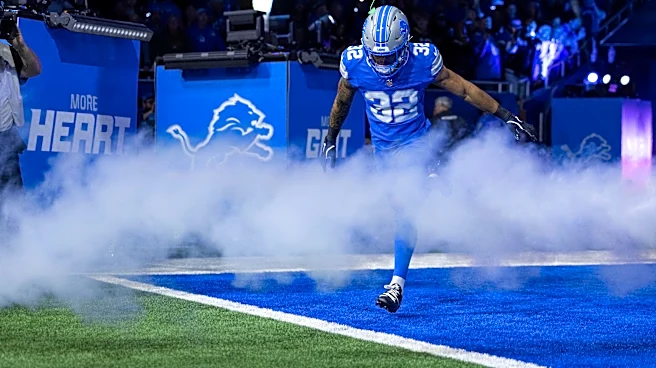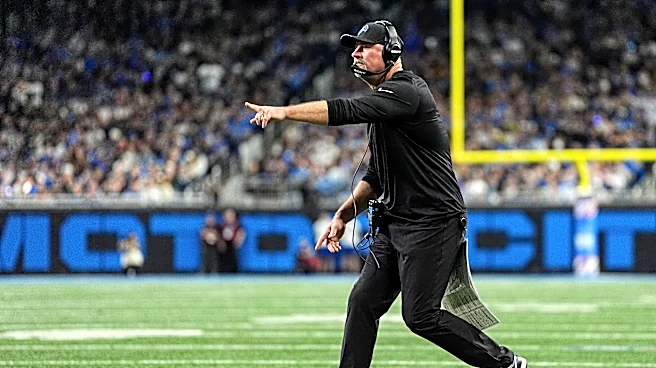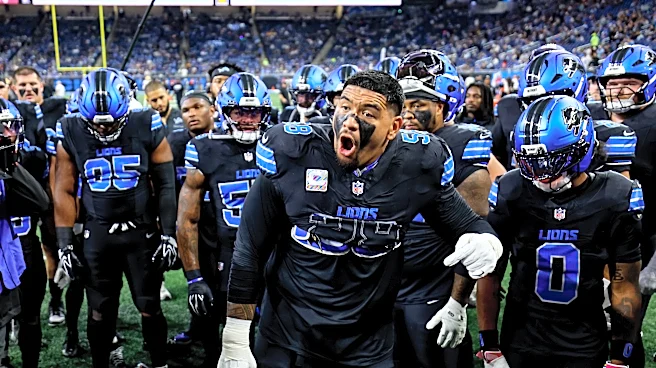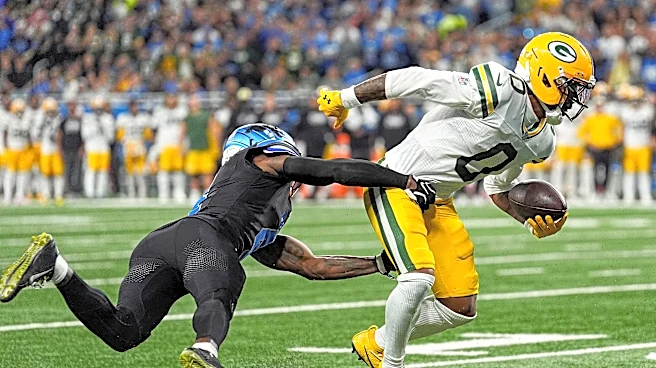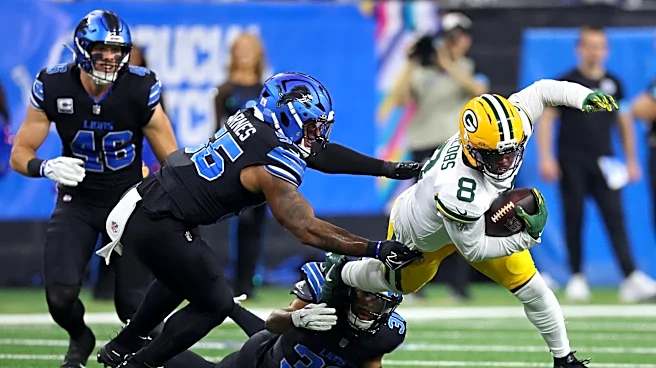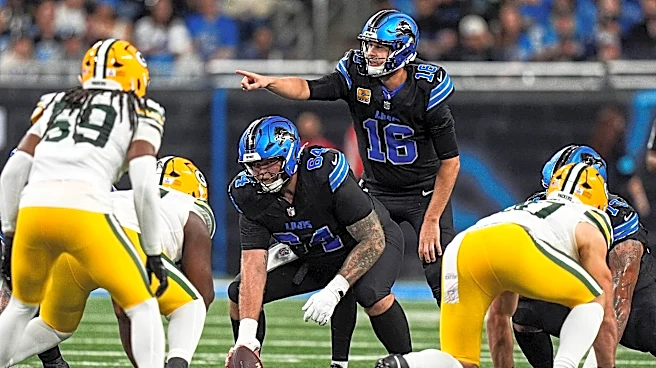


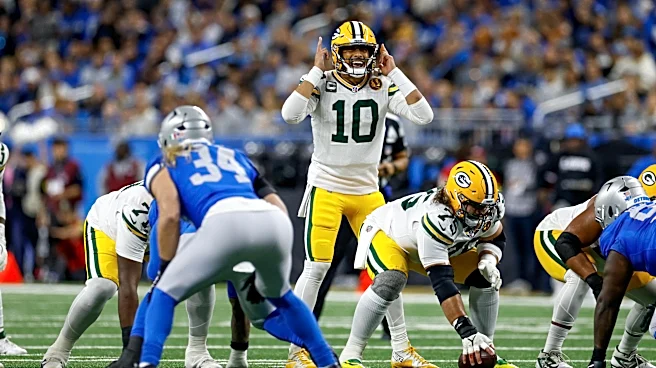
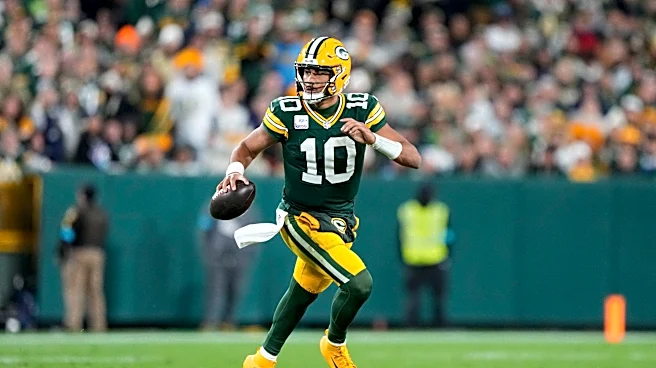
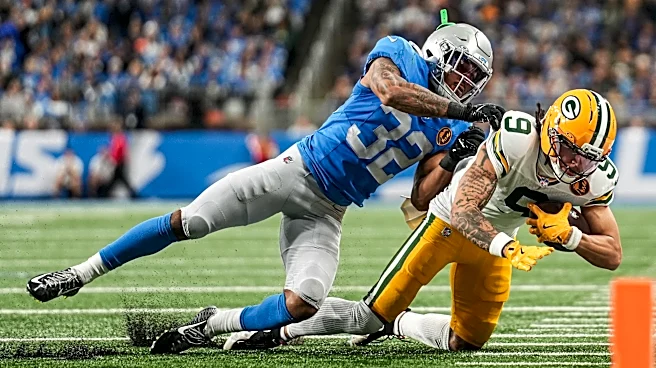

The Detroit Lions battled self-inflicted adversity as it scrapped out a 20-17 victory over the Green Bay Packers to start the season 1-0 in the NFC North.
Not how the prognosticators drew it up, the Lions defense had its best game of the season, stepping up in critical situations to hold the Packers to just 17 points. Although, some had pointed out the Packers’ deep passing game is a paper tiger. Might want to bookmark that to revisit in Week 18.
While the final score was 20-17, the Lions were definitively
the better team on the field for most of the game. By comparison of success rate, this was the second largest margin of play of the Week 7 slate.
Unfortunately, costly turnovers and a failed fourth-and-goal in the second half held the Lions offense back from hitting its normal 30+ points per game output.
For this week’s film study, I want to take a look at both the good things the Lions offense did, and then look at the bad to improve on moving forward.
The good
Always start with the good.
Designed for Jameson Williams
Below is my favorite schemed play of the game. Jameson Williams is a nightmare for defensive coordinators because he can take the top off the defense at any moment with his speed. But in the red zone, that vertical threat is mitigated by spacing. Here, offensive coordinator Drew Petzing does an awesome job designing a play for Williams using his speed horizontally.
Below, Williams is set in motion presnap into the box behind the offensive line. At the snap, he continues horizontally into the flat. His speed is already hard to keep up with, but when he is hidden and mixed with the traffic and movement of the play action fake, it is a near impossible assignment for the defense.
The other critical element of the play design is Amon-Ra St. Brown lining up at the wing slot, and inserting inside the B-gap with the run-action. Most safeties and/or linebackers have keys that read this action as a run principle resulting in the first steps of the play side linebacker and deep safety to be downhill at the B-gap. From there, it’s an easy pitch and catch for Jared Goff.
Not-a-statue Jared Goff for MVP
After another great performance, Goff is finally starting to get the national attention he deserves for his historic start to the 2026 season. Dan Campbell has been consistent in his praise for Goff and the consistent, elite quarterback play he is showing week-in and week-out.
Goff does all of the things presnap that go unnoticed in the mental and command elements of the offense, and he does them at a high level. His trained eyes in the play action game is being recognized as being elite.
But when it comes to MVP voting, it’s typically the highlight reel out-of-structure plays that win the day. Goff is never going to match Josh Allen, Lamar Jackson, or Caleb Williams in this part of the game, obviously. It is time, however, to dispel the narrative that Goff is just a statue in the pocket. An immobile pocket passer that once pushed off his spot, he’s in trouble.
Below I want to spotlight two plays where Jared Goff uses his legs to create two big plays while while throwing off platform.
The first one is the touchdown pass to Jameson Williams. While Penei Sewell sitting in the zone on the mesh concept has garnered the spotlight, take a moment to watch how Goff navigates the pocket, feeling the pressure and driving forward, stepping forward to complete the pass to Williams. Jameson even noted that it was a no-look pass from Goff.
- Goff extended the play with his legs
- Threw the ball off platform, across his body
- No-look pass while drawing defenders toward Sewell.

On the second play below, Goff immediately recognizes the creeping safety and blitzing linebacker to his right and exits the pocket to his left. Shuffling his feet, Goff backs an accurate throw to Amon-Ra St. Brown on a dig route going in the opposite direction as Goff’s momentum. The combination of both his mental processing as well as his athleticism to throw on the run rendered the Packers blitz moot, a huge component that will come in handy when the Lions match up against the Minnesota Vikings historically blitz-heavy scheme.
Strong signs from the offensive line
With center Cade Mays making his return and first start as a Lions, plenty of attention was given situation as backup Juice Scruggs had played well in his absence.
Below is a third-and-1 run resulting in a first down, a critical situational area of the game that also reared its ugly head in the fourth quarter (more on that later).
The key point I wanted to highlight here is the recognition and pickup on this outside zone run following the late presnap shift from the Packers defensive line.
The bad
While there were strong signals from the offensive line, there were also a handful of missed assignments leading to negative plays.
The first play here shows some missed assignment/miscommunication up front. With left guard Christian Mahogany combo-blocking the nose with center Cade Mays and left tackle Penei Sewell working up to the play side linebacker, the B-gap defensive tackle is left untouched to make the tackle behind the line of scrimmage.

These types of mistakes are self-inflicted, and should become far and few between as the season progresses.
The fourth-and-1
Let’s get to the big one. To start, I agree with the decision to go for it on fourth down here. Beyond the generic historical analytical models given the field position and time on the clock remaining, it’s important to consider the particular teams on the field. In most games, the Lions offense will likely be the single best unit on the field on either side of the football. The weight given to that part of the equation needs to be adjusted and considered above the generic historic analytical models. That is, take the generic historical analytical model and adjust the weights and parameters to get a personalized approach for each game context.
Now, while I approve of the decision from Dan Campbell to go, I do not like the play call from Petzing in this situation.
I will admit, there are advantages to the play design particular for this situation. The part I do not like is that it did leave the team vulnerable in the exact way that the Packers took advantage of.
Let’s break it down in detail.
First, the clip of the full play is provided below.
Diagrammed, the unique part of this run concept is that it appears to blend duo and power gap concepts. On short yardage, duo has the positive element of preventing penetration and displacing the defensive front. Combining this with power elements (the pulling right guard and fullback trap motion), the offense creates a numbers and angle advantage for critical play side blocks. On paper, this checks all the boxes for a critical short yardage play.

The flaw, in my opinion, is in the details.
Spotlighted below is the backside of the formation. The vulnerability here is the presentation of the cornerback as an active run defender at the line of scrimmage. If the corner starts the play at the snap where he was when the offensive line made its presnap line call, he is not an impact player in the success of this down-and-distance play call.

The other interesting note is that the inline tight end here is none other than wide receiver Isaac TeSlaa. First, credit to TeSlaa for sticking his nose in the play and taking on the edge player.
Putting TeSlaa down at the line is not my criticism of the play. My guess is that Petzing designed the play this way to hold the cornerback from blitzing the way he did at the snap. TeSlaa is a big threat the release on a play-action concept. My criticism is that when you have a quarterback that has elite command of the offense, I want to put the play in his hands to make adjustments. The snap took place with five seconds left on the play clock.
I’m making an assumption that could be wrong, but this play is not set up or is executed like they had two plays called in the huddle to check out of when that corner presents on the backside edge. Maybe the idea is to not give the blitzing defender predictable timing to jump the run, but the Packers aggression paid off.
In critical spots, give the on-field coach the opportunity to correct problems when the game is on the line.
The other element of this design that I do not like is the level of difficulty in assignment that is put on tight end Sam LaPorta. Below is the front side of the play. LaPorta is asked to reach and gain inside leverage on the edge defender Lukas Van Ness (90) on his inside gap. This is an insane block from LaPorta (pay the man). But I don’t like fighting against the natural leverage LaPorta already has. Instead of blending the duo and power concepts, sticking to a true power concept on critical downs puts less strain on the players.

This fourth down play call is one that I think adds up to perfection on the chalkboard, but in practice there are critical points where failure can break the dam.
Overall, the Lions offense was way more good than bad. And the bad is mostly self-inflicted mistakes that this young offensive line can continue to grow and learn from. The 2023 Detroit Lions leaned on a veteran offensive line to win in critical situations.
This 2026 offensive line has the potential to provide the same late in the season. The ultimate fate of the team likely depends on it.