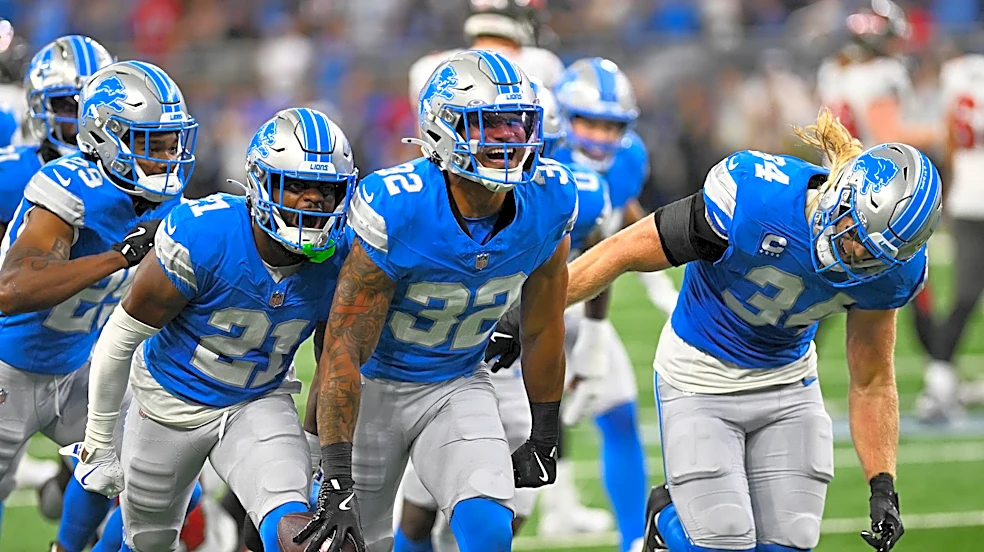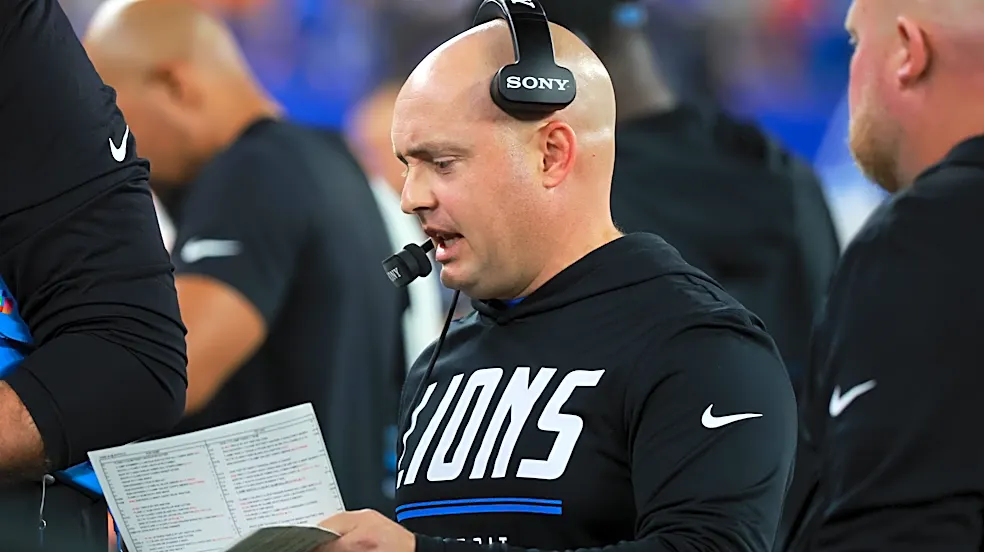

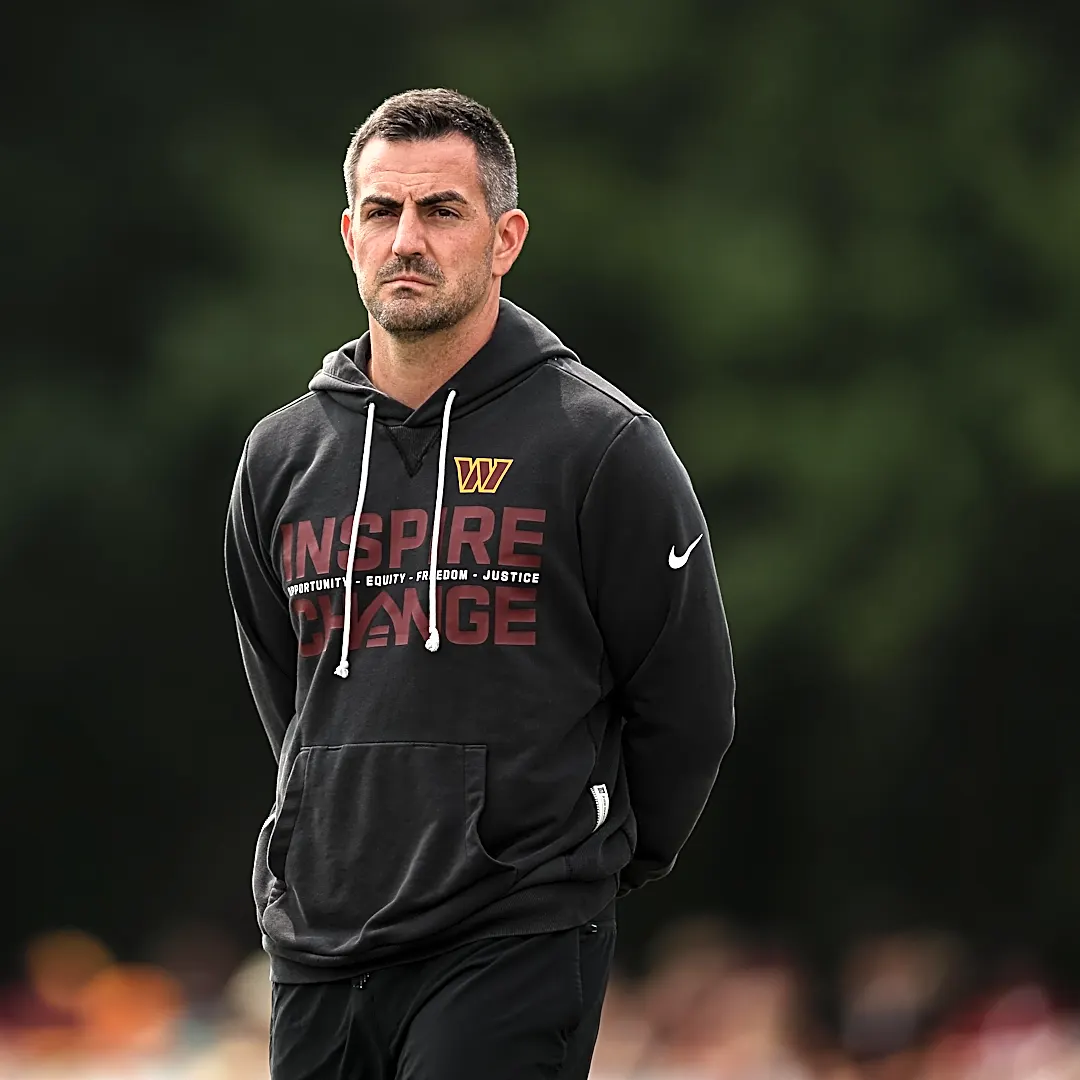



All three Detroit Lions coordinators spoke with the media on Thursday in preparation for Sunday’s big matchup with the Green Bay Packers.
Here were my biggest takeaways from those media sessions.
Offensive coordinator Drew Petzing
What Cade Mays brings
It’s become obvious that the Lions plan on starting Cade Mays at center on Sunday, despite the recent success of Juice Scruggs. Petzing provided some brief insight into what he expects from Mays on the field.
“He plays at a high level. He’s big, he’s physical, he’s really smart. The communication
piece is a huge part of playing that position. So, that’s just kind of a number of things off the top of my head, but excited to see him back out there.”
Game-day communication
Earlier this week, The Athletic posted a fascinating article about how game-day communication works in the sideline headsets, and Petzing was quoted several times throughout the piece. I followed up with him on Thursday to ask how his preferred method of communication has evolved since entering the league, and he noted how a lot of that was through his early days before becoming an offensive coordinator.
I think your headset communication is always tweaking and changing a little bit, but I think a lot of that’s developed when I wasn’t calling it. I was in the NFL for 10 years before I called to play and I was a part of four or five different play callers, different systems, different game day processes. I think throughout that process you figure out what you thought went really well and other things you’re like, ‘Yeah, that would not work for me and maybe it works for other people.’
Defensive coordinator Kelvin Sheppard
No snap count for Brian Branch?
At the start of the week, coach Dan Campbell said it would be hard to see Brian Branch play 70 snaps in his first week back, but Sheppard said they weren’t heading into the weekend with a specific number cap on his playing time.
“We haven’t given a rep count or anything like that. It’s going to be more of a feel thing as the game goes and we’ll pick and choose what’s right and what’s not.”
Secondary on the rise
While Sheppard was prompted by questions on all three players, the Lions defensive coordinator had high praise for rookie Keith Abney, as well as cornerback Ennis Rakestraw and Roger McCreary.
Sheppard on Abney:
“A player that didn’t play safety since middle school and you asked him to go do that in the NFL and for him to perform the way he did, the efficiency in which he played with. But it’s still so much meat left on that bone, and he’ll be the first to tell you things he did in that game that he wants back, that he wants to do better. But a lot more positive to build on than negative to learn from when it comes to that player.”
On Rakestraw/McCreary:
“Those guys are starting to rise and as they rise, they’ll create more opportunities for themselves and it’s up to them as far as what they do with it. But credit both those guys, they went out in that game and played a lot of man with no help in that game. And that’s not easy to do in the NFL when you’re called to do it at the frequency we asked those two to do it in Arizona. And I just want to credit them, man, and just continue to build on those things and understand, let’s continue to grow now.”
Picking your poison
Earlier in the week, coach Dan Campbell made some interesting comments about how defending the Packers’ passing attack is a “pick your poison” proposition. Fail to cover the entirety of the deep field, and Jordan Love won’t be afraid to take his shots. But if you stay in a deep shell, the Packers can also use guys like Tucker Kraft to beat you over the middle.
So I asked Sheppard, how do you decide on your poison? Obviously, Sheppard was protective over this week’s game plan, but he did talk about how they use preparation to guide those decisions.
“That is the coach’s job to make sure that we understand the down and distancing, the tendencies and things like that. What have we seen? And obviously each game things change. You prepare. These coaches are good in this league and they self-scout as well.”
Sheppard also had high praise for Packers coach Matt LaFleur.
“It’s a chess match the whole game, man. LaFleur’s one of the best in the business. He has one of the best offenses in the league historically over the last, what, seven years? And it’s a reason why.”
Special teams coordinator Dave Fipp
Note: A separate story has been written about Fipp revealing the Lions’ new punt/kick returner after Tom Kennedy’s injury.
How to treat kickoffs in end-of-game scenarios
A hot topic in the NFL is how to treat kickoffs when there are only seconds left in the game. A couple of weeks ago, we saw the Philadelphia Eagles kick to the Jaguars, only for Ameer Abdullah to take the return into field goal range for a last-second win for Jacksonville. Others believe kicking out of bounds is the safer play, despite the fact that it bleeds no time off the clock and puts the opponents on the 35-yard line.
So what does Fipp think? Well, there are too many factors to have one firm stance:
“I think kickoff roughly takes five seconds. So, if you’re five seconds or less and you think you can go down there and stop him, then kicking the ball to him is probably a good idea. But, then you also get into the argument of, okay, well there are seven seconds. If you kick a touchback, how many plays can they get in seven seconds? Maybe they can get two plays in there. Is that enough time for them to get a chunk and get down? If they have a timeout, not have a timeout factors into it obviously. So, there’s a lot that goes into it. I think some of it’s got to be who’s your coverage team? Who’s their returner? How much time’s in the game? What’s the score? Do they need a field goal? Who’s their kicker? Are you outside in the wind and weather? Are they kicking into the wind? Are they kicking with the wind? All of it probably factors into it.”
The Lions spent a lot of training camp working on end-of-game scenarios, and Fipp says this topic still comes up a lot among the staff.
Punting for placement, not power
With the new kickoff rules, starting field position is significantly higher than in previous years.
2026 average: 30.9
2025: 30.7
2024: 30.1
2023: 28.8
2022: 28.5
Fipp was asked if better starting field position impacts what they value in punters. While Fipp didn’t want to get into specifics, he did note that punter power isn’t as valuable as it used to be, and that placement and coverage are more valued.
“I think it does change as you get closer to midfield. I mean, you guys have talked about it, how far you punt the ball from the 50-yard line doesn’t matter. It matters where you stop them or where you give them the ball at the end of the play.”