


78 Years of Solitude (Part 3)
– by Mario Crescibene
Part 3
Beneath an elevated highway in the south of Medellín, a skate park is already in motion. Skaters drop in from every side of the concrete bowl, cutting lines that should end in collisions, yet somehow no one crashes into each other. Wheels grind and boards clack against the lip, smoke from blunts and cigarettes curling aimlessly under the lights. The park is 4 Sur, and tonight we are celebrating the tenth anniversary of Rodeo Skateboard — the best skate shop
in Medellín.
I find an open space on some large concrete steps overlooking the bowl that serve as stands. The park is already packed even though it’s still early in the night. Bodies press in on either side of me as more people slowly arrive. I’m not exactly sure when I got here, but that is how time moves in the city of eternal spring. It drifts and disperses just like the smoke from the blunts.
Above me, fluorescent lights run in long lines along the underside of the highway, illuminating the concrete park below, every surface covered in graffiti. Cartoon characters share the walls with spray-painted rats scurrying across the ramps, the unofficial mascot of 4 Sur. A green creature painted on the lip of a circular mound just below me watches the bowl with bloodshot eyes. One can only imagine what he was smoking. Tags piled on tags, a whole painted pantheon on display under the concrete sky.
The skate park stretches further than it looks. Bowls feed into bowls, rails and obstacles populating the space between. A ramp flows into a curve that rides all the way up a wall to the underside of the highway, a challenge to anyone brave enough to try and touch the ceiling. A cement island rises in the middle of it all, skaters gliding to the top to chill and smoke as they watch their fellow rats below. Because the painted rats scurrying across the walls are not just a mascot. They are a self-portrait. Here in 4 Sur, that is what the skaters call themselves. Las Ratas.
One of the Ratas on the cement island finishes his cigarette and gets up, dropping into the bowl. He flows effortlessly through the skate scene, coming out the other side right in front of me. He flicks his board haphazardly into the air with his back foot. It spins beneath him as he floats in the air suspended above it, then lands on it again without breaking his rhythm. Before I can register what just happened, two more skaters cross in front, one grinding the rail and the other balancing on his rear two wheels.
Every part of the park is its own microcosm, endless tricks unfolding all at once. It looks like chaos as boards fly through the air in every direction. A kid bails near the lip and his deck shoots sideways across the concrete, yet somehow the skater behind him reads it before it lands and carves around the loose board, never breaking his line. There is no verbal communication between the ballistic poets. They read each other’s movements, nobody ever flinching. They are fearless.
I stop trying to track the routes. With so many Ratas scurrying through the park it is futile to make sense of the mayhem. But like a unified heart, there is something lying beneath the madness that ties everything together — the skaters tapping into the same collective consciousness. They do not think or plan before they flow through their routes; they commit to them in the moment. There are no halfway lines. No second guesses. No skater pulling up at the lip of the bowl to calculate or re-calibrate.
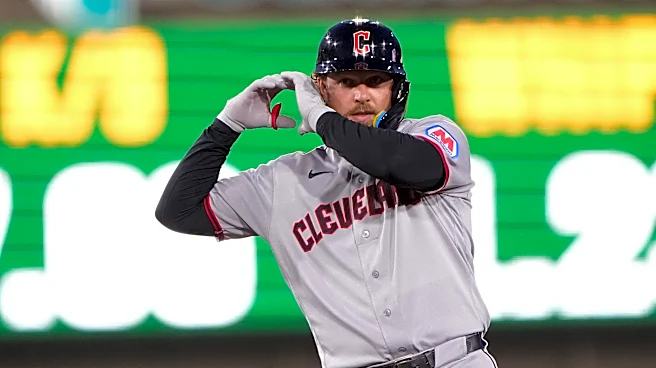
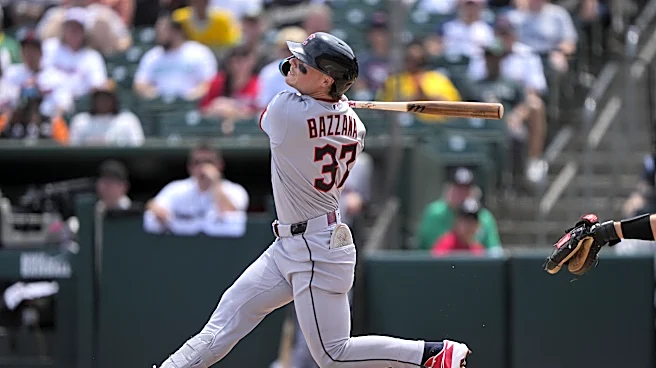
It hits me how stark the contrast is between the punks flying through the bowl with reckless abandon and the Guardians’ offense. These rebels on wheels weave as if controlled by a manifest destiny that calls for complete surrender. Yet leading up to the series against the Athletics, the Guards have looked like they are attempting to manifest destiny itself when they swing their bats. The Ratas let the bowl pull them through it, present in the moment, but the Guards keep trying to muscle the moment into submission.
I get up and cross to the other side of the park, walking the perimeter of the bowl. I pass people drinking beer and sharing cigarettes, leaning against the railings, everyone watching the show unfolding just inches away from them. A skater grinds alongside a group of spectators, none of them flinching. They have a faith in their fellow concrete creatives that I admittedly still lack as I desperately swerve through the pack trying not to knock into anyone.
The far end opens into a wider space beyond the ramps with smaller features. Tables have been set up along the edge, stacked with t-shirts, hats, stickers, and posters printed for the 10th anniversary of Rodeo Skateboard. Behind one of the tables, a man stands with his arms folded, holding court: Juan, the owner of Rodeo Skateboard.
He is short in stature and unassuming, but despite his long grey beard and longer hair, there is something timeless to his mystique. A skate warlock. He is surrounded by a pack of his disciples, passing bottles around, leaning in to share heroic stories and valiant crashes, brandishing scars and old wounds, while others come over to the dais to congratulate Juan on 10 years with warm hugs. Without Juan, the skate scene in Medellín is not what it is today. He is the Rat King, and tonight is his night.
I wait for an opening and step in to make my tribute, commenting on the great event. He nods with a large grin, eyes glinting with the satisfaction of a man watching his decade of success play out before him. But it’s getting late, I tell him. “I think I’m going to head home.”
He shakes his head wildly. “You can’t leave now! The night is just getting started. Solo quince minutos más.” He pulls a blunt from behind his ear, lights it, and passes it to me without a word.
“Fine. Fifteen minutes more,” I acquiesce as I take the blunt. I can’t say no to Juan, and I can never say no to a blunt.
A whoop goes up from the bowl behind me. I turn to see someone wrapping a rail in cloth and dousing it in what could only be lighter fluid. A lighter sparks, and the rail catches ablaze, a line of fire running the length of it. A queue forms for the first competition of the night as one rider after the next steps to the top of the run to demonstrate their skill and cojones.
The crowd presses tighter as people rush over to claim a good view, leaning in, voices rising in shouts of support for those who ride the full length of the flaming rail. Someone drops in, carrying his speed across the concrete, and ollies onto the rail. Fire erupts on either side of his board as he slides through the flames and lands on the other side, the fire spitting off his trucks.
The crowd erupts, and Juan tosses a t-shirt that sails through the air and into the outstretched hand of his champion. Another challenger is already at the top of the route ready to prove his mettle, the rail still burning, and goes without hesitation the moment the line clears. For an hour there is no pause between the landing of the last rider and the commitment of the next.
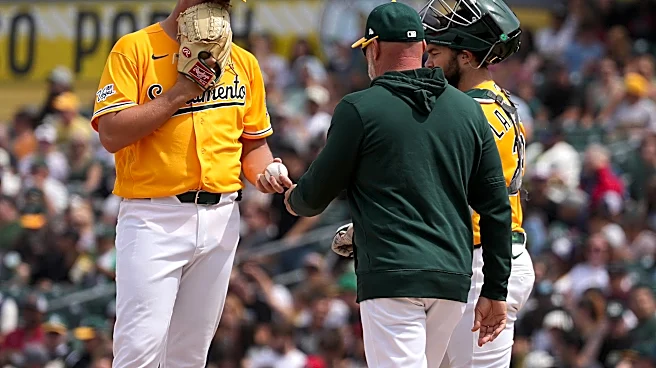
Six thousand kilometers away in Sacramento, the Guardians are beginning to find their own rhythm. After weeks of grinding at the plate, the bats have finally come alive. Something in that Northern California air, maybe. Or maybe they are starting to tap into the collective consciousness of the local skate culture, letting the moment carry them instead of fighting it.
A guy sits down on a concrete bank next to me, lighting a cigarette. He looks out at the rail and then over at me, nodding in the universal acknowledgment between strangers who have ended up on the lip of the same bowl. I nod back. He offers me a cigarette, but I refuse. Just blunts for me.
“Primera vez aquí?” he asks.
“Primera vez en un evento así,” I say. “Pero he estado en el parque antes.”
He grins knowingly and tells me his name as we fist bump. He has been skating at 4 Sur for years. He points out a few of the riders in the line and tells me which ones to watch. As the competition continues he talks about Juan with a reverent respect, and the legend that is Rodeo Skateboard. But as the flaming rail begins to finally go out I order an Uber and tell him that it’s getting late and that I should really be heading home. I have an article I have to write.
He laughs, smoke curling out of his mouth, and shakes his head. “No, hermano. Solo quince minutos más. Lo mejor todavía no ha comenzado.”
I relent and cancel my Uber. Fine. Fifteen minutes more.
As if on cue, Juan drags a metal hoop out from behind the tables and props it upright at the bottom of one of the smaller ramps. He goes through the same ceremony of wrapping it in cloth, dousing it in lighter fluid, and setting it ablaze. The flames have barely begun to rise before someone is already approaching at full speed. He ducks his head as he kicks his board into the air in an ollie that threads through the burning circle, and comes out the other side landing clean, his wheels squealing off the cement as he curves to avoid the crowd that continues to press in from every direction.
Another t-shirt sails through the air as Juan marks his approval. One Rata after the next makes dastardly attempts to clear the ring of fire. Juan is laughing, gazing on in pure delight from behind his table, throwing out shirts and prizes as fast as the punks can earn them. To his side, a group of roadies begins to set up amps and a drum set, preparing for the first band of the night.
Within minutes a thrash metal band tears into their first song at full volume filling 4 Sur with their audio assault. The guitar comes screaming in, distortion overloaded. The bass drum hammers double-kicks, cymbals crashing over the crowd in waves. The singer, shirtless, belts out lyrics I can’t understand, his grunts and rants coming out in a language all their own — more of a growl than a song. He swings the microphone wildly in a wide circle over his head by the cord, the cable carving the air around him like a lasso, and on every downbeat he yanks it back into his mouth just in time to scream the next line.
A mosh pit opens in front of the stage and I force my way to the center. While the riders in the bowl miraculously never crash, in the mosh pit it’s the antithesis. Bodies slam into each other, possessed by the same energy possessing the maniac at the mic. A shoulder catches mine and spins me sideways. I push back into someone else, the pit absorbing me and spitting me back out without breaking its rhythm.
Despite the body blows nobody falls. And just like out on the bowl, nobody hesitates. Everyone throws themselves at everyone else with a reckless abandon and a complete faith that they will be caught and thrown back in. There is no thought in any of it. No one is calculating angles. No one is bracing. The body decides, and the body commits.
The band finishes their set with one last barrage, the singer screaming into the mic one final time before letting it fall. A roar goes up as hands raise in a salute of gratitude for the savage display. Sweat drips off everyone in the pit as the band gives way for the next group. I look at my phone. It’s late. I put the phone back in my pocket.
Solo quince minutos más, I tell myself.
The next band starts setting up where the thrash band just was, rolling out congas and a timbale set while trumpet players warm up off to the side. The energy of the park transforms before they have played a single note. People who were recklessly throwing themselves around in the pit just a minute ago eagerly rearrange themselves to find dance partners, brushing the sweat off their faces and catching their breath as the band begins their set.
The count comes in on the timbales, the horns hit on the downbeat, and the whole park drops into a salsa rhythm at once. A couple starts dancing in the space next to me, the woman spinning out under her partner’s arm and rolling back in, their hands sliding behind each other’s backs without breaking the rhythm. Beside them another woman dips low under her partner’s arm and comes back up laughing. The mosh pit has become a dance floor without anyone announcing it, and out on the bowl the punks are still skating.
The salsa beat moves me, my hips finding their Latino flair, my shoulders shaking to the rhythm of the music. A woman next to me grabs my hand and we fall into step, her body reading mine before either of us has said a word. She spins out under my arm, and I am pulling her in again before any thought arrives. She twirls into my waiting arms, the pure joy of instantaneous improvisation written across her face.
The night is no longer something happening in front of me; it is now flowing through me. I am no longer an observer of some external phenomenon. I am experiencing it. We all are. The salsa band creating the soundtrack for the night as the dancers and Ratas in the bowl move to the same flow. The endless night continuing to unfold as one chapter evolves into the next. And as the Guardians find their flow in Sacramento, I’ll be here. Me and my Ratas de Medellín.