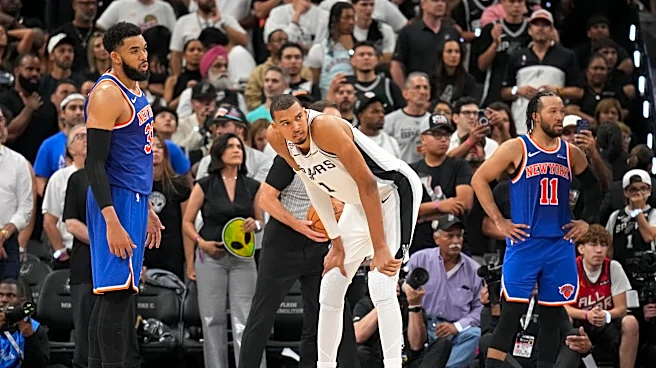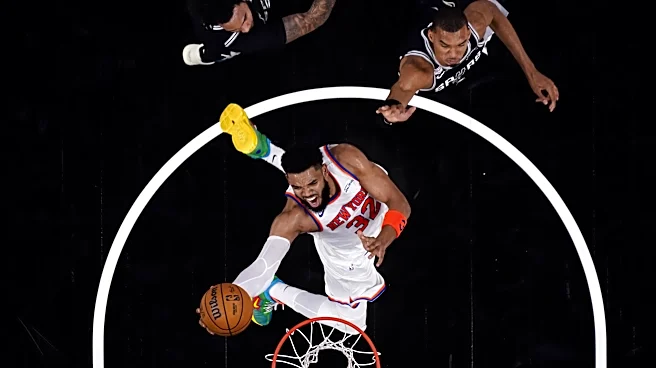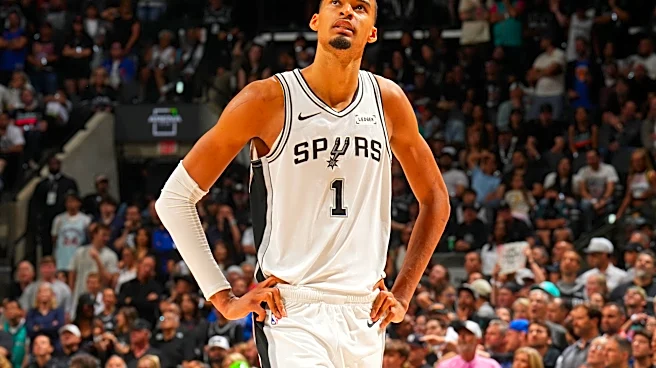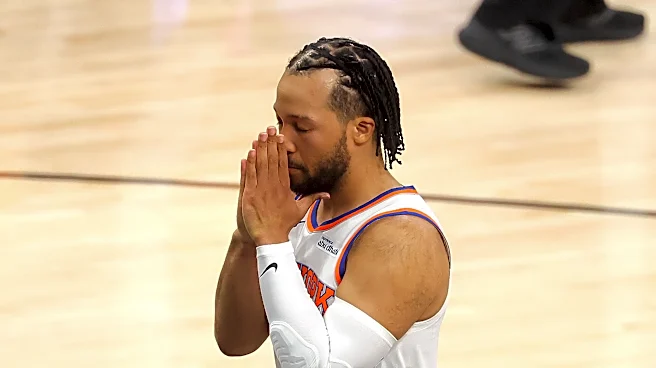



Before this NBA finals series against the New York Knicks even started, there was one little thing that had been gnawing at the back the of my mind, and that was what has made the Knicks successful against the Spurs in the regular season did not align well with a strategy that gotten the Spurs to the Finals in the first place: double teaming the star and making the role players beat you.
It worked well against the Minnesota Timberwolves in the second round for few reasons, one being that Anthony Edwards
can at times be a reluctant passer and try to be the hero by himself, but more than anything it was because his best target, Donte DiVincenzo, was out with a ruptured Achilles. The results were a little more mixed against the Oklahoma City Thunder in large part because Alex Caruso decided to go nuclear from beyond the arc for a few games. (If he could have done that in college, maybe Texas A&M’s greatest achievement in men’s basketball would be something beyond a handful of Sweet 16 appearances.)
However, what brought the Spurs back from a 3-2 deficit in the Western Conference Finals was their ability to adjust. Specifically, they switched things up from “stop Shai Gilgeous-Alexander at all costs” to “stay at home on role players and make him beat us by himself”. The result was a big Game 7 performance from him, but it was for naught as he didn’t have enough help, allowing the Spurs to pull away as the game wore on.
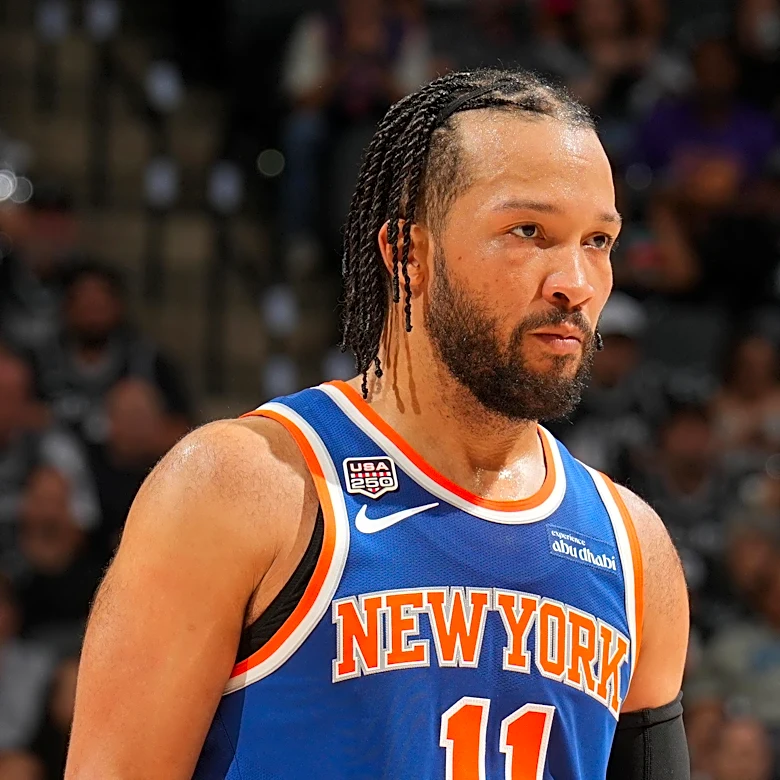
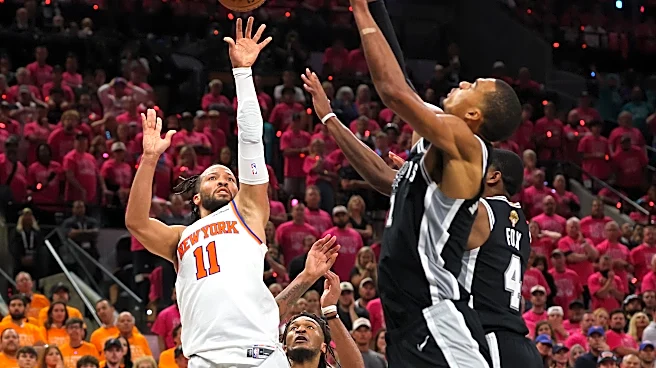
That brings us to the Knicks. Coming into the series, I had this aching feeling the Spurs would at least start with the same approach: stop Jalen Brunson and make everyone else beat you. They’ve mostly achieved the first part (outside of crunch time) with Brunson shooting under 34%, but the problem is unlike their previous opponents, the Knicks have the shooters to punish you for leaving them open, and so far, they have done just that.
In the regular season, seven of the Knicks’ top nine rotation players hit greater than 36.8% from three on 3.5 or more attempts per game. The two that didn’t — Mohamed Diawara and Tyler Kolek — haven’t even played in this series. So that means the Knicks’ top 7 shooters, who are all well above league average are sometimes on the floor all at once. The only three Knicks getting minutes who aren’t on that list are Mitchell Robinson, whom you still have to stay home on down low, and of course Spurs fans know what killers Jose Alvarado and hometown kid Jordan Clarkson can be off then bench if they get hot.
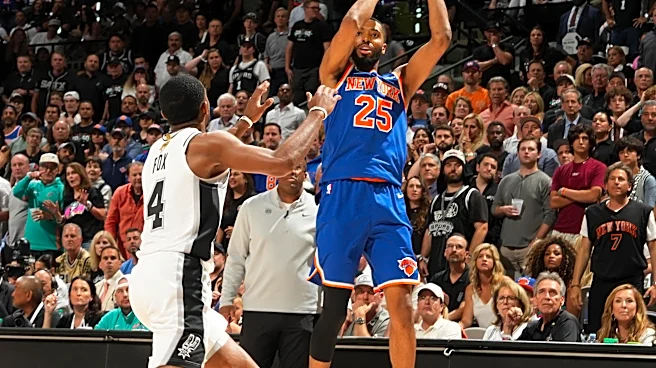
The Knicks haven’t been at their best three so far in this series (which is concerning as the series shifts to their home court), but they have been hitting them in timely fashion, and just like I have imagines implanted in my brain of Mikal Bridges nailing five open threes in their regular season blowout win over the Spurs in Madison Square Garden, I saw similar instances in Game 2 in particular, where a Spurs defender left his man open in the corner for a split second to double-team or swipe at Brunson, only for him to immediately find the open shooter before the defender can recover. And as Mike Breen would put it, bang.
I don’t know if this is the strategy the coaches have chosen up to this point or if the players are having momentary but costly lapses. Regardless of the reason, both parties need to make the adjustment back to staying at home on shooters, especially in that left hard corner. Just take a look at the Knicks shot chart in this series:

If this doesn’t scream “keep letting Brunson work in the midrange but stop leaving corner shooters open”, then I don’t know what does. (In case you’re wondering, the Spurs are also green in the left corner but on a smaller sample size of 4-9, otherwise they’re red everywhere except inside the restricted area, where they are a similar 35-55. You can check out all the stats and charts here.)
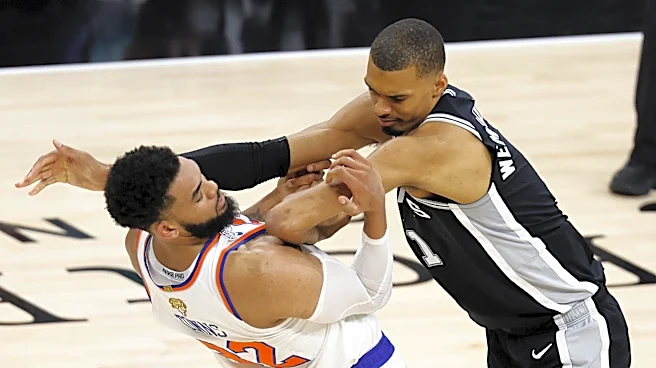
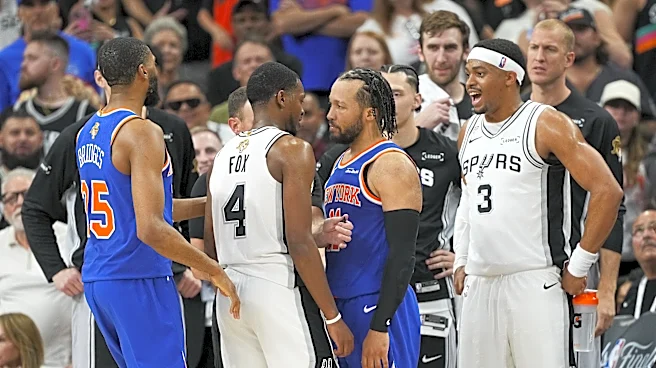
Of course, there are plenty more things the Spurs could do better besides defend one particular shot. They actually led in the final two minutes of both games before proceeding to blow it in crunch time, Game 2 in particularly painful fashion (but it still doesn’t beat Game 6 of 2013 — I don’t think anything could), so better decision making in with the game on the line is paramount. Leaving a combined 12 points on the court via missed free throws (seven in game 2) is another thing they can go back and kick themselves over. (Speaking of which, blowing two games in which they had an optimal whistle is also costly, because how long will that last?)
Things happen in-game that no one can predict or control. What can be controlled is strategy and game plan, and the Spurs staff and players have shown throughout these playoffs that they can learn and adjust. They made the exact same adjustment of staying home on shooters and guarding the opposing star one-on-one last series, and hopefully the plan heading into Game 3 is to do that again. Brunson may be more capable of going nuclear than SGA — he has scored 60 points on the Spurs before, but guess what? The Spurs won that game.
There is nothing fun about being down 0-2, knowing you could just as easily be 1-1 or even 2-0, and facing the gauntlet of needing to win 4 of 5 games, including two on the road, to win a series — never mind a championship in an era when the Finals are a lot more difficult to reach than they were during the Spurs’ dynasty days (which is insane). However, if there is a silver lining, it’s that all pressure is on the Knicks now, and the Spurs can play free and make adjustments without fear of consequence. They’ve shown they can do it before, and now it’s time to do it again.
As much as everything seems stacked against the Spurs at this point, FanDuel Sportsbook only has them a 1.5 point underdog in Game 3. That’s how tight this series has been and should continue to be, coming down to minute details and split second decisions. However, with the correct adjustments and mindset, maybe the Spurs can force the pendulum to swing back their favor.