


What lies before the Phoenix Suns this upcoming season is a puzzle. With the preseason around the corner, we’re still at the point where past performance serves as the baseline for theorizing about what could come next for Phoenix. How will the lineups and rotations fit together? What is this team’s upside? What challenges will emerge along the way?
We sit around the virtual water cooler, tossing around theories and building cases for and against all of the above. It was through this conduit of conversation
that I heard a comparison that immediately piqued my interest and sent me sprinting toward the computer to start digging. Erik Ruby from Phoenix Suns NOW floated an idea I had never really considered, and I’m glad he did. Because once he planted the seed, down the statistical rabbit hole I went, digging through numbers, roles, tendencies, and whatever else I could get my grubby little basketball hands on.
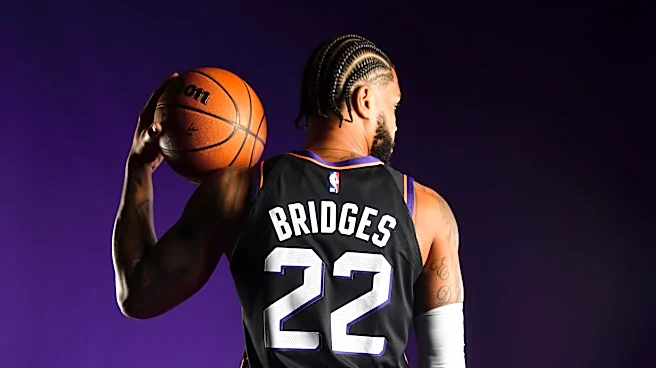
The comparison? Miles Bridges might not be all that far from becoming an Aaron Gordon-type player.
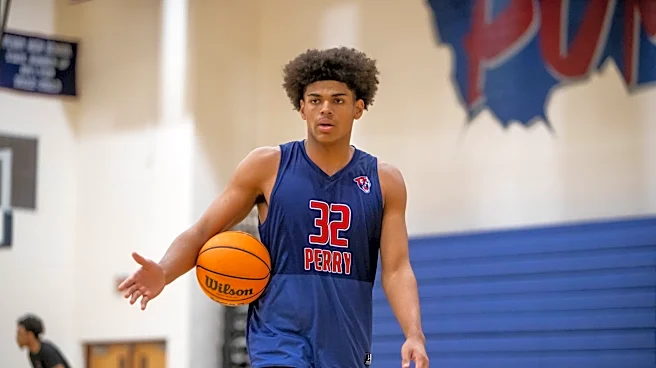
Could it be? Could Miles Bridges be in the process of evolving into an Aaron Gordon type of player? Is Koa Peat the Charmander, all raw power and untapped potential? Miles Bridges the Charmeleon, stronger, meaner, and beginning to understand exactly what he can become? And Aaron Gordon the Charizard, the fully evolved version of the archetype, terrorizing everything in his path? Maybe. Hell, now I need to know.
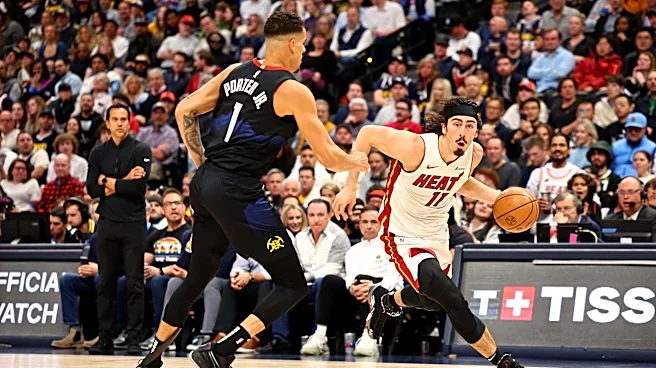
You look at Aaron Gordon and see a champion, somebody who played a vital role in bringing a championship to Denver and has become an ideal running mate for Nikola Jokic as the Nuggets have marched through the Western Conference over the past few seasons. So there’s no world where we should even be comparing these two players, right? After all, Miles Bridges spent his entire career with the Charlotte Hornets and never played a postseason game. But prior to arriving in Denver at age 25, Gordon had played in only five postseason games with the Orlando Magic.
And the more I sat with this comparison, the more I thought it might not be a terrible representation of what Miles Bridges could become as a player. Because when you look at the measurables and the deliverables, there is a case to be made that they are similar.
One thing I have to take into account as I begin this research is that Gordon plays alongside quite possibly the greatest player of the current generation. What Nikola Jokic brings to the court and how he elevates those around him puts everybody on his team in a position to succeed. It reminds me of Steve Nash here in Phoenix, when players would arrive and have career years because they received opportunities they might not have found elsewhere. The way Jokic passes and opens the floor for his teammates will always put Gordon in a different situation than Bridges.
By circumstance, Gordon is clearly in the better environment, so even as I work through the statistical analysis, some of it will naturally favor him because of the situation he’s in. He has thrived and flourished in a stable environment while being asked to fulfill essentially the same role season after season.
Bridges, meanwhile, spent his career in Charlotte as part of a team and culture in constant flux. One season he’s asked to be a primary scoring option. The next he’s asked to become a tertiary option. He has a good season, the team struggles anyway, Charlotte receives another high draft pick, and the organization shifts its priorities and roster construction around that acquisition rather than building toward Bridges’ strengths.
And through seven seasons in Charlotte, he still averaged 15.9 points, 6.1 rebounds, and 2.8 assists on 46%, 34%, and 83% shooting splits. So Bridges arrives in Phoenix from a much different situation. He’s joining an organization entering Year 2 of a complete cultural and strategic reset, one in which he has an opportunity to thrive in a defined role, much like Gordon did when the Orlando Magic traded him to the Denver Nuggets in 2021.
It’s also worth remembering that Gordon entered the NBA with higher expectations relative to his perceived talent. He was the fourth overall pick in the 2014 NBA Draft, while Bridges was selected 12th overall in 2018. Even from a career expectations standpoint, those lines run somewhat parallel. Gordon has simply been in better situations and capitalized. Bridges is entering a better situation.
My first data point is, probably to nobody’s surprise, BBall Index. This is where we can find the measurables for both players, along with BBall Index’s definitions of their advanced position, offensive role, and defensive role. The first thing that stands out is the obvious. Miles Bridges is three years younger than Aaron Gordon, while Gordon is 1 inch taller and 10 pounds heavier than Bridges.
But this is where things get interesting. Both players are classified identically by BBall Index. Their advanced position is on ball wing, their offensive role is shot creator, and their defensive role is wing stopper. So from an archetype standpoint, we’re already looking at two very similar players.

The next data point I’m going to look at, which comes to us via Data Baller, is what both players looked like during their age-27 seasons. For Miles Bridges, that was last season. For Gordon, it was the 2022–23 season, the same year he won a championship with the Denver Nuggets.
Again, circumstances dictate so much here, but there is one similarity in their respective situations. Bridges was the tertiary option in shot attempts last season with Charlotte, averaging 13.5 attempts per game, which was 0.1 more than rookie Kon Knueppel. He was also fourth on the team in scoring. Gordon, at the same age, was similarly fourth on the Nuggets in scoring while ranking fourth in shot attempts.

My point is that neither player was the second most utilized offensive option on his team, nor was either expected to be. They were tertiary or fourth options within their respective offenses. And when you look at the numbers provided, noting that RS stands for regular season in the graphic, they aren’t all that far apart. Gordon has the edge, but even when you look at the efficiency numbers, the difference isn’t drastic.
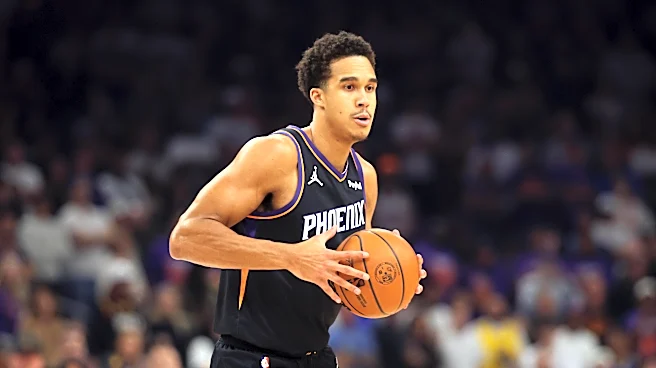
As Bridges prepares for his age-28 season, a milestone he’ll reach in March, he’ll most likely find himself operating as that tertiary option once again. The expectation is that Devin Booker will lead the Suns in shot attempts, followed by Jalen Green. From there, Bridges and Dillon Brooks will likely fluctuate depending on the night, the matchup, and foul situations.
So Bridges is a power forward who can produce from that position as a tertiary offensive option while carrying the same general archetype as Aaron Gordon.
Let’s take a look at the overall shot diet throughout their careers.

Both players primarily generate their offense at the rim or from beyond the arc, although Gordon has shown more of an affinity for the midrange than Bridges. So what you’re getting from both players, regardless of situation (seeing as we’re looking at their entire careers) are players who take nearly half of their shots at the rim while stretching the floor enough to remain viable threats from beyond the arc.
Gordon is a career 33.5% three-point shooter, while Bridges sits at 33.8%. The difference, as the chart below illustrates, is volume. Bridges attempts 5.2 three-pointers per game compared to 3.3 for Gordon. Gordon has more of an affinity for operating in the midrange, while Bridges exchanges many of those attempts for shots from beyond the arc.

We can take this a step further by comparing their shot diets through the first seven seasons of their respective careers. Once again, the similarities are evident, with both players generating their offense from nearly the same areas of the floor.

What’s interesting is how remarkably similar their overall efficiency has been. Gordon carries a career 53.6% effective field goal percentage, while Bridges sits at 53.0%. That’s important context when looking at the shot charts. Bridges’ heavier three-point diet doesn’t automatically make him a less efficient offensive player. His overall efficiency is remarkably comparable to Gordon’s, despite Gordon possessing a much more efficient profile at the rim.
What about defensively? Again, very similar players. Whether it’s pick-and-roll screener defense, rim defense, help defensive activity, or matchup difficulty, Gordon and Bridges share plenty of similarities.
Both graded out with an A in nearly the exact same percentile last season when it came to guarding opposing teams’ best players. They’re active off-ball as help defenders, and when they’re involved in high screens, both do a stellar job protecting the rim in drop coverage.
Bridges actually has the slight edge in pick-and-roll screener mobile defense, highlighting his ability to defend on the perimeter when switched onto ball handlers. It’s another area where his versatility stands out, and one where he graded better than Gordon last season.


My last point of emphasis reinforces a couple of points I’ve been making this offseason as I attempt to predict how Bridges will ultimately generate opportunities within the confines of this offense.
With Devin Booker and Jalen Green serving as the primary offensive threats, Bridges needs to be a viable enough threat himself that his on-ball gravity creates secondary and tertiary opportunities for both Booker and Green. The theory is relatively simple. When Bridges has the ball, secondary defenders have to respect his ability to get to the rim. That forces them to shade away from their assignments, creating opportunities elsewhere if Bridges can penetrate and distribute the ball effectively.
When you look at the career trends over the past three seasons, with the obvious gap in 2022-23 following Bridges’ yearlong suspension, you see that he’s remarkably similar to Aaron Gordon in both his on-ball gravity, off-ball gravity, and his playmaking ability.
Then there’s Bridges’ off-ball gravity. While that number has trended downward over the past two seasons, likely due in part to his circumstances, he still ranked in the 79th percentile last season.


Defenders can’t simply sag off Bridges and devote their attention elsewhere because he possesses enough offensive gravity to punish them when they do. And on a team built around Booker and Green, creating advantages, that gravity could be one of the most important aspects of what Bridges brings to the offense.
Do I believe Miles Bridges is the next Aaron Gordon? No. There are too many variables, too many circumstances, and too many factors involved for anybody to truly be the next anybody. Everything is situational.
I do find the comparison fascinating from an archetype perspective. Look at what they have been asked to do, how they operate, and how they weaponize their physicality and aggression, and there are plenty of similarities worth exploring. Where that ultimately takes Bridges in Phoenix is anybody’s guess.
How that translates to Phoenix’s schematic approach night in and night out, on both the offensive and defensive ends, will ultimately determine who Miles Bridges becomes in this new situation and with this new opportunity. He’s not the next Aaron Gordon. He’s the first Miles Bridges. And at 27 years old, entering his prime, what that ultimately looks like will be determined by him and him alone.