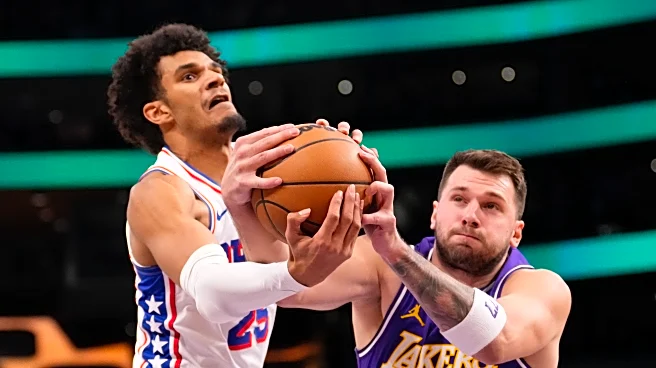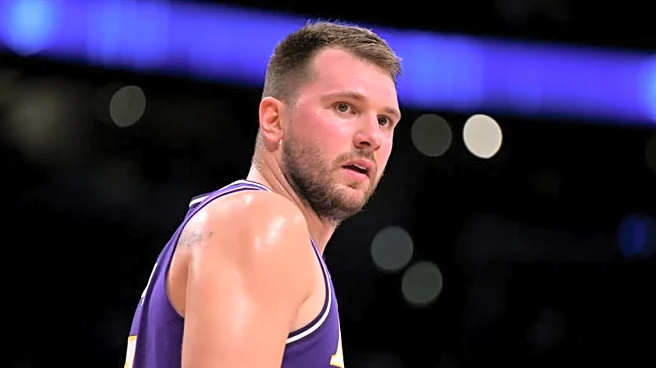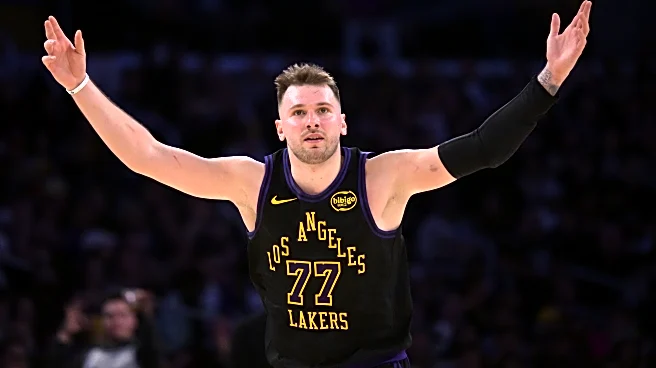


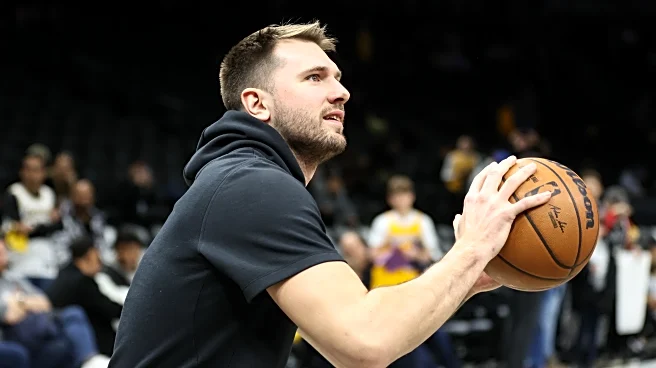
Luka Dončić has been the best player on every team he’s been on for nearly a decade. Considering he first started playing professionally in Spain for powerhouse Real Madrid at 16 and will not be 27 for another month, that’s saying something.
But, Dončić is a true prodigy, someone whose preternatural feel for the game has long transcended his age and has more often than not turned doubters into dummies. One only need to ask Nico Harrison how he went from top basketball decision maker into a laughingstock
updating his LinkedIn profile in less than 12 months to understand how Dončić can prove so wrong those who question his game.
Dončić, however, is not infallible. That makes him no different from any other player of course. But in the spotlight of Los Angeles and when you’re the best player for the Lakers, there’s a different sort of burden you carry that often comes with the sort of critiques and aspersions filled analysis that sells in a world of 24/7 news cycles and the hellscape of takes born from the social media meritocracy where every person has a microphone and a desire to go viral.
Further, the best player on the Lakers is not just judged by how many triple-doubles he gets, his scoring binges, All-Star appearances or even All-NBA nods. Those things do matter, of course, and the flare displayed when racking up those numbers or achievements certainly will further endear you to the fans. But the ultimate goal for any face of the Lakers is whether you can deliver a championship — and not just one, if we’re being honest. If you don’t do it, you can still be enshrined and remembered forever, but if you can reach the mountaintop, there’s that extra bit of reverence reserved for you.
While these results are the ultimate measure, though, the burden of being the best player is also about the process that gets you to that final destination and the everyday leadership and example you set as the guide to get your team there.
In other words, if a championship is the north star the franchise is chasing, the best player is the steward whose hand steers the wheel on the pathway there.
And, while Luka’s prodigious talent is a necessary requirement first and foremost, it’s not the only one. What’s also important is that leadership you naturally have as the team’s best player and how much it can matter in setting the tone for your team.
Before the Lakers’ recent win over the Raptors, I thought JJ Redick captured this idea well when he spoke of Luka’s growing leadership in his first full season with the team and offered examples of the ways that being a leader can be all-encompassing and not just based on setting an example via your production on the court (emphasis mine):
“I talked about this a little bit at the beginning of the season. I think there was a comfort level that wasn’t there because of everything with the trade and the emotional toll and shock of that. He’s been more engaging. Obviously, he’s done some great stuff off the court like the Porsche experience…The stuff that we coach him on, whether that’s his interactions with referees, defensive engagement, all of that stuff, that’s all forms of leadership.
“I can tell you he’s so much improved from where he was last year and I think the guys have gotten to see his personality. Opening up and just being yourself and being vulnerable is also a form of leadership and he’s done that.”
I emphasized the part I did because, honestly, I think this is the part of leadership that most translates to what happens on-court for your team and how much it can influence success, both on a possession-to-possession basis and in the bigger picture by helping to establish the personality and ethos of your team. And, maybe more importantly, I believe it’s also the part of being a leader where, for Luka, I think the most sustained improvement is needed for him and the team to take the next step together.
I don’t think this is controversial, either. Give any Luka super-fan — or even Luka himself — the truth serum and I think they’d readily admit that the parts of his game that could improve the most are his play-to-play defensive engagement and effort and, after that, his general demeanor towards and interactions with the referees.
Defensively, Luka has many more positive moments than his biggest detractors would have you believe, just as his general strengths as a rebounder and player who can generate steals or create deflections can also be downplayed when discussing his overall defensive impact. But, there are still too many defensive possessions where his fundamentals break down, his commitment to making the extra effort is not there or he seems content to let the opposing offense get theirs so he can try to get it back on the other end.
And those cost him and the team in real ways, too.
It’s certainly fair to point out that his offensive ask is higher than most players or that his relative usage rate creates a situation in which his effort on defense is bound to suffer. But, it’s also fair to point out that, in different stretches of his career, he’s shown a defensive commitment for extended stretches during different parts of his career and his team has greatly benefited from that. Not just because it keeps the defensive integrity of the unit high, but because it’s also clear that Luka’s effort and commitment level serve as an inspiring factor for his teammates. When his goes up, theirs does too.
In terms of his mostly poor relationship with the refs, this has long been a knock on Luka, but mostly through the lens of how this impacts his individual performance due to frustration, how it makes it less likely he will get back on defense, or his accumulating technical fouls total. But I’d argue there’s a larger, more substantive discussion to be had about how fractured relationships with the refs can generally depress the team’s emotional barometer or, in more severe cases, even affect how a game is called.

Putting the latter aside, it can sometimes feel like the persistent arguing and negativity can help the team slip into a less focused, more irritated state that negatively affects their effort and execution. I also think it can have the opposite effect on opponents, sometimes putting a battery in their backs to go harder and use that emotional instability from the Lakers as a way to turn the game.
For example, in the team’s NBA Cup quarterfinal loss to the Spurs, Luka was unhappy with the early game officiating and ended up getting a technical foul with 1:44 left in the first quarter with the Lakers trailing by just three points. Over the next 4:20 of game time, the Spurs absolutely jumped on the Lakers with an 18-4 run, essentially winning the game on the spot.
Luka wasn’t in the game for much of that carnage, but watching the game live, it did feel like the Lakers were somewhat deflated after Luka’s tech while the Spurs upped the ante even more with their physicality and pressure to seize control of the game.
That’s both an extreme example and one where multiple factors are at play, so if you don’t want to ascribe the shift in the game to that, I get it. But what I believe we can agree on is that on a more fundamental level, I don’t think Luka can continue to argue with the refs to the degree he does and not expect it to impact his team in negative ways. It’s just not realistic.
I also understand it’s not realistic for him to completely stop, which is why I would never advocate for that. Further, his emotions running hot the way they do can also serve as inspiration to him and his team, so it would be disingenuous to act as though the spirit he brings to the game can’t also have some positive outcomes.
But when shifting back to the idea of leadership and the burden Luka must bear as the team’s best player, I think these are all things that must find the right balance to lead to the best outcomes for the team. Because, ultimately, when you are the best player, the team goes as you do.
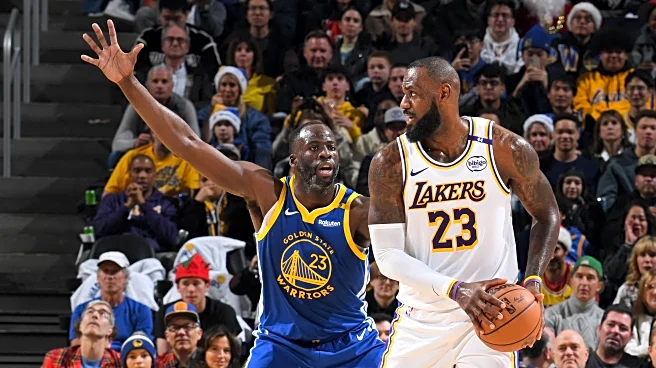
We saw this with LeBron before Luka arrived, just as we saw it with Kobe before him, Shaq before him, and even with Magic and, earlier in the Showtime era, Kareem. All of these players had different personalities and different character traits that could both inspire and, at times, detract from their teams. And all of them had to learn how to best channel their emotions and find their leadership style that would provide more positives than negatives.
And, ultimately, they all did and to great results for the Lakers. Now, it’s Luka’s turn and whether he can meet this burden head-on might end up meaning just as much to the Lakers winning as his prodigious talent.
You can follow Darius on BlueSky at @forumbluegold and find more of his Lakers coverage on the Laker Film Room Podcast.