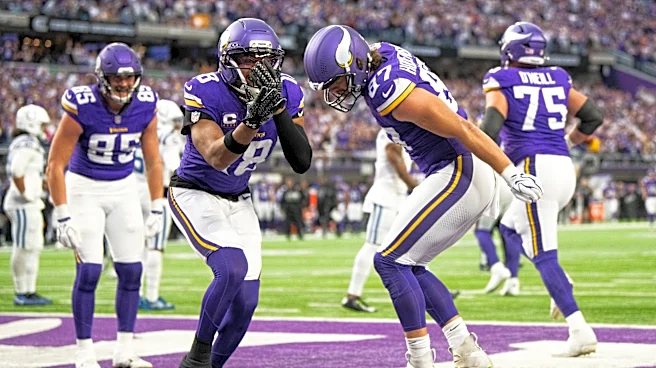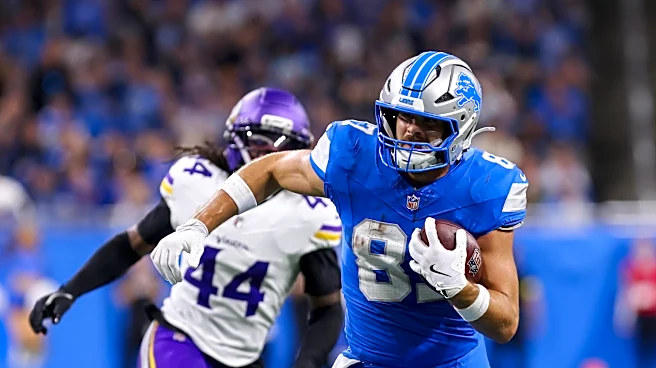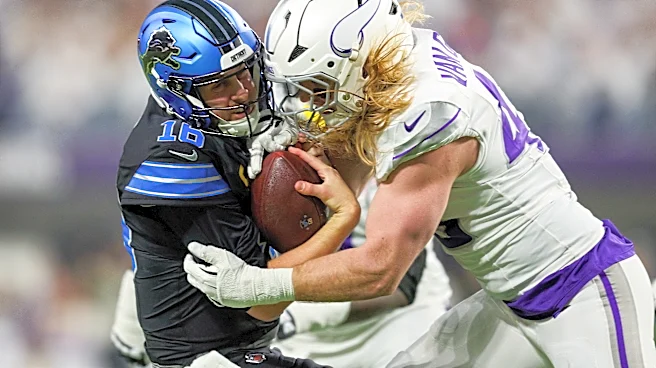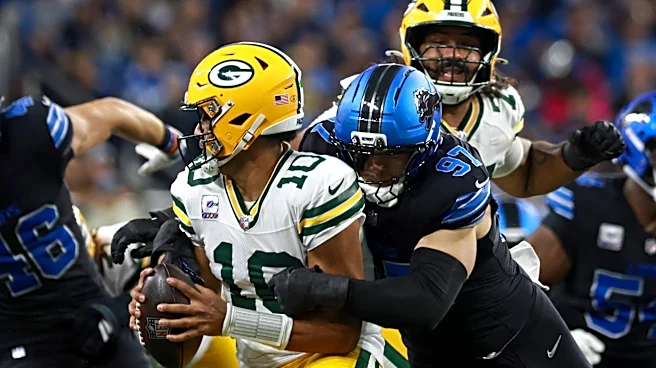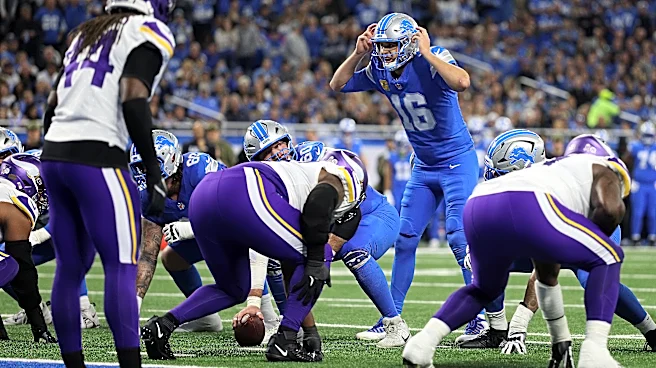



The Detroit Lions have a chance to take down the undefeated Minnesota Vikings and make a statement in a very competitive NFC North. But the Vikings and their historic defense won’t make it easy for Detroit.
Let’s take a closer look at the matchup with our Lions vs. Vikings preview and prediction. It’s On Paper time.
Lions pass offense (9th) vs. Vikings pass defense (1st)

The Lions’ pass offense is coming off perhaps its most impressive performance. The Packers pass defense was the best they’ve played against so far, and they posted an impressive 119.7 passer
rating and an impressive 57.1% dropback success rate (sixth best of the week).
For the season, they continue to establish themselves as a top-five unit in the NFL. They rank:
- First in passer rating (112.5)
- Fifth in yards per attempt (8.0)
- Second in dropback EPA (0.309)
- Fourth in dropback success rate (51.8%)
The only reason they may be dragging behind in DVOA is strength (or lack of strength) of opponent. The Saints, Bills, Jets, and Cardinals all rank 20th or worse in pass defense DVOA. But last week’s performance against the Packers certainly helps Detroit’s case.
In terms of pass protection, it’s been great news for Detroit. They rank second in PFF pass blocking grade (82.1), seventh in ESPN’s pass block win rate (55%), fifth in pressure percentage allowed (30.8%), and 11th in sack rate (5.1%).
Obviously, this week, the key is how they manage the blitz. And they’ve been phenomenal thus far. Against the blitz, the Lions rank:
- Fifth in pressure percentage (35.1%)
- First in EPA/pass (+0.25)
- Eighth in sack percentage (5.4%)
This will be a challenge for Minnesota.

But, of course, the Vikings defense is their best unit on the team, particularly against the pass. Not a single quarterback has averaged a passer rating over 90 against the Vikings, and only Jordan Love managed over 200 net passing yards.
Now, it’s worth clocking how bad the passing offenses the Vikings have faced off against. By DVOA, the best passing offense they’ve faced is Chicago (12th), but that game was played in a monsoon. Here’s where the rest of the teams rank: Packers (18), Bucs (25), Dolphins (26), Saints (24), Colts (31).
Still, the Vikings aren’t just beating up bad teams, they’re destroying them. For the season, the Vikings rank:
- First in passer rating allowed (61.7)
- Fourth in yards per attempt (6.1)
- First in dropback EPA (-0.226)
- First in dropback success rate (35.5%)
Obviously, their pass rush is what really kills teams. Their ridiculous 68.4% blitz rate is 26.1% higher than any other team, and it has resulted in the top pressure rate (48.8%) and sack rate (10%) in the NFL.
Player to watch: LB Blake Cashman. I believe Cashman should be in the running for Defensive Player of the Year. Cashman does everything for the Vikings defense, including blitzing (4.5 sacks), coverage (five passes defended), and being a menace in the run game (six tackles for loss). He has PFF’s second-highest grade among linebackers (86.2) with ridiculous grades in pass rush (86.2, 3rd), coverage (75.1, 9th) and run defense (70.9, 25th).
Advantage: Draw. This is a top-five unit vs. the top unit in the NFL. But the Vikings have yet to be tested like Detroit will test them, and the Lions are coming off a strong performance against what was the No. 2 pass defense in the NFL last week. This one can truly go either way.
Lions run offense (14th) vs. Vikings run defense (9th)

The Lions run game has been a statistical enigma this year. The inconsistencies are both hard to watch and tough to comprehend. On a play-by-play basis, the Lions remain a pretty damn good running game. They rank:
- 15th in yards per carry (4.2)
- 19th in rush EPA (-0.108)
- Third in success rate (46.9%)
The high success rate and mediocre EPA/YPC usually suggests a lack of explosive plays, and that is true to some degree. The Lions are 10th in amount of 10-yard rushes (21), but they have just two rushes of 20+ yards (only two teams have fewer).
But the bigger concern is the high percentage of negative plays. Detroit’s “stuffed” rate (0 or negative yardage runs) is 20.9%, the third highest in the league. To be producing the third-highest success rate but also the third-highest stuffed rate is literal insanity. It speaks to how good the run game is outside of these negative plays, but the lapses in blocking are frustrating and really throws the Lions’ offense off-balance. One answer to the problem could be rushing in lighter formations, as Detroit gets less and less efficient with the more tight ends they put out there:
Despite the inconsistencies, the Lions run blocking does seem to be very good. They rank fifth in PFF run blocking grade (73.2), fourth in adjusted line yards, and 20th in ESPN run block win rate.

Minnesota has given up a few big days on the ground this year, but they’ve also faced some of the best rushing attacks in football (and two of the worst). Overall, they’re still among the best in the league:
- 21st in yards per carry allowed (4.2)
- Second in rush EPA (-0.212)
- First in rushing success rate (31.2%)
Unfortunately for Detroit, they are also very good at creating negative plays in the run game. Their 19.1% stuffed rate ranks eighth in the NFL. They’re also stellar in another facet of the run game Detroit struggles at: short-yardage situation. The Lions are converting short-yardage situations just 60% of the time (21st), while the Vikings are allowing a power success rate of only 58% (ninth).
Player to watch: Jalen Redmond. The Vikings’ 291-pound defensive tackle is currently PFF’s No. 1 graded interior defender against the run (90.5). He will give the Lions’ guards a handful on Sunday.
Advantage: Vikings +1. There’s enough opportunity for the Lions to find some success here, but the inconsistencies are a huge concern right now, and if Detroit continues to allow negative plays in the run game, it will set up nightmare down-and-distances for Jared Goff.
Vikings pass offense (27th) vs. Lions pass defense (24th)

The Kyler Murray project is off to a slow start. It hasn’t been a disaster—as the Vikings are generally avoiding negative plays (18 sacks, 22nd; two interceptions, t-third)—but the efficiency is quite poor.
- 15th in passer rating (90.7)
- 22nd in yards per attempt (6.6)
- 25th in dropback EPA (-0.029)
- 30th in success rate (38.6%)
It’s hard to pin down exactly where things are going wrong. Obviously, the Vikings have a strong set of receivers in Justin Jefferson, Jordan Addison and T.J. Hockenson—Murray’s current favorite target. And while the offensive line isn’t great, the pass blocking statistics are fine: 11th in pressure rate allowed (32.7%), 10th in PFF pass blocking grade, but 30th in sack rate (9.9%).
That suggests Murray has been holding onto the ball longer than normal and his 2.91 average seconds to throw (12th) does support that. And while he is certainly capable and willing to evade pressure with his feet, he hasn’t been consistent at it.
Ultimately, I think this is just a relatively poor passing attack that doesn’t throw the ball deep often (Murray is 23rd in average depth of target and 15th in deep shot percentage), and hasn’t found its groove.

Detroit is slowly climbing out of the basement with their pass defense. For the season they rank:
- 25th in passer rating (102.2)
- 17th in yards per attempt (7.3)
- 28th in dropback EPA (0.242)
- 28th in dropback success rate (50.0%)
But over the last two games, the Lions rank:
- 15th in passer rating (87.8)
- 20th in dropback EPA (0.140)
- 16th in dropback success rate (44.1%)
Now, a two-game sample size isn’t enough for me to declare the unit fixed—especially against a couple of bad-to-mediocre passing attacks—but it is progress nonetheless. Bad passing attacks were torching them at the beginning of the year.
The pass rush remains the saving grace of the Lions defense. Detroit ranks just 16th in pressure rate (36.1%) and time to pressure (2.62), but second in PFF pass rush grade, fourth in ESPN’s pass rush win rate, and seventh in sack rate (7.2%).
Player to watch: T.J. Hockenson. The former Lions tight end leads the Vikings offense with 27 catches, and Detroit has been awful at defending tight ends this year. The Lions rank 31st in pass defense DVOA vs. tight ends, and the Lions linebackers have struggled in coverage in recent weeks.
Advantage: Draw. I’m not yet to a point where I feel I can trust the Lions pass defense, despite the recent improvement. The Vikings shouldn’t have a big day against Detroit, but with the talent they have, it would not be surprising if they hit on a couple of explosive plays that could shift the game.
Vikings run offense (24th) vs. Lions run defense (22nd)

This chart doesn’t look too bad, but the Vikings run game is apparently worse than it appears. they rank just:
- 21st in yards per carry (4.0)
- 27th in rush EPA (-0.195)
- 27th in rush success rate (34.0%)
The mediocre offensive line looks largely to blame for the Vikings’ run game. They rank 25th in PFF grade (55.7), 14th in adjusted line yards, but oddly fourth in run block win rate. That said, they haven’t been getting a ton of help from the backs either. Despite ranking sixth in rush yards before contact per carry (1.87), they rank 31st in yards after contact per carry (2.16).
So, there’s a lot going on, and not much of it is good.
However, the return of Jordan Mason last week could give the unit a shot in the arm.

The Lions run defense has been quite inconsistent all year, but it looks like there has been some mild improvement. Of course, facing two of the worst rushing attacks in the past two games have helped, but there are worse reputations than being able to hold bad offenses down.
For the year, the Lions rank:
- 17th in yards per carry allowed (4.1)
- 25th in rush EPA (-0.068)
- Ninth in rushing success rate (37.4%)
Here’s the good news: the Lions have been great in the middle of the defense, and that matches up well against a Vikings interior offensive line that has struggled and Mason’s power rushing style.
Player to watch: Tyleik Williams. The Lions’ second-year defensive tackle is quietly having a fantastic season. It doesn’t show up much on the stat sheet, but he’s a force in the middle of the defense.
Advantage: Lions +1. While these teams are statistically pretty close to each other, I believe the styles of rushing attack favors Detroit this week.
Last week’s prediction:
Last week, I think I did an excellent job with my preview. I probably gave the Lions run game a little too much credit and their pass defense too little credit, but I correctly gave the Lions an advantage in the passing game despite Green Bay boasting the second-best pass defense. While I predicted a shootout and we only got a 20-17 final score, I still feel like I was on the right track given how well the offenses moved the ball.
On Paper is now 5-1 in overall record and 3-3 against the spread.
In the comment section, no one expected this low of a final score, butDatertots came closest with their 24-17 prediction. Here is your prize:

This week’s prediction:
We come out with a draw between the two teams. When there’s a draw, I try to look at other aspects of the game not covered.
There’s turnovers, but neither team gives the ball away much. Detroit has just three giveaways on the year (t-second fewest), Minnesota has four (t-fourth fewest). However, the Vikings are much more likely to force turnovers, creating 11 takeaways (t-fifth) compared to the Lions’ six (t-24th).
Special teams is also a draw, with the Vikings ranking first in DVOA and the Lions ranking fifth (I broke down the special teams numbers more here).
I could just give the Lions the advantage here because they’re the home team, but I’m looking for something a little more robust in my analysis. And the fact that the Vikings are far more likely to create a game-shifting takeaway than the Lions is just enough for me to put them over the top.
Lions 23, Vikings 24.