



To start, here’s a breakdown of the 2026 Executive of the Year voting:
There are a lot of good executives here. If you look leaguewide, of the nine teams that won at least 50 games, eight of them are on this list.
Who’s missing? The Knicks, of course. Only one other team won at least 47 games and saw its executive not earn
a single vote: Minnesota.
Fast forward to late May, and despite five different teams in the East having an executive on this list, none of them are in the NBA Finals, but Leon Rose is. You’d think at some point, awards like these would no longer value the regular season in such a way, but how else would we show how highly we think of Brad Stevens?
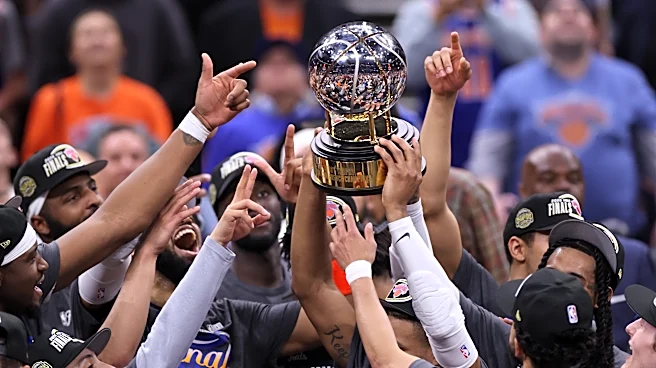
Individual awards are temporary. Banners are eternal. Even if the NBA Cup banner will never be hung, the 2025-26 Knicks will forever be represented in the rafters at Madison Square Garden, regardless of what happens next.
And it’s all thanks to Mr. Rose.
When James Dolan hired Rose to succeed Steve Mills as the Knicks’ President of Basketball Operations on March 2, 2020, the organization was in a bleak, bleak place. They were just over a year removed from trading their young All-Star on a rookie contract because of his lack of long-term belief in the organization, and had a foundation banking on several late lottery picks and 2019 No. 3 overall pick RJ Barrett to move into the future.
Rose had never worked in an NBA front office, but had decades of experience in basketball as an agent with CAA, which had many star connections. Some of the best players in the league had Rose in their inner circle in the past, so the hope among fans was that he’d leverage those connections to make the Knicks a destination after years of being spurned by elite talent.
The day he was hired, the young Knicks took down a veteran Rockets squad led by James Harden (go figure) at Madison Square Garden behind 27 by Barrett and a double-double off the bench by Mitchell Robinson. Despite how bleak this roster looked, those two were your foundation.

Nine days later, their season abruptly ended due to the COVID-19 pandemic. The Leon Rose era was already in chaotic and uncharted waters before he had even gotten a chance to furnish his office at 34th and 7th.
With no invitation to the bubble when life got more normal, his first offseason began without much of an in-person evaluation period. Interim head coach Mike Miller was shown the door, and the search began for the team’s 13th head coach in 20 years since Jeff Van Gundy was canned in late 2001. There are a lot of directions they could’ve gone.
They interviewed, in some capacity, the likes of Ime Udoka, Jason Kidd, Kenny Atkinson, Jahmal Mosley, Will Hardy, Mike Brown (hmm, whatever happened to him), and more, offering all different types of styles. Developers, young coaches, analytical coaches, offensive coaches, defensive coaches, star target coaches, etc.
Ultimately, in a list that included plenty of faces looking for their first head coaching job, he went for a retread, hiring Tom Thibodeau to take his “dream job” after up-and-down tenures in both Chicago and Minnesota. While their last attempt at hiring a defensive coach failed miserably in David Fizdale, Thibodeau was more respected in the mediascape and showed right away just how serious Rose was about ending the cycle of mediocrity.
Thibs’ scheme required buy-in, effort, and conditioning. For a young team, it might be hard to adapt to, but he made the early-2010s Bulls and late-2010s Timberwolves grow up. Why couldn’t he do it here? It was an edict to get out of the doldrums and start building something competitive.
But going into 2020-21, the team wasn’t expected to be competitive. Rose’s first-ever draft saw the Knicks drop from 6th to 8th in the lottery and select Dayton forward Obi Toppin, who was considered the best player available. This, to date, has been Rose’s only lottery selection, so the fact that multiple talented players like Devin Vassell and Tyrese Haliburton went behind him stings, but oh well. Drafting a talented combo guard in Immanuel Quickley at No. 25 doesn’t hurt.
Drafting Toppin clearly indicated that the conglomerate of power forwards the Knicks signed after striking out on three pitches in 2019 free agency was not part of the future vision. Taj Gibson was waived, Bobby Portis’ team option was declined, and Julius Randle was pretty clearly on the trade block as an expiring contract. The team waived Elfrid Payton, only to re-sign him a few days later.
Rose was also a big fan of wheeling and dealing. He swung multiple trades on draft night to maneuver around the board, ultimately selling the team’s second-round pick for a 2023 Pistons 2nd. He’d acquire a pair of 2nds from the Utah Jazz to eat Ed Davis’ modest contract before flipping him to the Timberwolves for filler and another 2nd. Three seconds just to ship Davis from Utah to Minnesota is good business.
On the margins entering his first season, he signed veteran role players Alec Burks, Nerlens Noel, and Austin Rivers, while eventually bringing back Gibson to continue mentoring the young Robinson in January after waiving OG Nova Knick Omari Spellman. Despite what we know now, this season was supposed to be a continuation of a rebuild that saw the team enter 2021 with another crack at a top pick.
That didn’t happen. Instead, Thibodeau’s system ignited a fire into the ragtag mix of youth and veterans that charged them to an unlikely 41-31 record and No. 4 seed. Randle took himself off the trade block with an unbelievable season, finishing eighth in MVP voting while winning Most Improved Player. Everyone on the team was a sniper. They had the third-best defensive rating in basketball. Even as COVID restrictions limited fans, the energy was palpable as they broke the eight-year playoff drought out of nowhere.
Adjusting to the sudden reality of a potential Knicks playoff team, Rose swung a masterful midseason trade, sending certified bust Dennis Smith Jr. and a 2021 Hornets’ 2nd to the Pistons for Derrick Rose. He additionally grabbed another two seconds in a midseason trade that shipped out Rivers and Ignas Brazdeikis. D-Rose immediately stabilized a point guard position that had Elfrid Payton eating up too many minutes from Quickley in Thibs’ veteran system, and put the Knicks in a serious position.
But the reality check came hard and fast, as Trae Young became the first true Garden villain of the 21st century and the clock struck midnight on Randle’s Cinderella run. The magic ended as quickly as it began, but there was new hope surrounding the franchise.
The sudden bolt into playoff contention rewired the brains of everyone in the organization. There have been many cases of young teams overreacting to a strong season after years of misery, and it has led to negative blowbacks (the 2023 Giants still give me pain). Unfortunately for Rose, he wasn’t immune.
The flexibility the Knicks had in the 2021 offseason was mostly used to re-sign guys like D-Rose, Noel, and Burks to multi-year deals. They picked up Randle’s team option and gave him a new $120 million contract. But with the team’s offense being a major sticking point in the playoffs, Rose elected to give $72 million to Evan Fournier and, after being bought out by OKC, a one-year deal to former All-Star and New York native Kemba Walker.
In the draft, Rose continued to wheel and deal, drafting a talented quartet that included Quentin Grimes, Deuce McBride, Rokas Jokubaitis, and Jericho Sims while picking up a conditional 1st and two more future second-round picks.
Expectations were as high as they’d been in eight years ahead of the 2021-22 season. The season started brilliantly with a double-overtime win over Boston and a Christmas revenge game against the Hawks, but misery sank in over time. The offensive additions weakened the team’s defensive identity. Randle regressed, as did several veterans who were just given big extensions. D-Rose missed most of the season with an injury. The team sank to a miserable 37-45, missing the play-in and dooming the Knicks back to the lottery for the eighth time in nine years.
The first major inflection point had been reached in his tenure. Many outside voices believed the Knicks rushed a rebuild and urged them to build around their smattering of young players. Barrett took a step forward in 21-22, while guys like Grimes, Quickley, and Toppin showed promise when given time to cook. The vitriol surrounding Randle reached an all-time high as his relationship with the fans grew toxic.
At this point, he had to decide what path to take with the team. Does he tear it down and “Play the Kids”, or does he take a big swing in the offseason to patch the holes in the foundation? The Spurs and Jazz were starting to tear things down, freeing up both Dejounte Murray and Donovan Mitchell in the trade market. Murray was a strong defender with an ability to score, but the real prize was bringing the New York kid home. It would take a hefty sum, but for the first time in over a decade, there was a star that wanted to call the Mecca home.
Rose was adamant about pushing forward to return to the playoffs in 2023. He sent a sizable contingent (including Randle, for some reason) to sit courtside to watch Mitchell in his first-round series against the Dallas Mavericks. With Luka Doncic sidelined with injury, he’d have a chance to show that he’s the top dog in this series and win it by himself for the Jazz.
But Mitchell wasn’t the one they were solely there to see. Doncic’s second-in-command just so happened to be Rose’s godson, who has deep ties to the organization through his agency and his childhood. Jalen Brunson stole the show that series, scoring 41 points in Game 2 and averaging 27.8 points across a six-game series victory. With all the connections, coupled with his father being hired as an assistant, it was a match made in heaven when Brunson hit free agency on June 30.
The problem was that the Knicks had zero cap space, and Dallas would likely not be very cooperative towards a sign-and-trade. To fit his contract, they’d need to open up $30 million, which isn’t an easy task. It cost the team their lottery pick, as a complicated web of trades saw the team trade back from No. 11 to No. 13 (collecting multiple conditional firsts in the process) and then flip the pick that became All-NBA center Jalen Duren, along with Walker, to the Pistons for basically nothing. A week later, Burks and Noel met the same fate as salary dumps.
With that new cap space, Brunson was inked to a $104 million contract, the largest-ever free agent deal for a non-All-Star. That gamble was widely criticized, especially when it would seem to complicate the pursuits of Murray and Mitchell. The rest of the day was spent rewarding the homegrown Robinson with a $60 million extension, while signing his backup in analytical darling Isaiah Hartenstein for just eight million per year.
Rose didn’t match the Hawks’ offer for Murray despite a warchest of picks. When Danny Ainge asked for the moon and the stars for Mitchell, he balked at it, too. He didn’t want to give up foundational young pieces like Barrett, whom he rewarded with a $115 million extension. Twice, he stayed frugal when he had a chance to add an All-Star guard, hoping that his acquisition of Brunson and overall roster reshuffling could return the team to the playoffs.
23 games into the 2022-23 season, things weren’t changing. The Knicks were 10-13, and the sharks were circling. So much so that Rose privately started to consider a coaching change as the good graces of Thibodeau’s first year started to fade. For the first time, his job security started to feel in serious danger. What if all of these moves didn’t work out? Would Dolan emerge from his multi-year slumber to take a sledgehammer to the operations?
Thankfully, we never found out. Brunson emerged as a bona fide superstar, forming a formidable tandem with a rejuvenated Randle to revitalize the Knicks’ offense. The defensive fortitude of Robinson and the rising Grimes made the starting five solid defensively despite its natural shortcomings. With the deadline approaching once again, Rose had a decision to make.
And, once again, he made the right move in adding to the roster. Just before the deadline, he flipped the malcontent, benched Cam Reddish, and traded a first-round pick to the Portland Trail Blazers to acquire Brunson’s college roommate, Josh Hart. His addition would bring a spark on both ends of the floor, as he’d prove to be a dynamo in transition, add a new element to the team’s already gigantic rebounding advantage, and give them the hustle and glue guy they sorely lacked.
That team finished 47-35, obtaining the No. 5 seed. In a twist of fate, they matched up with Mitchell’s Cavaliers in the first round and knocked them out in five games, with Brunson outdueling the New York native and Hart tormenting the Cavs with his hustle. The series win marked the first for the Knicks in a decade, but the good feelings dissipated when Brunson’s supporting cast completely failed him against Jimmy Butler and the Miami Heat in the second round.
But the calculus was now significantly easier going forward. The foundation was there and stabilized, no longer relying on outlier performances from veterans on contract years and data that suggested Randle was closer to an all-star than he was to what he was in 21-22.
The 2023 offseason was rather quiet. After trading away their draft pick, the team was essentially muted in the NBA Draft for the first time in quite a while. With Randle’s contract and his performance justifying his role on the team, Rose cut bait with his only ever lottery pick, flipping Toppin for two seconds. He used the savings to sign yet another Villanova product to the mid-level exception, inking Donte DiVincenzo to a four-year contract to add perimeter shooting to a team that was very mid-range and paint-oriented with its three best players in Brunson, Randle, and Barrett.
The start of the 2023-24 season was uneven. There were highs, there were lows, there was a feeling of stagnation. You knew the Knicks were good, a step above what we saw the last 20 years, but you knew they were limited in terms of upward trajectory. With Quickley due for a new extension soon and the team’s ceiling being rather low, Rose made a bold move. Out went the team’s two best young players for a non-All-Star on an expiring contract.
OG Anunoby is one of the league’s best 3-and-D wings, so it was no surprise that he would eventually field the largest contract in franchise history that offseason, but it’s never an easy sell to fully commit to contention by shedding the best young talent on your team. Rose doubled down on this by trading Fournier’s buried contract and the diminished Quentin Grimes for Bojan Bogdanovic and OAKAAK Burks just before the trade deadline.
On the night of the OG trade, Rose made one of his niftiest moves as POBO, extending seldom-used guard Deuce McBride to a three-year, $13 million deal to replace Quickley as the team’s backup point guard. It’s fair to say that it went pretty well.
For a month, the Knicks looked like the best team in basketball. Randle, Brunson, and Anunoby fit together like a glove. The emergence of DiVincenzo as one of the best volume shooters in the league, coupled with the steadiness of Hartenstein on both ends, made the January Knicks a dominant force to be reckoned with, but that all changed when Randle went crashing to the floor on a drawn charge attempt by Jaime Jaquez Jr. on January 28.
Randle would never wear the orange and blue again. Injuries to Anunoby, Bogdanovic, Robinson, Hart, and eventually Brunson saw the team fall apart in Game 7 of a second-round series against the Pacers. An exciting season came to a close, but the Knicks felt like a legitimate player going forward in the Eastern Conference.
This momentum motivated the front office to continue adding pieces. The war chest had been slowly accumulating over the years, to the point where the Knicks had the most future picks of any top-tier team outside of the surging Thunder. With no true 1A emerging on the trade market and wonky fits being passed over yearly, Rose chose a bold move. The war chest would be unloaded… for another non-All-Star role player.
Mikal Bridges is a different flavor of 3-and-D wing. He isn’t quite as impressive a defender as Anunoby, nor as strong, but he possesses a better ability to handle the ball and was a better matchup for the league’s premier guards. He was also a Villanova graduate, further strengthening the Nova Knicks bond. Four unprotected first-round picks, along with an excess Milwaukee pick and a pick swap, is an extremely hefty price, but it was time to push the chips in.
Why? Well, the newly established second apron was quickly approaching. Anunoby was about to ink a $212 million contract. Brunson was extension-eligible. Randle was extension-eligible. While Rose’s cap expert, Brock Aller, was incredible at circumventing the aprons, the time to go all in was now. They couldn’t wait another offseason or two without risking the aprons breaking up the core.
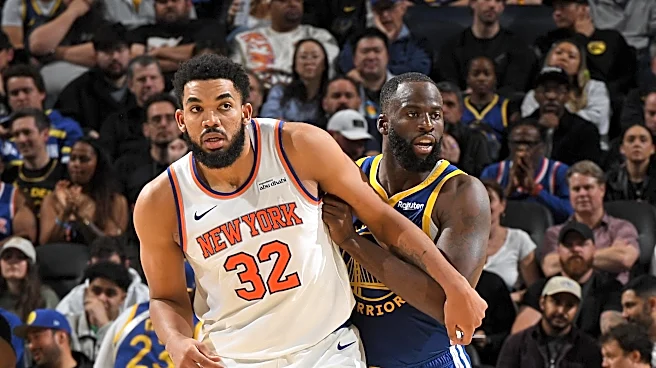
Speaking of all in, there was one big move left to be made. Karl-Anthony Towns is a CAA client, someone that Knicks brass has been eyeing up for years as Minnesota gravitated towards No. 1 overall pick Anthony Edwards as its franchise face. The tires had long been kicked for a move, but nobody expected it to come days before training camp started in late September. For everything they meant to the franchise and fans, Randle and DiVincenzo were gone. The Big Bodega was in.
The Knicks were all in. While Brunson had taken a massive pay cut to gain flexibility, the team now had two players on $200 million contracts and another two who would be on $150 million deals to go along with two others making over $15 million per year. They built their roster to beat the defending champion Celtics, but those Celtics thrashed them four times in the regular season. The starters looked clunky all season, the offense never felt dominant, and the defense wasn’t able to be elite with two bad defenders. Going into the playoffs, there was real concern.
Then, for a while, it went away. A gritty, six-game series win over the Pistons and an unbelievable upset over the Celtics had fans dreaming of the team’s first NBA Finals trip of the 2000s. All that stood in the way was a Pacers team they knew they should’ve beat the year before. What could go wrong?
It turns out, everything. Rose built the team to conquer the Celtics, but they were not prepared for the run-and-gun Pacers, who ran them out of the gym in a six-game series that was over much earlier than it seems. While the Knicks reached their first Eastern Conference Finals in 25 years, the season felt underwhelming.
And so, we reached the second major inflection point. Serious flaws with this roster were presented, and many felt like a big change might be necessary to shake things up. There was also the case of Tom Thibodeau, to whom the franchise was indebted after helping return them to relevance. But his issues were abundant. The starters were gassed, his scheme wasn’t modern on either end of the floor, and the locker room was split on him.
It was a tough decision, but Rose and Dolan decided to fire Thibodeau just one year after giving him an extension. To replace him, the front office went on a lengthy coaching search that briefly made the team a laughing stock, but they settled on Mike Brown, an offensive coach who would maximize this team’s offensive potential.
The roster stayed mostly intact, even when the Bucks came calling after Giannis Antetokounmpo made it clear to their brass that he wanted to be a Knick. There wasn’t much the Knicks could offer, but the fact that those talks didn’t get serious implies that they weren’t willing to make the move at all costs.
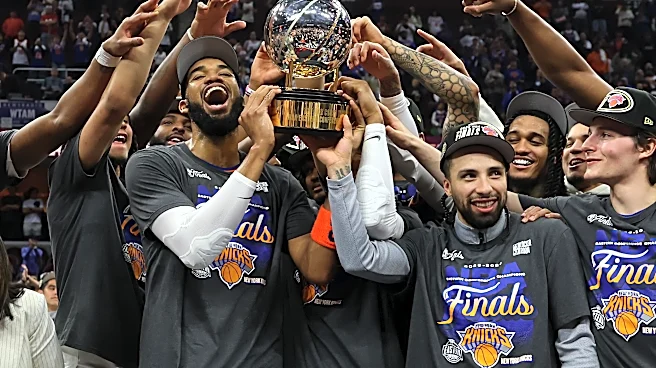
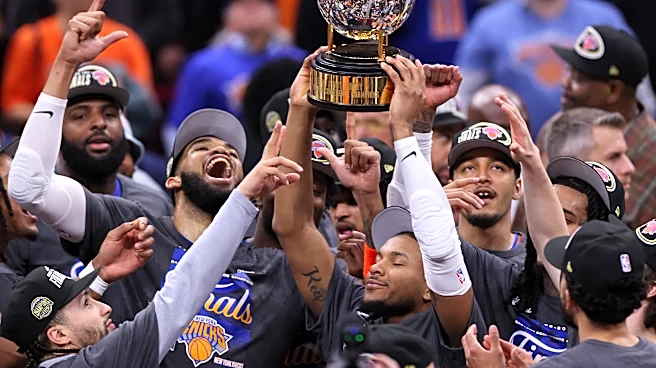
It’s been a rocky season. The Knicks have looked unbeatable one day and hard to watch the next, but they’ve found their stride at the right time. 11 consecutive wins in the postseason for the team’s longest winning streak, regardless of time of season, in 13 years. Sweeping their way to the NBA Finals against the team led by the man you almost acquired via trade four years ago. Finally reaching the place that seemed unattainable six years ago.
The journey has been exhausting. Dealing with big market expectations has been a chore for every decision-maker for every New York franchise for decades, but the Knicks were a different beast. Rose was considered a savior for several years, but as the Knicks stagnated a tier beneath the true contenders, he traded fan favorites and future flexibility for win-now pieces.
He faced multiple serious inflection points. He had to decide whether he was going to commit to prolonged rebuild or trying to turn things around fast. When the 2021 Knicks’ bubble burst, he had to decide whether it was worth it to continue trying to win or to retool around the young guys. He had to decide whether it would be wise to spend the team’s assets on a star guard in the trade market. He had to decide whether to fire Thibodeau or retool the roster after last season’s disappointing finish.
He had to make bold moves. Signing Brunson to a nine-figure contract was widely criticized by the NBA community. He made all in move after all in move to raise the team’s ceiling high enough to compete for a championship. He fired the most accomplished head coach the franchise had seen this century after the team’s best season in 25 years.
He’s not without his mistakes. The one lottery pick he’s ever had was spent on a permanent role player. He’s traded picks that became Ajay Mitchell, Tre Johnson, and Jalen Duren. He’s passed on the likes of Herb Jones, Jalen Williams, and Tyrese Haliburton. He signed Evan Fournier to a massive contract in an overreaction to 2020-21.
But perhaps his greatest strength is his patience. It’s extremely easy to overreact to things. If he had listened to the fanbase, the team would’ve built around a core of Quickley, Toppin, Reddish, and Barrett and been doomed to 35 wins forever. He knew not to trade Randle at an all-time low in 2022. He didn’t pull the trigger on enticing stars over the years just to finally accomplish a decade-long mission goal. He gave this roster patience, not disbanding them after one year or giving up on them when things looked extremely bleak at the deadline.
Leon Rose’s vision has culminated in things beyond what any fan could’ve imagined in 2020. He’s done this with one singular inherited player still on the roster, one lottery pick, and a whole lot of creativity. Consider where he’s built this roster from:
- Jalen Brunson: signed in free agency on a four-year, $104 million deal that was widely considered an overpay. Extended on a 4/156.
- Mikal Bridges: acquired via trade from Brooklyn for five first-round picks, Bojan Bogdanovic, and filler salary (thanks, Brock Aller!). Extended on a 4/150.
- Josh Hart: acquired via trade from Portland for Cam Reddish and the No. 23 pick in the 2023 NBA Draft (Kris Murray). Extended on a 4/80.
- OG Anunoby: acquired via trade from Toronto for RJ Barrett and Immanuel Quickley. Extended on a 5/212.
- Karl-Anthony Towns: acquired via trade from Minnesota for Julius Randle and Donte DiVincenzo.
- Jose Alvarado: acquired via trade from New Orleans for Dalen Terry and two seconds.
- Deuce McBride: drafted No. 36 overall in the 2021 NBA Draft. Extended on a 3/13.
- Jordan Clarkson: signed in free agency on a veteran minimum in July 2025.
- Landry Shamet: signed in free agency on a veteran minimum in September 2024.
- Mitchell Robinson: inherited from Steve Mills.
- Mo Diawara: drafted No. 51 overall in the 2025 NBA Draft.
- Jeremy Sochan: signed in the buyout market in February 2026.
- Tyler Kolek: drafted No. 38 overall in the 2024 NBA Draft.
- Pacome Dadiet: drafted No. 25 overall in the 2024 NBA Draft.
- Ariel Hukporti: drafted No. 58 overall in the 2024 NBA Draft.
In the end, Rose has built something that has proven to be an outlier in the NBA. The Knicks weren’t built through a massive free agency haul like superteams of old. They didn’t rely on tanking for a half-decade and getting lucky in the lottery over and over again. They built their team meticulously in an innovative way, assembling a group of players who were cast off for deficiencies, imperfections, and players who were misvalued in one way or another.
Regardless of how the NBA Finals go, the Leon Rose era has been a resounding success. He’s completed one of the great turnarounds in NBA history, with as little ammunition as any executive in league history.