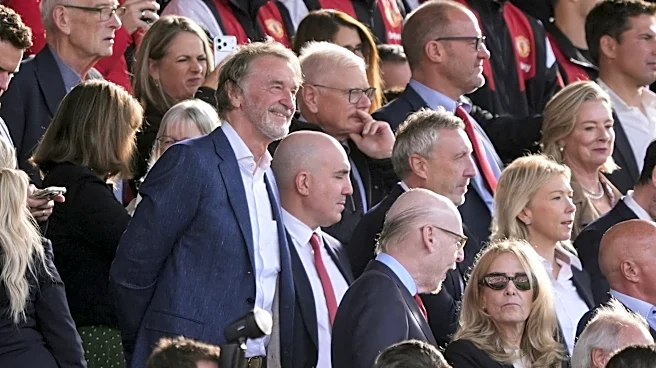






Most observers were sympathetic to the job the INEOS Group faced when they first entered the building. Years of mismanagement meant there wouldn’t be a quick fix, and most fans accepted that. In their first transfer window, there was a sense that they were not looking to pay over the odds for any player.
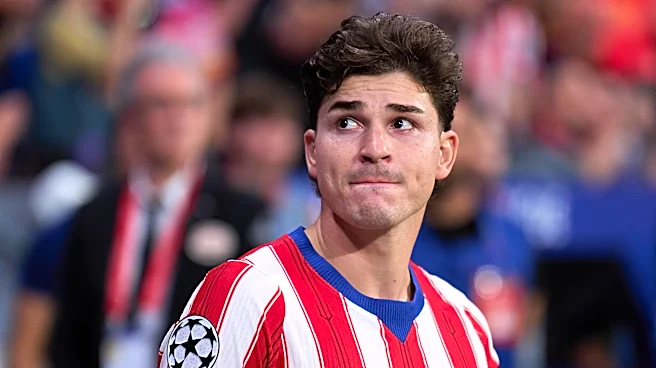
At the time, when anything around £50m was the going rate for most Premier League players, Leny Yoro was the only player of five who was bought for ‘big’ money. The logic with the Frenchman was that
he was young enough to fetch a similar fee if the move didn’t work out, as they were buying serious potential.
The others were acquired for what seemed a reasonable fee in an inflated market. Of course, if any of them contributed significantly, they’d be considered a bargain. One can understand why such a strategy was attractive to the new administrators at the club. Years of Galactico-style spending in the early Woodward years had not worked, nor had paying massive wages to superstar players who could contribute to some degree in the short term but whose best days were behind them in the later years.
Unfortunately for INEOS, not a single signing from that window has been a success. Ayden Heaven and Patrick Dorgu joined in the January window that season; one could make a case for Heaven as he cost £1 million in transfer fees and had shown promise before the start of this season. A similar case to Heaven’s can be made for Senne Lammens, who, despite a shaky start to this season, has the potential to become the real thing.
It’s important to remind ourselves that last season’s PFA Player of the Season represents Manchester United, and even he has looked awful this season, so the younger players who have actually shown promise could perhaps be given a break. Regardless, Lammens and Heaven are the exceptions as far as this strategy’s concerned.
The likes of Matheus Cunha, Bryan Mbeumo, Matthias De Ligt, and Noussair Mazraoui fall under a separate category. These players fall under the more experienced bracket, clearly demanded by the managers at the time. These players have had patches of good form but haven’t blown us away, as was expected.
Based on the four windows, this manager-centric group has done better than the INEOS-centric group without being overly impressive. Moreover, the players who survived the pre-INEOS era, like Bruno Fernandes, Harry Maguire, Casemiro, Luke Shaw, Lisandro Martinez, Amad Diallo and Diogo Dalot, were more influential as far as results go in the last two seasons, and no one thought they were the answer either.
Despite all that, the group was strong enough to finish in third place in the league with 71 points. As Michael Carrick was only confirmed to take over as permanent boss towards the end of last season, it was always going to be a more INEOS-centric approach to this window.
Anyone with common sense would’ve seen this summer’s window as an opportunity to accelerate progress by adding serious talent to a mixed bunch. Not to mention, the person put in charge was still learning his trade and needed all the help he could get, but instead of shelving the strategy from the unsuccessful first window, they decided to go back to it; almost as if they knew better and it was everything around them that was wrong.
One could have felt a bit of sympathy at the start, but doing it again stinks of arrogance. They were fortunate enough that Michael Carrick was available to calm things down at the start of the year, but they didn’t seem to have acknowledged it in the summer. As things stand, it doesn’t look like Omar Berrada, Jason Wilcox, and Christopher Vivell are going anywhere, but there’s little reason to trust their insight going forward.