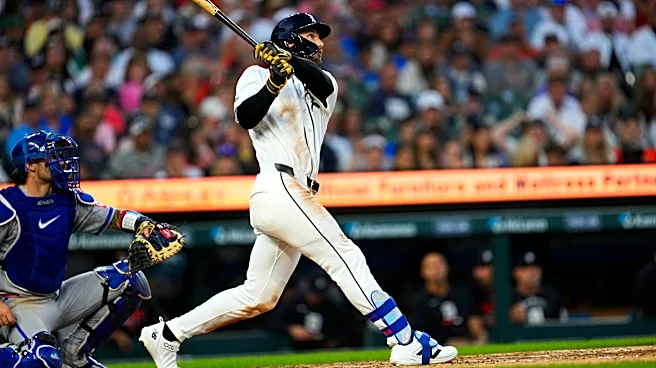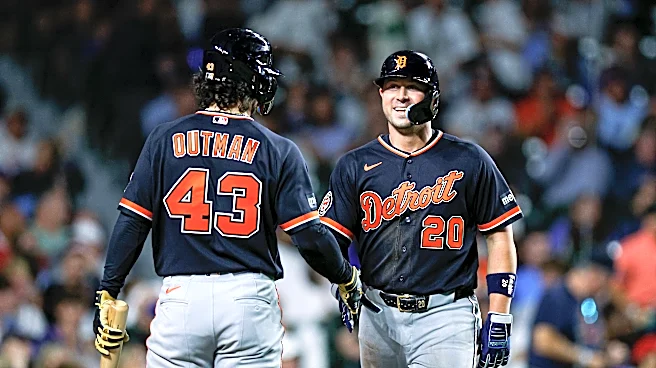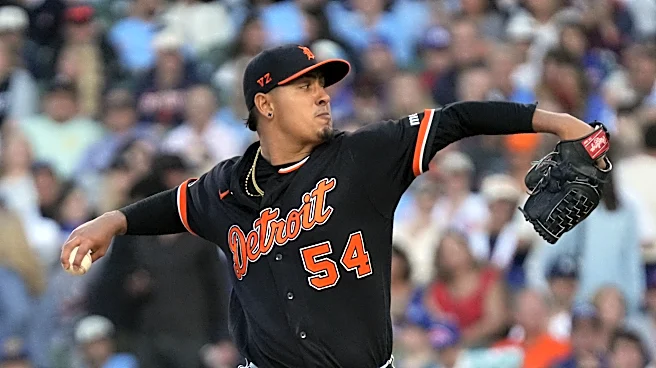






The Detroit Tigers are doing their very best to get back into the playoff picture. After a 22-14 run from June 1 to the All-Star break, they’ve won five of seven, including a 4-2 road trip, to start the unofficial second half of the season. As fun as it’s been, their surge has been muted by the fact that several other American League teams ahead of them, most notably the Boston Red Sox, are also streaking, and the division leading White Sox and Guardians are holding firm. After all this, the Tigers are still
fourth in the AL Central, let alone the wild card race. Currently they’re four games back for the last wild card, with just the 11th best record in the American League. Even now there are three possible paths the club may follow at the August 3 trade deadline, and how they play over the last nine games heading into it could still completely flip their approach. There’s just no way around the fact that they likely need to keep up their recent pace just to grab a wild card berth.
To be clear, I still believe the Tigers need to trade Tarik Skubal for a major league starter and a good hitting prospect if possible. Their position just isn’t good enough to bet the house on, and a trade return for Skubal could keep them in good position to take cracks at the postsason for years to come. If they keep him and win the World Series, you can circle back to mock me. I’ll be way too busy celebrating. However, the Tigers themselves have held out on trade talks so far, and so one assumes that as they keep winning, the odds of keeping Skubal continue to increase. However, their payroll situation makes that posture incredibly tricky to navigate as well. Whatever happens over the next 10 days, the Tigers face a pretty difficult deadline no matter how they approach it. Nothing has really clarified at this point. Depending on how their last nine games go heading into the deadline, they still may decide to sell. They may want to buy, although it’s hard to see how they manage that. Some combination of both is probably the best path forward.
Buy, if you can
If the Tigers are going to hold onto Skubal, they might as well make it count and address needs to really give them a good chance at a postseason run. The problem is that the Tigers have already boxed themselves in with a luxury tax payroll near or slightly over the threshold. This has huge implications for what they can do at the deadline assuming they keep Skubal, leaving them no wiggle room to work with.
The Tigers luxury tax payroll is currently at $244.5 million for 2026 per Spotrac, which is $500,000 over the threshold. FanGraphs Roster Resource has their luxury tax estimate for the Tigers just over $240M. That would give them almost four million in wiggle room before having to pay the penalty. Meanwhile, Cot’s has them just shy of $2M over the threshold already. I can’t tell you who is correct, and in both cases they’re estimates, so we’re already dealing with a bit of uncertainly there. What’s clear is that they can’t really add anyone without going over, and doing so would create a cascade of issues downstream.
The compensation for not trading Skubal, and possibly, though less likely now, Casey Mize, and then extending them qualifying offers this offseason instead, should be a pick right after the main first round. If they could collect picks for both Skubal and Mize declining the qualifying offer, along with holding a competitive balance A round selection, assuming those aren’t erased in the next CBA, the Tigers could have four picks in the top 40 of the 2027 draft. That would also give them a pretty enormous bonus pool for a team that will presumably be picking in the middle to the end of the regular first round. Amateur scouting director Mark Conner could have an absolute field day in the draft under those conditions, restocking a farm system that is still good, but far from one of the best in the game with Kevin McGonigle graduated.
However, should the Tigers end the season over the luxury tax threshold, those extra picks would be pushed back significantly, which would also cut down the bonus pool for the 2027 draft quite a lot. That would be at least a minor disaster on top of already passing up the potential trade returns for Skubal at the deadline.
If you didn’t really get why the Tigers’ front office were roasted in the spring over their handling of Tarik Skubal’s arbitration dispute, hopefully you see why this matters now. Losing that case took them right up to the threshold. It doesn’t help that, presumably thinking they’d win that argument with Boras, they went out and spent a small fortune on Framber Valdez. This at least was bold and they needed starting pitching after Reese Olson went down. Less understandable is the front office’s inability to acquire and develop their own relief talent. The Tigers spent $27.5 million on three free agent relievers this offseason because they didn’t really have much of a choice. None of those deals were terrible on their own, but if you’re dropping that much coin on free agent relief help, you should be getting a real killer closer type in the mix instead of three guys who are roughly average relievers at most.
So they obviously also need to trade for a good reliever, at a minimum. Betting on Jackson Jobe’s return alone as an addition to the bullpen would not be very wise as he’s returning from Tommy John surgery and is also still very young and inexperienced in the first place. But they can’t go get anyone without sacrificing their 2027 draft standing in the process.
One way of doing this without hurting the team might be to try and trade Matt Vierling or Zach McKinstry. The two utility players are past their modest peak seasons, seemingly, and they have been used more than is advisable as both have struggled mightily at the plate. McKinstry’s luxury tax hit is $4.2 million, while Vierling’s is $3.26 million. Moving either one’s pro-rated salary for the rest of the season would give them a little more room to operate, though the Tigers aren’t going to get anything in return and will be hard pressed to even give them away right now. This probably isn’t a realistic option.
Trading Jake Rogers would seeningly get them under the limit as well based on the Spotrac estimate, and the Tigers could perhaps get a decent prospect for a high end defensive catcher from a contender, no matter how weak the bat. Of course, that leads to the Tigers relying on Eduardo Valencia or Triple-A veteran Carlos Pérez as Dillon Dingler’s backup. That might work, as the Tigers have tried to keep Dingler from being too overworked this season and he can perhaps handle even more of the catching workload the rest of the way. Still, changing catchers at the deadline is a good way to throw off your pitching staff’s equilibrium, undercutting the whole purpose of trading Rogers in the first place.
Perhaps the best option if the Tigers decide to keep Skubal and go get some help for the bullpen at a minimum, is to shop Jack Flaherty. The right-hander’s erratic bouts of underperformance make him expendable to a degree, and his $17,5 million hit to their luxury tax payroll calculation would open up a lot more possibilities if they deal him. He’s not going to draw a good trade package as he did in 2024, but Flaherty does have a 4.59 ERA/4.10 FIP going this season, and holds a stellar 2.67 ERA/3.25 FIP since the beginning of June. There will be a contender out there that needs starting pitching, and if they don’t have to give up too much in terms of prospects, that may make Flaherty fairly appealing. Of course, he may well have a partial no-trade clause that allows him to veto trades to a few teams as well, further complicating matters. And then you have to replace him in the rotation, which is not so simple with Mize still dealing with the adductor issue.
Still interested in running a major league team? Nothing here is going to be straightforward and easy.
Another option might be trading Tyler Holton. Lefty relievers are sometimes worth their weight in gold at the deadline. Remember Al Avila getting Reese Olson for two months of a completely washed Daniel Norris? Good times. The Tigers have Drew Sommers and Enmanuel de Jesus, but neither of them fills one with a ton of confidence. The real x factor here is Brant Hurter. If the big lefty is close to a rehab assignment and his issues are behind him, the Tigers could trade a flexible veteran in Holton, potentially get a modest, upper level pitching prospect back with options, and free themselves of enough of Holton’s $1.58 million to slip under the luxury tax threshold. Again, that’s only assuming that Spotrac is correct and they’re actually a little over the line right now. And that still doesn’t help them in terms of going and getting anyone to help. Instead you’re trading a veteran reliever and hoping to rely on Hurter and one of Sommers and de Jesus. Not real appealing options either.
Hopefully this illustrates just how pot committed the Tigers already are this season, and how difficult a situation they’re in. They really can’t buy without selling something as well. Unless they move someone significant, trading for a player they need puts them in a real bind in regard to luxury tax penalties and starts mortgaging their future on top of the big bets they already placed in the offseason. They really can’t just go trade for a player they want and stay all in without really hurting themselves in the 2027 draft, and that’s all on top of passing on a potential Skubal trade package as well. And even then if they stand pat, they may still have to find a way to trim payroll even to get the more highly placed compensation pick that would make missing out on a Skubal trade package more palatable.
Trade Tarik Skubal and try to win anyway
This still seems like the right move for the Tigers in so many ways. Yes it hurts their already poor chances of reaching the playoffs, but it also builds for the future while opening up more options to acquire talent at the deadline by removing the luxury tax threshold issues as a factor, while boosting the farm system at the same time. The Tigers are still five games under .500 and four games back in the wild card hunt. They’ve actually lost a half game since the All-Star break because the Red Sox and others refuse to lose either. Is this season really worth passing up the opportunity to land a major league starter with multiple years of control remaining, along with a top 100 prospect?
If they can’t get that much then they might as well just try and sort out the luxury tax issue another way, keep Skubal, and take their chances.
Imagine a commonly floated scenario where the Dodgers send the Tigers a right-handed starter in either Emmet Sheehan or River Ryan, and either rising right-handed hitting outfield prospect Mike Sirota, or a fast-rising right-handed pitching prospect in Christian Zazueta, in exchange for Skubal. Sheehan had a pretty good year in 2025 but has been bitten by the home run ball this year. Still, he punches out 26.4 percent of hitters with an average walk rate. He feels like a guy that Chris Fetter and Robin Lund could get back on track. Ryan has big-time stuff, but he’s been plagued with minor injuries this season as he tries to re-establish himself post-Tommy John. This is just an example, but a move like this would get the Tigers a controllable arm and a good prospect, while removing the luxury tax issue, opening up other options. Sure, you lose a crucial weapon in the postseason if you make it there in the first place, but again there are just so many risks associated with keeping Skubal.
With the payroll flexibility opened up, the Tigers could then pursue a relief upgrade and a decent starting pitcher to eat innings. Or they could go all in on relief help, and simply add Jackson Jobe back to the rotation when he’s fully rehabbed in a few weeks, and then just take their chances knowing they are better for 2027 and beyond in the process.
The turnaround time to perform multiple deals on the last day of the deadline would make this one heck of a task, but swinging multiple deals in the final hour successfully, is just part of being a good GM or president.
If they keep Skubal, it’s pretty hard to do anything else without really hurting themselves in the 2027 draft, on top of not adding anything to the farm from a Skubal trade. Risking even more than they already have on the hope that this is actually their year to win the World Series, just seems rather crazy.
Sell
Of course, this is the simplest posture. Should the Tigers fall back down the standings during the nine games remaining until the deadline, it’s time to listen on every player not nailed down if you can get prospects back in a deal. That includes Skubal, and Mize if he can pitch, but also Jack Flaherty, Kenley Jansen, Kyle Finnegan, Gleyber Torres, the works. Even Framber Valdez if you can move most of the contract and get a quality prospect back, would be open for bidding. Anyone not under multi-year team control who has value to any contender goes up for sale.
If the Tigers decide this just isn’t likely enough to work out in 2026, then it’s just time to play the kids, cut payroll way down to save for 2027-2028, and keep working to build around Kevin McGonigle, Dillon Dingler, Riley Greene, Troy Melton, Jobe, and Keider Montero.
The situation is very difficult
As you can see, the Tigers front office have themselves in quite a pickle over the next ten days. They can’t really buy without throwing all caution and future concerns to the wind. Even as things stand, they may need to find a way to trim payroll a bit even if they decide to stand pat and do little at the deadline. Adding relief talent and an upgrade in the outfield, things they could really use, feels pretty foolish unless they balance it with trading Tarik Skubal somehow, or at least clear enough in payroll to avoid the draft pick penalties.
The team is playing great ball but they dug themselves a hole so deep that there are few historical comparisons with any team that ended up making a playoff run. To hold on and just hope for the best is malpractice in this situation. Based on their track record, it’s hard to have confidence that the Tigers front office can navigate all this successfully. It’s also hard to have confidence that the Tigers can somehow manage to win the World Series with a bullpen this mediocre, while the costs for fully staying the course could be enormous in the long-term.
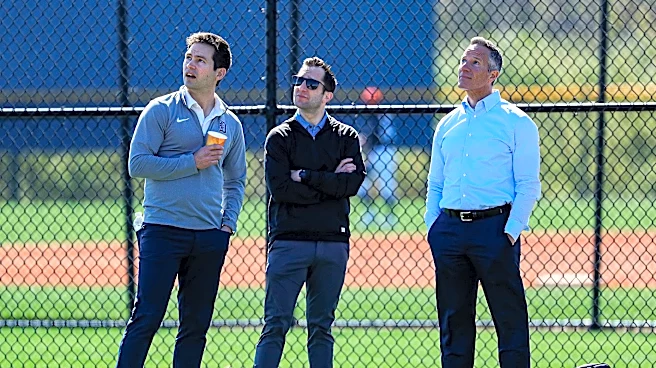
I don’t envy Scott Harris and Jeff Greenberg for the decisions they’re going to have to make by the August 3 deadline. Of course, they got themselves into this situation. This needle may be impossible to thread, but it’s going to be fascinating, though potentially painful, to watch them try. For the Tigers players, all they can do is keep winning as they have for almost two months now. The rest of a complicated situation is out of their control.