
The Mark Williams injury that was announced this past Thursday was not news anyone wanted to hear. He has been healthy all season, so learning he will miss two to three weeks with a left foot injury lands with a bit of frustration. Timing does add an interesting wrinkle, however. His production had begun to taper off recently, so this stretch arrives at a moment where the team can allow him to recover while also expanding the role of rookie Khaman Maluach.
If that is part of the plan, the calendar
cooperates. The Suns sit in a position where the Play-In tournament feels highly likely, and the postseason still sits within reach. Basketball Reference currently gives Phoenix a 34.9% chance to finish sixth or higher. That kind of positioning means meaningful games are coming, and those games provide invaluable experience for the young core.
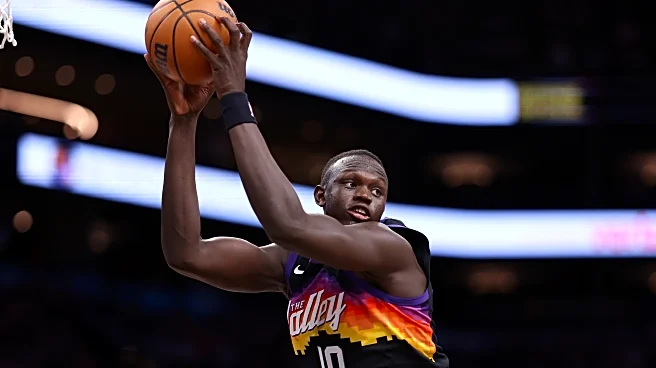
With Williams sidelined, Maluach has begun to see the floor more often. He’s played 32 minutes over two games since the announcement that Williams will miss some time, slotting in as the backup to sophomore big Oso Ighodaro. The minutes are real, and the situations matter. These are not empty possessions in a blowout. These are reps in games that carry weight in the standings, which makes them the next step in his development.
The process has looked a little clunky at times. He’s had 6 turnovers and fumbled a couple of opportunities in the paint. That is part of the experience for a 19-year-old center learning the speed and physicality of the NBA. Players at that position rarely step into meaningful minutes and immediately dominate. Growth takes time, repetition, and film study. Because of that, this stretch cannot be measured cleanly with a simple stat line.
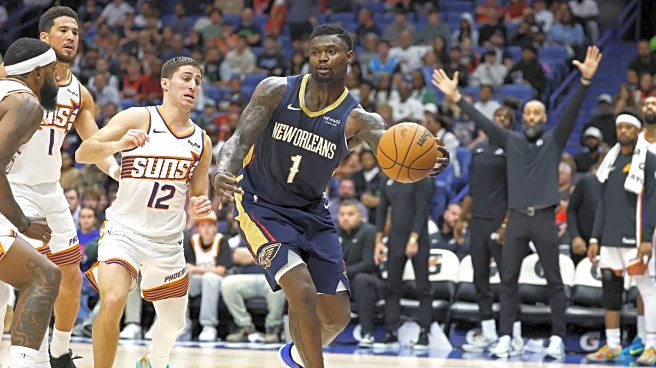
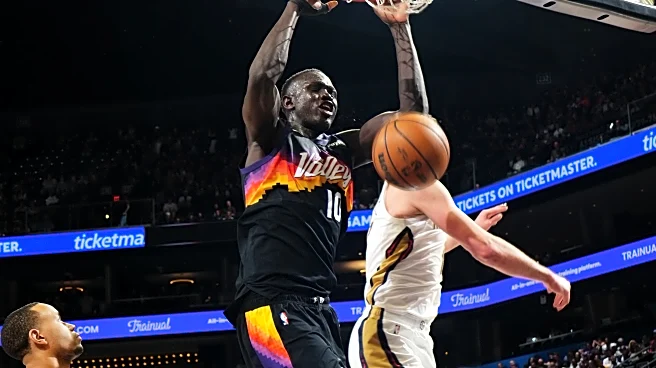
There were encouraging signs against the Pelicans. Knowing this might be the roughest version of Maluach we will ever see, he still finished the night with five blocks. The timing was impressive, especially against a New Orleans team that thrives on attacking the paint.
That defensive presence is the reason Phoenix selected him with the 10th pick in the 2025 NBA draft. His length is striking, and his size stands out the moment he steps on the floor. The scouting report labeled him as raw, although the physical tools are undeniable. When he runs the court, when he stretches those arms toward the rim or across a passing lane, you begin to understand the scale of the defender he can become.
The point total sat at four against New Orleans in 20 minutes played, coming on 2-of-3 shooting. Nothing alarming, although it is something worth noting. Why? Because of the old saying that a “center cannot pass the ball to himself”.
It has been quite a while since Phoenix has had a true interior presence with this kind of size. Mark Williams brings plenty to the table, and his length is impressive. But I would not describe him as overwhelming physically. Oso Ighodaro brings strength and physicality, although he does not possess the same reach. Khaman Maluach arrives with both traits. At 7’1”, 250 pounds, with a 7’8” foot 8 wingspan, he carries a frame Phoenix has not featured since the departure of Deandre Ayton.
There is another difference that stands out immediately when watching Maluach move across the floor. The motor. That is the first thing that jumps off the screen. Over the past few games, he has played with energy that never seems to fade. He sprints the floor on fast breaks. He runs from rim to rim. There is no lingering frustration after a missed rebound. No slow jog back on defense. The play ends on one end, and he is already moving toward the other.
That kind of effort changes the feel of the floor.
The next challenge becomes figuring out how he fits within the offense. Phoenix does not run an inside-out attack. The Suns currently rank sixth in the NBA in three-point rate. 45.4% of their attempts come from beyond the arc. Guards penetrate, kick the ball out, and the offense spreads the floor looking for space. Interior touches are rare.
Think about it. When was the last time you saw a big man receive a post-entry pass in this system? When was the last time the offense flowed through a consistent pick-and-roll that finished with a big catching the ball at the rim? That reality creates the next step in Maluach’s development.
If he is going to grow as an interior scorer, he has to touch the ball. And the passes need to arrive on time and in the right spot. Over the past few games, there were multiple possessions where Maluach had an open position near the rim. Other times, he was sprinting into open space in transition. The ball never reached him.
Part of that might be familiarity. This roster has not played with a center who occupies that type of space within the offense. Players fall back into what feels natural. The ball swings around the perimeter. The open shooter receives the pass. The shot goes up. Maluach drifts into position to rebound the miss. There is nothing wrong with that approach. A 7’1” center roaming the paint is a very good safety net when the ball does not fall.
But development requires opportunity. Maluach needs chances to catch the ball inside. He needs possessions where he can feel contact, hold position, and finish through traffic. He needs to learn not to bring the ball down once he receives it. He needs to feel defenders leaning on his shoulders and still find a way to score. Those lessons only arrive when the ball reaches his hands. If every possession ends with him sealing a defender and boxing out, the growth on the offensive side slows down.
The other element is the entry pass. That has been an ongoing issue for Phoenix for quite some time, going back to the Deandre Ayton era. Over the years, it felt like Ayton lost some trust from teammates when it came to those passes. There were possessions where he caught the ball and immediately kicked it back out. Other times, he drifted away from contact rather than attacking the rim. Still, the larger point remains. Entry passes to big men from Devin Booker have been inconsistent for a long time. Friday night provided another reminder.
Running pick-and-roll actions and entry pass drills in practice is one thing. Doing it at game speed, with ten bodies moving and twenty thousand eyes watching, is something else entirely. Repetition leads to retention, and the players around Maluach need to give him those repetitions.
This is an early observation during his integration into the rotation. Jordan Ott and the coaching staff are certainly breaking down the film and discussing ways to create a few more touches for him each night. The goal is development, although it also adds another dimension to an offense that leans heavily on the three-point shot.
Winning in the NBA requires variety. You cannot rely on launching threes every night and expect consistent results. The Suns have shown throughout the season that they can score in multiple ways. Since February 1, the numbers show an even stronger lean toward the perimeter. Phoenix owns a 49.3% three point rate during that stretch, which ranks third in the league.
This window without Mark Williams creates an opportunity. Maluach is seeing meaningful minutes, and the offense can explore small adjustments that incorporate his presence near the rim. Those possessions help him learn the rhythm of the league. They also give Phoenix another option within its system.
From a personal standpoint, the most encouraging part is seeing the young players on the floor. Khaman Maluach and Rasheer Fleming are gaining experience, and those minutes are arriving during wins. That matters. The future in Phoenix may be bright. It becomes even brighter if the team starts throwing a few more quality entry passes.