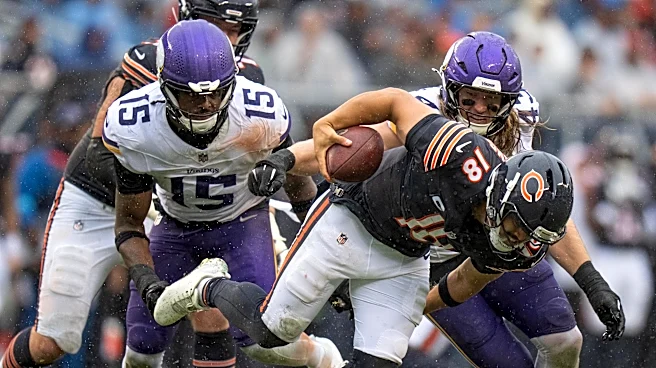



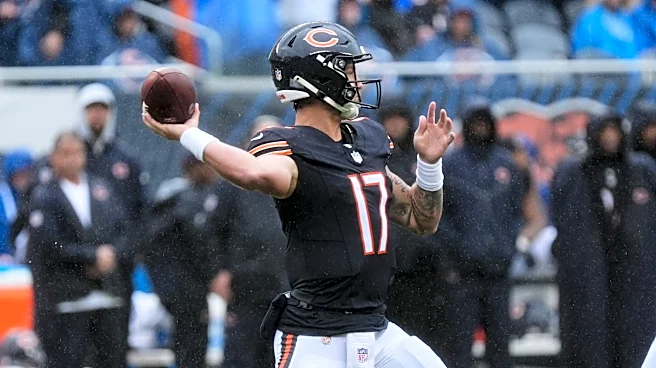
The Bears’ first two games could hardly have looked more different. They scored 59 points and ran all over the Panthers, then scored three points in a rain-soaked loss to the Vikings. The quarterback situation adds another layer of uncertainty, so this preview is tough to write! Caleb Williams has a hamstring injury, Tyson Bagent is in concussion protocol, so Case Keenum took the first-team practice reps on Wednesday. I’m going to assume Keenum is starting, so I won’t talk much about quarterback in this one.
The Bears ran for 281 yards against the Eagles last November, and Ben Johnson has built another offense that can make life very difficult if the run game gets going. Fangio and his defense will remember that afternoon.
Pass Game
Williams is special. He’s not consistently good, but his highs are special. I know that is hardly a groundbreaking statement, but it matters when evaluating the Bears because he can make a well-defended play look badly defended in about two seconds. He is outstanding on the move, keeps looking downfield while escaping pressure and has the arm to find a receiver long after the original concept should have ended. The Panthers game showed the frightening version of this offense.
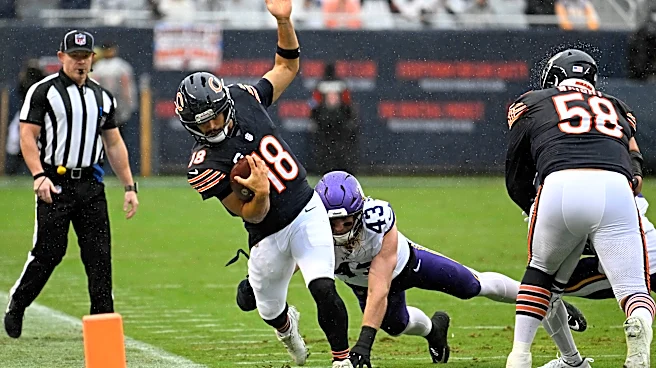
The Vikings game showed the other side. Flores was causing problems before Williams got hurt. Minnesota constantly threatened pressure, disrupted the timing of the passing game, and forced the Bears into uncomfortable downs. Williams can evade a free rusher better than almost anyone, but that does not mean the offense can live indefinitely with defenders arriving before its intermediate routes develop. If he plays on Monday, the hamstring also raises an obvious question about how freely he can escape. If he does not, the Eagles are facing a fundamentally different kind of quarterback.
Ben Johnson has said he does not anticipate dramatically changing the game plan based on the starter. I believe him in terms of the structure of the offense, but no coach can replace Williams’ movement and creativity. Keenum is experienced and should be able to run the system, but the Eagles will be much less concerned about him turning a broken play into a 25-yard gain. Bagent is more willing to take chances and push the ball if he clears protocol, although that can create opportunities for the defense too.
What surprised me while watching the first two games was how straightforward the Bears’ starting point has been. I expected more of the varied, puller-heavy run game associated with Johnson’s time in Detroit and perhaps more constant motion. Instead, the Bears have repeatedly lined up under center, run outside zone, and built passes from that same presentation. The lack of variety in the core run concept should not be confused with a lack of imagination. Johnson changes the formations, personnel, and accompanying routes so that the defense keeps seeing familiar movement with a different answer attached.
One of my favorite examples has a receiver moving through the C-gap. It looks like the sort of insert action that could bring an extra blocker into the run fit. Instead, the receiver continues upfield and becomes part of a three-level stretch in the passing game. A defender trained by the previous runs to react to movement through that gap now has to decide whether to fit the run, pick up the route, or pass it to someone else. Johnson makes you cover every blade of grass, and he is particularly good at creating that moment of indecision.
This Cole Kmet leak is beautiful, too. The Bears show outside zone to the left while bringing a tight end across the formation to block back the other way. They use that movement in their actual running game, which is why the fake is convincing. This time, Cole Kmet slips out into space. It is easy to describe as a play-action pass; the impressive part is how closely the pass resembles a run the defense has already had to respect. One false step from a linebacker or safety is enough. This is Ben Johnson’s secret. The run and pass game are as well connected as anyone’s offense.
The receiving group gives Johnson several ways to finish those designs. Rome Odunze can win downfield, and Luther Burden III can turn a quick completion into more. Kmet and Colston Loveland threaten the middle of the field, which is exactly where a defense can become vulnerable if its second-level defenders are responding to outside zone. Kalif Raymond has been heavily involved, which is a little surprising, given he hasn’t had much success.
The Bears also want more than quick throws. Their intermediate routes often develop quite deep, and they will send receivers vertically to create space underneath and across the field. I would be wary of playing passively and assuming a backup quarterback cannot hurt the Eagles. Give Johnson enough time, and he will find a way to get somebody open. Conversely, if the Eagles can make the quarterback throw before the deeper over or vertical route develops, the offense becomes far less threatening. That was a significant part of the Vikings’ success.
This brings us to protection, which I think is one of the most interesting parts of the matchup. The Bears’ line can move people in the running game. Darnell Wright is an outstanding right tackle, Joe Thuney and Jonah Jackson give them quality at guard, and they showed against the Panthers how well they can work together on zone runs. But I thought center Garrett Bradbury looked vulnerable when the Panthers and Vikings stressed him with stunts and twists. The Vikings, in particular, made the Bears communicate against changing pressure looks, and there were snaps where the protection never looked comfortable.
Fangio is not Flores. I can’t imagine the Eagles spending the entire night showing six defenders at the line and sending pressure at Minnesota’s rate. I do think this is a good week to mix in stunts and simulated pressures, though. Make Bradbury identify the rush, make the line pass defenders off, and see whether a four-man rush can create a problem after the Bears have accounted for the wrong threats. That fits Fangio far better than asking him to abandon his normal approach and blitz constantly.
The Eagles should also watch who the Bears leave in protection. Against the Vikings, extra blockers didn’t always solve the problem. A full slide could leave a tight end one-on-one with an edge rusher, and Dallas Turner took advantage on the final play. The Bears can have seven players assigned to protection and still produce an unfavorable matchup at exactly the point of attack. If the Eagles can identify those calls, they can pressure the quarterback without exposing the secondary by sending everyone.
I expect Johnson to have answers, particularly if Keenum starts. Screens, misdirection, and easy completions would make sense against a defense looking to attack the protection. The fake receiver screen that comes back to the running back is a good example. The Bears have enough talent at running back, receiver, and tight end to gain yards without asking the quarterback to hold the ball. And if the Eagles begin flying downhill to stop those plays, I would expect Johnson to have a shot or a trick play waiting. He won’t go down without a fight, whoever is at QB.
Run Game
The numbers back up what is obvious when watching the Bears. This offense revolves around outside zone. Through two games, 83% of their runs have been zone concepts, with outside zone making up roughly 71%. Those are insane figures. This is not Johnson running every concept he used with the Lions. The Bears have chosen something they execute well and are hammering it from different formations. 71% is significantly above anyone else in the NFL. Only 3 teams run outside zone above 50%!
Wright is central to it. He can displace defenders at right tackle, and the Bears are comfortable running behind him repeatedly. The rest of the line works together well when it can stretch the front, stay connected on double-teams, and climb to the linebackers. The tight ends are more than decorations in these formations (I’m very jealous). Kmet is an important blocker, while Loveland also contributes to the run game. That matters because the Bears can put multiple tight ends on the field and still threaten defenses with them in the passing game.
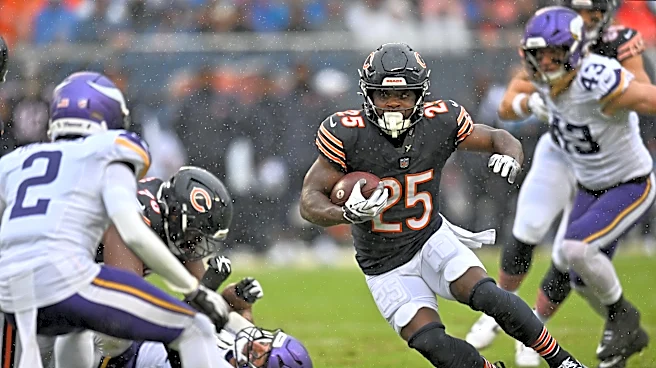
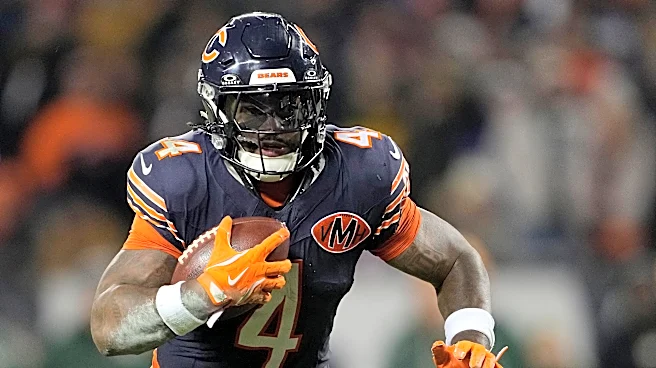
The running backs complement one another. D’Andre Swift is dangerous when he can press the front side, make the defense run horizontally, and accelerate through the lane that appears. Kyle Monangai is more direct and decisive inside. The Panthers could not consistently handle either player in Week 1. Swift gained 124 yards and Monangai added 100 as the Bears finished with 291 rushing yards.
Outside zone also creates cutbacks, and the Bears use them well. A defender who chases the apparent direction of the play too aggressively can open the lane behind him. Johnson adds another variation in the clip below. The blocking suggests outside zone to the left, but the back takes the ball back in the opposite direction. I’m going to call it outside zone counter, but I believe windback is the Shanahan term! It gives the defense another reason to hesitate before committing to the first movement it sees.
That hesitation is the point of the whole offense. If the Eagles are passive, the Bears can keep stretching them, cutting behind the flow and staying ahead of the sticks. If the Eagles overreact to the outside zone, Johnson has the windback runs, leaks, and play-action concepts ready to punish them. It is a difficult balance, and last year’s meeting showed how ugly it can get when the Bears dictate that balance to Fangio’s defense.
The Vikings found an effective answer. Flores regularly crowded the line with five or more defenders and was willing to bring a safety into the box, leaving one deep. Their front played outside zone with excellent discipline. The Bears were much less efficient on early downs, which gave Flores the third-and-long situations he wanted for his pressure packages. Minnesota’s approach was aggressive, but it was very well done. The run defense created the passing downs, and the pressure exploited them. The Bears made matters worse with penalties, drops, and a fumble in the rain, but the Vikings had already made the game uncomfortable before those mistakes decided it.
This is a great example. The Bears want to get heavy and go to 13 personnel. The Vikings answer with a seven-man (!) front and a safety in the box. It worked.
The Eagles have had their own problems against the run recently, so I’m not comfortable saying they will simply copy Minnesota’s success. They struggled against outside zone this past week. Their defensive linemen have to avoid being moved sideways and giving Swift or Monangai an easy cutback. The linebackers need to read the tight end movement without abandoning their gaps, which was a problem last week. If the Bears are consistently gaining five or six yards before third down, Johnson can call whatever he wants.
I would like Fangio to vary the picture occasionally. Bring a safety down on selected snaps. Change the front when the Bears bring on an extra tight end. Show Bradbury and the quarterback something different before the snap. That does not require a full conversion to Flores’ defense. It requires the Eagles to make the Bears prove their outside zone will work against more than one look. If Williams is unavailable, denying the run game becomes even more important.
Final Thoughts
Caleb Williams not playing is obviously a big deal. He is an extraordinary talent, and his absence would make the Eagles’ job easier. But I think the bigger question for Fangio is whether the Bears can make the game look like last November’s meeting. Johnson embarrassed this defense with the run then, and he’s shown over two weeks that he is perfectly willing to keep calling outside zone when opponents cannot stop it.
The Vikings proved the Bears can be knocked off schedule, but they did it with a defensive style the Eagles do not normally play. I want Fangio to learn from the idea, not copy every call. If the Eagles can force repeated third-and-long situations, I like their chances regardless of the quarterback. If Swift and Monangai are finding cutbacks while the play-action game starts pulling defenders out of position, this could be a difficult night, even without Caleb Williams. It’s rarely easy on the road on a Monday night.
Thank you for reading! I’d love to hear your thoughts, so feel free to comment below and ask any questions. If you would like to support me further, please check out my Patreon here!