





Intense playoff basketball calls for heightened scrutiny on the margins.
Every rotation matters. The margins are small enough that each small schematic shift can not only swing games, but also define entire seasons.
For that reason, coaching stands out this time of year. The good coaches are usually the ones who make it to this stage, and a team rarely makes a deep playoff run without coaching playing a big part in the team’s execution.
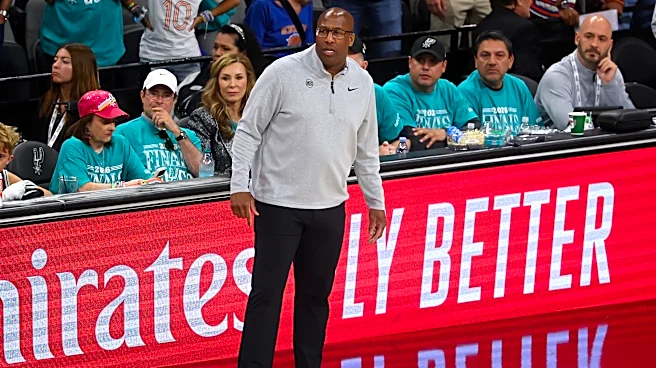
In Mike Brown’s case, no head coach has been watched closer throughout
this entire postseason than him. The Knicks controversially fired their most successful head coach in 20 years after reaching the Eastern Conference Finals for the first time in 25 years last June, and went on a highly publicized coaching search that saw them be “turned down” by five teams in their pursuit.
When they ended up with Brown, it was viewed as a desperation hire that was way down the Knicks’ list. Why fire Thibodeau if you didn’t have a plan, right?
After mixed results in the regular season and a 1-2 series deficit in the first round against the Atlanta Hawks, the sharks were circling on not just the core, but the coach. Could he be one-and-done? How would he respond?
Well, after Game 3 in Atlanta, he made a key adjustment. The same way he made a big adjustment to end the three-week stretch from hell in January.
And then, he adjusted again.
And again.
And again.
Across this postseason, one in which the Knicks have carried a 13-game winning streak to being a pair of wins from ending their 53-year title drought, Coach Brown has been integral in making a multitude of adjustments, both mid-game and mid-series, to slow down and throttle everyone in the Knicks’ path.
Let’s start with Game 3, where the shellshocked Knicks were left picking up the pieces after being punched in the mouth twice by CJ McCollum’s heroics. The house of cards was collapsing. If they didn’t immediately bounce back with multiple victories, the Grim Reaper himself would be sitting courtside at Madison Square Garden to tear down this core.
So they went to work. Three massive adjustments were made on both ends of the court to give the Hawks a different look.
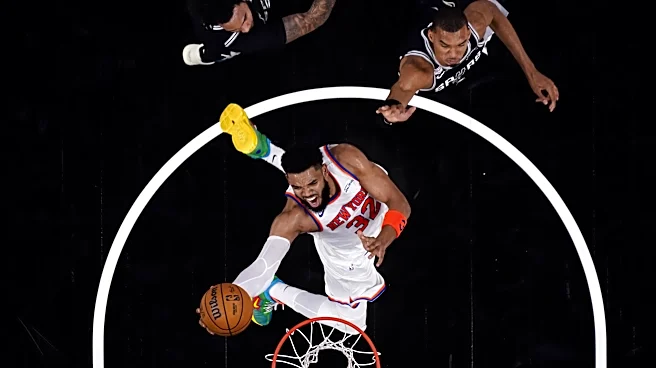
They switched from a Brunson-centric offense to a KAT-centric offense, putting the ball in the big man’s hands up high and making him the facilitator. From there, he’d have options. They’d run a back screen with Brunson and Anunoby that, most of the time, would generate an open cut to the rim by Anunoby or a clean look from three by Brunson. That switch alone kicked the half-court offense up a notch.
He abandoned the full bench lineups that had gotten crushed in the first three games. For all but a few minutes of the last 13 games (notably in the third quarter of Game 2 on Friday), there has been either Brunson or Towns on the court for every single minute outside of garbage time.

But the other adjustment also neutered McCollum’s impact. Instead of playing him 1-on-1, they hedged against Atlanta’s lack of creation and shooting depth by blitzing him to get the ball out of his hands. Predictably, when guys like Jalen Johnson and Dyson Daniels had the ball, the Hawks’ offense cratered.
By blitzing McCollum, his efficiency nosedived. He went from averaging 27 points on 51/39 splits across the first three games to 11.3 points on 39/10 splits in the final three. The Knicks won the final three games by a combined 96 points and made those two one-point defeats feel like a pity party.
The gameplan of blitzing the ball handler was also applied to their second-round series against the Sixers, forcing the ball out of Tyrese Maxey’s hands or forcing him into bad decisions. With a hobbled Joel Embiid not able to take command of the offense, it allowed the Knicks to put the clamps on Philadelphia’s offense.
There was also the offensive gameplan of abusing Embiid in the pick-and-roll, which they did to an almost mortifying degree. It was abuse out there.
There weren’t many opportunities for adjustments in a relatively uncompetitive series, but this was where Mike Brown really started to lean on Landry Shamet off the bench. When the team fell behind 20-8 in Game 3, behind fiery play by Maxey and VJ Edgecombe, he rode bench lineups that overwhelmed the Sixers, which was especially important as Towns dealt with foul trouble.
Moving into the Cleveland series, the same plan of blitzing the ball handler was falling apart… fast. The shooting depth that the Cavs had on display was hurting them throughout Game 1. A once close game had spiraled to a near 20-point hole late in the third that ultimately ended up at 22.
In the moment of facing the most adversity since Game 3 against the Hawks, there were three more big adjustments to be made.
The first was to start playing 1-on-1. Late in the third, they stopped showing two to James Harden, who had rebounded after a miserable first half to be the best facilitator on the floor. It immediately slowed down their offense.
The second was to optimize spacing with the five-out offense. Josh Hart was badly struggling, so Brown replaced him with Shamet and rode him the rest of the way as Cleveland was unable to use ghost coverage to load up on Brunson.
And that brings us back to Brunson, who began hunting the switch onto Harden before frying him into oblivion, single-handedly making this a ballgame before clutch threes by Shamet and Mikal Bridges took it home.
That massive 22-point comeback fundamentally broke the Cavaliers. After renewed confidence in Hart resulted in a playoff career-high 26 points in Game 2, it was abundantly clear that the Knicks were at a different level, steamrolling their way to a clean sweep to formally vindicate the decision to hire Mike Brown and reach the NBA Finals for the first time in 27 years.
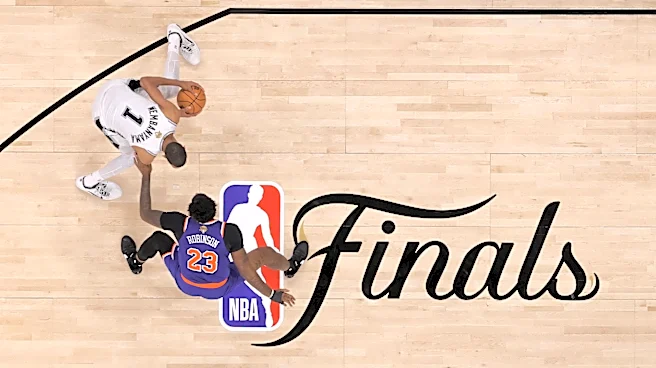
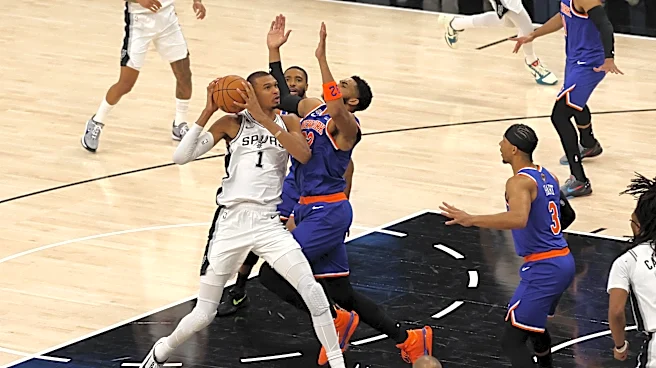
There hasn’t been anything too noticeable in terms of adjustments thus far in the Finals against San Antonio. The opening plans of Towns sticking with Wemby and playing with physicality, and going back to a Brunson-centric offense to take advantage of their desire to deny him at all costs have mostly worked to this point, but there will likely come a time where a big adjustment has to be made, whether in the rotation or in the scheme.
But based on how this postseason has gone, you have to like where the Knicks stand in that regard.