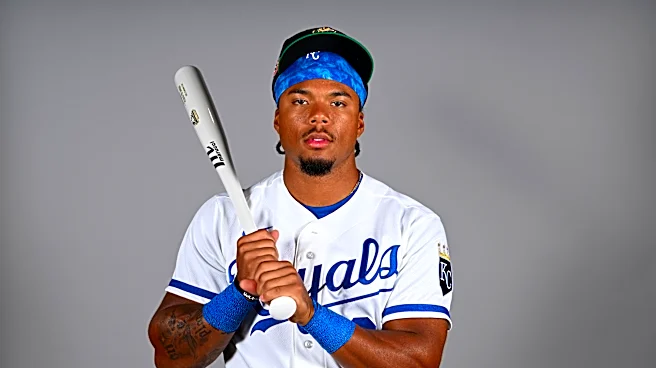




Every offseason, Kansas City Royals general manager J.J. Picollo picks up the phone and tries to convince 29 other front offices that his prospects are worth more than they think. Or at least we hope he is this active.
On The Royals Rundown Podcast, we had Jeremy Greco play Picollo, while I served as the opposing general manager. We negotiated trades, and Jeremy wrote about his offseason plan in Playing Picollo Part 2. If you missed that episode, you can listen to it here.
The rules were simple. Jeremy
ran the Royals with a shopping list of team needs. I played opposing GMs, and my only job was to protect my team and get a fair deal. No charity, no hometown discount, no pretending a Low-A reliever is a future closer because he’s wearing powder blue. While I am not a front office executive, I tried considering what holes my imaginary organization had, where their competitive timeline stood, and ultimately get the help they needed and could use.
We talked through six players. Four deals got done, two fell apart, and by the end Kansas City had a new rotation and a much thinner farm system. Here is the logic behind every call I made from the other side of the table.
All prospect rankings are from MLB Pipeline.
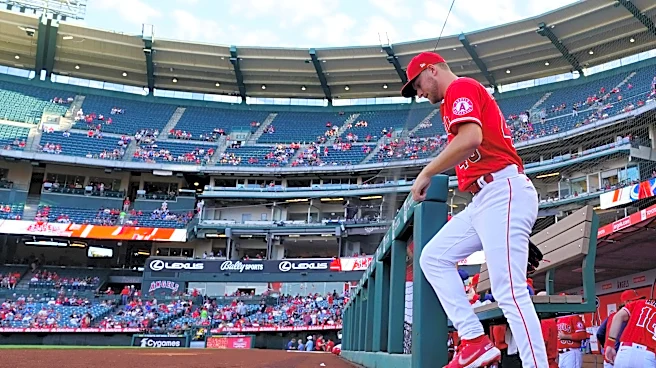
Reid Detmers (Angels): deal done
Royals get: LHP Reid Detmers
Angels get: LHP David Shields (#4), C Blake Mitchell (#5), RHP Jack Slightom (#12)
If you’re going to ask me for my best starter, you’re going to pay for my best starter. Detmers threw 185 innings with a 3.36 ERA, struck out 211, and was worth 4.2 WAR, and he comes with two more years of team control. His changeup generates whiffs like a buy-one-get-one coupon generates foot traffic, and he got better as the year went on, posting a 2.05 ERA after the All-Star break. Bring him to Kauffman Stadium, and he’s not a back-end piece, he’s likely the Royals’ Opening Day starter.
Jeremy’s opening offer leaned on Slightom and red-hot outfielder Angeibel Gomez. It was tough to reject, but Gomez is still far away from a big-league debut, so I countered with Shields, Mitchell, and Kendry Chourio. Neither of us was getting everything we wanted, so we met in the middle: Shields, Mitchell, and Slightom.
From the Angels’ chair, I liked it. I told Jeremy I felt I got the better end, and that the deal only swings back their way if both the arm and the bat miss. Jeremy’s response was that both carry red flags. That’s fair. It’s also exactly what a GM says after they’ve already hung up the phone.
The headline of this deal is not a single prospect, but rather two in Shields and Mitchell. Shields had an electric 2026 season, staying all year in the High-A Quad Cities rotation en route to the Midwest League championship. There are concerns about Shields’ velocity, but the then-19-year-old hurler had little problem this year against more experienced batters.
He is a starter through and through, and few pitchers are better poised to start their age-20 season in Double-A than Shields. While the minor-league run environment exploded this season, I looked at Shields’ 2.48 SIERA in valuing him. For comparison, Milwaukee Brewers flamethrower Jacob Misiorowski led MLB with a 2.35 SIERA this season. The results will not translate one-to-one from High-A to MLB, but they show how elite a pitcher Shields was in 2026.
The wild card here is Mitchell, the uber-athletic catcher with a polarizing batting profile. His 23 homers and 27 stolen bases in High-A this season put him in elite company, while his 131 wRC+ shows how much more productive he was than his peers However, the 34.1% strikeout rate is a huge red flag, even weighed against a 22.1% walk rate. That ratio would be among the better in MLB, but it was only tied for 212th among High-A batters alone. Add in his contact issues, and Mitchell feels like an all-or-nothing prospect Kansas City could move on from after the 2026 season. The Angels lack a clear top catching prospect better than Mitchell, so shoring up that position with an MLB hole to boot feels feasible.
Slightom is more of a wild card, not because of any flaws or red flags, but because he has yet to show what he can do in professional games. Kansas City liked him enough to give him an above-slot deal after drafting him this year in the second round, thanks to projectable stuff and a starter’s build. But with no affiliated action yet, the jury is still out on what Slightom will be. I looked at that build and his fastball, coupled with a unique delivery, and think there is a solid prospect there to work with on his secondary offerings. Here is a quick look at him down in Arizona.
Logan Gilbert (Mariners): no deal
My ask: 3B Josh Hammond (#3), UTL Nick Loftin (MLB), LHP Dash Albus (NR)
The Gilbert talks are where I learned the most about playing the other side. Jeremy kept offering pieces that made sense for the Royals to move. I kept asking for pieces that made sense for the Mariners to own.
Michael Massey was the easy no. Seattle’s middle infield is already a crowded elevator, with Cole Young, Brendan Donovan, Michael Arroyo and Brock Rodden all waiting for the doors to open. Adding another second baseman solves nothing. Third base is the real long-term hole, especially with Donovan hitting free agency after 2027. That’s why I pushed for Hammond.
I also wasn’t going to let Jeremy forget what they were buying. Gilbert has one year of control left and projects to make about $15.4 million in his final arbitration year. One year of an ace is still one year. I wanted Loftin, not Isaac Collins, and Jeremy wouldn’t budge on Loftin. The talks did not last long on Gilbert, but opened another door in Seattle.
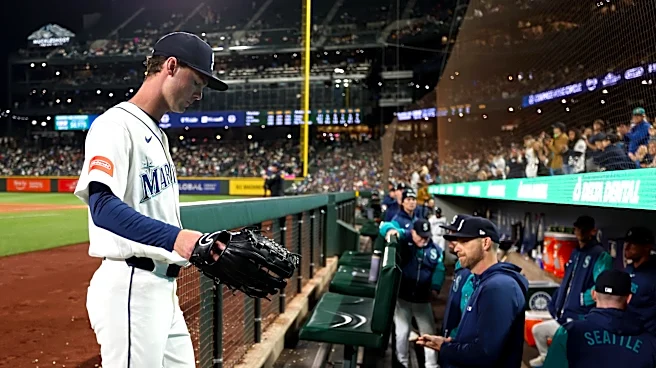
George Kirby (Mariners): deal done
Royals get: RHP George Kirby
Mariners get: C Ramon Ramirez (#7), RHP Lucas Braun (#16), LHP Dash Albus (NR)
So we stayed in Seattle and changed the name on the jersey. I countered with Ramirez, Braun, and Albus for two years of Kirby, and Jeremy took it.
My pitch was simple. Kirby is coming off a down 2026, a 4.33 ERA in 174.2 innings, which is the only reason he’s available at this price. The Royals get a surefire rotation arm with two years of control, and the Mariners turn a pitcher in a dip into three young pieces. Jeremy walked away thinking they gave up very little in Braun and Albus. Sometimes the best trades are the ones where both sides think they won the coin flip.
Ramirez is the headline piece here for Seattle, banking on the still underappreciated catching prospect in the Royals’ system. While an injury took some time from him this summer, his High-A performance went well overall. Looking at his skills behind the plate from 2025 to 2026, I feel comfortable with him sticking as a catcher after some fielding and blocking concerns raised eyebrows last season. His bat is what will carry him, and the bat speed remains tantalizing after a 2025 injury saw his power decline following his return. He would join Seattle’s organization as a well-rounded alternative to Luke Stevenson, the Mariners’ current top catching prospect.
The Royals need pitching depth heading into 2027, but if there was room to let Braun walk, I was going to take it. With youngsters Kade Anderson and Ryan Sloan pushing for MLB roles in 2027, there is a steep drop off to the Mariners’ next wave of pitching talent. Braun serves more as an insurance policy than a high-ceiling add, but with a 3.69 SIERA in Triple-A action last season, that is his best role in any organization. The control is his calling card, but Braun lacks a tool that screams MLB regular to me. Still, you carry insurance for a reason, and Seattle will likely need some on their supporting starting staff.
This was the second time I tried to get Albus, and I finally landed him for Seattle. Albus is not a top-30 prospect, but relievers rarely are. The 19th rounder from the 2024 MLB Draft now has two steady seasons in the Royals organization, pitching at least 55 innings each year. His jump from 13.8% K-BB% in 2025 to 21.4% K-BB% in 2026 gives him some helium. Albus was also among High-A’s best pitchers at inducing chase swings (39.8%, 98th percentile) and limiting in-zone contact (73.5%, 94th percentile). Those are not aberrations, but rather him improving on what he was strongest with at Low-A last season. Heading into his age-24 season, Albus should start next season at Double-A.
Nick Lodolo (Reds): no deal
My ask: LHP Justin Lamkin (8), OF Asbel Gonzalez (15)
Lodolo’s 2026 was a story told mostly by blisters. He finished with a 4.97 ERA in 108.2 innings. Look past that and you find a pitcher who, in his healthy 2025, posted a 3.33 ERA over 156.2 innings and 4.7 WAR. He has one year of control left at a projected $5.7 million, which is a bargain for a guy who can pitch like that when his fingers cooperate.
So I asked for Lamkin and Gonzalez, essentially the price of the 2025 version. Jeremy refused to pay 2025 prices for a 2026 Lodolo. I understood the logic. I also pointed out that they had just paid exactly that kind of price for a George Kirby coming off his own down year. Consistency is a lot to ask from a general manager. Apparently it’s even more to ask from a podcast host. This was also before Lamkin really started taking off in the Arizona Fall League, so my buy-low attempt on the Texas A&M alum fell short. Thank goodness for Royals fans.
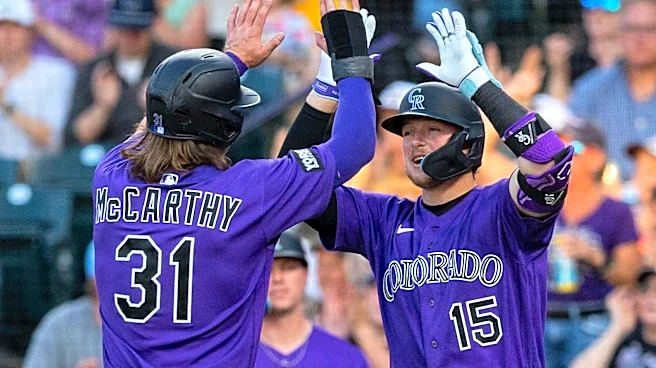
Ryan Feltner (Rockies): deal done
Royals get: RHP Ryan Feltner
Rockies get: RHP Felix Arronde (#21), LHP Darwin Rodriguez (NR)
Feltner found a niche in piggyback and bulk relief work, and his changeup is the kind of pitch that looks better the farther it gets from Coors Field. He projects to make about $3.8 million in arbitration and isn’t a lock to be tendered. Getting him out of Colorado is a bet that he becomes something else. Plenty of pitchers have walked out of that altitude and found out who they really were.
Of every deal we made, this is the one I like most from the opposing side. Colorado turns a non-tender candidate into two arms. Kansas City gets a lottery ticket with a really good changeup.
Arronde had a ton of helium coming into 2026, after pitching 128.2 High-A innings with a 2.80 ERA in that span. He was not a dominant strikeout pitcher, but adeptly limited home runs and induced ineffective contact in his 26 appearances. But the burgeoning minor-league run environment was a brick wall for him in 2026, where he jumped to Double-A and pitched his third consecutive 100-plus-inning season. The strikeouts ticked up, but the walk rate spiked from 8.1% to 11.2%. His home run rate was one of the worst in minor league baseball, allowing 2.14 home runs per nine innings, or 25 in his 24 total appearances. He was a consistent presence in the strike zone this year, and hopefully a repeat of Double-A this coming season gets him back on track.
Rodriguez is a nice-to-have in this deal as a guy who, like Albus, has factors that say he could develop into a big-league contributor in coming years. The Venezuelan pitched a career-high 115 innings this season, all at Low-A Columbia, with a 3.83 ERA, 3.55 FIP, and 3.54 SIERA all showing how consistent he was in Columbia. His control sets up a so-so arsenal well, somehow getting batters to chase at a 32.4% rate while only whiffing 23.5% of the time. He was a late starter to his professional career, but has been remarkably consistent over the past three years. High-A offers the next test, though, and his lacking stuff might be his downfall. But finding that next fastball shape for Rodriguez and honing the changeup, that is on my organization.
Dylan Crews (Nationals): deal done
Royals get: OF Dylan Crews
Nationals get: LHP Daniel Lynch IV (MLB), OF Sean Gamble (#10)
The first position player added in this exercise is banking on a blue-chip prospect benefitting from a change of scenery. Crews has the pedigree and a solid glove, but no track record of production yet. He hit .223/.289/.374 with an 82 OPS+ in 2026, good for 0.7 WAR. My honest projection is that he peaks as a 1- to 2-WAR player. Talent doesn’t win ballgames. Production does. But he would still serve as an improvement to the current Royals outfield and give the team room to add another impact bat in the outfield, where hopefully Crews would serve more as a supplementary role in center field or left as needed.
What Crews does offer the Royals is cost certainty. He’s pre-arbitration through 2027 and under team control through 2030, and that matters for a payroll that just swallowed Detmers, Kirby, and Feltner. When the rotation gets expensive, a cheap outfielder with upside starts to look like a necessity.
Jeremy’s offer included Yandel Ricardo (#11 in the farm system). I swapped Ricardo out for Lynch and asked for Gamble and Lynch. The logic was based entirely on Washington’s needs. With Seaver King and Eli Willits holding down shortstop, Washington needs a future multi-position outfielder with some base power more than another infielder, and Gamble fits. Lynch fills a bullpen that needs left-handed arms, and with Washington’s recent track record of testing out pitching reclamation projects, I think the 2018 first-rounder would offer them a starting option that I know Kansas City fans do not want to see pitching against them.
Gamble’s season is a Rorschach test. He finished with a 72 wRC+ at Low-A as a 19-year-old, but he also stole 38 bases, including 12 in his final 23 games. His power ticked up late, too, with a .123 ISO from August on compared to .107 for the year. Squint one way and he’s a speedster still learning to hit. Squint the other, and he’s a young hitter starting to find damage. As the Nationals, I’ll happily take that ink blot.
He was exclusively in center field for Columbia last year, flashing his speed and reaction on plenty of highlight-reel plays. I am still interested in the versatile profile he had coming out of IMG Academy last year, but his future likely lies in center or left. The Nationals do have some outfield prospects, but like Gamble, all are far from the league. Luke Dickerson is a similar profile to Gamble, but is not a surefire guy to push Gamble off Washington’s radar altogether.
The final tally
When the dust settled, five of the Royals’ top 12 prospects were wearing new uniforms: Shields, Mitchell, Ramirez, Gamble, and Slightom. In return, Kansas City added three starting pitchers and a cost-controlled outfielder. Taking that opposing general manager hat off after this exercise, I feel that is the aggressive stance Kansas City needs to take this offseason if they want to improve the big-league product, without hedging their bets on a litany of prospects who have not played above High-A.
But give Jeremy credit for what he didn’t move. They held on to Chourio and Gomez, the two best players in the system, and Hammond stayed put because he wouldn’t part with Loftin in the Gilbert talks. A front office can survive trading depth. It rarely survives trading the future, and all three have hopeful roles in the next great wave of Royals prospects.
There was a strange beauty in playing the other side of this equation. I was able to go get guys I want to see progress like Rodriguez and Albus, while adding prospects who would be likely top-ten additions to any system out there. Will our thought process come to fruition? Likely not, just like many free agent or trade predictions we will see over the offseason ahead. But that intent on Kansas City’s end is what needs to materialize if fans are to believe 2026 was an injury-fueled fluke rather than a return to the baseball purgatory Kansas City has occupied for much of my adult life.