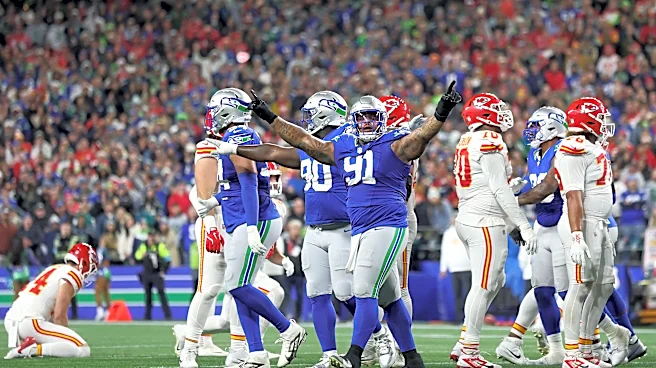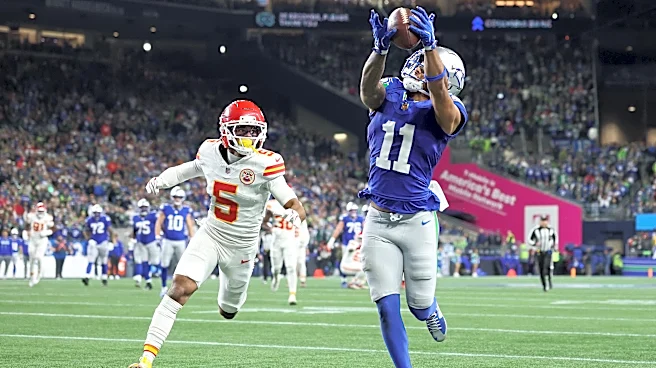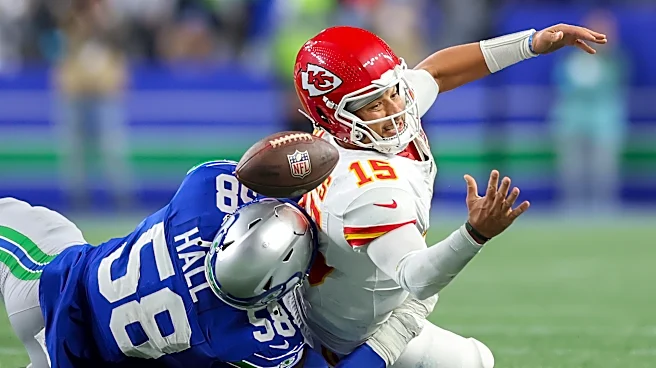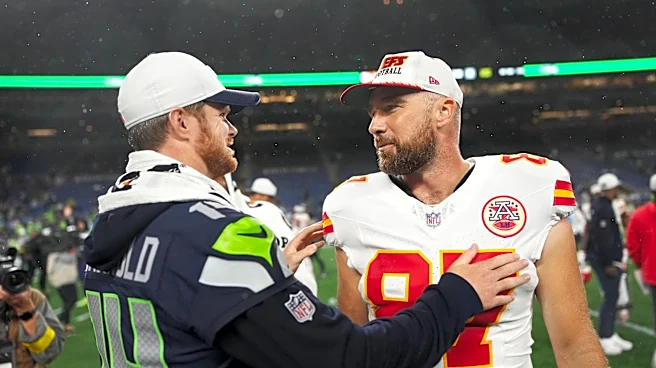

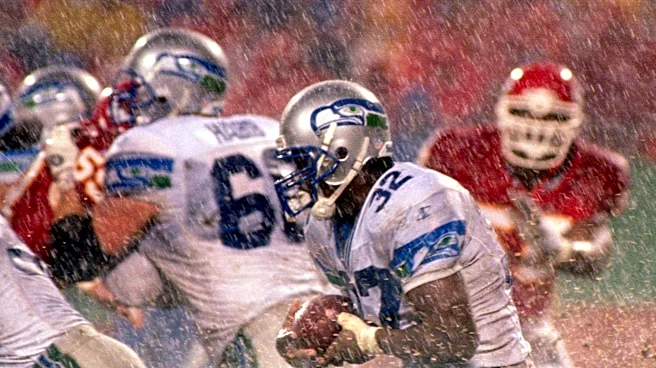
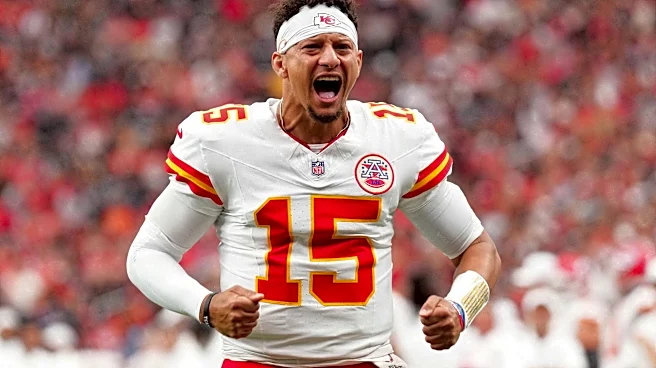

The Seattle Seahawks 20–3 win over the Kansas City Chiefs was fantastic. As I pointed out in the preview, a loss could have put the Seahawks in a difficult position, while a win would restore some confidence and put Seattle back in the mix.
Winning the division is still a long way off, but this result shows that there is enough talent on the field and on the coaching staff to make the necessary adjustments. After losses to the Washington Commanders and Denver Broncos, beating a quality opponent was
essential. You can’t just rack up wins against weaker teams and then struggle when the level of competition goes up.
Of course, we have to account for the Chiefs’ injuries, especially along the offensive line. Seattle had its own injury issues, though, and that shouldn’t take away from a defense that held Patrick Mahomes and company to just three points.
The offense still showed some glaring issues, but there were also signs of improvement. The offensive line played a more solid game, the rushing attack grew as the game went on, and the defense showed it can compete against elite opponents.
This win doesn’t solve every problem, but it gives the Seahawks something they desperately needed: confidence and an opportunity to build some momentum.
The Good
1. The Seahawks defense was dominant
It’s hard to imagine a much better defensive performance than this one. The Seahawks held the Chiefs to just 3 points, 213 total yards, and 11 first downs, without allowing a single trip into the red zone. The three points tied the lowest total in any game started by Patrick Mahomes, while the 213 yards, 11 first downs, and zero red-zone trips were all new lows for the quarterback across his 153 career starts.
Seattle also outgained Kansas City by 197 yards. Across Mahomes’ 153 starts, only one game had featured a larger yardage differential against his team: the AFC Championship Game against the Patriots during the 2018 season. That puts Seattle’s dominance into perspective.
And this wasn’t simply a bad night for Kansas City; it was a normal night for the Seahawks defense. According to ESPN Research, Seattle became the first team since the 1984 Cleveland Browns to hold each of its first seven opponents of the season under 180 passing yards. The defense was also allowing just 3.99 yards per play, the lowest mark in the league and the fewest by any team through seven games since the 2019 New England Patriots.
The Seahawks’ performance against explosive plays reinforces that impression. They had allowed just 26 explosive plays through their first seven games — defined as runs of at least 12 yards or passes of at least 16 yards. According to TruMedia, that’s tied with the 2007 Indianapolis Colts for the fewest explosive plays allowed by any team through its first seven games since 2000.
All of this becomes even more impressive when you consider the opponent. Mahomes is one of the best quarterbacks in the NFL, Andy Reid remains one of the league’s top offensive minds, and Kenneth Walker III is capable of turning an ordinary play into a big gain. Seattle still contained the ground game and suffocated the opposing offense. Walker finished with just 36 rushing yards on 14 carries.
Kenneth Walker III entered the matchup averaging 133 rushing yards per game, leading the NFL in rushing production. Against his former team, however, he was held to just 36 yards on 14 carries, averaging 2.6 yards per attempt.
The Seahawks consistently set the edge and played sound team defense against the run. There were a few missed angles, but because the defense rallied to the ball as a unit, it was still able to make the play. On the rep above, Leonard Williams forces the running back inside, and Tyrice Knight makes the tackle for loss. The defensive tackle is the one who creates the play.
Another game in which Byron Murphy was unstoppable as a stand-up pass rusher. Great angle and plenty of explosiveness off the snap.
2. Nick Emmanwori showed his potential
Nick Emmanwori deserves a section of his own. Despite entering the game questionable, he played 100% of the defensive snaps and has shown unusual versatility for such a young player. He has played at least 50 snaps in each of the last four games.
His usage helps explain the potential Seattle has in this player. This season, Emmanwori has lined up approximately 36% of the time in the slot, 34% as a linebacker, and 27% near the line of scrimmage as an EDGE. His ability to play so many different roles allows the defense to change its looks without necessarily substituting personnel.
It took me a while to realize that Nick Emmanwori was the one making the tackle. He’s lined up on the opposite end of the line, and he isn’t just acting as a backside defender. He explodes off the snap and tracks down the ball carrier on the other side of the formation.
Here, he’s playing as an EDGE. Even though Travis Kelce, who isn’t exactly an elite blocker, has him engaged, Nick sheds the block after initially biting on Walker’s inside cut and still makes the tackle.
Now he’s impacting the game from the slot, covering a receiver downfield. When he’s asked to defend a vertical route without a double move or a change of direction, he can win the rep as if he were prime Richard Sherman.
Here, he shows outstanding instincts. He’s responsible for a zone with a tight end in his area, but he recognizes that the play is developing toward another receiver. He tries to help by closing the space and ends up getting a hand on the pass. Incredible. It’s just as impactful as that sensational pass breakup against the Texans last year.
This is pure athleticism. He reads the flow of the play, realizes Mahomes still has the ball, and takes off after the quarterback. No. 15 tries to work his magic, but under pressure, he ends up throwing an interception. Nick deserves a share of the credit for that turnover.
3. Jaxon Smith-Njigba continues to be the engine of the offense
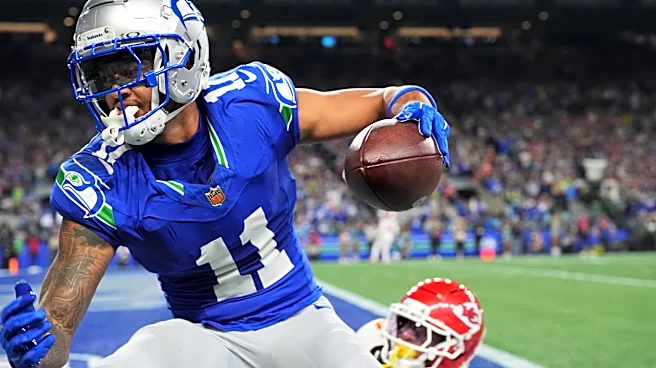
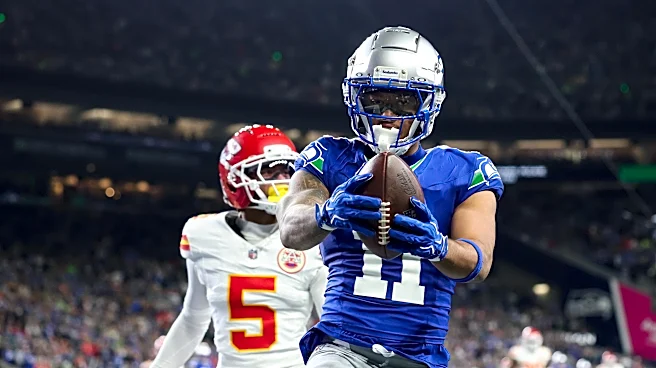
Jaxon Smith-Njigba is putting together an extraordinary season and once again proved that he’s the engine of the Seahawks’ offense. Against Kansas City, he finished with 9 receptions for 150 yards and a touchdown. His impact was especially impressive in the first half, when he recorded six catches for 129 yards and a touchdown.
According to ESPN Research, those 129 receiving yards were the most JSN has recorded in any half of his NFL career. It was also the most receiving yards in a first half by a Seahawks player since Tyler Lockett recorded 133 yards on the road against the Arizona Cardinals in 2020.
His performance is part of a historic start to the season. JSN became the sixth player in NFL history to record at least 100 receiving yards in six of his team’s first seven games. He also became the fourth player in NFL history to reach at least 55 receptions and 800 receiving yards through his team’s first seven games.
He also passed Darrell Jackson to reach 28 receiving touchdowns in his first four seasons, the fifth-most in franchise history over that span.
I’ve seen people saying the Chiefs shouldn’t have put a rookie in Mansoor Delane on JSN. He played tight coverage against JSN on several occasions, including on the touchdown. Here, though, JSN absolutely burns the defensive back. The rookie tries to challenge him in press coverage, which isn’t a great idea against JSN. The safety providing over-the-top help takes a terrible angle, and JSN makes Kansas City pay with yards after the catch.
4. Signs of life from the offensive line and rushing attack
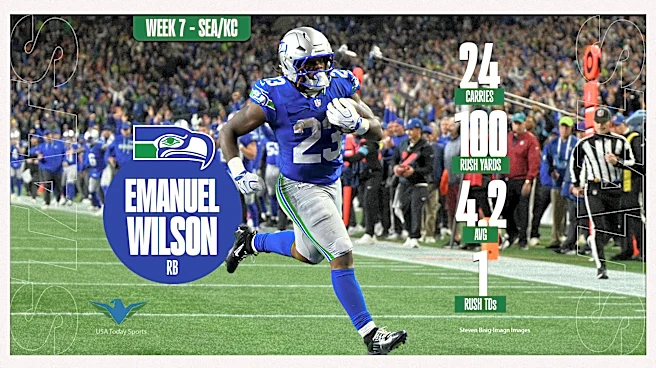
Emanuel Wilson finished the game with 24 carries for 100 yards and a touchdown, averaging 4.2 yards per attempt.
What’s most interesting is how his production was distributed. He had just 22 rushing yards in the first half but finished with 78 in the second. Over Seattle’s final three offensive drives, Wilson recorded 54 rushing yards, including the 21-yard touchdown run.
Wilson isn’t an explosive running back, and his limitations in burst and big-play ability remain evident. But when he’s used according to his strengths — running vertically and attacking the available gaps — he can be effective.
Zach Charbonnet should be able to help when he returns, but we shouldn’t expect his return to solve every problem with the rushing attack. What the Seahawks need is consistency. Against the Chiefs, Wilson and the offensive line showed signs that it is achievable.
Nick Kallerup makes this touchdown happen. He helps Eric Saubert with the initial block, then comes back to create the gap against No. 21. Wilson isn’t naturally a one-cut runner, but he recognizes the opening and gets into the end zone with barely anyone touching him.
Turning to the offensive line: after allowing 10 sacks over the previous two games, Seattle’s offensive line didn’t give up a single sack against Kansas City. That’s a significant improvement, both for Darnold’s performance and for the offense’s ability to sustain drives.
It doesn’t look as though Seattle made a major schematic overhaul. The difference against the Chiefs seems to have come primarily from better execution. The blocks were more consistent, Darnold had a better environment in which to operate, and the rushing attack produced without needing to rely on a big run every time.
5. The offense showed it can convert in difficult third-down situations
Despite the issues that still need to be addressed, there was a good reason to feel optimistic about the offense: Seattle converted 5-of-6 third-down attempts with at least nine yards to go. That’s the best conversion rate in a game with at least five such attempts since the Indianapolis Colts went 5-for-5 against the Houston Texans in Week 11 of 2008.
That deserves credit. It’s true that many of those long-yardage situations were also the result of problems earlier in the drive — inefficient play calls, short gains, and situations in which the offense put itself behind the chains. But converting five of six third-and-long attempts requires execution, and the Seahawks delivered.
AJ Barner also contributed with four catches for 42 yards. The offense showed it has the tools to move the ball even when the situation isn’t ideal. The next step is to make drives more consistent from the early downs and find more efficient ways to turn those advances into touchdowns.
Having Barner back opens up other dimensions of the offense, and he could be particularly useful in the red zone. Here, the play is designed to create space for him against man coverage. Shaheed’s route clears space on the lateral break, allowing Barner to make the catch and pick up his usual yards after the catch.
The Bad
1. Brian Fleury needs to fix the red-zone offense
Seattle had three red-zone possessions against Kansas City and came away with just six points: two field goals and one Sam Darnold interception. Those were two clear opportunities to score touchdowns that went to waste.
On the first trip, Seattle reached the Chiefs’ 9-yard line. Emanuel Wilson gained three yards, followed by a shovel pass to AJ Barner that lost a yard and nearly resulted in a fumble. Keep it simple until the offense can execute consistently.
Darnold then failed to complete the next attempt to Jaxon Smith-Njigba, and Jason Myers came on to kick a 25-yard field goal. The route concepts are so poor that there are essentially three players occupying two defenders at the top of the screen, Shaheed running an ineffective route at the bottom, and everyone else clustered around JSN. That makes the defense’s job easy.
What’s bizarre is that Fleury does a good job creating traffic and protecting releases in other situations. That’s something he should be calling much more often in the red zone. There’s no magic involved, but Shaheed’s route creates space for Kupp to read the opening and make a good catch.
The second opportunity was even more frustrating. After a 28-yard pass to JSN, Seattle reached the 2-yard line. George Holani lost a yard, and on the next play, Darnold threw an interception in the end zone. It was a huge opportunity to extend the lead before halftime, but the offense came away with nothing.
In the third quarter, the same story played out again. Seattle reached the 6-yard line, but a run by Velus Jones Jr. lost six yards. Fleury keeps calling these runs — at least this time it wasn’t Wilson — and Grey Zabel loses a key block at the second level. Charles Cross also gets beaten, leaving the running back with no chance.
Then came a delay-of-game penalty, which pushed the offense further back, and the next pass to Holani fell incomplete. Another field goal, this time from 35 yards. Of the 21 potential points available across those three opportunities, Seattle scored just six. No offense is going to be perfect in the red zone, but the problem for the Seahawks is how they keep wasting favorable opportunities.
Against Kansas City, the defense was dominant enough to make sure those failures didn’t cost Seattle the game. Against more efficient opponents, those wasted possessions could have much bigger consequences.
2. Sam Darnold still can’t put together a clean game
Sam Darnold had some positive moments against Kansas City, but he made another mistake that could have completely changed the game. The biggest concern isn’t just the interception; it’s the feeling that he isn’t learning from his mistakes.
After the loss to Denver, Darnold acknowledged that he’d been too greedy with his passes. Against Kansas City, he took another unnecessary risk in a situation where Seattle was already in position to score.
The problem is that Darnold looks like an all-or-nothing quarterback. At times, he finds a tight window, makes an excellent read, and delivers an accurate pass. At other times, he makes a disastrous decision that undoes all the work that came before it. There seems to be no middle ground.
The win doesn’t erase that concern. Darnold needs to show he can protect the ball, recognize when a play isn’t there, and accept that an incompletion can be better than trying to do everything himself.
On the interception, JSN’s and Shaheed’s routes again head in the same direction. Darnold has JSN open at one point, but he hesitates and is late with the throw. He ends up getting intercepted because the spacing of the routes has carried Shaheed’s defender into the passing lane.
Here, he leaves a big gain and a potential touchdown on the field. It’s another play designed to create space for Barner. The vertical routes have pushed the defenders deep into the end zone, which should leave Barner with plenty of room to run. But Darnold chooses to fire the ball in rather than put some air under it and clear the defender. He misses a huge opportunity.
Another missed opportunity. The concept is poor, and Darnold manages to buy time because the pressure arrives with just TWO rushers after Lucas loses his block. Holani and Darnold aren’t on the same page, and they miss out on a touchdown.
As mentioned, he played well overall, getting the ball out quicker and throwing with more confidence. But there’s still plenty of room for improvement. Here, he manages to escape what looked like a sure sack, albeit in somewhat awkward fashion, and runs for an important first down.
3. The defense still has room to improve
We’re looking at the negatives here, but this is actually a reason for optimism. The team put together a dominant performance, and it clearly hasn’t reached its ceiling yet. The Chiefs didn’t have much at wide receiver, yet they still found some production through their tight ends by exploiting the space behind the linebackers — an area opponents have been targeting at times this season.
Jones and Knight were caught out of position in coverage on a few occasions, even though both were dominant against the run. Here, there are communication issues and the defense isn’t properly set. Mahomes buys time because he isn’t contained in the pocket, and Jones abandons Kelce even though Knight is in position to make the play. That opens a window for the completion.
Mahomes’ escapes happened when the EDGE rushers decided to attack upfield and compromised the integrity of their rush lanes, giving him room to extend the play and find his receivers. That’s something to keep an eye on against Caleb Williams.
There were also a few execution errors. This is a great call by MM. He sends the outside corner on a blitz, rotates the nickel into the deep-safety role, spins Okada around, and drops Julian Love into coverage. The safety identifies the target and drives downhill, but misses the tackle, allowing the Chiefs to turn the play into a very manageable fourth-down situation.
Late in the game, the defense lost focus on a few plays. Here, Mahomes was in a bad situation, but Seattle allowed the completion, missed two tackles, and gave up a solid gain.
Final Thoughts
The 20–3 win over Kansas City was important for Seattle in more ways than one. After losses to Washington and Denver, the team needed to respond against a quality opponent and regain some confidence. The defense did exactly that in convincing fashion, the rushing attack improved as the game went on, and the offensive line showed some much-needed progress.
That doesn’t mean every problem has disappeared. The red-zone struggles are still costing the Seahawks points, and Darnold needs to show that he can avoid unnecessary mistakes. Against a more efficient opponent, those issues could turn a comfortable win into a painful loss.
The next matchup, against the Chicago Bears, will be another important test. Ben Johnson’s team has offensive talent and a quarterback capable of creating problems, while Mike Macdonald will have another opportunity to show how his defense adjusts to a different offense.
It will be another chance to play in prime time and show that the win over Kansas City wasn’t a one-off.
The division is still in the distance, but Seattle is back in the fight.
Go Hawks!