




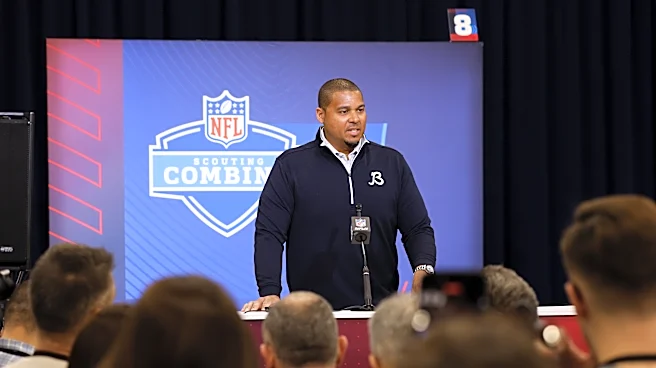
Last April, I wrote a similar piece, operating under the premise that Brad Holmes—the unpredictable, best-player-available, talent-evaluating wizard that he is—might veer from commonly mocked and reported projections at Pick No. 28. One of my “surprise” candidates ended up being the eventual selection in Ohio State defensive tackle Tyleik Williams. The goal then, as it is now, was to open up alternative paths so fans can understand that just because a pick isn’t widely mocked doesn’t mean it’s a bad
one. Allen Park is essentially Fort Knox for draft information for a reason. The unexpected should be expected.
This year, while the board feels more refined and the bunch at Pick No. 17 appears well covered, it’s still important to temper expectations. The NFL’s cyclical, year-round captivating machine has created four months of buildup, and the Lions’ need to rebound from an underachieving step-back season has placed this draft—and this pick—under an even more intense microscope than usual.
In this exercise, I’ve excluded most of the usual suspects at offensive tackle (Spencer Fano, Kadyn Proctor, Monroe Freeling, Max Iheanachor, Blake Miller), defensive end (Keldric Faulk, T.J. Parker, Akheem Mesidor), offensive guard Olaivavega Ioane, injury-discount cornerback Jermod McCoy, and any universally Top 10-caliber prospects (e.g. Caleb Downs). I’ve also left out quarterbacks, running backs, wide receivers, and tight ends. No offense to prospects like Jordyn Tyson or Kenyon Sadiq, but if that’s the direction, you likely won’t hear from me again until pick 50 while I slowly and reluctantly formulate my acceptance and rationalization.
To prepare for a potential Jahmyr Gibbs-, Jack Campbell-, or Tyleik Williams-type moment, it’s worth remembering that this draft class doesn’t have clean consensus tiers. From prospects roughly in the 15–50 range on most media boards, evaluations can swing wildly depending on team, scheme, and front office philosophy. A player sitting closer to 40-50th overall on the consensus big board could easily be viewed as a clear first-rounder in certain buildings, while a prospect widely mocked in the Top 15–20 range throughout the cycle could just as easily land in the middle of Day 2 once teams finish stacking their boards.
Some of these names could also emerge as trade-down targets (hooray, more bites at the apple). And depending on how the board breaks—whether there’s an early run at offensive tackle or whether Detroit’s internal grades differ significantly on the top edge defenders—the range of outcomes at Pick No. 17 remains wide.
With all of that in mind, below are ten prospects who could realistically be in play when the Detroit Lions are on the clock in Pittsburgh.
Nickel/Safety
Dillon Thieneman (Oregon) – Height: 6-foot-1 | Weight: 201 | Age: 21.7 | Grit Index: 9.41 | Relative Athletic Score: 9.71 (no agility) | Consensus Big Board Ranking: 17th
While Thieneman is trending into the early first-round conversation—potentially as high as picks 11 or 12—the consensus No. 2 safety in this class still profiles as a very real fit for the Detroit Lions. A Day 1 starter as a freshman at Purdue, he’s been an athletic, versatile playmaker ever since—capable of filling virtually any role on the back end. He brings the physicality to trigger downhill and bruise up backs and blockers in the run game, while also showing the range and instincts to impact plays from the deep middle to the sidelines.
Beyond his schematic versatility, Thieneman checks every box from a reliability and culture standpoint. He offers strong leadership traits, has been a core contributor on punt coverage units, and is incredibly durable—starting all 39 possible games in his college career while averaging 7.9 tackles per game.
His addition would give Kelvin Sheppard maximum flexibility on the back end. Thieneman could rotate through—and potentially step into— the slot role previously held by Amik Robertson, while also providing insurance for either Kerby Joseph or Brian Branch as the team navigates their short- and long-term outlooks. He would be the ultimate chess piece to counter modern offenses.
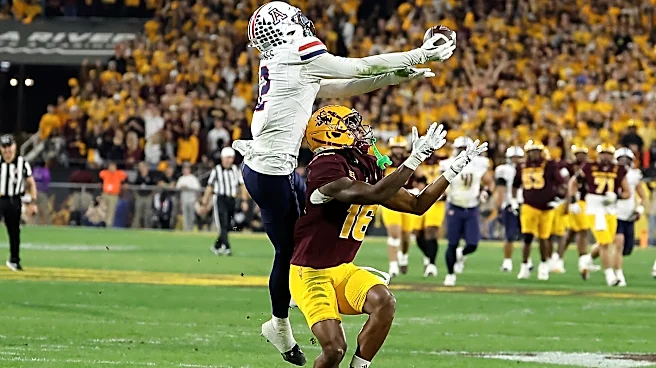
Treydan Stukes (Arizona) – Height: 6-foot-0 | Weight: 193 | Age: 24.6 | Grit Index: 9.82 | Relative Athletic Score: 9.95| Consensus Big Board Ranking: 60th
Both Miami (FL)’s Keionte Scott and Stukes are fiery, older, middle-of-the-field defenders who align with the Lions’ defensive DNA, and Stukes is a name that has quietly built momentum over the last month with analysts dropping breadcrumbs along the way.
Perseverance and passion define his profile. A former walk-on turned three-time captain, Stukes has navigated constant coaching turnover (three head coaches, five defensive coordinators), transitioned from outside cornerback (12 starts over three seasons) into a full-time slot defender (26 starts over three seasons), and a torn ACL in 2024—yet still consistently produced high-level, instinctive play with strong on-ball production, particularly last season.
Stukes bursts to the ball and flies around the football field, consistently erasing the geometry of opposing offenses by closing space and eliminating throwing lanes before they fully develop. He reads and reacts downhill with authority, playing fast and confident thanks in large part to his renowned film room preparation, which allows him to anticipate concepts early and trigger without hesitation. He plays with the kind of unquestioned trust and quiet reliability you build over time—the type of presence where, like “Jem” Coughlin in The Town, you don’t need to ask if he’s going to show up or follow through. He just does.
In Detroit, Stukes would align cleanly with the defensive identity Kelvin Sheppard is building. He projects as a versatile piece in the slot with the ability to rotate at safety and, at times, align outside as a matchup defender. His usage could resemble a hybrid defensive back role similar in spirit to Cooper DeJean to drive deployment across multiple alignments.
Cornerback
Chris Johnson (San Diego State) – Height: 6-foot-0 | Weight: 193 | Age: 21.4 | Grit Index: 8.72 | Relative Athletic Score: 9.84 | Consensus Big Board Ranking: 34th
While players like Colton Hood offer a more physical press profile and D’Angelo Ponds has been a well-discussed undersized, tenacious, intangibles-driven option, Johnson is a rising prospect who brings a more complete and translatable skill set. He’s experienced across press, man, and zone concepts, with a polished, coachable demeanor and consistent work habits that tend to resonate strongly in Detroit’s culture-driven evaluation process.
Johnson has spent the last two seasons smothering receivers while also bringing the noise in run support. Given the age of D.J. Reed (29.4), the uncertainty surrounding Terrion Arnold entering Year 3, and the reality that you can never have too many corners, the fit becomes even more logical.
He’s a fundamentally sound defender with big hands and the ball skills to help the Lions take another step defensively, while also offering special teams coverage value—something that will always pique the interest of Dave Fipp.
Avieon Terrell (Clemson) – Height: 5-foot-10 | Weight: 186 | Age: 21.2 | Grit Index: 8.59 | Relative Athletic Score: 4.94 (no agility) | Consensus Big Board Ranking: 21st
Terrell—the younger brother of A. J. Terrell—has had a somewhat uneven draft cycle, largely because he wasn’t built to win the “underwear Olympics” portion of the process. But like Brian Branch before him, he showed well in on-field drills, and his tape tells a much more complete story. That distinction matters for a Detroit front office that places a premium on players they view simply as high-level football players (“you’re a football player, man”). It’s also why stylistic comparisons to Tyrann Mathieu or Devon Witherspoon carry some appeal.
Terrell plays bigger than his frame suggests. He’s an impactful presence in run support, operating as a second-level enforcer with a knack for creating disruption—evidenced by eight career forced fumbles, a consistent ability to pop the pill out.
In coverage, he mirrors that physicality with fluidity and control. Terrell is comfortable in press-man situations, stays connected through routes, and has shown added versatility with subpackage usage, including reps in the slot this past season. That role also unlocked his effectiveness as a blitzer, where his timing and urgency make him a disruptive presence.
He would be a natural fit within the Detroit Lions defensive ecosystem as a tone-setting, versatile defensive back capable of impacting the game in multiple phases with the upside to be a true difference maker.
Linebacker
Jacob Rodriguez (Texas Tech) – Height: 6-foot-1 | Weight: 233 | Age: 23.6 | Grit Index: 9.95 | Relative Athletic Score: 9.61 | Consensus Big Board Ranking: 43rd
Rodriguez’s meteoric rise in draft stock has mirrored the trajectory of a Black Hawk helicopter—fittingly, one his wife pilots for the U.S. Army—as he stuffed the stat sheet all season as an impact defender and followed it up with a dominant athletic showing at the NFL Scouting Combine. One of the more intriguing and polarizing prospects in this class, Rodriguez began the cycle as a Day 3 projection and has surged into first-round consideration. A former quarterback at Virginia turned walk-on and two-time captain at Texas Tech, he capped off his career with a fifth-place finish in Heisman Trophy voting while taking home a collection of other hardware.
Rodriguez projects as an immediate coaches’, locker room, and fan favorite in Detroit, with a skill set well-suited for the Will linebacker role alongside Jack Campbell as the heir apparent to Alex Anzalone.
The mustached marauder brings a high-level hunt-and-chase skill set with true sideline-to-sideline range. He’s slithery working through traffic, able to elude blockers with quickness and instincts, and consistently finds the football. Rodriguez often plays like a heat-seeking missile, triggering aggressively toward the ball—but that same aggressiveness can lead to occasional missed tackles or getting displaced by ball fakes. With more discipline and refinement, those inconsistencies can be minimized, especially alongside a steadying presence like Campbell as his running mate.
CJ Allen (Georgia) – Height: 6-foot | Weight: 230 | Age: 21.1 | Grit Index: 9.40 | Relative Athletic Score: N/A | Consensus Big Board Ranking: 35th
Allen’s draft cycle has been the inverse of Jacob Rodriguez, with the two potentially crossing paths in the linebacker pecking order due in large part to Allen’s unfortunate November knee injury. While he lacks verified athletic testing and may ultimately project more naturally as a Mike linebacker, he would still be a tantalizing option for the Detroit Lions next to Jack Campbell. His high-character, high-effort makeup helped him earn the role of quarterback of the the Bulldogs defense as a true freshman —a strong indicator of trust, leadership, and command.
Allen is widely regarded as extremely coachable—a quick learner with fast processing speed and a high football IQ. The Lions haven’t hesitated to invest early at linebacker, and Allen’s stable violence would be a major draw. He profiles as a tough play diffuser with a high floor, capable of bringing consistency to the second level of the defense while continuing to develop in coverage and as a blitzer.
Defensive End
Zion Young (Missouri) – Height: 6-foot-5 | Weight: 262 | Age: 22 | Grit Index: 7.73 | Relative Athletic Score: 7.68 (no agility) | Consensus Big Board Ranking: 39th
Young is a stout can-of-whoop-ass on the edge, leaving opposing blockers searching for Advil and ice after four quarters. He’s a physical, tone-setting competitor who brings real edge to the defensive front. While there were some off-field questions in his college career, Missouri head coach Eli Drinkwitz and his fellow Tigers teammates have spoken highly of his work ethic and presence within the program as a team captain.
While not the most athletic edge enforcer, Young unleashes superior power, length, and urgency off the snap. He generates a strong initial jolt, using heavy hands to stonewall at the line of scrimmage. Like Gandalf the White, he makes it clear: “you shall not pass” when teams try to run outside on him.
Young put it all together during a productive senior season (16.5 tackles for loss), and his physical profile would translate well to the Detroit Lions defensive line rotation. As he continues to refine his pass-rush plan and clean up leverage inconsistencies, he has the tools to develop into a reliable, physically imposing presence in the trenches.
Gabe Jacas (Illinois) – Height: 6-foot-3 | Weight: 260 | Age: 21.9 | Grit Index: 9.14 | Relative Athletic Score: 9.59 (limited testing) | Consensus Big Board Ranking: 50th
Jacas was one of my favorite edge prospects to watch in this class. His motor is non-stop, and he’s capable of lining up and contributing up and down the defensive front.
Over the last two seasons, Jacas totaled 19 sacks and 26.5 tackles for loss, winning with violent, well-timed hands and an aggressive, technically sound approach to block deconstruction. He consistently plays with urgency and control, allowing him to defeat blocks at a high level and stay involved in the play.
There’s a controlled relentlessness to his game that feels straight out of Heat—think Neil McCauley pacing through the city with that calm, procedural edge, everything deliberate, nothing wasted. He doesn’t freelance or chase plays; he stays disciplined within structure, applies steady pressure snap after snap, and trusts that consistent execution will eventually break the offense down.
Jacas projects as a player who could round out the Detroit Lions’ four-man defensive line rotation. His versatility, durability, and leadership traits give him the profile of a player the staff could trust across a wide range of defensive end responsibilities.
Defensive Tackle
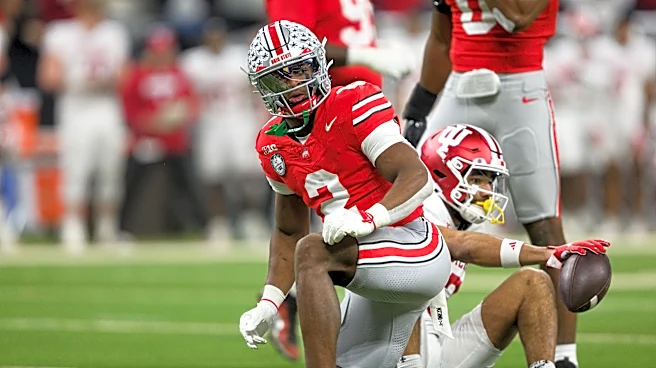
Kayden McDonald (Ohio State) – Height: 6-foot-2 | Weight: 326 | Age: 21.1 | Grit Index: 6.11 | Relative Athletic Score: N/A | Consensus Big Board Ranking: 29th
McDonald projects as the successor at nose tackle to Tyleik Williams and shares a number of similarities in play style. Despite just turning 21, he plays with grown-man strength, controlling the A-gaps with power and leverage while flashing deceptive quickness for his size—even as his pass-rush profile remains a work in progress.
Like Williams, McDonald shows strong play diagnosis against the run and consistently hustles snap-to-snap. His ability to anchor, absorb contact, and clog interior rushing lanes makes him a difficult player to move at the point of attack.
He’s even drawn comparisons to D. J. Reader from Lance Zierlein, further reinforcing his fit as a potential type for the Detroit Lions. While there is some overlap with Williams, that skill set would allow Detroit to maintain a deep, physical interior rotation. McDonald could rotate at nose tackle while him and Williams also take snaps alongside Alim McNeill in certain fronts, helping form a stout, hard-to-move presence inside.
Christen Miller (Georgia) – Height: 6-foot-3 | Weight: 321 | Age:21.7 | Grit Index: 6.62 | Relative Athletic Score: N/A | Consensus Big Board Ranking: 31st
Miller is a punisher who leans on powerful upper-body strength to control blocks at the point of attack. While he wasn’t a high-end splash-play producer, he consistently handled single blocks and flashed the ability to reset the line of scrimmage. He remains a work in progress when dealing with double teams.
Similar to McDonald, Miller projects as an early-down contributor with a blend of imposing physicality and functional quickness. He shows good range along the line of scrimmage, playing with active pursuit and energy when working laterally to track down ball carriers. Another intriguing option to strive for more opponent third and longs.
Miller is a high-upside talent, though his workload was relatively limited—averaging a career-high 31 snaps per game last season. In Detroit, he would likely factor into a rotation behind Williams at nose tackle, while also mixing to give McNeill a breather in certain fronts. That depth would give the Lions added flexibility on the interior, particularly as they evaluate McNeill’s long-term trajectory following injury
Offensive Line
Keylan Rutledge (Georgia Tech) – Height: 6-foot-3 | Weight: 318 | Age: 22.6 | Grit Index: 9.70 | Relative Athletic Score: 9.53 | Consensus Big Board Ranking: 59th
The artist known as “Big Red” is a strong schematic fit for the Detroit Lions offensive line identity, with his primary hurdle being the transition from right guard to left guard at the next level. With Tate Ratledge entrenched on the right side, that alignment shift would be the main adjustment, though he also brings some secondary center versatility in his projection.
Rutledge plays with a mauling, physical demeanor that consistently shows up in the run game, where he overwhelms opponents and creates vertical displacement at the point of attack. That mentality carries over into a strong cultural impact across both Middle Tennessee State and Georgia Tech, making him a natural fit for a room led by Hank Fraley.
At Georgia Tech, he helped anchor the run game for Haynes King, Jamal Haynes, and Malachi Hosley as a forceful drive blocker who consistently moved defenders off the ball while also holding up on backside work.
While he will need an adjustment period transitioning to left guard and refining his pass protection consistency at the NFL level, his physical temperament and intangibles give him a strong case to land high on Detroit’s board.
Any learning curve he may have would be insulated by playing next to Penei Sewell, with his intangibles likely keeping him high on the Detroit Lions’ big board.
Caleb Lomu (Utah) – Height: 6-foot-6 | Weight: 313 | Age: 21.3 | Grit Index: 7.91 | Relative Athletic Score: 9.78 (no agility) | Consensus Big Board Ranking: 28th
Lomu is still young and developing, with his primary areas of concern centered around functional strength and a lack of aggressive demeanor. Those traits don’t naturally align with a Detroit-style offensive line profile, and among the players in this group, he is likely the least probable fit for the Detroit Lions.
That said, his reactionary ability stands out. Lomu shows quick adjustment skills and good recovery footwork, which can translate into creating movement and explosiveness in the run game. His lateral quickness and functional footwork are more naturally suited to zone-heavy concepts, and there is at least baseline athletic ability and core strength that could translate in pass protection as he continues to develop.
While it’s less likely Lomu sits near the top of the Lions’ offensive tackle board, it’s not entirely out of the question that he falls into consideration if an early run pushes other tackles off the board. In that scenario, he could carry a developmental first-round grade with a path to converting to and eventually competing at right tackle, learning behind Larry Borom while he adjusts to the speed and physicality of the NFL.
He isn’t an ideal stylistic fit, but there are enough traits to make him a developmental option if Detroit prioritizes long-term tackle investment.