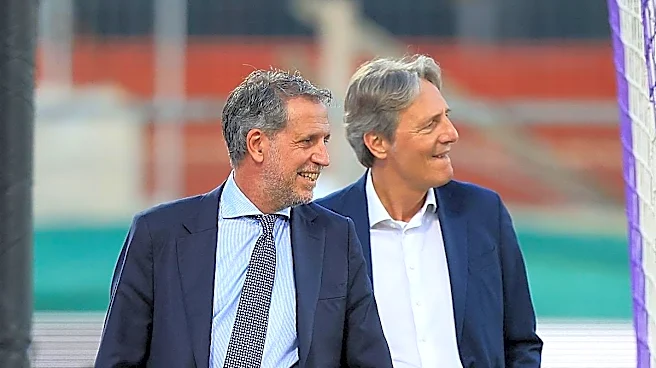




Fiorentina’s 2025-2026 was its worst season since 2001-2002. The ownership group made bold changes to get the club back to its accustomed European aspiration, headlined by the signing of Fabio Paratici, whose arrival from Tottenham Hotspur came with a bit of mystery—how exactly did he balance his duties in north London with those in Florence during the January mercato?—came with the remit to rebuild the team.
The new sporting director has been extraordinarily busy over these first three weeks of the transfer
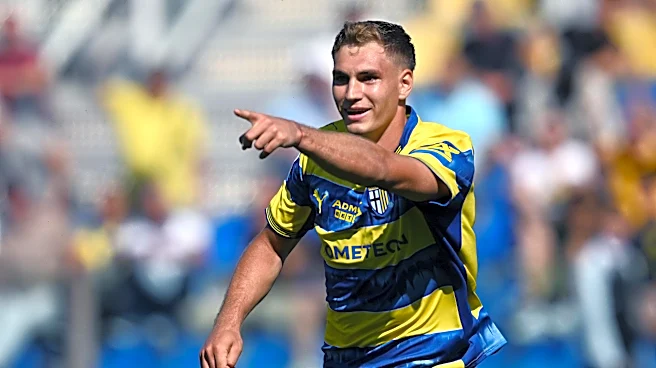
window: Viery, Radu Drǎgușin, Arthur Atta, Alex Jimenez, and Christ Inao Oulaï have arrived for a combined €67.5 million, with another €43.5 million in loan fees to make Drǎguşin and Jimenez permanent. Throw in another €23 million for Marco Brescianini and Giovanni Fabbian—both obligatory loan fees after the Viola avoided relegation—and it’s a €90+ million spend even before the expected additions of at least a couple wingers and probably another player or two.
It’s been fun for fans to see the Viola splash the cash, although that’s hardly a guarantee of success. Fiorentina’s most expensive season for transfers was 2025-2026 and can only be termed a disaster that nearly resulted in playing the centenary season in Serie B. Still, Paratici’s willingness to spend that Commisso money has done more than rebuild the squad. It’s lifted the funereal mood of the supporters and sparked optimism about the club’s mid- and long-term prospects.
As fans, we deserve a little fun. The summer window is for projecting the best possible outcome before the slog of the season begins. Even so, there’s a dark cloud hanging over this flurry of transfer activity and I can’t get out from under it. My question is: Where is all this money coming from?
There are simple answers to a simple question, of course. The money’s coming from the Commisso family, as it has since Rocco bought Fiorentina in 2019. His widow Catherine and son Giuseppe didn’t seem too involved before the patriarch’s passing last year but have whipped out the checkbook this summer and handed it to Paratici with the orders to “make it great again.” That’s simple enough, right?
Again, Fiorentina’s already spent €90 million in this window and Paratici’s far from finished. He isn’t funding this activity through player sales: Lorenzo Amatucci, Jonas Harder, Lorenzo Lucchesi, Jacopo Fazzini, Lucas Beltrán, and Robin Gosens (the last 3 are loans) have earned the Viola all of €6.8 million. Even projecting sales for surplus guys like Matías Moreno, Nicolás Valentini, Albert Guðmundsson, and Roberto Piccoli, there’s no way to make up that sum.
This raises the possibility of selling one of the club’s “untouchables.” Fiorentina has a number of decent-to-good players who could be available but few of them would bring in enough money to fund this mercato. The only one who would is Moise Kean and Paratici has spoken several times about the Moose being central to the club’s plan. Assuming Kean isn’t sold (and I hope he isn’t despite his brother’s social media antics), it’s unlikely that the Viola can fund this spending spree through player sales.
Transfer spend isn’t the only marker of financial health, of course. The wage bill is often more predictive of a team’s quality than its outlay in the market. One of Paratici’s primary concerns has been reducing the wage bill, which means shuffling off a number of the high salaries in the squad. However, with Kean and David de Gea confirmed for next year, the top two earners from last year are back. Chopping and changing farther down the roster can save some money but not enough to make up the difference.
Fiorentina’s finances are already more precarious than a recent European finalist’s should be. UEFA just fined the club €6 million for overspending last season and the cash inflow will be restricted even further this season. Continental competition brought in €7.78 million last season from UEFA, as well as extra match day revenue. That match day revenue, by the way, is also down due to the ongoing construction on the Stadio Artemio Franchi. Without the ability to fill up the venerable arena, the Viola’s earnings shrink even more. Figure in the club’s financial commitment to that construction, which will 1) never finish and 2) become more expensive the longer it drags on, and there are plenty of reasons to worry about cash inflow in the near future.
Returning to the incoming transfers, one thing that stands out is how Paratici has structured them. Every new signing except Viery has a clause in their contract sending a percentage of any future sale to the original club: 10% for Drǎgușin, 30% for Atta, 20% for Jimenez, 10% for Oulaï. There’s nothing wrong with doing business like this. It’s part of the modern game. The problem is that even if these players increase in value, those sell-on clauses limit the profit Fiorentina can make from them.
For example, it’s not hard to imagine a situation in which Atta, for example, demonstrates his quality, enticing a Premier League club to buy him for €50 million (approximately 0.33 Morgan Rogerses). Udinese would get 30% of that fee, which would be €15 million, leaving €35 million for Fiorentina. That would be a measly €5 million. Factor in amortization and it’d be €11 million. That’s not much profit for what is on paper a €50 million sale.
With limited profit potential going forward, it seems that Paratici’s putting all his eggs in European qualification. It’s a gamble but not a stupid one: reinforcing the squad now and allowing Fabio Grosso and company to focus on just one game a week should help the Viola rebound into the top half of the table. It’s not unreasonable to think that some of Serie A’s representatives on the continent—Roma, Como, Atalanta—could regress. Of the teams failing to qualify last year, none look certain to make the leap this time around. Projecting a big step up relies on Grosso getting things right and a new squad clicking immediately but if the club believes in what it’s doing, those are bets it has to make.
I worry about what comes next, though. Last summer saw the Commisso family pump money into the squad and reap nothing but catastrophe. While a second consecutive worst-case scenario is unlikely, there has to be a contingency plan in case things fall apart again. That’s why people like Paratici make the big bucks: it’s not about creating a winning team right now. It’s about creating a platform for sustained, repeatable success going forward.
What that future looks like is the question. To be clear, I’m not an accountant. I’m not a business guy. I don’t really understand finance very well. Combine my ignorance about the subject matter with my ignorance of the overall economic picture of the club—Paratici and company are the only ones who can see every entry in the account book and doubtless have very bright people working to ensure compliance with financial regulations—and the likelihood of me raising the alarm over nothing sits between possible and likely.
Even so, it’s a difficult circle to square, not least because of the parties involved. Catherine Commisso was never anything but supportive of Rocco’s Viola ambitions in public, despite rumors about her frustration with the constant transatlantic travel. Giuseppe’s been a cipher: on the board since his father bought the club, he’s only stepped into the public eye since Rocco’s death.
If Fiorentina suffered a bit over the past couple years as the family closed ranks around the ailing Rocco Commisso, that’s fine. Maybe returning Fiorentina to glory is part of honoring his legacy. Catherine and Giuseppe may well be ready to commit more energy and money to the team than in years past. How they’re able to do that while remaining in alignment with the financial regulations of Serie A and UEFA is an open question, though, especially if my reasoning above is correct.
Paratici, despite his track record of building excellent teams by making big, ambitious signings, has a darker side to his reputation too. His decision to go all-in on Cristiano Ronaldo at Juventus backfired tremendously, as documented by our friends at BWRAO, and the Old Lady still hasn’t fully recovered. That pivot from gritty, untouchable Serie A juggernaut to glitzy, Champions League washout wasn’t entirely on the sporting director (step forward, failson extraordinaire Andrea Agnelli), but at least one of the hands on the wheel belonged to Fabio Paratici. That got him an 18-month ban from all soccer-related activities for the Plusvalenza scandal.
To be clear, these aren’t equivalent situations. Fiorentina hasn’t signed anyone that visible and probably never will. But looking at Paratici’s track record with Juve and then with Tottenham Hotspur (our sibling blog Cartilage Free Captain says mixed success at best) and there’s room to wonder about how well he looks after a club’s long-term financial health, especially since he left Juve under a massive investigation and left Spurs battling relegation two years running despite spending a ton on players.
That’s not something fans should worry all that much about. Caring more about spreadsheets than what happens on the pitch is loser behavior which I’m forced to cop to. Supporters should be delighted that the Commisos are spending with a free hand and leave it at that. Indeed, providing funds and then getting out of the way is the best thing an ownership group can do for a club.
I can’t stop asking myself, “Why now?” Maybe Catherine and Giuseppe are willing to pony up money where Rocco wasn’t but I have trouble believing that’s the whole story, especially given the late Commisso patriarch’s competitive ambition in all aspects of his career. Maybe the plan is to pull a Como: pump cash into the squad indiscriminately and figure it out later. Now that money and soft power are brazenly running the game (e.g. Donald Trump at the World Cup), perhaps the Viola brain trust has decided it can wriggle out of any future penalties by citing unpunished naughtiness by other clubs. Maybe there’s a huge sponsorship deal coming. Maybe the income from the 100th anniversary season will fund all these purchases.
At the back of my mind, though, remains my harebrained conjecture about Paratici’s arrival heralding a sale. I don’t think the Commissos are selling right now. I doubt a new buyer would spring right now, for one thing. Fiorentina’s an interesting investment for anyone who’s got the money to buy a Serie A team but its finances are complicated and it’s too late in the transfer window for anyone to shake things up that much. Management has put too much time, energy, and money into rebuilding the club from the ground up to sell for anything less than a godfather offer.
We’ve seen Viola ownership groups pull the calcio equivalent of a pump-and-dump scheme right before selling the club. I’m categorically not making that accusation. Indeed, I’m not making any accusation of skulduggery of any kind. The Commisso regime has operated above board at every juncture and I don’t see any reason for that to change. As a Guy with a Podcast, as a fan who Notices Things, and as man who’s Just Asking Questions, though, there’s enough here to get my attention.