


The origin of April Fool’s Day remains murky. It appears to have originated in the early to mid-1500s in France. Many people still partake today, pranking family, friends, and co-workers. It’s a bit of a remnant from a time when we didn’t take everything so seriously and could still laugh at ourselves and with others.
Forty-two years ago today, George Plimpton, with a considerable helping hand from Sports Illustrated and the New York Mets, pulled off one of the most hilarious and elaborate April Fool’s
jokes ever seen in the sports world.
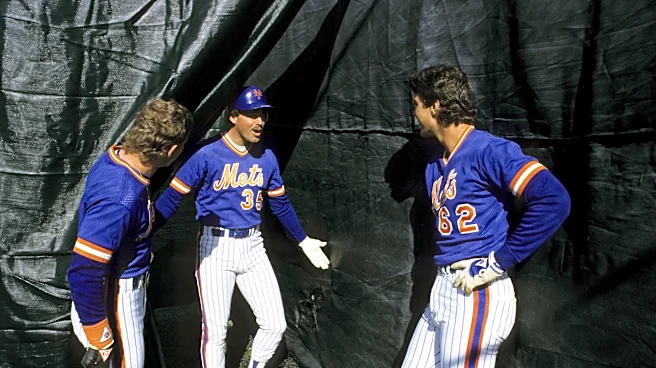
The magazine ran a story that week titled “The Curious Case of Sidd Finch,” about one Hayden Siddhartha “Sidd” Finch, a 6’4″, 180-pound nomad who grew up in an English orphanage and briefly attended Harvard. Finch then went to Tibet to learn “yogic mastery of mind-body.” He returned to the States, eventually turning up at one of the Mets’ minor league affiliates proclaiming, “I have learned the art of the pitch.” He proceeded to blow away Mets scouting personnel with his 168-mph fastball. The magazine even had pictures of Finch, a gangly specimen, wearing just one hiking boot, rearing back to throw, all the while adorned in a Mets jersey. It was outlandishly campy. Across the country, people asked, “Is this true?” Did the Mets somehow stumble onto a player so rare, so odd? After all, Plimpton was a notable and respected writer. Right? Right?
Being a regular subscriber to Sports Illustrated in those days, I remember receiving the Finch issue. I wish I had kept it. It might fetch something on eBay. The issue featured Patrick Ewing, Chris Mullin, and Dwayne McClain on the cover (Big East basketball was a thing in those days). On page 58, Plimpton introduces the world to Finch.
After reading a few paragraphs, the story was so absurd that I was certain it was a hoax. Plimpton was known as an eccentric and creative writer, so the Finch story would not have been a stretch for him. After all, this is a guy who played quarterback for the Detroit Lions—and took a ferocious beating doing it—just to get material for a book. The thought of an April Fool’s joke never crossed my mind, despite Plimpton dropping several hints in the story, such as this nugget:
“He’s a pitcher, part yogi and part recluse. Impressively liberated from our opulent lifestyle.” The first letter of each word spells out: Happy April Fools.
The story caused a national uproar, probably because the Mets were all in. Finch was assigned the number 21 and given a locker between Daryl Strawberry and George Foster. Lenny Dykstra took some practice cuts off Finch. Mets pitching coach Mel Stottlemyre was quoted multiple times.
Many Mets fans, slow on the uptake, were overjoyed about finding this unicorn of a player.
A New York sports editor even complained to the Mets’ public relations department for allowing Sports Illustrated to break the story.
Two general managers called baseball commissioner Peter Ueberroth asking about the phenom. A radio talk show host claimed to have seen Finch pitch. That part doesn’t surprise me. Radio talk show hosts, at least in those days, would say just about anything.
The story got some airtime on the major networks – all three, ABC, NBC, and CBS – as well as the St. Petersburg Times, which sent reporters to the Mets’ spring training complex for an April 2 press conference in which Finch announced his “retirement,” choosing instead to “play the French horn or golf or something.” Or something. That part always cracks me up.
Finch was brilliantly played by an Oak Park, Illinois, art teacher named Joe Berton, who happened to be 6’4″ with size 14 feet.
Sports Illustrated ran a small piece in its April 8 issue announcing the retirement. The hoax was finally revealed on April 15. You can still find the original story online, and it reads better today than it did in 1985. I dismissed the story as a waste of time when it first came out, but re-reading the piece forty years on, I now realize it’s a baseball classic.
It’s amazing that so many people believed the story when it appeared. I had a few conversations with baseball friends that started with, “Hey, did you hear about this kid with the Mets?”
Plimpton did a fantastic job of spinning the tale, including several hilarious paragraphs about Ronn Reynolds, a Wichita native who was assigned as Finch’s personal catcher. Plimpton also tracks down Finch’s Harvard roommate and even speaks to his landlady in St. Petersburg, a Mrs. Roy Butterfield. Finch even has an entry on the Baseball-Reference website.
Berton, a jovial fellow, still shows up occasionally at autograph shows, signing photos and bobbleheads. I didn’t like it back in 1985 but love it in 2026. The Mets should be selling Finch jerseys. Maybe they do.
The Royals have had a few phenoms in their history. One of the first was Steve Busby, who arrived in Kansas City with much acclaim after throwing a spring training no-hitter with Doug Bird. Busby looked like the second coming of Tom Seaver. He lived up to the hype and then some, throwing no-hitters in his first two seasons and becoming the ace of the Royals staff before arm problems derailed his career. Some internet maven recently published a piece on the top ten pitchers in Kansas City Royals history. Busby didn’t even make the honorable mention. I rarely get mad at stuff I read online, but this piece raised my body temperature by a few degrees. Busby is absolutely top ten all-time.
Clint Hurdle was the next Royals phenom, going as far as landing on the cover of Sports Illustrated. My father and I were sitting in the first row behind home plate when Hurdle hit his first major league home run, a prodigious blast that landed in the right-field fountains. Hurdle was only 19 at the time. On the drive home, Pop said that Hurdle could be the next Mickey Mantle. Hurdle never became the next Mick, though he did have a modest career. The real phenom of that time slipped under the radar. His name was Willie Wilson.
Every few years, the Kansas City media, with urging from the Royals front office, would tout another savior, but none really stuck until Carlos Beltrán, and then later Alex Gordon, arrived on the scene.
More recently, Bobby Jr. was the phenom of the day, and he has been everything that was advertised, and more. This year, all eyes turn toward Carter Jensen, a local kid who looks like he has the right stuff. I’ve seen him play a few times in the low minors, have followed his progress each season, and am thrilled to see him in Kansas City. Here’s hoping he can manage the expectations and have a wonderful career.