

The National Football League is a collection of sorts. It is comprised of two charter members, nine expansion clubs, and 14 franchises that started in another pro football league, while the remaining teams joined at various intervals or took over an existing franchise.
It is now 32 clubs, all wrapped up very tidily into two conferences with four divisions, which house four teams within each division.
RELATED: WHEN THE CARDINALS ALMOST MOVED TO EVANSTON, ILLINOIS
The Arizona Cardinals are the second
oldest pro football team in North America behind the Toronto Argonauts, and the oldest continuous NFL franchise. The team began as a local Chicago entity in an athletic club (now referred to as gyms).

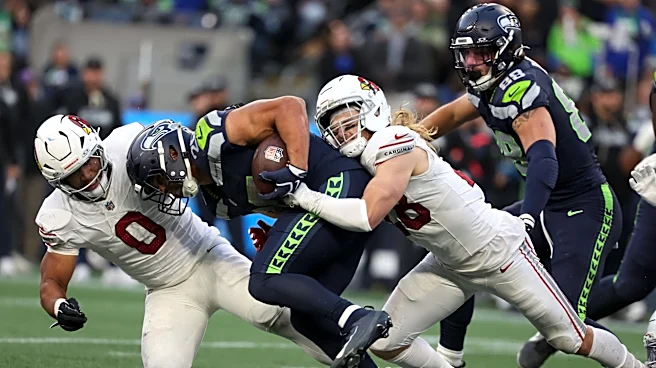
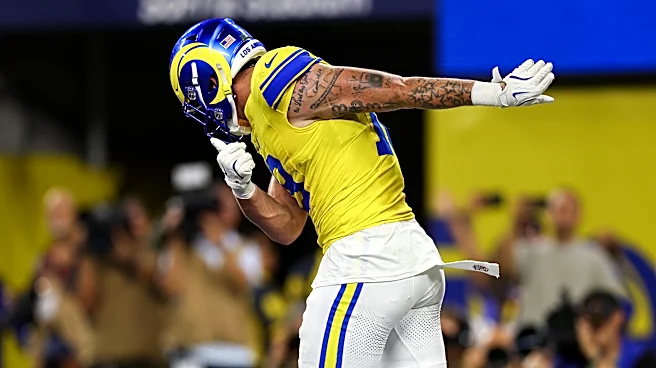
The Cardinals play the Los Angeles Rams this weekend, which are both members of the NFC West Division, one of the league’s most competitive. Arizona won their first match 18-16 in Week 6.
The Cardinals and the Rams have something in common that no other clubs share: They both called St. Louis, Missouri, home at some juncture, and each team consequently left this Midwestern city for greener pastures.
No other NFL club can hold this distinction. Just the Cardinals and the Rams.
From Chicago to St. Louis
The Cardinals began in 1898 as a gym team in Chicago off of Racine Street, which runs north and south and ends near the Little Calumet River and dumps into Lake Michigan. It is definitely South Chicago.
At the time, the game of American Football was in its infancy. The game was mainly inside runs and a lot of violence. The forward pass wasn’t even legal until l906, so the term “three yards and a cloud of dust” originated from this time period.

These athletic clubs served men who wanted to remain in shape and still compete in sports. So after a hard day in the courtroom, the pharmacy, the butcher shop, or construction, men would go to their local gym and work out, box, swim, lift weights, and do other assorted physical activities before they headed home.
Almost every gym had a baseball team and played against other athletic clubs. And because Chicago was so large, there were so many teams that were either formed in the local athletic clubs or were formed as neighborhood teams. During this time period, everyone loved baseball, everyone played baseball as a kid, and everyone went to see the hometown Cubs or White Sox.
This union of playing other neighborhood baseball teams became the basis of a loose entity commonly called the “Chicago Football League” once the sport of American Football began to take hold. It was a sport for the more rugged individual, the ones who liked contact and wanted to do a bit more athletically than stroke a ball and run bases. Over the years, this league saw around 150 teams come and go and had different divisions based on the weight of their roster members, similar to what boxing offers. Coming from athletic clubs, this made sense.
Because this athletic club had a baseball team, they now offered a football team. And the same opponents each club or neighborhood had already been playing made scheduling games easier.

Local house painter Chris O’Brien and his brother Pat formed the “Morgan Athletic Club” football team. They played their games at a nearby private park called “Normal Park,” which had wooden bleachers built for baseball games. It was just a matter of stripping off a gridiron for football contests. Because it wasn’t a city-owned facility, O’Brien could charge admission. The majority of these teams were named after streets, gyms, or neighborhoods, such as the Standards, Alpins, Cornell Athletic Club, the Ripmores, the Hamburgs, Ragen’s Colts, the Friars, the Iroquois Athletic Club, and the Young Royals, to name a few.
The O’Brien’s team was often referred to as “The Morgans.” They then became known as the “Racine Normals,” which designated a street and ballpark.
At some point, nearby University of Chicago Maroons were buying new uniforms for their football squad, and O’Brien offered to purchase the outgoing unies. He mentioned that the maroon uniforms were now faded a bit, and he called them “Cardinal red.” So, beginning in 1901, the Normals became the “Racine Cardinals.”

When the NFL began in 1920 as the “American Professional Football Association,” there were 19 clubs, all in the Midwest and along the Eastern Seaboard. As O’Brien was about to enter his Cardinals into this new venture, there was another team from Racine, Wisconsin, called the “Racine Legion.” To avoid confusion, O’Brien changed his club’s moniker to the “Chicago Cardinals.”
The Cardinals were purchased by Dr. David Jones in 1929, who sold the team to Charlie “Blue Shirt” Bidwill in 1932 on Bidwill’s fancy yacht.
After Bidwill passed away prior to the 1947 NFL season, in which the Cardinals won the league championship, his wife Violet took over ownership. She remarried several years later to Walter Wolfner, who was a St. Louis businessman and became the team’s managing director.
In 1954, Wolfner organized an annual preseason game for the Cardinals to be played in St. Louis called the “Cardinal Glennon Charity Game,” which benefited Cardinal Glennon Children’s Hospital and remained a staple of the team’s preseason schedule for over two decades.

In 1958, Texas oilman Lamar Hunt tried to buy the Cardinals and relocate the team to his hometown of Dallas. The next year, the Wolfners offered Hunt a 20% stake in the franchise, but the team would remain in Chicago. Instead, Hunt formed the “American Football League” and placed his own team in Dallas. Later, this team relocated to Missouri and became the “Kansas City Chiefs.”
The Cardinals played their home games at Comiskey Park, home of the White Sox on Chicago’s south side. It was built in 1909 for baseball games, and by the late 1950s needed a lot of work and enhancements. The White Sox owned the park and balked at expensive repairs and upgrades, so Wolfner looked at other stadium options.
In the late 1950s, Wolfner mulled over his idea to seek out a new place for the Cardinals to play, and the franchise could make money and survive. He had roots in St. Louis, where he made his fortune as a coffee broker. All Violet had known was Chicago, and she didn’t want to move anywhere.
Dyche Stadium on the campus of Northwestern University had been recently renovated. The advantage of this venue is that it did not have a track that went around the football field, which moved the seats up closer to the action. The university was just 33 minutes north of downtown Chicago.
An agreement was made with Northwestern to house the Cardinals on Sundays. However, a document called the “Madison Street Agreement” prevented the move. This agreement was between the owner of the Chicago Bears, George Halas, and former Cardinals owners Dr. Jones and later Bidwill. The league stepped in and nixed the Cardinals move to Dyche Stadium.

Because Wolfner had ties to St. Louis, there was an annual preseason game already in place, and the franchise’s inability to find a suitable place for home games, the team relocated to St. Louis beginning with the 1960 season and was christened the “St. Louis Cardinals.” Because there was already a baseball team with the same name, the gridiron team was often referred to as the “St. Louis Football Cardinals,” similar to the situation in New York City and the “New York Football Giants.” Both the baseball and football teams shared Busch Stadium.
The Football Cardinals remained in St. Louis until 1987, when they relocated to Arizona and became the “Phoenix Cardinals.”
From Los Angeles to St. Louis
The Los Angeles Rams began as the Cleveland Rams in 1936, as the second entity named the “American Football League,” often referred to as AFL2. After this league folded, the Rams’ owners petitioned for membership in the NFL and began play in 1937. Cleveland won the NFL Championship in 1945, and the team relocated to Los Angeles the next year as air travel became available instead of traveling by train.

The Rams played their home games in the cavernous “Los Angeles Memorial Coliseum,” which held 103,000 patrons. The issue with using this facility was that every other football team played its home games there as well. The upstart “All-America Football Conference” had a team called the “Los Angeles Dons” that had a lease. Both USC and UCLA played their home games at Memorial Coliseum. Scheduling issues were prevalent.
The Rams played in LA from 1946 until 1994 and won the 1951 NFL Championship, the franchise’s second title. From 1973 to 1980, the Rams went to the playoffs every season, losing four NFC Championship Games and one Super Bowl.

In 1980, they moved away from the Coliseum and became a tenant of Anaheim Stadium, home of the baseball Angels.
Then the team made another good run from 1983 to 1989, where every year (except 1987) they played in the postseason and lost two NFC Championship Games.
But beginning with the 1990 season, the Rams fell on very hard times. They won 5, 3, 6, and 5 games before going 4-12-0 in 1994. Whereas in the 1960s and 1970s it was a place to be seen, surrounded by various Hollywood celebrities, support for the Rams had withered to the point where they were barely part of the Los Angeles sports landscape any longer. Their stadium was built for baseball, and situating a football gridiron into odd corners had posed issues from Day 1.
The Rams had been diligently seeking new stadium options but were unable to secure an improved venue plus a deep recession in the nation’s most expensive state. Politicians got involved, and any notion of a publicly-built stadium quickly became rebuffed and an afterthought.
Team owner Georgia Frontiere decided to relocate her team and found the welcoming arms of St. Louis. At the time, any relocation required a two-thirds vote of approval from the other league owners. They voted 21-6 against the move (with two abstentions). Frontiere threatened a lawsuit, and wary of going through a long, protracted legal battle, the owners held another vote, this time approving the move by a tally of 23-6.

The now “St. Louis Rams” played in Busch Stadium for one season while the brand new “Trans World Dome” (now renamed “The Dome at America’s Center”) was being completed with a seating capacity of 67,277.
From 1999 to 2001, the Rams were known as “The Greatest Show on Turf” and won Super Bowl XXXIV, their third franchise title, and then lost Super Bowl XXXVI.
In 2016, the Rams moved back to Los Angeles.
The City of St. Louis has had the St. Louis Gunners (1931-1939), the St. Louis Blues (1934), the St. Louis Cardinals (1960-1987), and the St. Louis Rams (1995-2015). Today, the UFL has placed the St. Louis Battlehawks in The Dome, which annually leads the league in attendance.
Barry Shuck is a pro football historian and a member of the Professional Football Researchers Association