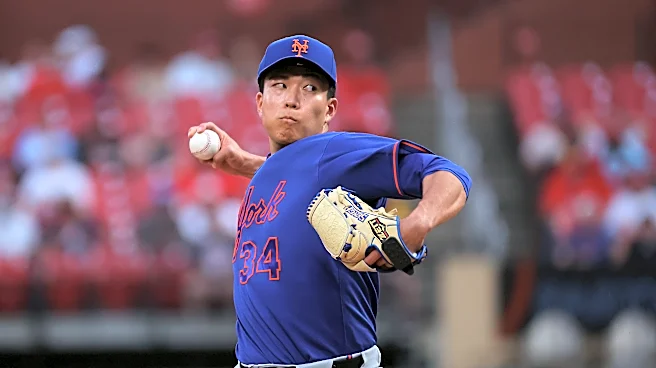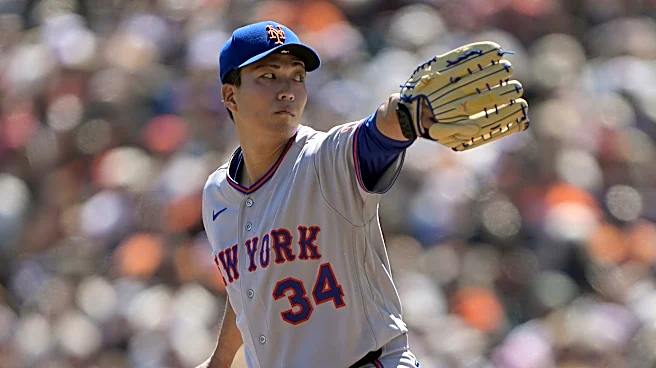




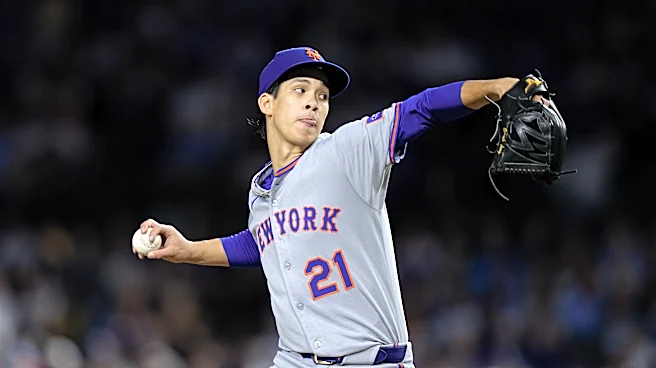
In his first thirteen starts in 2025, Kodai Senga led all qualified starting pitchers in baseball with a 1.47 ERA. But even before he suffered a hamstring injury in mid-June that wound up derailing his season, it was reasonable to wonder whether or not his early-season performance was sustainable.
Coming off a 2024 season that saw him throw just a handful of innings very late in the regular season and during the Mets’ playoff run to the National League Championship Series, Senga’s strikeout rate was
down nearly seven percentage points—from 29.1 to 22.6 percent—when compared to his excellent 2023 season. And his fastball had lost some of its zip, as he was averaging about 94.5 miles per hour through the middle of June, a decrease from his average of 96 miles per hour in the ‘23 season.
Thanks largely to his decreased strikeout rate, Senga had a 3.24 FIP and a 3.37 xERA at the time of the hamstring injury. Pitchers don’t always see their ERA regress to predictive metrics like those, but it would’ve been fair for an observer to wonder whether or not he’d keep being that good without finding more strikeouts or doing something differently—like cutting down on walks—to compensate for the lack of whiffs.
We never got to find out what that version of Senga’s season would have looked like, though, and he was very clearly not the same pitcher when he returned from the injured list following a one-outing rehab assignment with the Double-A Binghamton Rumble Ponies.
The remainder of the 2025 season was a disaster for Senga and the Mets. In nine starts following his return, Senga had a 5.90 ERA and a 5.76 FIP. His strikeout rate remained down, but his walk and home run rates skyrocketed. And as the Mets were desperate for effective starting pitching down the stretch as they attempted to salvage a once-promising season, Senga found himself demoted to Triple-A Syracuse. He made his final two appearances of the season at that level as the Mets ultimately missed the playoffs by one game.
Early in the offseason, Senga’s named was included in reputable trade rumors alongside Brandon Nimmo and Jeff McNeil, both of whom were actually traded not too longer afterwards. And as the Mets put their 2026 rotation together, nobody really knew if they could expect to get anything out of Senga.
It’s amazing what a couple of starts can do to change perception of a player, though. Senga has struck out 34.0 percent of opposing hitters across his first two outings, and his walk rate is massively improved when compared to what it looked like post-injury last year. On top of that, he’s thrown harder in these two starts than he did in 2023, as he’s averaged 96.6 miles per hour with his fastball. And while he hasn’t faced a powerhouse lineup yet, the fact that he hasn’t surrendered a home run is still a good thing.
Add it all up, and Senga has a 3.09 ERA and a 1.74 FIP. Yes, it’s very, very early, and durability is a legitimate concern given the way things have gone with injuries over the past two seasons. But as a fan, it’s hard not to get excited about this version of Senga, a pitcher who’s been quite effective as is and has the underlying metrics suggesting that he should be even better moving forward.