

I remain, possibly foolishly, optimistic that the coming lockout won’t be as bad as some others say. Baseball’s having a bit of a hot streak, with the Dodgers playing the key role of central villain, young studs like Cam Schlittler and Jacob Misiorowski taking on the mantle of a baseball game’s protagonist, and we just saw in the World Series that it’s possible to win without just emptying your bank account to do so. Add to it that there’s this… general air of anger towards billionaires, toward the elite,
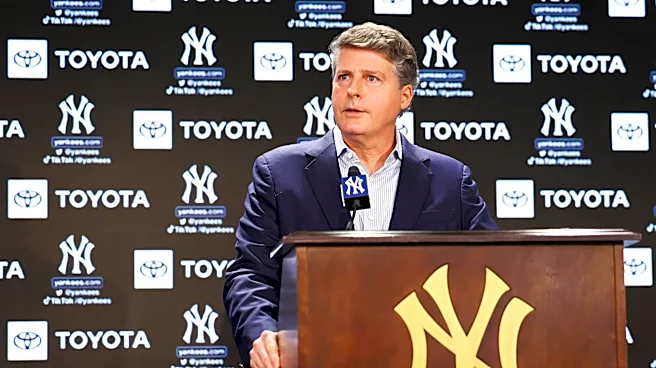
that the likes of Steve Cohen and Hal Steinbrenner sneering about competitive balance will be less effective than I think they think it will be.
Still, I’m a naturally cynical person, and I also understand how money works. Ownership is committed to a salary cap, and we know this because Hal himself has said so. CBA negotiations will go someway along the lines of the player’s union disregarding Item No. 1, a salary cap and floor, and ownership refusing to engage until the union agrees to negotiate on Item No. 1.
Many have noted the irony that a cap/floor system would probably cost Bob Nutting or Bob Castellini or various other small-market Bobs more money on a year-to-year basis. A cap of $280 and floor of $120 (all moneys in millions of USD) would cost Nutting an additional $14 million based on his 2026 payroll allocation, meaning he’s forced to sign two relievers.
But the key to a capped system is cost certainty, and what that certainty feeds. Year over year income is just less important than appreciation of the central asset, the franchise itself. Franchise valuation is the whole game here, as we’ve seen the Angels sell for four billion dollars, the Yankees agree to a $12ish billion valuation with Apollo, a private equity firm, and Mark Warner able to sell the LA Lakers at just about the same price.
If certainty is the deadly enemy of tolerance, it is the great friend of the marketplace. Being able to project out three, five, ten years into the future what your payroll is going to be means your costs are relatively stable, while your income has upside in the form of new TV and streaming deals, as well as non-baseball revenue streams. This increases your franchise valuation, and critically, you’re able to borrow against that valuation to further invest — the Atlanta Braves and Washington Nationals, for example, are real estate developers that occasionally play baseball, and those valuations fund that development. That clubs are then able to write off the interest on those loans to lower their taxable income isn’t to be overlooked either.
That’s my biggest fear, the biggest obstacle to a short lockout that leaves the season mostly untouched. The owners can stomach some pain because of the windfall that will come if a cap controls their costs going forward. Even a cap negotiated to rise over time still presents that cost certainty, even a change to the arbitration system presents that cost certainty.
I hope that the general cultural attitude toward the rich burns out any of the “millionaires playing a children’s game” rhetoric that ownership will rely on. I hope that the MLBPA strike fund is sufficient to hold over the younger players who haven’t signed their guaranteed deals yet. I’m worried that the perceived necessity of juicing franchise valuation will win out over all of that.