



By the mid-1970s the Yankees were starting to get over that hangover of some 30 years of baseball dominance, with the team finding a clutch of new young talent to replace the legends like Mickey Mantle or Whitey Ford who had eventually left the sport. Thurman Munson was the captain by 1976, Graig Nettles was well on his way to becoming one of the more underrated players in Yankee history, and the club made it all the way back to the World Series. They did run into the Big Red Machine out of Cincinnati,
who swept the resurgent Bronx Bombers on the way to being baseball’s only undefeated postseason champion since MLB began divisional play in 1969.
Owner George Steinbrenner began to get more and more involved in the day-to-day management of the Yankees, and the allure of starpower would become an addiction The Boss would deal with throughout the ’80s in particular. Before getting there though, a former MVP was putting up five and six win seasons for AL rivals, and in the winter of 1976, Reggie Jackson became a free agent. He would become the linchpin that would push the rambunctious ’70s Yankees across the top.
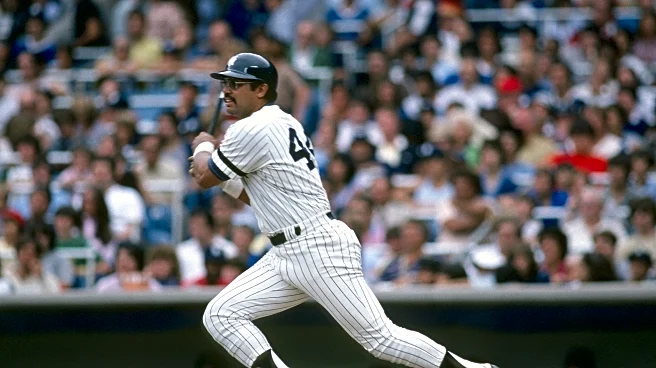
Reggie Jackson
Signing Date: November 29, 1976
Contract: Five years, $2.96 million
In his first 10 years in MLB, Jackson established himself as one of the great hitters of his time — even as he set strikeout records seemingly every season. The outfielder was an All-Star and received MVP votes every season from 1968 to 1976, save for a “down” year in 1970. Perhaps more crucially, Jackson was a massive part of the emergence of the Oakland Athletics from the late ’60s into the early ’0s, forming a Big Three of sorts with Sal Bando and Joe Rudi, with Vida Blue and Catfish Hunter forming a devastating top two in the club’s starting rotation and closer Rollie Fingers slamming the door.
Those Athletics teams would mirror the environment Jackson would find in the Bronx a half-decade later, with a rather snappy and contentious clubhouse. Despite the sometimes outward hostility between teammates, the club rattled off three consecutive World Series titles between 1972 and ’74, a feat only the Yankees themselves have ever matched — and I will take a second to formally jinx the 2026 Dodgers.
It was in this run that Reggie established what would be the biggest part of his Yankee legacy, postseason excellence. The 1973 World Series MVP ended up notching an .818 OPS across seven playoff series with the Athletics, and a hilarious 1.004 OPS in the two Fall Classics he played in — missing the ’72 Series after being injured in the ALCS. Reggie could hit, could hit when the lights were brightest, and could handle the choppy waters of a sometimes-dysfunctional clubhouse.
As Peter Seitz’s decision to nullify the reserve clause and let Andy Messersmith and Dave McNally become free agents came down in 1975, Jackson began to dream of negotiating his own deals and getting away from Oakland’s stingy owner Charlie Finley. A trade to the Baltimore Orioles led to a year in orange, where Reggie led the league in slugging and adjusted OPS — despite missing the season’s first month in a contract holdout — but there were brighter lights waiting.
The Yankees won the bidding against Baltimore and magnate Charles Bronfman’s Montreal Expos, landing a player commanding a higher salary than anyone on the defending AL pennant winners. From the word go, manager Billy Martin didn’t like his new superstar, perhaps with the distaste starting all the way back in 1972, when Jackson’s A’s bested Martin’s Tigers in the postseason. Martin himself much preferred Jackson’s old Oakland teammate Rudi, but Steinbrenner would not be denied.
Coming into the Bronx, Nettles was wearing Reggie’s customary No. 9, and pitching coach Art Fowler (Martin’s drinking buddy) had No. 42, the right fielder’s second choice. In tribute to the recently-retired Henry Aaron, Jackson asked for and received No. 44, the number he would have on his back for the rest of his career and indeed one that would eventually be retired by the Yankees.
It was a bumpy beginning for Reggie in pinstripes, partially of his own volition. By June, a preseason interview he gave with Sport magazine had hit the shelves, and he called himself “the straw that stirs the drink,” also saying that the captain Munson “could only stir it bad.” This understandably made the clubhouse mad and led to a distance between Jackson and his teammate. It only got worse in Boston on June 18th, when the heat between Martin and Jackson would come to a head. The right fielder misplayed a ball off the bat of Jim Rice, and his manager became convinced the big star was dogging it in the outfield. On national television, Billy pulled Reggie mid-inning as punishment, and the resulting shouting match in the dugout probably would have led to punches thrown if coaches Yogi Berra and Elston Howard didn’t physically restrain their former dynasty teammate and the current star.
You can’t exactly pin the moment the Bronx became a Zoo, but perhaps that WPIX broadcast was it. Still, the Yankees would end up winning the AL East, and the stage was set for Jackson to continue his playoff excellence for the team that demands it the most.
And it went poorly, to start. Against the Royals in the ALCS, Jackson started the series 1-for-14, benched by Martin in the critical Game 5. Pissed off to high heaven, Reggie got one shot to make an impact as he was called upon to pinch-hit in the eighth:
That RBI single brought the game to within a run and the Yankees would end up coming all the way back, earning a World Series showdown with the Los Angeles Dodgers. Once again, Reggie would start the series cold before home runs in Games 4 and 5 gave the star a chance for a brand new nickname back in the Bronx:
If you’re keeping track at home, that is a 1.792 OPS in the World Series against the NL’s best, and what a way to earn a return on that big free agent contract. Reggie Jackson was the World Series MVP in wake of his three-homer grand finale, and the Yankees had their first title since 1962. The press dubbed Jackson “the black Babe Ruth”, and while he wasn’t quite as good in the regular season in 1978, he helped bring another World Series title to the Bronx, this time under skipper Bob Lemon (a general first-half malaise in the Bronx eventually led to a Martin meltdown and resignation, specifically after damning comments against Jackson and Steinbrenner). A “mere” 1.200 OPS in the ‘78 Series wasn’t enough for his second WS MVP in pinstripes, but two years into that landmark deal, it would be impossible to deny that Reggie was worth it.
Of course, that would be the highest the Zoo could climb. Martin returned in midseason 1979 with the Yanks at 34-31 under Lemon, but it was Munson’s sudden death in early August that shook the franchise to its core. Although Jackson and Munson had their squabbles, by then he was a familiar passenger of Munson’s in the air, and he was unquestionably rattled as well. A fourth-place finish without their captain led to Martin’s second firing, and while Reggie would have his best season in pinstripes under replacement Dick Howser (a 169 wRC+ and a league-best 41 homers for the AL MVP runner-up), the Royals began their haunting of the Yankees in the ‘80s, meeting, beating, and sweeping the Bronx Bombers for the first time in 1980.
One last trip to the Series came in 1981, another showdown with the Dodgers in a strike-shortened year. A calf injury held Jackson out for the first three games, and yet another World Series OPS over 1.000 wasn’t enough to beat LA. Jackson’s final moments as a Yankee came in a losing Fall Classic effort. He went West to California, inking a four-year deal with Gene Autry’s Angels and regretting the decision to sign in New York in the first place.
It’s a funny thing, that Reggie Jackson in his own autobiography (co-written with Mike Lupica) would so publicly decry that five-year commitment. In just half a decade he carved his name into World Series and Yankee history broadly, indeed he has the shortest tenure of anyone enshrined in Monument Park. Jackson perhaps had the perfect first season as a big-money free agent, and perhaps heightened expectations for players coming to the Bronx, and those expectations have had a knock-on effect ever since.
Still, the roles a tempestuous manager and a thirsty media played in Jackson’s time in New York seemed to make every day, indeed every offhand quote, a labor. Without all that pressure, it’s possible Reggie actually puts up better numbers in a different city — but he probably doesn’t become Mr. October.
See more of the “50 Most Notable Yankees Free Agent Signings in 50 Years” series here.