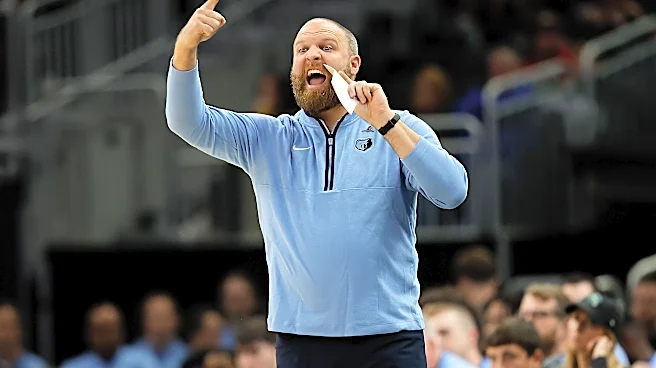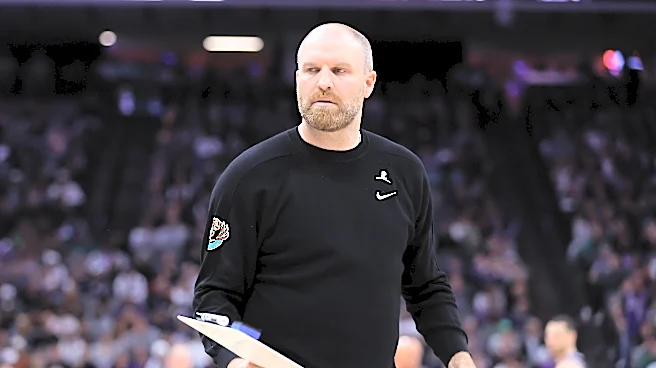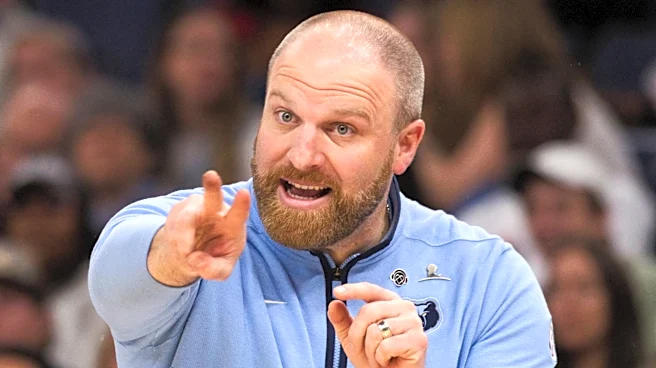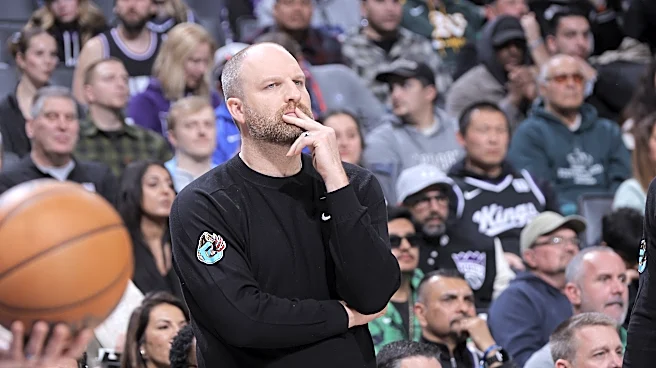







On Thursday, news broke that the Milwaukee Bucks will hire Taylor Jenkins as their new head coach. This came just 11 days after it was announced that Doc Rivers would no longer be coaching the team, which itself came out on the same day their 2025–26 season officially ended. If these were clues to a word game, the answer would be “decisive.” And for this, Bucks fans should be ecstatic.
The coaching search
Following Mike Budenholzer’s departure from Milwaukee after the Bucks lost in the first round of the playoffs to
the eighth-seeded Miami Heat in 2023, the Bucks’ coaching charge has been a carousel of poor decisions. Yes, Adrian Griffin led the team to a 30-13 start to the 2023-24 season, and yes, Rivers was rightfully inducted into the Hall of Fame while coaching the Bucks. But anyone with a pair of eyes and some nous could tell you they weren’t the right men for the job. And boy, did we ever—especially with Rivers. Jack cited his poor clutch-time offence, Jackson called for his job after a loss to the Washington Wizards, Finn seemed prescient calling for a new coach—though not necessarily a first-timer, and Van took umbrage with Rivers following an embarrassing loss to the Chicago Bulls. Of course, you could see it too—fans were done with Rivers by November. Ultimately, though, the Bucks’ head coaching failures have been part of a much larger separation-of-powers problem. The Jenkins hire suggests that balance may be restored.
First, it signals strategic patience. If the Bucks had done what we had all called for and fired Rivers mid-season, not only would it have been messy, but chances are it wouldn’t have been successful. A 2017 study by José A. Martínez fouund “that changing a coach only improved performance in approximately 12% of cases, and instead decreased performance in approximately 5.20% of cases and had a neutral effect in the majority of cases (approximately 83%).” Similar results were found by Berry Tramel in 2018, who determined that only 37 of 152 midseason coaching changes in the previous 50 years had been success, while the “overwhelming majority of changes didn’t seem to matter.” Of course, the Bucks only had to look back to their own midseason firing of Griffin and hiring of Rivers to know this. So, by keeping Rivers, the Bucks showed poise—that they’ve learned from past mistakes—avoiding a knee-jerk reaction in order to make a move at the right time—the offseason.
In addition, hiring Jenkins just 11 days after Rivers’ departure indicates the move was planned and that there is a clear direction moving forward. While some might have wanted a prolonged search that thoroughly interrogated every available option—or even waited for potential candidates to become available—we’ve seen that show before. Following Mike Budenholzer’s dismissal, the Bucks worked through an arduous Bachelor-like process that included initial groups of candidates before narrowing to finalists, eventually selecting Griffin—only to fire him less than eight months later. Conversely, the swiftness of Jenkins’ hiring signals conviction. Decisiveness. It declares, loud and proud, this is our guy, and we’re not mucking around. These sorts of decisions aren’t made when there’s doubt. And they certainly aren’t made when there’s a disjoint between the powers that be.
Finally, Jenkins’ hiring preserves optionality. Should Giannis sign an extension, Jenkins is the man for the job, a proven coach with multiple 50+ win seasons and four trips to the playoffs—in the vaunted West, no less (more on that below). But should Giannis request a move—or get traded if he doesn’t extend—and the Bucks rebuild, Jenkins is also the right man for the job, having excelled with youth and player development.
What to expect with Jenkins
Following a lengthy tenure as assistant coach under Budenholzer—five years with the Atlanta Hawks and one year in Milwaukee—Jenkins was hired as head coach of the Memphis Grizzlies to start the 2019–20 season. There, he coached the team for five full seasons before being let go with just nine games left in the 2024-25 season. In that time, the Grizzlies were generally very successful, with Jenkins ranking first in franchise history for total wins as a coach (250) and third in winning percentage (53.9%) behind Lionel Hollins and Dave Joerger, who had the luxury of coaching Memphis through the Marc Gasol, Zach Randolph, Mike Conley Jr., and Tony Allen-led “Grit and Grind” era. As the table below attests, the Grizzlies were immediately better once Jenkins was hired—and immediately worse when he was let go:

Jenkins began his head coaching career with a nearly brand-new Grizzlies squad. Franchise icon Marc Gasol had been traded to the Toronto Raptors in exchange for a package headlined by Jonas Valanciunas during the 2018–19 season, while Mike Conley was traded to the Utah Jazz for Grayson Allen, Kyle Korver, Jae Crowder, and draft picks in June. Key veteran Garrett Temple was traded for Avery Bradley the season before too, only for Bradley to be waived in July. In all, six of Memphis’ top seven players in minutes per game were gone.
Instead, Jenkins took over a team full of youth. Rookie Ja Morant led the team in minutes, followed by Crowder, third-year Dillon Brooks, sophomore Jaren Jackson Jr., Valanciunas, and rookie Brandon Clarke. Other key contributors included Kyle Anderson, sophomore De’Anthony Melton, sophomore Grayson Allen, and Solomon Hill. In total, seven of their top 11 players were 24 years or younger. Six had two or fewer years of experience. Still, they finished just one game out of the playoffs behind the eighth-seeded Portland Trail Blazers, who they lost to 126-122 in the inaugural play-in game.
One year later, despite Jackson being limited to just 11 games, the Grizzlies would make the playoffs. Relying on even more youth—rookies Desmond Bane and Xavier Tillman—Jenkins guided the Grizzlies to an overtime play-in win against the Stephen Curry and Draymond Green-led Golden State Warriors despite having just a 27.8% change of doing so to begin. Though they ultimately lost 4-1 to the Utah Jazz in the first round, the promise was evident.
In 2021–22, that promise came to fruition. Morant was named an All-Star, Most Improved Player, and made the All-NBA Second Team, and finished seventh in MVP voting. Jackson was named to the All-Defensive First Team and was fifth in Defensive Player of the Year voting. Melton, Tyus Jones, and Clarke all received Sixth Man of the Year votes as the Grizzlies finished second in the Western Conference. New acquisition Steven Adams was hugely impactful too, especially on the boards—he led the league in offensive rebounds—and when screening for Morant. In the playoffs, Memphis beat the Minnesota Timberwolves 4-2 in the first round, before losing 4-2 to the Golden State Warriors in the semifinals.
2022–23 saw sustained regular-season success—a key marker for any coach. The Grizzlies again finished second in the West, as Morant was once again named an All-Star; Jackson earned DPOY and All-Defensive First Team honours; Brooks was selected to the All-Defensive Second Team; and Jones finished sixth in 6MOY voting. In the playoffs, however, the Grizzlies fell to the Los Angeles Lakers in the first round, 4-2, losing Game 6 by a whopping 40 points. It would be an omen of things to come.
The Grizzlies were decimated by injuries during 2023–24, with Adams missing the entire season, Morant limited to just nine games, and Bane playing only 42. Making matters worse, newly-acquired Marcus Smart—who the team had acquired as part of a three-team deal that saw Memphis give up Tyus Jones and two first-round draft picks—played just 20 games. All things considered, winning 27 games with Vince Williams Jr., GG Jackson, John Konchar, David Roddy, and Ziaire Williams as five of your top eight players in total minutes is pretty impressive.
Jenkins’ final season with the Grizzlies, the 2024–25 season, seemed to have the writing on the wall from the beginning. Prior to the season, general manager Zach Kleiman overhauled the coaching staff, bringing in six new assistants to combat struggles with half-court offence. It seemed to be working too, with the Grizzlies going 35-16 to start the season. But after a 9-14 slump, Jenkins was fired, with Kleiman citing a need for “urgency” and “clarity of direction.” The Grizzlies, fifth in the Western Conference at the time Jenkins was dismissed, ended up eighth before being swept by the Oklahoma City Thunder in the first round. This year, they went just 25-57, finishing 13th.
So, what can Bucks fans take from all of this? Despite the Grizzlies’ half-court struggles on offence, they finished with an 11th-or-better ranked offence three times in five seasons under Jenkins (not including the injury-riddled 2023–24), twice finishing top six. Jenkins’ teams also tend to play with pace, finishing in the top eight five times. And while three-point volume hasn’t typically been a priority, there has been growth there too, with the early Jenkins-led Grizzlies finishing 23rd or 24th in attempts and the teams either side of that 2023–24 season finishing 11th and 13th. Defensively, Jenkins’ teams have consistently been strong, highlighted by three top-seven finishes, and have finished no worse than 14th in defensive rating. Both of these bode well for a Bucks team that was neither offensively nor defensively proficient this year, finishing 24th in offensive rating and 26th in defensive rating.
Jenkins’ Grizzlies also regularly succeeded as a rebounding team, something that was so obviously an area of need for this year’s Bucks (who finished 26th in rebound percentage). Again, excluding 2023–24, they had three top-10 finishes, including rankings in first and third, while never finishing below 14th. And while Steven Adams was certainly a pivotal part of Memphis’ success on the boards, Jenkins only had him for two seasons and 118 games. Similarly, he only had Valanciunas for two seasons and 132 games. Outside of these—and one season with Zach Edey (8.3 RPG)—Jenkins has never had a single player average over 6.8 RPG. This bodes well for a Bucks team that does have good individual rebounders—Giannis, Jericho Sims, Bobby Portis, Kevin Porter Jr.—but hasn’t been able to get it done as a collective unit.
All things considered, Jenkins’ hiring is an inspired one. It represents a Bucks franchise that is back on the same page, while simultaneously giving it direction for both of its conceivable paths moving forward. Win now or youth movement, Jenkins is the man for the job. And with that big question mark decisively out of the way, Jon Horst and his team can now focus on the upcoming draft and free agency period to ensure that 2026–27 looks absolutely nothing like 2025–26.