




As the WNBA approaches the All-Star break, most teams around the league are looking to solidify their player rotations and minutes distributions. For the Atlanta Dream, however, missing All-Star Brionna Jones has prevented the team from reaching its full potential. The expectation is that Jones returns to play in the next month and is hopefully able to contribute to a deep playoff run for the Dream. Let’s take a look at what the team is missing without Jones, how they have attempted to replace her
minutes, and what options the team has going forward.
Brionna’s Background and 2025 Performance
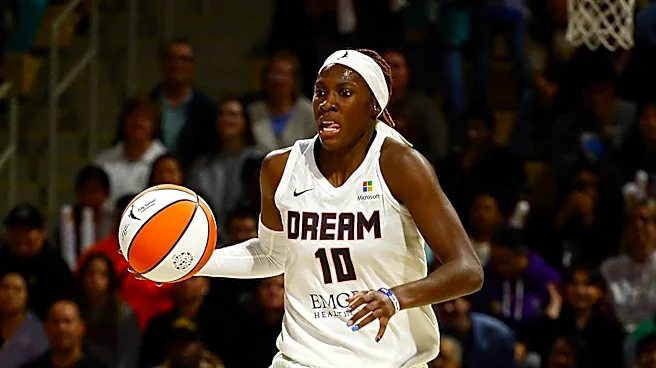
Brionna Jones was signed by the Atlanta Dream as a free agent before the 2025 season. She averaged 12.8 points and 7.3 rebounds in 26.6 minutes per game, shooting 52.7% from the field. Throughout her nine-year career (including her dominant breakout years in Connecticut), Jones has been a hyper-efficient play-finisher. Her career 55% FG reflects her solid footwork and disciplined shot selection. Listed at 6’3” and 215 lbs, Jones has the strength to dominate the offensive glass, provide a reliable release option for her teammates, and efficiently finish the shots that she takes.
Angel Reese Impact for Atlanta
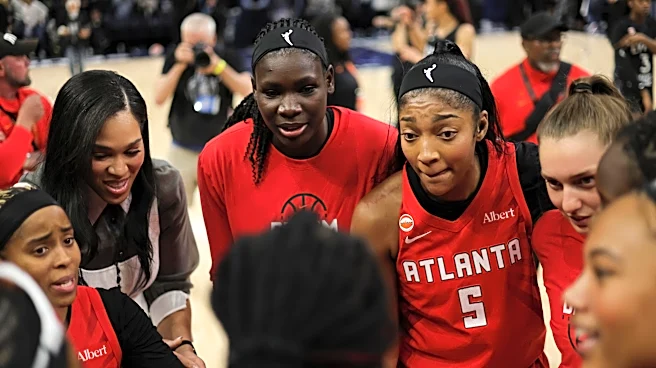
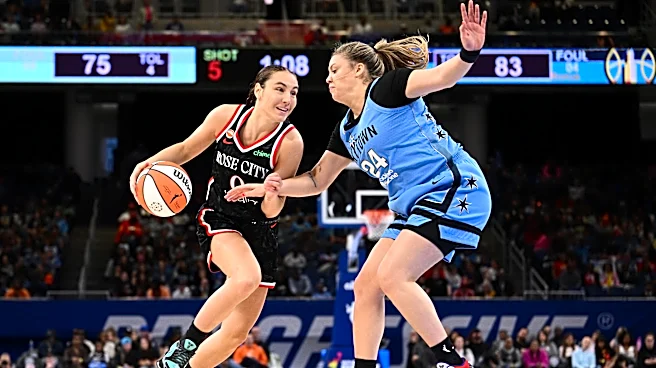
Although Angel Reese primarily played at the four for Chicago alongside Kamila Cardoso at the five position, she has taken on the center role for the Dream in Brionna Jones’s absence. On the positive side, Angel is scoring at a slightly higher rate than in her first two seasons in Chicago, with 14.8 points per game. She is getting to the free throw line more consistently and making more free throws per game. She has also maintained her steal and block rates from last season.
Angel has also continued her elite rebounding, especially on the offensive glass. She leads the league in rebounds total per game at 11.6, with a whopping 5.4 offensive rebounds per game. To put that in perspective, the gap between Angel at the top of the OREB leaderboard and Natasha Howard, in second place with 3.4 offensive rebounds per game, is bigger than the dropoff from Howard to Breanna Stewart in 25th place. According to www.pbpstats.com, only 11 of Angel’s 221 rebounds (at the time of writing) were “me-bound” rebounds off her own missed shots. If you subtract Angel’s me-bounds, she still has as many offensive rebounds as Howard and Stewart combined.
The two biggest concerns with Angel’s offensive play this season are her shooting percentages and her turnovers. In terms of shooting, Angel has a 41.3% field goal percentage, down from 45.8% in 2025 with Chicago. Of the 24 players in the league who have taken at least 200 field goal attempts, only six have a worse field goal percentage. Only three players in the league have a worse field goal percentage on two-point attempts than Reese’s 44.3% (Arike Ogunbowale at 32.5%, Skylar Diggins at 38.6%, and Flau’jae Johnson at 42.4%).
The concerns with Angel’s shooting are not just statistical, but can also be seen on the court. She opened Saturday’s game against Seattle with a deep midrange shot that is not typically seen in a Karl Smesko-led offense. She is shooting just 10% on three-point attempts. Reese also has a tendency to attempt tough contested layups; when combined with her low release point, Angel is getting more than a shot per game blocked (29 blocks against in 19 games this season, according to Her Hoop Stats). In comparison, Brionna Jones had 28 shots blocked in her 44 games played in 2025. Additionally, if Angel is knocked to the ground on her missed shots or if her momentum carries her off the court, this impacts Atlanta’s transition defense as they have to compensate for her missing presence in the paint.
In terms of turnovers, only Caitlin Clark has more lost ball turnovers (from losing control of the basketball or having it stolen, rather than a turnover resulting from a bad pass) than Angel Reese this season, while handling the ball more in a guard role. Clark, Alyssa Thomas, and Olivia Miles are the only players with more total turnovers in the league, but they all have assist to turnover ratios that are more than double Angel’s ratio. So while they are turning the ball over more, it is tied to their volume of passing and assists. This has been a concern for Reese throughout the season. Additionally, these turnover numbers do not take into account Angel’s 67 personal fouls, which is third-most in the WNBA (behind just Laura Juskaite and Natasha Howard). These fouls cost Atlanta possession at times, limit Reese’s ability to stay on the court, and allow Atlanta’s opponents more opportunities at the free throw line. While Angel has had stretches of protecting the basketball, she needs to improve her ball security as the season continues. Perhaps playing alongside Brionna Jones upon Jones’s return will take some of the defensive pressure off Reese, so that she can increase her shooting efficiency and limit her impactful turnovers.
Off the Bench
When Angel Reese is out of the game or when Coach Smesko wants more height on the court to play alongside Reese, the next frontcourt option off the bench for Atlanta has been rookie Madina Okot. As broadcasters love to discuss, she has only been playing basketball for six years. She transferred to South Carolina to play under Dawn Staley after playing at Mississippi State. For the Gamecocks, Okot had 22 double-doubles, while averaging 10.6 rebounds per game, with an impressive 149 offensive rebounds. There are many South Carolina faithful among the Atlanta fan base, so Dream supporters were happy to add another Gamecock to the squad.
In the WNBA, Okot has shown moments of the interior dominance demonstrated in college, while also displaying some understandable growing pains as a first-year player in the league. She has averaged 9.6 minutes per game, scoring 5.5 points per game, with 3.6 rebounds per game. Okot had a fantastic double-double against A’ja Wilson and the Las Vegas Aces, as well as a season high against Toronto earlier in the month with 18 points. While she has shot 60% from the field, she has 1.3 turnovers per game in her limited minutes. Even when just comparing her in the context of her first-year class, Okot has the most turnovers (25) for any rookie with less than 185 minutes played.
The next option off the bench after Okot for Atlanta has been Sika Koné. Although she did not have any games with more than four minutes played in 2025 for the Dream (in ten appearances in both the regular season and post-season), she has earned a bit more playing time in 2026. She has appeared in eighteen contests for the Dream, with three games playing double-digit minutes. Her best game came against Washington on June 6th, when she racked up six rebounds and nine points, albeit in a blowout 32-point Atlanta victory. Koné rebounds well, but gets attacked at the rim more than Atlanta’s other options, and does not seem to be trusted by the coaching staff enough to play significant minutes with the starters in close games.
Looking to the Future
The hope is that Brionna Jones will return soon to provide the reliable and consistent performance in the frontcourt that she showed in 2025 that led to Atlanta signing her to a three-year contract at over one million dollars per year, despite recovering from an offseason injury. Jones’s return would allow Reese to play a more natural position alongside another big, while hopefully providing rest for all of the frontcourt options to be more energized and efficient in their minutes. In the meantime, Okot will hopefully improve as she gets high-level coaching from the Dream’s staff, as well as more experience against WNBA competition. If Reese can improve her ball security, limit fouls, and avoid difficult contested shots, she could have a career year and help Atlanta in their pursuit of winning their first multi-game playoff series since 2013.
All statistics from stats.wnba.com unless noted otherwise.