

Being an offensive playcaller in the NFL is one of the most thankless jobs in sports. NFL fans might occasionally get on their team’s defensive playcaller for not blitzing enough (or blitzing too much), but few focus on the way the defense is called as a determining factor in wins and losses.
On the flip side, everybody thinks they can call offensive plays better than the guy their team has. Second guessing offensive playcalling is a weekly rite of passage for NFL fans.
Unfortunately for playcallers,
the analysis of their work tends to be results oriented. If a play works, it must be because the call was perfect. If it fails, it must have been foolish.
Of course, results ultimately matter more than anything else. Still, I think we should try to consider the context before every play when we evaluate whether a specific call was good or bad.
Back in Super Bowl XLIX, the Seattle Seahawks lost to the New England Patriots. The decisive play was an interception by Malcolm Butler at the goal line off Russell Wilson in the final minute. The Seahawks’ coaching staff was roasted for not calling a run on the one yard line.
The issue for me with the call wasn’t that Seattle threw an interception. It’s that with a championship hanging in the balance, they called a passing play targeting their sixth leading receiver instead of giving the ball to the greatest short yardage back of his generation, Marshawn Lynch, needing to pick up a single yard.
Conversely, there are situations where a playcall can be logical and simply not work out.
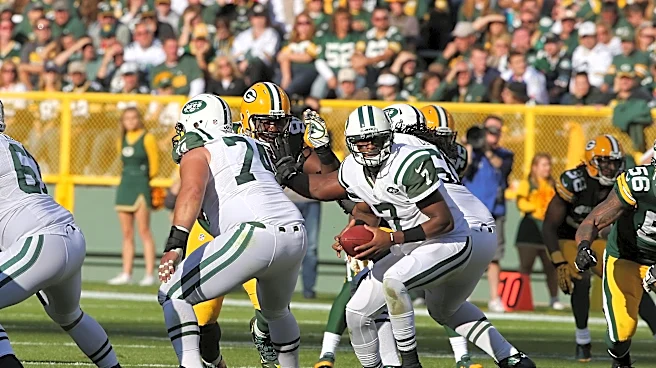
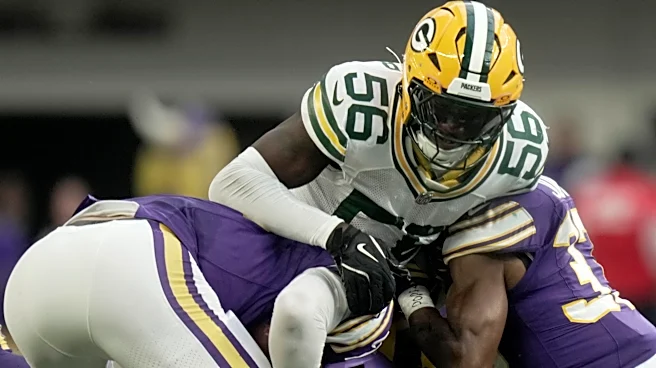
In Week 2 the Jets found themselves with a fourth and one at midfield with less than a minute and a half left in the fourth quarter. If the team converted the first down, they would be close to the range necessary for a game-winning field goal attempt.
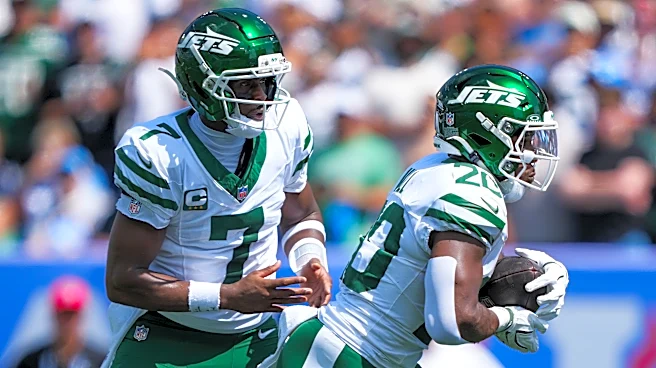
Offensive coordinator Frank Reich called a run up the middle from the shotgun to Braelon Allen that was stopped. Green Bay got the ball back with a chance to win it in regulation.
Since that run was stuffed, people have asked over and over why the offensive coordinator would call a shotgun run for his number two back.
I can’t sit here and tell you definitively that it was the right call, but I can at least offer an explanation as to why Reich tried that play.
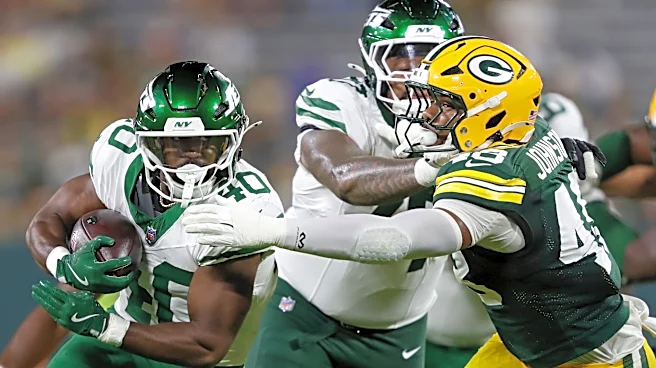
The Jets were not terribly successful running the ball in their loss to Green Bay. In fact, their top two backs only converted three runs all game that went for first downs along with a goal line touchdown.
One of them came in the first half on a third and short. The Jets ran a concept called Duo. Without getting too technical, Duo calls for the line to execute as many double teams as possible up the middle based on the defense’s alignment. The back then generally has one running back to read to find his hole. He, of course, also must see daylight from the blocks his teammates throw.

Eventually if the double team is effective or if a linebacker charges to the line of scrimmage, one of the offensive linemen has to peel off the double team and hit the linebacker.

Here Hall finds a hole to the outside.

Holes can close quickly, though, so Hall needed to be decisive. That gap, and his willingness to lower his shoulder converted this short yardage situation.
In the second quarter, the Jets found themselves in a goal to go situation from the 5 yard line. This time Allen was in. Again the Jets went to Duo from the shotgun.

Again, you eventually need your double teams to peel off and take a linebacker.

Here there aren’t many lanes to run in the middle of the field, but Allen sees the outside is wide open.

He bounces the run and takes it to the end zone.
Later in the game the Jets found themselves in a third and short. Again Allen is in the game. Again the call is Duo. The Jets aim to work some double teams.

Here we can see Allen’s line of sight to get a pretty good sense of the linebacker he’s reading. There is a nice gap that opens for him to hit.

Allen converts to move the chains.
Fast forward to that drive in the fourth quarter. On the play immediately preceding the fourth down stuff, the Jets had it on third and two from their own 39. Here the Packers loaded the line of scrimmage with defenders. This run might well have been Duo, but so many guys at the line make it tough to say for sure.

Breece Hall is the back on this snap, and it appears he has a nice lane opening in front of him.

Instead of hitting that lane, he bounces right, which takes him into traffic.

The Packers stuff him for a one yard gain, setting up fourth down.

Look, I don’t know how Hall was coached to execute this run. I can’t guarantee you he picks up the first down if he hits that hole in front of him with 100 percent certainty. It did look like to me like he cut into a much tougher path, though.
That brings us to fourth down.
What has Frank Reich seen all day? His team has three rushing first downs and one rushing touchdown. Three of those four were picked up running Duo from the shotgun in either short yardage or goal to go situations. It has been the Jets’ most reliable run play of the game. Allen converted two of those three runs, and Hall just arguably made the wrong cut on a short yardage play.
That’s the information Reich had to work with as he decided which play to turn to on fourth and one.
Does that necessarily make giving the ball to Allen off Duo from the shotgun the best call he could make in this situation? No, of course not. Do I understand why he would make that call given the context? I do. Do I think the call is defensible? Again, yes, I do.
Unfortunately we sometimes are so focused on the call that we let the players off the hook for poor execution. This play ended up being blocked so poorly that I can’t even tell you the blocking assignments with any degree of confidence. At first I thought it looked something like this.

Watching it a few times I wondered if it was something like this.

What I can say is the Jets missed a lot of blocks. Jeremy Ruckert was immediately beaten inside off the end of the line.

Armand Membou seems to be attempting a cut block and completely misses.

And Joe Tippmann also ends up on the ground as he is aiming for a double team.

I can understand if you would have preferred having Breece Hall in there, but I don’t believe he or any back on the league is going to convert a first down on a play blocked like this.
You may say that even knowing all that, it still made more sense to run Hall from under center. No matter what happened to that point, Hall is your lead back, and under center runs tend to be more effective.
I can’t really dispute that logic. Just know that there is no guarantee it would have worked. The Jets called 10 runs in this game for Hall under center which produced 23 yards. Four of the ten resulted in negative yardage.
I’m not trying to absolve Frank Reich of blame here. He made some decisions during the game which were curious. If you include sacks and quarterback scrambles as passing calls, the Jets had a pass:run ratio of 2:1 in this game. The team isn’t built to play that way.
You might find this to be an odd criticism given everything I just said about the Jets’ rushing woes in this game. I’ll admit that maybe more runs would not have worked. Regardless, this team’s identity is based on being a physical team that can run the ball. Geno Smith in 2026 is not the sort of quarterback who is likely to have much success when you call 50 passing plays.
Sometimes running the ball effectively means taking some negatives early in the game but slowly wearing down the defense with your physicality and breaking through later.
I also would question Allen getting only 5 carries. On a bad weather day where yards were tough to come by, I find it tough to understand why the Jets didn’t make more use of a tough inside runner. When he was on the field, the Jets had an even more extreme pass-run split than they did in general. (Almost 75 percent of the play where Allen was in were passes.)
I also do have one criticism of Reich’s fourth down call. There was a very simple tweak to the Jets’ formation that could have raised the odds of success. It was always likely that Green Bay would sell out against run with guys firing up the field.

On each play, the offense must have seven players lined up on the line of scrimmage, five offensive linemen and two eligible receivers. Here Garrett Wilson was on the line while Jeremy Ruckert was off the line. The Jets very easily could have shifted Wilson back and Ruckert onto the line to give him an easier angle to hit his block. Knowing how aggressive Green Bay would be, this small tweak could have helped Ruckert out.

Ultimately, though, this play probably would have been stuffed even had Ruckert connected on his block. The Jets failed to execute it across the board.
It’s easy to get on the guy calling the plays, but I think Reich’s thought process was logical enough to avoid heavy criticism. Ultimately it’s on the players to execute. The Jets are supposed to be built around a strong offensive line, and they just didn’t do the job on this critical play.