
The Los Angeles Rams know that eventually they must confront a reality every NFL team faces: replacing a franchise quarterback. For now, that quarterback remains Matthew Stafford, who helped deliver a championship during Super Bowl LVI and continues to lead the offense for head coach Sean McVay. However, with Stafford approaching the latter stages of his career, speculation about the Rams’ long-term plan under center has intensified. While many observers expect Los Angeles to address the position
in the draft, the team’s leadership has hinted that urgency may not be necessary. If the Rams truly believe they can afford patience, an unexpected future scenario could emerge—one in which Joe Burrow ultimately becomes Stafford’s successor.
Since arriving from the Detroit Lions in 2021, Stafford has fit seamlessly into McVay’s offensive system. The Rams’ willingness to trade significant draft capital for a proven quarterback paid immediate dividends with a Super Bowl victory. That aggressive philosophy has defined the franchise’s roster-building approach under general manager Les Snead. Instead of relying heavily on developing rookies, the Rams have repeatedly pursued established stars who can contribute immediately. As a result, the team has rarely drafted high enough to select elite quarterback prospects.
Because of that strategy, the Rams’ approach to Stafford’s eventual replacement has never been straightforward. Drafting a quarterback early often requires both a premium pick and patience during the player’s development. For a team that consistently prioritizes winning now, investing heavily in a long-term quarterback project may not align with its current philosophy. That is especially true if the front office believes Stafford can continue playing at a high level for several more seasons.
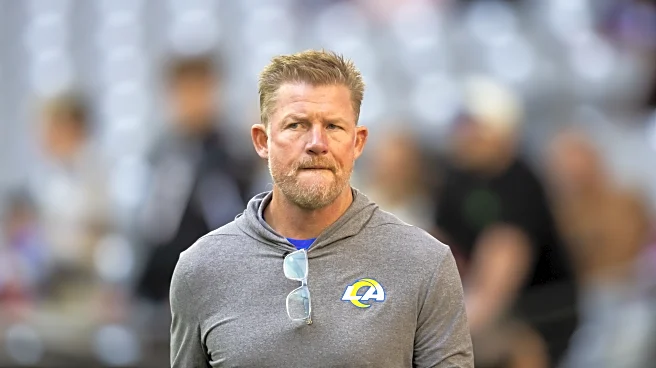
Snead himself has hinted that the Rams are not operating with a sense of urgency when it comes to drafting a quarterback. Speaking about the team’s long-term outlook, Snead acknowledged that life after Stafford will eventually arrive but emphasized that the timeline remains uncertain. “We’re very well aware that there is a life after Matthew coming at some point,” Snead said, adding that it “could be two, three years from now,” meaning the situation is “not urgent for us right now.” That sentiment reinforces the idea that Los Angeles may not feel pressured to select Stafford’s successor in the 2026 NFL Draft, even with valuable draft capital available.
If the Rams do take that patient approach, it opens the door to a different long-term possibility. Instead of drafting and developing Stafford’s replacement, Los Angeles could wait for another elite quarterback to become available through trade or shifting circumstances across the league. The Rams have already demonstrated that they are comfortable executing bold quarterback moves if the opportunity presents itself.
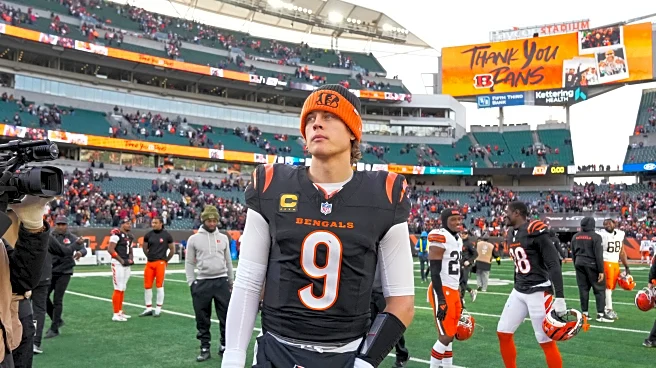
That possibility becomes particularly intriguing when considering the trajectory of Joe Burrow and the Cincinnati Bengals. Burrow has been one of the league’s premier quarterbacks since entering the NFL as the first overall pick in 2020. His leadership and precision passing quickly transformed the Bengals into contenders, culminating in a Super Bowl appearance—ironically against the Rams. At just 29 years old, Burrow remains firmly entrenched as Cincinnati’s franchise quarterback.
Yet the NFL’s history shows that even seemingly permanent partnerships can evolve over time. Contract dynamics, roster-building challenges, and competitive expectations can all influence the long-term direction of a franchise. Quarterbacks who once appeared inseparable from their teams have eventually changed uniforms, sometimes in blockbuster trades that reshape the league’s landscape.
If the Rams maintain their competitive core while Stafford continues to play into the later stages of his career, the timeline could align with a future moment when Burrow’s situation in Cincinnati is irreconcilable . That scenario is far from guaranteed, but Los Angeles has positioned itself as one of the league’s most aggressive and opportunistic organizations. Should a superstar quarterback ever become available, the Rams would likely explore the possibility.
The appeal would be obvious. McVay’s offense thrives on quick processing, accuracy, and creative playmaking—qualities that define Burrow’s style of play. Pairing one of the league’s brightest offensive minds with one of its best quarterbacks would immediately create championship expectations. The Rams also offer the advantages of a major market, a stable coaching environment, and a front office willing to invest aggressively in talent.
In many ways, this would simply mirror the blueprint the Rams used to acquire Stafford in the first place. When the organization determined it needed an upgrade from Jared Goff, it did not hesitate to pursue a proven star rather than relying on an uncertain rookie. The result was a Super Bowl title and a renewed window of contention.
That history is what makes the idea of “kicking the can down the road” so intriguing for Los Angeles. If the Rams believe Stafford still has productive years ahead and if they trust their ability to attract elite talent when opportunities arise, there may be little incentive to force a quarterback decision in the 2026 draft. Patience could ultimately position them for another transformative move.
For now, Stafford remains firmly in control of the Rams’ offense and their championship aspirations. But if Snead and the front office truly believe there is no rush to find the next quarterback, it suggests the team is comfortable waiting for the right opportunity rather than the nearest one. And in a league where circumstances can change quickly, that patience could one day lead the Rams from Matthew Stafford to Joe Burrow as the next face of the franchise.