


It’s important to be clear from the start: this is not a prediction of what the Seattle Seahawks will do in the 2026 NFL Draft. Instead, this is an exercise based on a consensus-style board, identifying realistic targets based on range, league buzz, and positional value.
Even with lingering concerns along the interior offensive line—especially at center and right guard—this is not a new problem. Last offseason, general manager John Schneider chose to trust internal options like Olu Oluwatimi, Jalen
Sundell, and Anthony Bradford rather than invest heavily in the draft or free agency. That context matters: Seattle could once again avoid early-round investments here, even if the need still exists on paper.
With that in mind, here are realistic names across each round.
First round
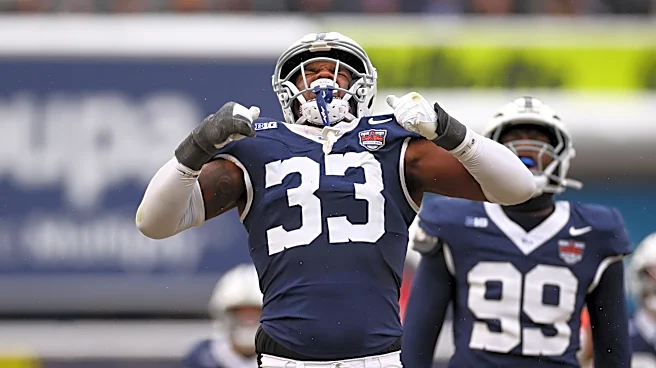
Chase Bisontis, G, Texas A&M
Chase Bisontis is one of the more polarizing players in this class. Depending on the board, he can be viewed anywhere from an early second-round pick to a late first-round talent. A big part of that variance comes from his lack of ideal arm length (31 3/4”), which shows up in pass protection.
On tape, though, Bisontis is a tough, well-schooled guard. He brings heavy hands, strong core power, and excellent balance, allowing him to sustain blocks and consistently win in the run game. He’s equally comfortable in zone and gap concepts, showing the ability to climb, adjust in space, and generate displacement on double teams.
There are concerns—his footwork can get rushed in pass protection, and his shorter wingspan forces him into lunging situations at times—but overall, his technique and play strength help him compensate. For Seattle, he would project as a high-floor, high-upside interior starter, capable of stabilizing the run game immediately.
Emmanuel Pregnon, G, Oregon
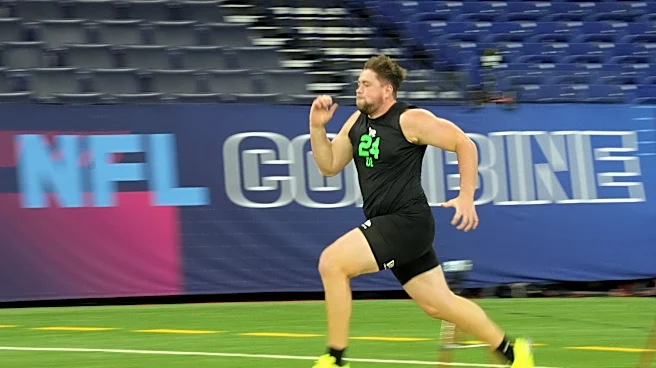
Emmanuel Pregnon is one of the more interesting evaluations in this class—and a name that has reportedly drawn significant interest from Seattle, especially after a fantastic Pro Day.
He’s a bit of a paradox. On paper, he grades extremely well in zone schemes, but his play style screams gap/downhill blocker. Pregnon has a prototypical frame, plays with power, and consistently reclaims reps with strong hands and a wide base, even when he loses first contact.
He’s also ultra-durable and highly experienced, but comes with a notable caveat: after multiple transfers, he enters the league as an older rookie, which can cap perceived long-term upside.
Athletically, he tested well, but that explosiveness doesn’t always translate cleanly on tape—something that mirrors the profile of Anthony Bradford. His range and foot quickness are average in space, and quicker defensive fronts can create leakage issues.
Still, in pass protection, he shows good awareness against twists and blitzes, using his length effectively. For Seattle, Pregnon would be a plug-and-play guard with immediate run-game impact, even if the ceiling is more “solid starter” than star.
Second round
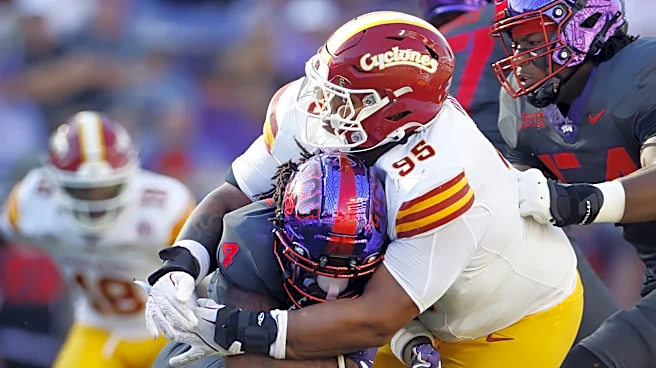
Gennings Dunker, G, Iowa
Gennings Dunker is another case where testing doesn’t fully match the tape. His athletic profile is underwhelming, but on the field, he looks more functional and fluid than expected.
Coming from Iowa, he benefits from one of the most NFL-ready offensive line systems in college football, particularly in the run game. He plays with heavy hands and a strong frame, capable of generating movement when his technique is right.
Dunker did himself favors with a strong Senior Bowl week, showing he can hold up against better competition. Still, his limitations are real: he’s a segmented mover with average lateral quickness and can struggle against twists and quicker interior rushers.
For Seattle, the appeal would be his pro readiness and physicality, especially if moved permanently inside to guard.
Keylan Rutledge, G, Georgia Tech
Keylan Rutledge brings a rugged, physical identity that offensive line coaches love. He thrives in drive and combo blocking situations, where he can generate movement and impose his will.
He’s experienced and tough, with good pop in his hands, but his game isn’t without flaws. Balance and body control can be inconsistent, and his recovery ability is limited due to tighter hips and heavier feet.
In pass protection, his range is average, and quicker defenders can create issues on the edge. Still, his mentality and strength give him a clear path to becoming a valuable rotational piece with starting upside.
Sam Hecht, C, Kansas State
Sam Hecht might be one of the most technically refined centers in the class. While he lacks ideal size and length, his hand placement, leverage, and consistency are all high-level.
He’s an excellent mover in space, making him a strong fit for zone-heavy schemes. His ability to stay connected to blocks and process defensive movement stands out on tape.
The concern is physical: he doesn’t generate much knock-back and can be overpowered by bigger interior defenders. Adding mass will be key at the next level.
For Seattle, he fits the mold of a high-IQ, technically sound center who could compete early and develop into a starter.
Third round
Connor Lew, C, Auburn
Connor Lew’s evaluation hinges heavily on medicals. A team captain at Auburn, he suffered an ACL injury in October 2025, which limited his overall sample size and creates uncertainty in his draft range.
If healthy, he likely goes earlier. Lew is athletic, smart, and technically sound, with strong hands and good movement ability. His leadership and intelligence are major positives.
There are still areas to clean up—his pass sets can get inconsistent, and he lacks top-tier drive power—but his overall profile is that of a future starter.
For Seattle, this would be a classic case of betting on traits, leadership, and recovery timeline.
Kage Casey, OT/OG, Boise State
Kage Casey entered the process with intrigue, but didn’t fully capitalize—especially during the Senior Bowl, where a stronger showing could have boosted his stock.
His lack of length was always a concern, and it shows up against NFL-caliber edge defenders. While he’s a capable athlete with decent range and a solid anchor, his shorter arms allow defenders into his frame too often.
There’s still value here. Casey is durable, competitive, and could carve out a role as a swing tackle with guard flexibility, but the ceiling may be lower than initially expected.
Brian Parker II, OT/C, Duke
Brian Parker II is likely a tackle-to-center conversion at the next level, and his performance at the Shrine Bowl reinforced that projection.
He has good technique, strong hands, and plays with control and balance. However, his lack of length and play strength make it difficult to project him as an NFL tackle.
At center, though, things change. His awareness, ability to process rush games, and controlled movement make him a very intriguing developmental option.
For Seattle, he would offer interior flexibility with starting upside at center, which aligns well with their current roster uncertainty.
Logan Jones, C, Iowa
Logan Jones is another fascinating case. Once seen as a potential early entrant, he returned to school and will now enter the league as an older rookie (turning 25).
Expectations were high—especially after being highlighted on Bruce Feldman’s Freaks List—but his testing didn’t match the hype, which likely hurt his stock.
On tape, though, he’s still very polished. He has excellent technique, quickness, and consistency in zone schemes. His biggest issues come against long, powerful nose tackles, where his lack of length becomes a major limitation.
Jones may not have elite traits, but he’s NFL-ready and could contribute early in the right system.
Sixth round
DJ Campbell, G, Texas
DJ Campbell is an experienced, durable guard with clear strengths—and clear limitations.
He’s strong, smart, and effective in tight spaces, particularly in gap schemes. However, his athletic limitations show up when he’s asked to operate in space, making him somewhat scheme-dependent.
For Seattle, he would likely be viewed as depth with situational value, rather than a long-term answer.
Pat Coogan, C, Indiana
Pat Coogan brings experience and positional understanding, but lacks standout physical traits.
He profiles as a depth piece who can compete for a roster spot, especially in a room where competition is still open at center.
Micah Morris, G, Georgia
Micah Morris is one of the most intriguing late-round swings in this group. Physically, he looks the part—elite size, strength, and athletic testing (RAS 9.97)—and he was highly productive at Georgia, even allowing zero sacks in 2025.
But the tape is uneven. He plays with a high pad level, inconsistent hand placement, and often relies more on size than technique. There are also minor injury notes, though nothing considered long-term.
Still, the tools are undeniable. Morris has rare movement ability for his size and flashes high-level pass protection traits when everything clicks.
For Seattle, this would be a classic Day 3 upside bet: if the coaching staff can refine his technique and unlock his aggression, there’s starting potential in a power/gap scheme.
Final Thoughts
This offensive line class offers a wide range of profiles, from plug-and-play starters to developmental swings. For the Seahawks, the key question isn’t just talent, it’s philosophy.
If John Schneider sticks to his recent approach, Seattle may once again prioritize internal development over early investment. But if they decide to address the interior more aggressively, there are clear fits across every round.
Either way, the foundation of this group will likely come down to one question: trust what you have—or go get more.