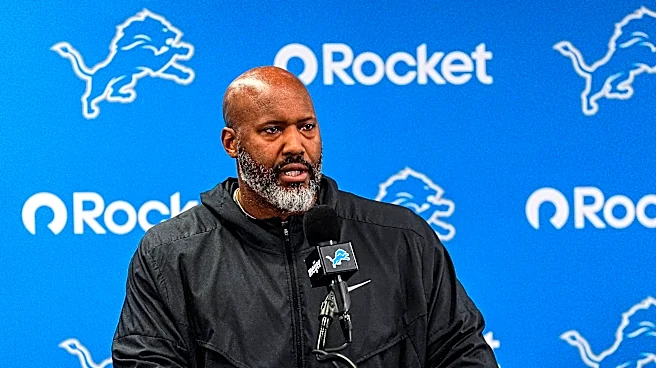



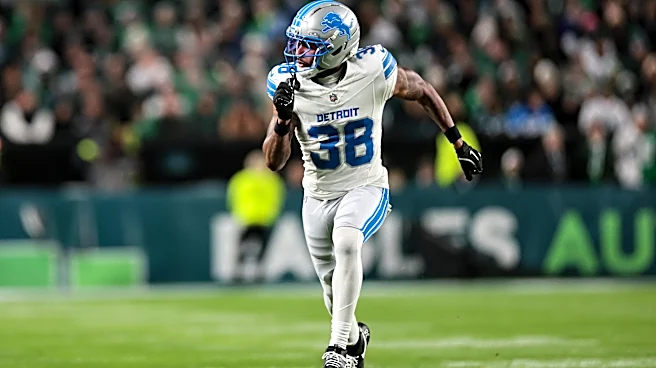
On Wednesday, Detroit Lions general manager Brad Holmes spoke to the local media for the first time since the team made the decision to cut Terrion Arnold following his arrest in connection with an incident earlier this year that resulted in eight felony charges. It was an opportunity for Holmes to face some criticism on the way the Lions handled Arnold’s situation and built the cornerback room behind him.
One of the main lingering questions was why the Lions’ opinion on Arnold shifted throughout
the process. When his name was first connected to the incident—before his arrest—the Lions organization backed Arnold and his version of the story.
“We got all the information that says he wasn’t involved,” coach Dan Campbell said during the owners’ meeting in April. “That’s what we know, that’s all we know, and that’s really all I can say. As far as I know, it’s not a big deal. It seems like he still wasn’t involved with this.”
The Lions then opted to waive him days after his arrest. Holmes didn’t offer many details on what changed, simply noting that when they got more information, they made the move they felt was right.
“The whole situation obviously was unfortunate. Look, the kid made a mistake,” Holmes said. “The more information that we got throughout the process, that was the result of us doing what the best and right thing was for the club, which was: move on and move forward.”
The other criticism Holmes has faced is not doing enough to plan for this possibility. Detroit knew of the incident back before free agency and the NFL Combine, but it didn’t appear they did much to fortify the outside cornerback room in case Arnold would not be around. They re-signed Rock Ya-Sin and added Roger McCreary in free agency. But the only other notable addition was Keith Abney in the fifth round of the draft, and he’s more of a nickel cornerback.
Holmes rejected that criticism in a bit of a contentious back-and-forth with a local reporter. Eventually, he offered the following conclusion, essentially backing the players in the building.
“We like the guys we have, we like what we’ve done, and we feel good about what’s in the room,” Holmes said.
What’s in the room is starting cornerback D.J. Reed and Ya-Sin. Holmes stressed his confidence in Ya-Sin, who will step in directly for Arnold this year.
“Rock played really good football for us last year. He’s had a really good camp this year,” Holmes said.
He also went through the depth players and explains why he’s not particularly worried there, either. With former second-round pick Ennis Rakestraw, he acknowledged an up-and-down training camp, but believes there’s been significant progress, too.
“His health has been better. He’s had a chance to go out there and compete, and he’s gotten better throughout camp,” Holmes said. “He has a lot of ability. He has a lot of stuff in his body where he can play sticky. I thought his run game stuff improved. He showed that throughout the preseason, as well.”
There’s also McCreary, who, while originally tagged as some help in the nickel room, has shown some promise on the outside both prior to his arrival in Detroit and during camp.
“He’s played a lot of football, both inside and a little bit outside,” Holmes said. “I would actually argue that some of his stuff that he did on the outside—what he did last year on the outside—may have been a little more appealing than what he did inside at his first stop. Really like him.”
While Holmes’ comments didn’t address or respond to every question and criticism around the Arnold situation, they do finally put some closure on an era that both the Lions and their fans are likely ready to move on from.