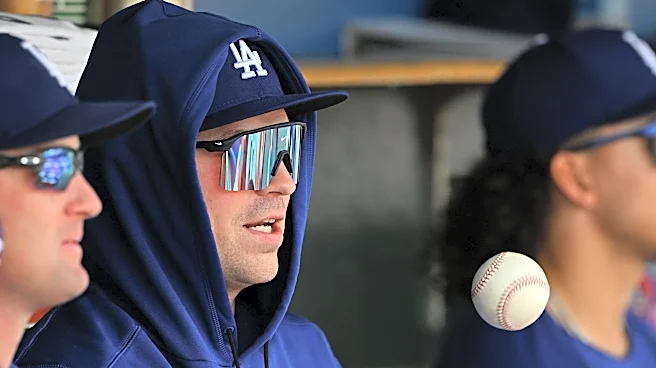


Edwin Diaz makes $23 million a year to close out games for the Los Angeles Dodgers, a team that has seemed to stop caring about a payroll budget at all. This year’s qualifying offer is $23.15 million, meaning if Yankee closer David Bednar accepts the one-time, one-year deal, he’ll be the highest paid closer in baseball for one season, a season in which we’re not quite sure what the baseball landscape will look like.
Of course Bednar has the right to negotiate a longer-term deal with the Yankees or
any other team after declining the QO, and something like the three-year $51 million contract Devin Williams inked with the Mets might be more in line with what he wants —less money per year, but more of a long-term commitment especially if 2027 sees games be lost.
The Yankees were burned by the qualifying offer last year, extending it to Trent Grisham only for the alleged centerfielder fail to reach a full win of value, and the club was clearly worried about a similar misfire should they put the QO tab on Jazz Chisholm Jr. I think there’s considerably less risk in having Bednar around, even at a slight annual overpay, than either of those two guys, but there’s also less risk with an accepted QO than there is with signing him for more than one more year.
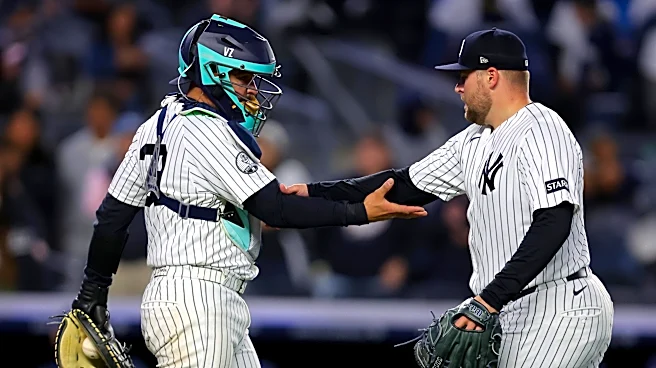
Let’s start with the good — a 2.47 ERA that dropped to a 2.15 in the second half, Bednar brings a very old school, bulldog-like mentality to the ninth, seems to be eager to get the ball in the pressure moments, and makes me feel relaxed when he’s on the mound with a two-run lead.
But the Yankee ability to pick up a turnip and turn it into a middle reliever with a 98 mph sinker and 2.61 ERA, which they do at least once a year, keeps expenses on relief pitching low. The team committed just $24,840,763 to the bullpen this year, a million bucks and change more than the Dodgers paid for Diaz alone while putting together a better unit albeit by ERA. The one team with a better relief ERA, the Red Sox, spent more than half of that (let’s round up) $25 million on Aroldis Chapman, who had an excellent season, but the Yankees could recreate the proverbial aggregate for less money.
As always, I don’t care about Hal Steinbrenner’s wallet, but he does, and that kind of flexibility in filling out a bullpen gives the Yankees a wide range of options — they are almost always able to make deals at the trade deadline because they have a little extra money that they DIDN’T give to someone like Aroldis Chapman or Edwin Diaz or Josh Hader, or they can give that extra money to a headlining free agent, or they can buck their fungible relief trend and have Bednar for one expensive year.
At one year I don’t mind ballooning the relief budget, especially when the free agent class is pretty underwhelming. I don’t think the Yankees will make a push for Tarik Skubal, Jazz can go play somewhere else, and while I want Teruaki Sato, I don’t imagine I’d consider Brian Cashman a failure if he can’t sign the NPB MVP. At three or four years, I no longer want Bednar — his fastball was down a full mile per hour in 2026, and while I don’t mind a 33-year-old closer, I worry a lot about a 34 or 35 year old.
That kind of commitment also restricts the pot of money that can be given out in the 2028 or 2029 FA classes, both stronger than the ‘27 cohort. Lastly, I think a multi-year deal to closers locks them in a role because of the money they’re owed; the closer is the closer because he’s the closer. Relief pitching is exactly where you want to maintain your flexibility, one year with David Bednar sounds like a great time. Much more than that locks up resources in the side of the roster the Yankees are best at tinkering with.