


The CBA negotiations are going to be contentious this winter. By this point, you know the basic tenet of the talks: owners want a salary cap, players don’t. Everything that has already been proposed by either side of the table hinges on how that sticking point is ultimately resolved. Several things have been proposed (that we know of) that range from interesting (shorter season, longer division series) to absurd (picking a playoff opponent?). Some things could be lifted from other sports’ CBA negotiations to be applied
to MLB other than the cap.
If such a cap were brought about, watching teams scramble to get under that cap would be amusing. We can assume that if there is a cap, there would also be a floor, so one possible way would be to trade an onerous contract to another to help both teams get in compliance. It’s the old “I’ll scratch your back, you scratch mine” adage where teams are helping teams. Other teams would either have straight up release a player or grab an overpaid veteran to make sure they are getting above that bottom number.
But what if there was the ability to simply get rid of a contract without penalty?
In the NBA, teams were at one point allowed to “amnesty” any contract on their books, in that that contract would not count towards the salary cap. A cursory bit of research (alright, Wikipedia) filled in some gaps about this:
Under the 2005 CBA, one player could be waived prior to the start of the 2005–06 season and not count toward the luxury tax. Unlike the 2011 CBA, the player still counted under the salary cap…Under the 2011 Collective Bargaining Agreement (CBA), each franchise was allowed to waive one player prior to the start of any season between the 2011–12 and 2015–16 seasons. The remaining salary still contractually owed was not included in the salary cap or luxury tax totals of the team terminating his employment.
So, after 2011, teams could waive a player and get out from the contract in terms of it not counting against the cap or luxury tax, but they still had to actually pay the player the money. Seems like a good idea for teams that had players that weren’t living up to the deal where they could get rid of that player and the anchor he was placing on the team’s cap, but the player himself still got paid. Win-win, right? No shot that the player’s association would just allow teams to no longer pay a player they signed to a guaranteed deal, so making sure that the player gets his due would be their main objective.
So what if the baseball decided to bring that kind of idea into the next bit of negotiations, supposing that a cap were actually instituted? Who would the Phillies be interested in “amnestying”? There is really only a few options to consider here.
Using Fangraphs and their indispensable Roster Resource, uh, resource, we can see how the Phillies stack up with their payrollin the future years. Their biggest obligations come in the form of six players:

You can see that the amount of long term, high cost contracts have an odious feel were you to be an accountant. The team had a plan to sign a bunch of veteran players to long term contracts, which makes their future look a bit inflated. Obviously, the eyes are drawn to Trea Turner and the ~$27 million owed to him each season until 2033. He’s coming off a career worst season and looks like the best option if the team were to try and be rid of it. Of course, there are cons for this idea as well. The Phillies currently don’t have a great backup plan to take over shortstop were Turner to move on. Sure, they could just hand the spot over the Aidan Miller, but that’s far from a guarantee that he’ll be successful right from the jump.
There are arguments for the others as well if we’re looking at it with a cold, calculating eye at the money.
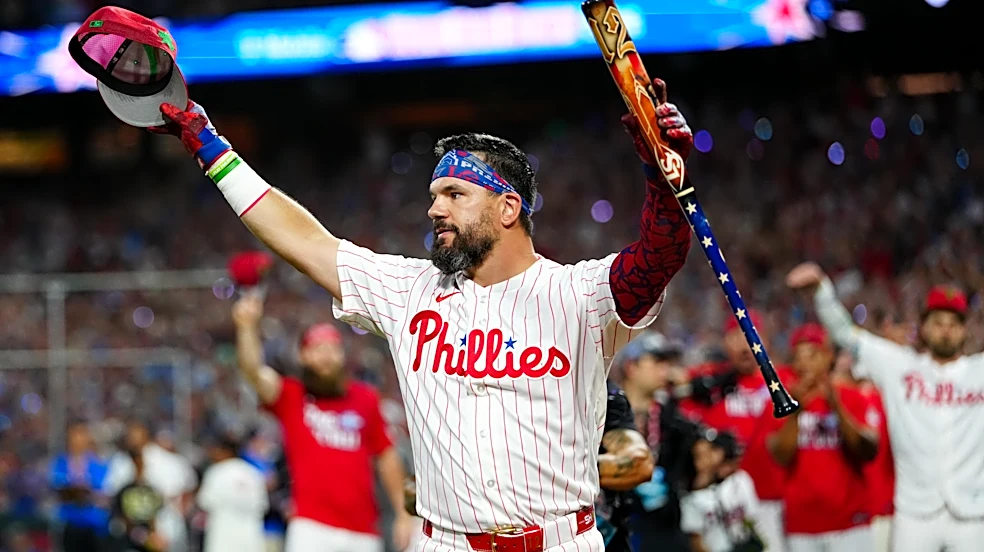
- Kyle Schwarber is the team’s main source of power in a time where power is at a premium. He’s also 33 years old and will be paid $33 million each year for the next four years. Does the team want to bet he’ll maintain the same amount of hitting prowess and power over those four years?
- Bryce Harper has had some nagging injuries over the years that have taken a bit away from his production. He has five more years on his deal; does the team want to bet that he’ll avoid enough injuries to remain as productive as he is?
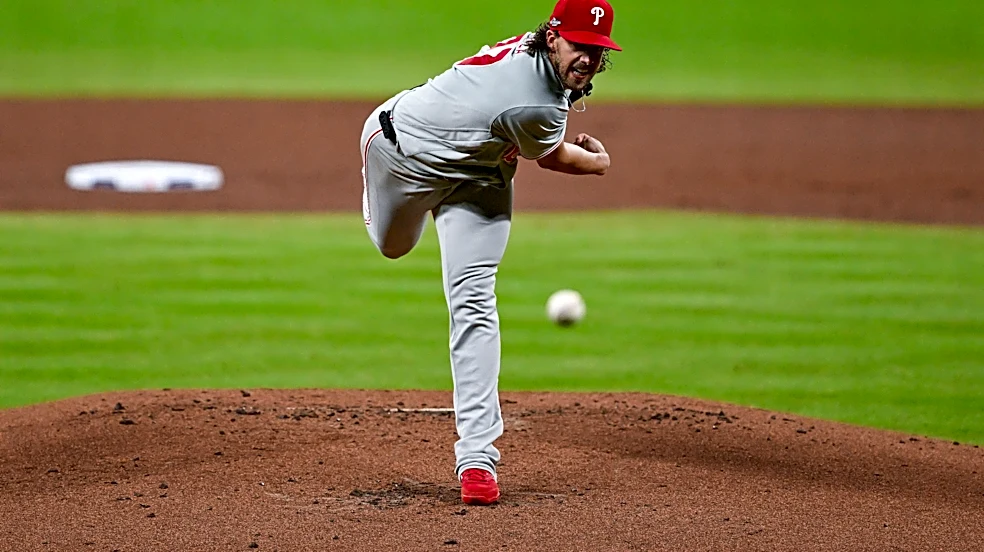
- Aaron Nola’s extension looked ill fated almost at the moment he signed it, yet he was able to turn it around quite a bit over the final two months of the 2027 season. Was that a mirage or a sign that the deal might not end up as bad as it seems?
- Even J.T. Realmuto, at two more years of $15 million, needs to be in the discussion. He was flat bad in 2026; is he someone the team wants to give regular playing time to moving forward? Instead of looking for a competent backup, wouldn’t they just rather get a new catcher altogether?
The more one would look at it, the number of pros and cons would likely grow for each player. There isn’t really much of a chance that either Cristopher Sanchez or Jesus Luzardo would be considered for this idea. Even if they do command large sums of money over the next few years, their importance to club and how it has been constructed means there isn’t much of a chance they are sent packing. Again, one could make the same arguments for them as could be made for others: age, performance curve, etc.
But really? Sanchez or Luzardo? They’d be traded before waived.
The two best candidates are likely going to be Trea Turner or Aaron Nola. I still firmly believe that there are productive years still ahead for Turner. Last year circled the drain into some kind of death spiral where he posted a wRC+ almost twenty points below even his worst season (104 in 2017 -> 83 last year). Believing that there is still good in there takes a rather large leap, but consider me Indiana Jones, standing over the chasm at Petra with one leg in the air.
With Nola, he was really good at the end of 2026, but each time that they tried to use a catcher for him other than Garrett Stubbs, he stunk again. Stubbs probably isn’t going to be coming back for the future, so what does that mean? Nola can’t pitch to anyone else? I’d be more willing to bet that a 33 year old pitcher with almost 2,000 innings on his arm is not going to be working out well over the next four years. For me, that is the contract I would be most willing to let go of.
As stated before, all of this will depend on if a salary cap is instituted during the negotiations. If it doesn’t happen, then this idea of letting owners get out of rostering a player is probably dead in the water. The idea that it would even be brought about as part of those negotiations is probably remote in the first place.
But it’s still fun to think about!