

In 2022, Major League Baseball introduced the PitchCom system. The baseball world did not end.
In 2023, MLB began adhering to a pitch clock. The baseball world did not end.
2023 also brought bigger bases. The baseball world did not end.
For a sport that had been ultra-conservative for the vast majority of its existence, the last few years have brought momentous change. For the most part (extra inning ghost runners excepted—though I’m personally not as hard on that new development as others), all these
changes have enlivened the sport. Attendance figures tracking up for the first time in decades seem to support this conclusion.

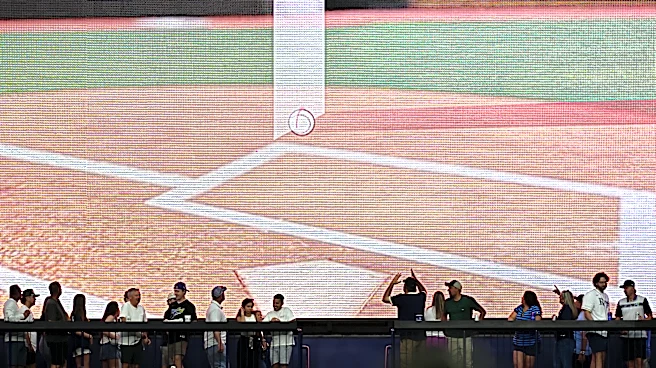
Thus far in 2026, another big change has been implemented in MLB—that of course being the “robot umpires”, or more accurately the Automated Ball-Strike (ABS) challenge system allowing batters or fielders to challenge umpire ball/strike calls.
Somewhat remarkably, our Minnesota Twins have been at the forefront of this new technology, boasting the most challenges initiated as of 4/29/26. A remarkably helpful table of ABS challenge data can be browsed on Baseball Savant. While Twins batters have not been all that accurate after performing the helmet-tap gesture which initiates a challenge, Twins pitchers/fielders have been some of the most accurate in baseball.
Much of this owes to C Ryan Jeffers showing disproportionate skill in not only knowing the ABS strike zone inside and out, but also harboring an innate game-theory understanding of when to deploy challenges (each team gets two ABS challenges but can continue to challenge indefinitely if successful).

We are still very early in this ABS challenge process, so nothing definitive can yet be said on the topic. But three initial observations bring me hope that not only will ABS challenges thrive, but also probably be expanded in the near-to-medium future:
- First and foremost, ABS challenges provide just another opportunity to “get things right”. As you’ll read more about in an upcoming game thread post, I recently read a book detailing all the ways in which pitchers are refining their repertoire to make their wares as visually challenging as possible for the batter. Well, that goes for the umpire behind the plate as well. The more hurlers obfuscate, the harder it is for umps to arbitrate. For the first time in MLB history, players now have the opportunity to fight city hall, so to speak—and sometimes even win!

- Whenever a batter lays off a pitch or draws a walk, fans will yell “good eye!”. But in reality, we have little in the way of quantifiable evidence to judge whether it was truly a “good eye”—or simply a “couldn’t get the bat off the shoulder but got lucky” situation. ABS challenges really separate the men from the boys in this area. As described above in regards to Jeffers, he clearly has a superior “eye”, or knowledge of the exact strike zone boundaries. The more data ABS challenges provide, the more we’ll be able to drill down into who knows the zone and who doesn’t. Ultimately, this could also be a good teaching tool to help navigate the ever-important rectangle even better.

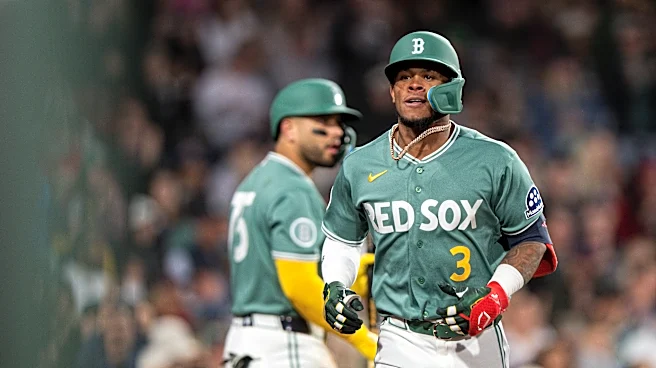
- MLB average time-of-game has ticked to two hours and forty five minutes—up from 2:38 two years ago (if still well below the 3:10 high water mark of ‘21)—and I’m sure ABS has had at least something to do with that. But I would say the added time hasn’t been much of an issue. Why? Because ABS challenges can genuinely be fun! At Target Field they play the Goldeneye ‘64 pause theme or the Wii Sports jingle as the graphic comes up. On one occasion at the park, a Red Sox batter challenged a pitch that was right down the middle and the crowd erupted in laughter! Just spitballing here, but if each contest averages 5 challenges and each challenge consumes maybe 30 seconds, those extra two-and-a-half minutes are worth it.

Ultimately, ABS challenges represent MLB’s first foray into the notion that the strike zone is not 100% arbitrated by the individual behind home plate. If all continues to go well this season, I can see a transition to full ABS in the future (whether that be 3 years, 5 years, etc.). It would simply make sense to utilize one standardized strike zone for every ball/strike call—not just the outliers.
Of course, as former umpire Doug Harvey once opined:
“If you don’t need umpires out there—and you can put robots out there—then why do we need ballplayers?”
A question perhaps best pondered…in The Twilight Zone.