


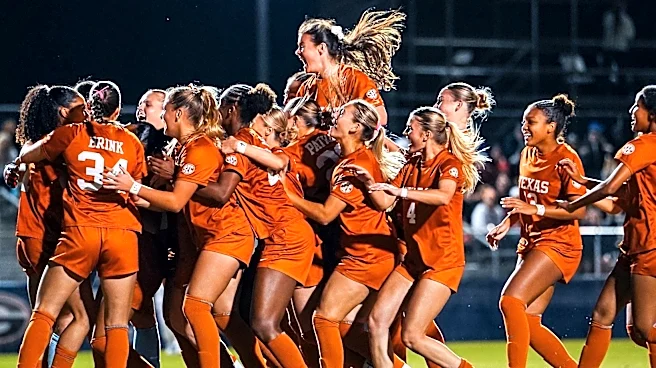

Making the Final Four changes a program. Making it back changes the expectations.
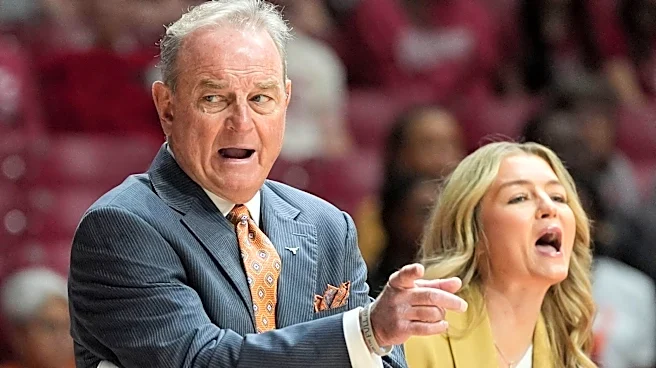
For Texas Longhorns women’s basketball, the conversation has moved beyond whether seventh-year head coach Vic Schaefer can build a team capable of competing on the sport’s biggest stage — consecutive national semifinal appearances have already answered that question.
Now comes the more difficult one: What will it take to leave that stage with a national championship?
The Longhorns enter the 2026-27 season carrying the accomplishments
of the teams that came before them and the uncertainty of a roster still establishing its own identity. Three-time All-American Madison Booker returns with proven scoring and postseason experience. Breya Cunningham provides an established presence inside. Returning guards and talented newcomers bring different strengths to a rotation that’s still learning how to put them together.
For Schaefer, the question stretches beyond Austin. His Mississippi State teams reached consecutive national championship games without winning the title. His Texas teams have now reached consecutive Final Fours without advancing to the championship game.
The opportunity is there again. So is the work required to finish it.
The standard has changed in Austin
Texas finished both the 2024-25 and 2025-26 seasons with 35 victories. The first of those seasons ended with the program’s first Final Four appearance since 2003. The second established that the Longhorns could return.
That consistency matters because championship expectations need a foundation. Texas has one.
The Longhorns won the 2026 SEC Tournament and earned a No. 1 NCAA tournament seed for the third consecutive season. They also recorded 16 victories over ranked opponents during the 2025-26 season, including four against top-five teams.
Those results show a program capable of beating elite competition throughout a season. The remaining challenge is sustaining that level through the final weekend.
Still, expectations must account for the players responsible for meeting them. A new roster inherits the program’s standard without automatically inheriting the previous team’s chemistry or defensive communication. Those qualities have to develop through practice, competition, and the adjustments players make as they learn one another.
Texas has earned the expectation that it will compete nationally. This particular team must establish how it’ll do that.
Booker’s experience shapes the offense
Booker’s return is a significant reason the Longhorns remain in the championship conversation.
The senior enters the season with three first-team All-America selections and three Cheryl Miller Small Forward of the Year awards. She brings experience handling defensive attention and the demands of postseason basketball.
Her value extends beyond the points she scores. When defenses concentrate on Booker, openings can develop along the perimeter or near the basket, so Texas has to recognize those opportunities before they disappear because against elite defenses, a slow decision can turn a promising possession into a difficult shot.
That relationship works in both directions. Timely passing, effective screening, and consistent spacing can improve Booker’s opportunities just as her scoring ability can create room for someone else.
Her ability to create when an initial action breaks down gives Texas an important option. Establishing dependable production throughout the lineup will make the offense more difficult to disrupt and give the Longhorns flexibility against different matchups.
Cunningham and the responsibility inside
Cunningham gives Texas an established interior presence with room to expand her influence.
The returning starter converted more than 59 percent of her field-goal attempts last season and reached double figures in scoring 10 times. That efficiency offers a foundation for Texas to build on in the frontcourt.
Her impact can extend beyond the possessions she finishes. When she establishes position inside, defenders have to decide whether to stay attached to their assignments or provide help in the paint. That attention can create opportunities elsewhere, particularly when Texas delivers entry passes on time and maintains its spacing.
Her opening performance offered an encouraging example. Against Fairleigh Dickinson, she recorded 21 points and 13 rebounds in Texas’ 85-65 victory. The competition level will increase, especially once SEC play begins, but the performance does illustrate the impact Cunningham can make on games by providing efficient scoring and steady rebounding.
As the season matures, Cunningham will need to establish position against more physical defenders while still converting shots at a high rate, the skill that makes her so valuable inside. Consistent frontcourt production would give Texas a way to attack when perimeter opportunities become harder to create.
A new roster builds its identity
Throughout the rotation, Schaefer has decisions to make about how responsibilities fit together.
Junior point guard Bryanna Preston, the incoming transfers, and the freshman class will all influence how Texas organizes its offense, spaces the floor and applies defensive pressure. The roster’s combination of experience and youth is something Schaefer acknowledged before the season.
Speaking with The IX Sports Podcast in August, he discussed the makeup of his team.
“We got two juniors, two seniors, and then we’ve got those five freshmen. Not a lot in between, but I’m excited about them, 100 percent,” Schaefer said.
That excitement comes with the task of identifying which combinations give Texas the best balance against different opponents.
A lineup built to increase defensive pressure may look different from one designed to improve spacing. Schaefer will need to determine where those approaches overlap and which adjustments the players can execute without losing their organization.
That’s why early-season development deserves attention beyond totals. Texas needs to learn which combinations function together and how players respond when a game becomes uncomfortable. Conference play and the NCAA Tournament will demand a clearer understanding of which lineups can be trusted.
The last two endings explain the challenge
The previous two seasons provide specific reasons to examine Texas’ offensive development.
In 2025, Texas trailed South Carolina by three points at halftime. The Gamecocks then outscored Longhorns 20-9 in the third quarter and went on to win 74-57.
That game showed how quickly a manageable deficit can become something much larger against elite competition. A few empty possessions, combined with an opponent finding its rhythm, can change the demands of the entire game.
The following season brought a different kind of difficulty.
Against UCLA, Texas forced 23 turnovers and held a 14-5 advantage in steals as its defense helped keep the game within reach, but the Longhorns shot 30.8 percent from the field and lost 51-44. The Bruins also had a plus-six advantage in points off three-pointers and a plus-nine advantage in points off free throws.
Texas gave itself opportunities. It couldn’t turn enough of them into points.
Although those losses don’t suggest that every difficult offensive stretch has the same cause, they do demonstrate why defensive pressure alone won’t always be enough.
When an opponent limits transition opportunities, Texas needs ways to produce in the half court — that could mean Booker creating a shot, Cunningham establishing position inside, or a guard recognizing an opening before the defense is still scrambling.
The challenge is maintaining that decision-making through a stretch of missed shots or an opponent’s run. Can the Longhorns identify what’s been taken away and adjust without rushing?
Saturday showed shared responsibility taking shape
Texas’ 91-35 victory over Tarleton State on Saturday offered an early example of how different contributions can come together.
Booker didn’t play after a hard fall in the previous game against South Dakota State. According to the Associated Press, she worked out Saturday morning but was held out as a precaution.
Without its leading offensive presence, Texas had to find production elsewhere.
Brihanna Crittendon led the Longhorns with 16 points on 7-of-11 shooting. Addison Bjorn and Isi Etute scored 12 apiece, while Amilia Holguin added 10. Those four freshmen combined for 50 points with Etute also collecting a team-high six rebounds.
Their production gave Texas several places to turn and provided the younger players with experience taking responsibility within the offense.
Lizzy Spaight contributed in ways that extend beyond her six points. She finished with five assists and five steals, connecting playmaking with defensive disruption. Zya Vann made three three-pointers, while Cunningham recorded four blocks.
Those contributions illustrate why the entire rotation matters. Scoring, distributing, protecting the rim and creating turnovers influence how effectively it performs.
In trademark fashion for a Schaefer-led team, the Longhorns defense helped establish that control Saturday. Tarleton State shot 24.4 percent and committed 27 turnovers, which Texas converted into 40 points.
That connection between defensive pressure and scoring helped Texas keep producing with Booker unavailable. It showed why the contributions throughout the rotation will remain important when she returns.
There’s a limit to what Saturday establishes. National contenders will offer fewer openings, protect the ball more effectively, and demand more execution against a set defense. Texas won’t always be able to generate that much offense through turnovers.
Still, the performance gives the Longhoorns something concrete to build on. Players accepted responsibility in different areas, and the team maintained control without its leading scorer.
The next step is carrying those contributions into more demanding matchups.
Schaefer’s pursuit continues
For Schaefer, the challenge is familiar.
His Mississippi State teams reached the national championship game in 2017 and 2018. The Bulldogs lost to South Carolina in the first appearance, then fell 61-58 to Notre Dame on a buzzer-beating three-pointer the following year.
Those losses remain part of his championship pursuit, but so does the work required to reach those games.
Building a team capable of playing for a title takes recruiting, development, preparation, and trust. Returning with another group requires doing that work again as circumstances change.
At Texas, Schaefer has established a program that can compete deep into the tournament. His previous experience gives him a history to draw from, but this roster will require its own adjustments. The task is evaluating what these players do well and preparing them for opponents capable of disrupting it.
Previous accomplishments can inform those decisions. They can’t make them for him.
His history makes the championship question unavoidable even as it also provides evidence that he can guide teams into position to answer it.
What should success look like?
A national championship is a reasonable goal for Texas — the Longhorns have earned their place in that conversation. But evaluating this season requires more than looking at its final result.
Another Final Four would represent sustained excellence. It would also leave the program pursuing the same final step. Both things can be true.
The circumstances would matter. A team that develops reliable offensive options, competes successfully against elite opponents, and loses a tightly-contested tournament game presents a different assessment from the one that repeatedly struggles with unresolved problems.
Texas’ schedule will provide opportunities to assess that development. Games against Ohio State, Louisville, TCU, Duke and UCLA will test the Longhorns before SEC play brings another demanding stretch.
Those matchups should reveal whether Texas can maintain its organization when scoring becomes difficult, respond to an opponent’s adjustments and complete defensive possessions against stronger competition.
I think the Longhorns have every reason to believe they can compete for a national championship. I also don’t think Schaefer’s ability to coach should be reduced to whether he’s already won one. Reaching two championship games and four Final Fours across two programs reflects years of building teams capable of competing at the highest level.
That record supports confidence. It doesn’t settle what this team accomplishes.
There’s too much basketball left to call this Schaefer’s championship year because Texas still has to demonstrate that it can overcome the offensive difficulties that contributed to its last two tournament exits.
Saturday offered an encouraging example, but the bigger test will be whether those contributions remain dependable when the competition becomes more demanding.
If Texas can carry that shared production into games that demand sharper decisions and more difficult shots, it’ll give itself a legitimate opportunity to change the ending.
After two straight Final Fours, the Longhorns have shown they know how to get there.
Now they have to show they know how to finish.