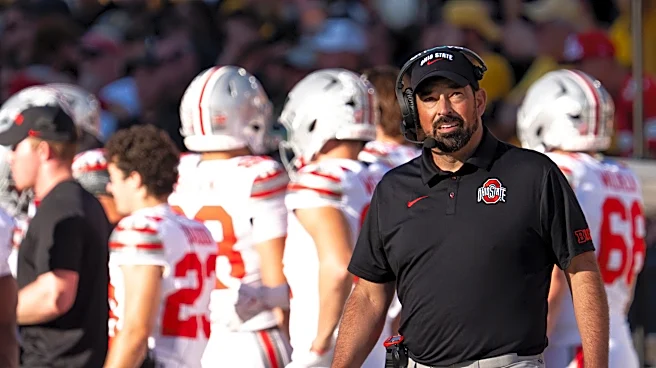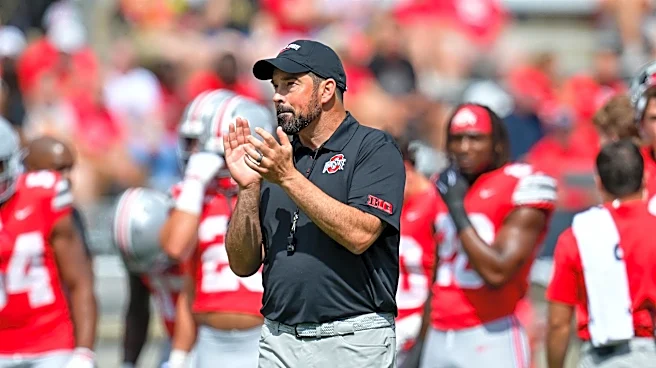

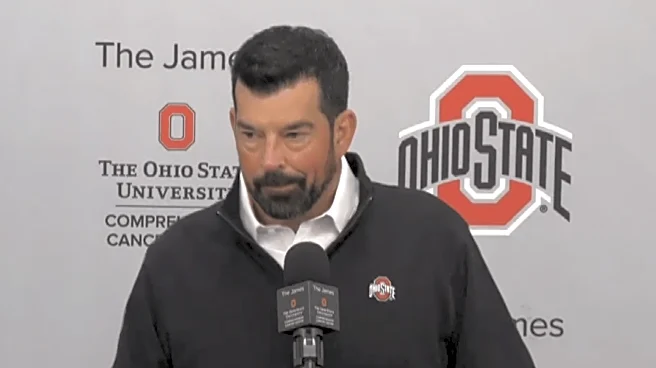
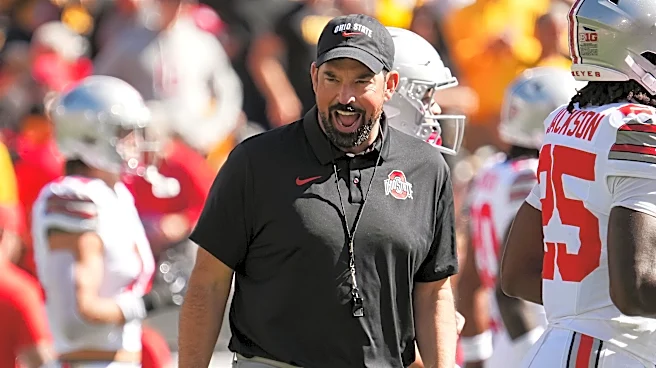
For most of his tenure as Ohio State’s head coach, Ryan Day has approached press conferences with the cautious precision of someone who knows that every word he says will be scrutinized, dissected, and potentially used against him in the court of Buckeye fandom. He has become exceptionally skilled at answering questions without necessarily revealing much of anything, relying on an impressive collection of coaching clichés, carefully constructed platitudes, and occasionally cryptic insights that make
you feel like you have to decipher the Da Vinci Code to figure out what he is actually saying at times.
And, to be fair, I don’t blame him. Coaching at Ohio State means operating under an extraordinary microscope, where even the most innocuous comment can become a weeklong controversy. The Ohio State beat is arguably the biggest in college football, and likely dwarfs that of some NFL teams, so there is no shortage of media members looking to report, discuss, and clickbait anything he says. There are legitimate reasons to protect players publicly, handle criticism privately, and avoid providing unnecessary ammunition to opponents, the media, or fans.
But something feels different about Day this season, and I think it might represent one of the most encouraging developments in his evolution as a head coach.
Day has become noticeably more willing to publicly challenge individual players, acknowledge shortcomings within his staff, and articulate precisely what hasn’t met his expectations through the first five games of the season. Rather than reflexively offering reassurance or explaining away obvious issues, he seems increasingly comfortable identifying problems by name and making it abundantly clear who is responsible for correcting them. And perhaps most importantly, we are already seeing evidence that his more direct approach is producing results.
Earlier this season, Day expressed frustration with the lack of explosiveness from Ohio State’s running backs, challenging Bo Jackson and Isaiah West to “run angry” after praising Ja’Kobi Jackson’s physicality against Kent State.
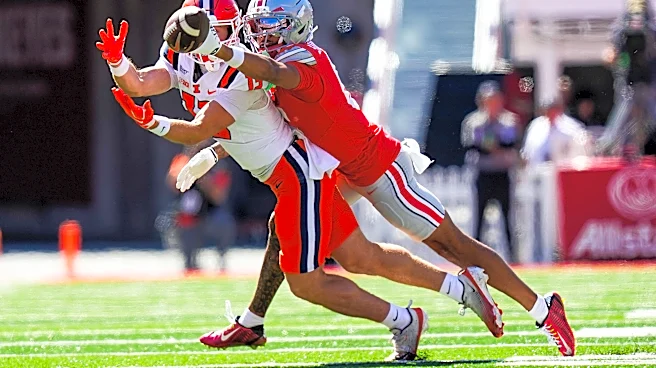
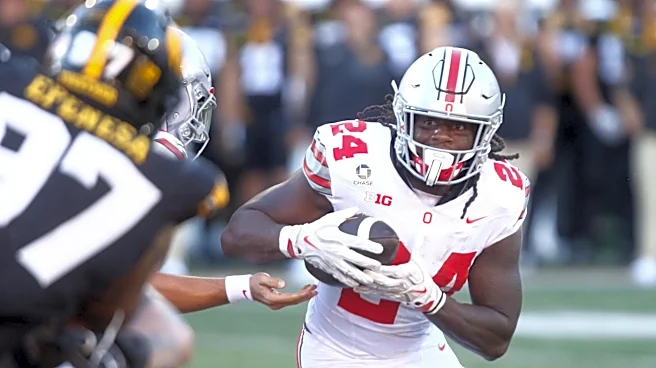
The response wasn’t immediate perfection, but it was progress. Against Iowa, Bo and Ja’Kobi Jackson combined for 142 rushing yards, providing the kind of consistent, physical ground game that Ohio State had struggled to establish. There is still work to be done, particularly when it comes to generating explosive runs, but the backs looked increasingly decisive and purposeful, more consistently picking up positive yardage rather than getting swallowed up at or behind the line of scrimmage.
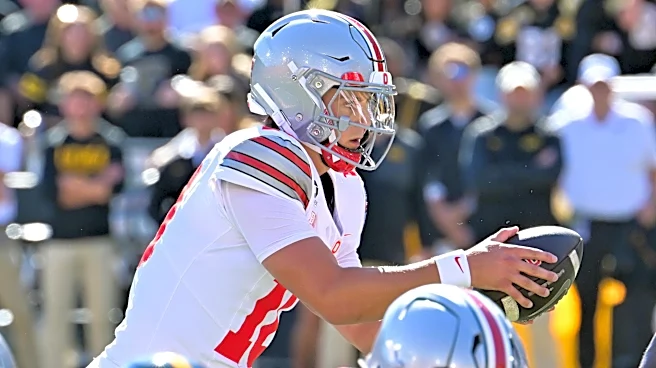
Then there was Julian Sayin. Before the Illinois game, Day challenged his quarterback to become more assertive when plays broke down, using his athleticism to extend possessions rather than being stuck in the structure of the play call. Sayin responded with arguably his most complete performance of the season, throwing for 367 yards and four touchdowns while adding 29 rushing yards and a score of his own. That decisiveness, physicality, and willingness to run were also evident last week at Kinnick Stadium.
Following the Illinois game, Day specifically acknowledged that he had challenged his quarterback and praised Sayin’s response.
“One of our jobs as coaches is to challenge,” he said. “Coaches challenge coaches, coaches challenge players, sometimes players will challenge the coaches — and I like when that happens.”
The quarterback, for his part, embraced the criticism.
“He’s just coaching hard, and he coaches the quarterbacks hard,” Sayin said following the Illinois win. “We wouldn’t want it any other way.”
Now, I recognize that correlation doesn’t necessarily establish causation. Sayin is an extraordinarily talented quarterback who was always capable of that performance (which is why some analysts and fans had been frustrated by not seeing it up until that point), and the improvements in the running game are a result of far more than just a stern talking-to from the head coach. But I think it would be foolish to dismiss the motivational significance of clearly — and publicly — defined expectations, especially when the players who were publicly challenged almost immediately respond by demonstrating precisely the improvements Day was demanding.
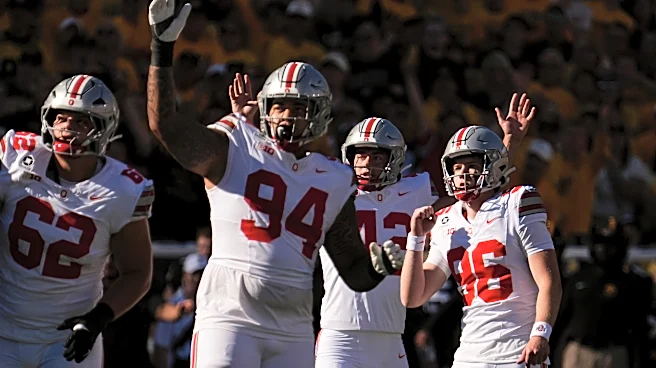
What makes this trend particularly interesting, however, is that Day’s newfound candor isn’t exclusively directed at players. During Tuesday’s press conference, he was asked about the performance of Ohio State’s special teams, an area that has been frustratingly inconsistent despite the offseason hiring of coordinator Robby Discher. Day’s response was unusually direct.
“I don’t think I can sit here and say that we’ve improved with special teams right now. We need to play better.”
That might not sound particularly inflammatory coming from most coaches, but from Day, it felt significant. He essentially acknowledged that, through five games, the unit has failed to demonstrate the improvement that Discher was brought to Columbus to deliver.
He didn’t explicitly blame Discher, nor should he have. Ultimately, the entire coaching staff shares responsibility for the program’s performance, and I have little doubt that the players are receiving quality instruction. But neither did Day hide behind vague assurances about fundamentals, execution, or the need to keep getting better. He simply acknowledged an uncomfortable reality that everyone in Buckeye Nation has seen plain as day, and I appreciate that.
Perhaps even more revealing were his comments about freshmen Khary Wilder and Legend Bey, two exceptionally explosive athletes whose limited playing time has generated understandable frustration and confusion among fans, myself included. Early in the season, I wrote about how impressed I was with both players, going so far as to suggest that Bey could be the starting running back by this point in the season and that Wilder needed to be a bigger part of the game plan heading into Texas.
In answering a question about the two young players, Day acknowledged the importance of talent but emphasized that ability alone does not automatically entitle anyone to playing time.
“Nobody just gets on the field because they have talent,” Day said. “If you compromise your culture and your values and the requirements it takes to be a player in this program, then we’re going to lose our culture, and that cannot happen.”
That, to me, is a particularly meaningful statement. One of the things that has impressed me most during Day’s tenure has been his ability to build a program that has withstood the extraordinary tumult college football has experienced in recent years. While all of the Buckeyes’ talk of “Brotherhood” didn’t begin under him, Day has taken that mantra and used it to cultivate a genuinely tight-knit family atmosphere inside the Woody at a time when the sport itself has become increasingly fractured.
Central to that accomplishment has been his emphasis on recruiting quality young men, supporting their development, and pushing them to become the best versions of themselves both on and off the field. That commitment to character and accountability has helped provide a sense of continuity in a sport where virtually everything else is becoming increasingly transactional.
That’s why I find Day’s comments about Wilder and Bey so noteworthy. He isn’t denying that their talent warrants consideration for additional playing time; in fact, he clearly recognizes the explosive potential that has made fans so eager to see them on the field. But he’s also making it clear that talent alone isn’t enough. The implication is that their ability has created opportunities that their preparation and consistency have not yet fully earned. To whom much is given, much is expected.
While I would personally love to see both players receive more opportunities, I not only respect Day’s rationale for keeping them off the field (for the time being), but perhaps even more so, his willingness to explain what is happening behind the scenes.
There is an important difference between protecting a player from unnecessary embarrassment and shielding him from accountability. Good coaching requires recognizing that distinction, and great coaching requires understanding when a player will benefit more from reassurance than from an unmistakable challenge. While Day’s willingness to make these challenges publicly is a bit of a departure from how he has approached things in the past, the underlying philosophy has been central to his coaching identity from the beginning.
When he first took over the program in 2019, he made “tough love” one of the foundational principles of his coaching identity. As early as his first Big Ten Media Days as head coach, he emphasized that leadership requires making difficult decisions and challenging players to improve. Then during his first fall camp, he explained the relationship between toughness and the emotional bonds he wanted to build across the program.
“When you preach love as much as we’ve preached as a coaching staff, I think the toughness is the other part of that,” Day said.
That philosophy has always existed within the program, and I don’t doubt that Day has spent years delivering difficult messages behind closed doors. But there is a difference between practicing tough love within the relative privacy of the Woody Hayes Athletic Center and allowing those expectations to become part of the public conversation, particularly when doing so invites uncomfortable questions about players, coaches, and the program itself.
I’ve written previously about how Day’s teams have often performed their best when they have something to prove. The 2024 national championship run remains the most obvious example, as Ohio State responded to the embarrassment of a fourth-straight Michigan loss by playing with a level of urgency, aggression, and purpose that had been increasingly absent from the Buckeyes’ M.O.
So, if Day’s teams consistently respond well to external challenges, why shouldn’t he become more intentional about creating that type of public-facing motivation? Why should Ohio State need a devastating loss, national criticism, or the threat of elimination to manufacture the competitive edge necessary to maximize its potential? Why can’t the head coach establish those expectations himself, identifying areas of complacency before they become season-defining failures and challenging players to respond before it’s too late?
Of course, there are limits to this approach. Public criticism can become counterproductive if it feels arbitrary, personal, or disproportionately directed toward specific individuals. Some players respond to confrontation, while others require a more measured motivational approach, and no amount of rhetoric can substitute for effective instruction, sound strategy, or competent execution.
But that is precisely why I find Day’s approach encouraging. He doesn’t appear interested in publicly berating players for the sake of appearing tough, as some coaches do; nor is he throwing anyone under the bus to protect his own image. His challenges have generally been specific, measured, and connected to identifiable areas of improvement. He isn’t embracing or manufacturing controversy; he is simply clearly communicating expectations in a public setting, presumably to get the best possible response from his players and coaches.
I think this can also create a healthier form of accountability throughout the program. When the head coach is willing to acknowledge that special teams haven’t improved, it becomes more difficult for anyone else in the building to pretend otherwise. When talented freshmen are told that opportunity must be earned, it reinforces the idea that the program’s standards apply regardless of recruiting rankings or obvious upside.
But beyond that, I think there’s another dimension to this development that deserves consideration: Day’s evolving relationship with the media and, by extension, Ohio State fans.
The enormous Buckeye beat serves as the primary conduit through which fans can question the people responsible for their favorite program. While it might be more comfortable for Day to dance around difficult topics, that doesn’t necessarily serve the broader conversation surrounding his team. In fact, the absence of straightforward answers can sometimes create more speculation and controversy than the truth itself.
By acknowledging the problems that are obvious to anyone watching and providing meaningful context for decisions that have frustrated fans, Day is demonstrating a greater willingness to engage with the people who have invested years of attention, emotion, and passion in his program. That doesn’t mean he owes the public an explanation for every personnel decision or private conversation, but there is a meaningful distinction between maintaining necessary boundaries and hiding behind the comfort of coachspeak.
And I think that willingness to be more forthcoming is beginning to foster a different kind of trust.
Ultimately, perhaps the most encouraging development is that Day seems increasingly comfortable with the uncomfortable responsibilities of leadership. He is demonstrating that being supportive doesn’t always mean being reassuring, that preserving a team’s culture doesn’t require insulating it from criticism, and that maintaining confidence in your players and coaches doesn’t mean pretending their performance has met expectations when it clearly has not.
I’ve long believed that Day embodies the qualities Ohio State should want in a head coach, not simply because of his football knowledge, but because of his humanity. His commitment to relationships, loyalty, and the well-being of his players has always been central to who he is and how he runs his program, and that makes me proud that he is coaching for my alma mater. What we’re seeing now isn’t an abandonment of those principles, but a more complete expression of them.
In a profession where toughness is too often confused with hostility and accountability with assigning blame, Day seems to be finding a more thoughtful balance. He can challenge his players without diminishing them, acknowledge his coaches’ shortcomings without disavowing them, and be candid with fans without surrendering the discretion his position requires.
If Ohio State is going to reach its potential this season, that balance could prove every bit as important as the adjustments made on the field, because the ultimate purpose of tough love isn’t to make someone feel the weight of your criticism; it’s to give them the confidence, clarity, and motivation to become more than they were before.