




Bayern Munich’s 3-3 draw against Viking FK was an entertaining Champions League spectacle, but from a Bayern perspective, it was also a frustrating reminder that dominating the statistics does not automatically translate into winning football.
Bayern finished with 66% possession, 25 shots, eight shots on target, and a staggering 3.51 expected goals (xG). Viking managed just eight shots and 0.56 xG. And yet, Bayern left Norway with only a point. So, what went wrong?
Was it defensive fragility? Bayern
conceded three goals despite limiting Viking to relatively few opportunities. The issue was not necessarily allowing a constant stream of chances, but failing to prevent the home side from making its opportunities count. Jonathan Tah endured a difficult outing, and his individual performance will inevitably attract scrutiny. When Bayern’s defenders make costly mistakes or fail to deal with dangerous situations, the team can pay for it even when the overall numbers suggest control.
Was it a lack of clinical finishing? Bayern generated enough attacking opportunities to win this match comfortably on paper. Twenty-five shots and 3.51 xG should be enough to put a game to bed. Yet, the final score tells a different story. Bayern must take greater advantage of their territorial dominance, particularly in Europe, where wasted opportunities can keep opponents alive long enough to punish them.
Were tactical issues to blame? Possession and passing accuracy are useful indicators, but they do not tell the whole story. Bayern had 66% of the ball and completed 498 accurate passes, yet they still struggled to turn their control into a victory. The balance between attacking aggressively and protecting themselves defensively remains crucial. Bayern cannot afford to become so focused on creating chances that they lose control of the game when possession changes hands.
Was it simply poor individual performances? Lennart Karl, Nathaniel Brown, and Jonathan Tah all struggled in the first half, with Kompany hooking all three at the break. Karl could not make enough of an impact in attack, Brown was caught out as Viking doubled their lead, and Tah struggled to deal with the home side’s early threat. Bayern cannot afford to have several starters underperform simultaneously, especially in a match where they were expected to control proceedings.
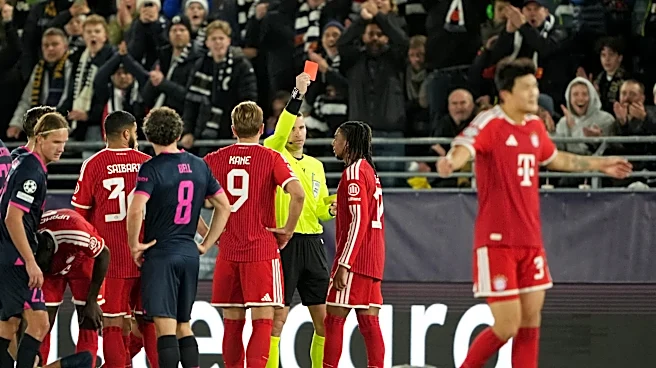
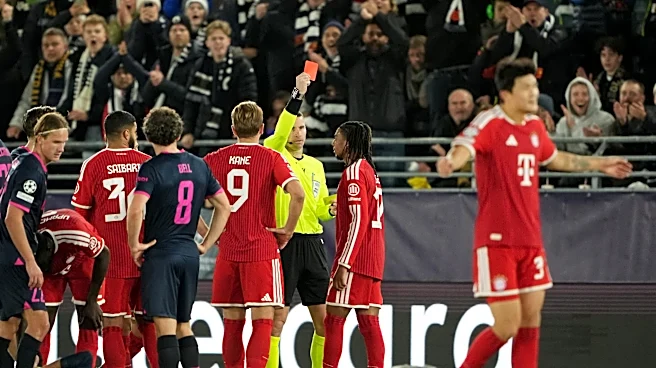
And then came Michael Olise’s red card. Just when Bayern had fought back from 2-0 down to lead 3-2, Olise picked up two yellow cards in quick succession, the second for throwing the ball at Viking captain Zlatko Tripić. It was an entirely avoidable moment of undisciplined decision-making that left Bayern with ten men and gave Viking the opportunity to push for an equalizer. Herman Haugen delivered in the 90th minute, turning what could have been a remarkable comeback into another painful dropped-points moment.
Bayern showed real character to overturn the deficit, but their defensive vulnerabilities, uneven individual performances, and failure to manage the closing stages ultimately cost them.
What do you think was the biggest factor in Bayern Munich dropping points to Viking FK? Was it the defensive fragility, the missed opportunities, the poor first-half performances, tactical issues, or Olise’s costly red card? Or was it a combination of all of the above?
Join the conversation!
Sign up for a user account and get:
- New, improved notifications system!
- Fewer ads
- Create community posts
- Comment on articles, community posts
- Rec comments, community posts