

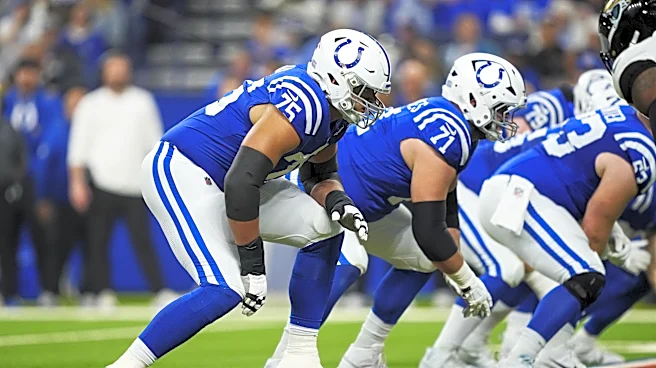
Pro Football Focus, the football analysis organization that NFL fans love to hate, is celebrating its 20th anniversary this year. In honor of that, Nathan Jahnke of PFF is creating an “All-PFF Team” for the past two decades for every NFL franchise. Each All-PFF team is based on – you guessed it – that team’s players’ PFF grades over their careers, so this is an opportunity for you to decide whether the single-game grades you react to so strongly week by week for specific players translate into injustices
when looked at over the entirety of those players’ careers.
Any exercise of this sort is fraught with difficult decisions in how to analyze the data, even though the individual game subjective PFF grades are set in concrete for the purpose of the analysis. Here are a couple of the decisions they make:
- How do you even define a team? With varying offensive and defensive personnel groupings over a game, a season, and an era, there is no simple answer. PFF includes 12 positions on offense and defense to deal with this (special teams are not included), based on the prevalence of 11 personnel and nickel defense in recent years but with adjustments for specific teams. On offense they include three wide receivers, one of whom has to have had significant time lining up in the slot, two tight ends, but only one running back for the Giants (for teams that ran more 21 than 12 personnel they removed one TE and added a FB). On defense they included either a third interior lineman or a third linebacker depending on whether a 3-4 or 4-3 defense was more commonly used.
- How do you weigh the entirety of a player’s career vs. what he accomplished in his peak seasons? This is basically the argument that has kept Eli Manning out of the Hall of Fame so far. PFF decides to use the top 5 years of a player’s career with that one team and excludes any season with a grade below 60.0 so as not to unduly penalize one bad year.
- Postseason games are included, but not more than 16 total games for any one season.
OK, take a minute to put your all-time Giants team for the past 20 years together, and see how it matches the one determined by PFF grades. Here we go.
Offense

My own reactions to this list are:
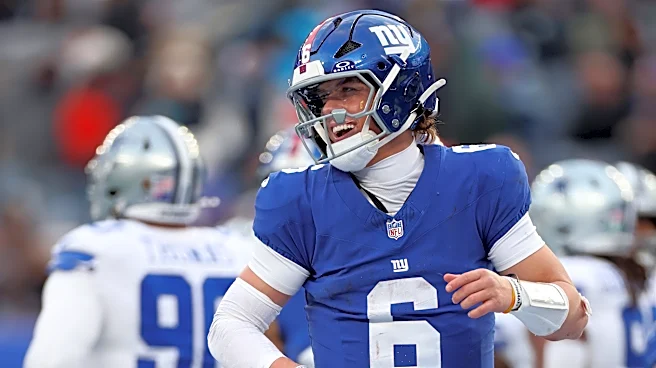
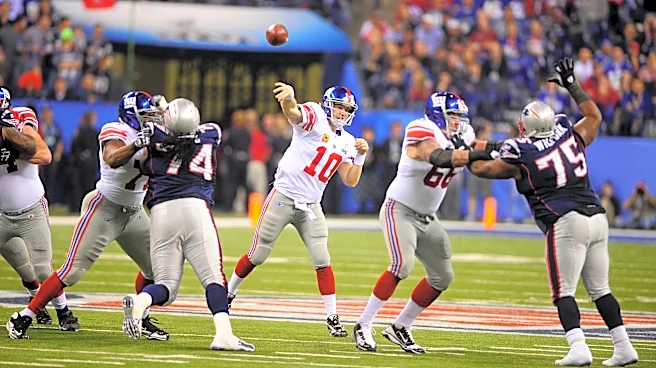
- QB: There is no other possibility than Eli Manning. We’ll hope that if they do a 25th anniversary list, Jaxson Dart gives him a run for his money by that time.
- OL: It says a lot about the futility of the Giants’ blocking over the past two decades that 4 of the 5 slots go to starters on the Giants’ 2007 Super Bowl championship team. Only David Diehl, arguably the weakest blocker on that team, loses out, and to Andrew Thomas, clearly the Giants’ best OL of the past decade +.
- HB: This is where it gets interesting. The Giants have had many great running backs over the past two decades. Tiki Barber was in his final season in 2006, the first year of the two-decade period, so he didn’t even qualify (though to stoke your PFF fire, I looked up his 2006 rushing grade, and it was only 64.0 despite the 1,803 yards he gained). Brandon Jacobs and Saquon Barkley each had two 1,000 yard rushing seasons for the Giants during this period. Bradshaw, however, beat out both of him because of his all-around good play, including not only two 1,000-yard seasons of his own but also his consistency and all-around play. Jahnke notes that Bradhsaw averaged more yards per carry, more first downs and touchdowns per attempt, had a higher explosive run rate, was a betetr receiver, and was a better pass protector.
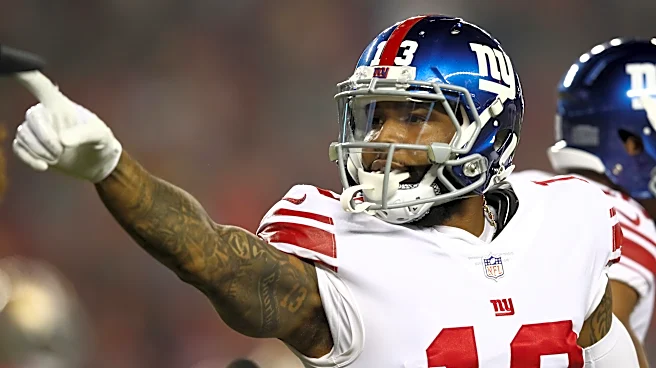
- WR: This is not much of a debate. Amani Toomer’s five best seasons, all over 1,000 yards, all occurred before 2006. Plaxico Burress had three great seasons in Giants’ blue before his untimely end as a Giant. Hakeem Nicks’ two 1,000 yard seasons both fall within the 20-year period, and newly re-signed Odell Beckham Jr. had all five of his 1,000-yard seasons during this time frame as well.
- Slot WR: It was a close contest between Victor Cruz and Sterling Shepard, but Jahnke’s decision to emphasize peak performance as determined by a player’s top five years gave the nod to Cruz, who was great during the 2011-2013 stretch before injury derailed his career, over the consistently good but less spectacular Shepard.
- TE: This has been something of a problem position for the Giants for a long time. It’s saying something that Jeremy Shockey, who only had two Giants seasons in the 20-year window (2006-7), comes out on top, while Kevin Boss, a solid but not spectacular TE, came in second over first-round pick Evan Engram. To me Engram was more of a receiving threat than Boss, but Engram has always had that drop problem, and Boss was to me a better blocker.
Defense

My reactions:
- DL: Jahnke notes that the defensive line has clearly been the Giants’ strength during this 20-year period, and that 9 different Giants’ IDLs and edge defenders who played during this time had at least one season with a PFF grade of at least 90. Even Michael Strahan, who only played his last 35 games during the PFF era, graded in the mid-80s those two seasons. In the interior, Dexter Lawrence clearly has to be one of the choices. It’s a toss-up in my mind between Snacks Harrison and Leonard Williams for the other (with a nod also to Dalvin Tomlinson), but I can see Snacks’ consistently excellent run defense winning out over Williams’ more balanced but less specatacular (other than 2020) performance as a Giant. On the outside, pick your poison. The Giants had so many great edge defenders during this period. I have no problem with Justin Tuck and Jason Pierre-Paul winning out, though Osi Umenyiora is mentioned by Jahnke and presumably wasn’t far behind. I probably would have gone with Osi.
- LB: What a disappointment the off-ball linebacker position has been for the Giants during this period, for someone who watched Sam Huff play as a child and saw Harry Carson and Carl Banks (not to mention Lawrence Taylor when he lined up off-ball) devastate opposing running games, along with Jessie Armstead in a later era. It’s telling that over a 20-year stretch, two LBs who each had exactly one great season as Giants come up as the all-time bests during the PFF era. I have to agree with PFF here, but I don’t have to like it.
- CB: The Giants have had what I regard as something of a cornerback problem for a long time. During the PFF era, to my knowledge the only Giants CBs to make the Pro Bowl (and only once each) have been Jackrabbit Jenkins, Dominique Rodgers-Cromartie, and James Bradberry. None of them were Giants draftees. The first two make the PFF list, along with Corey Webster, a solid CB for a while who was a Giants draftee and did make one hugely important play for them at a crucial moment. This position has been more notable for its outright failures in recent years, from Eli Apple to Deandre Baker to Deonte Banks. Is it too much to ask for them to have hit on Colton Hood?
- S: Things have been a little better at this position but have also been a bit unlucky. At one safety (Jahnke doesn’t separate free from strong), I’m fine with Kenny Phillips making the list, though Phillips’ career might have been so much more were it not for his recurring knee problems. At the other safety, Landon Collins was a great Giant for a few years but then left for Washington and hasn’t been the same player for a while. Collins apparently made the list in a close race with Xavier McKinney, who was sometimes great, sometimes not as a Giant; he’s been better as a Packer.
What does your list look like?