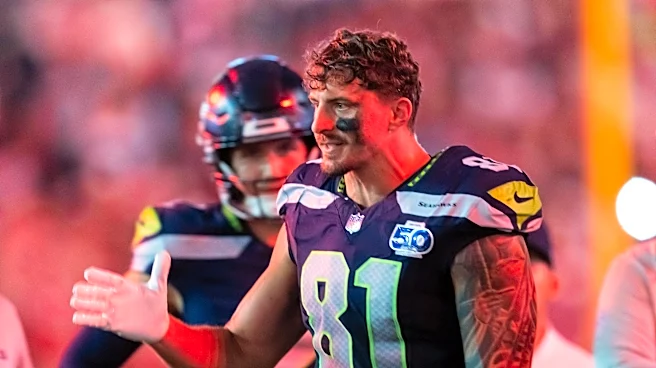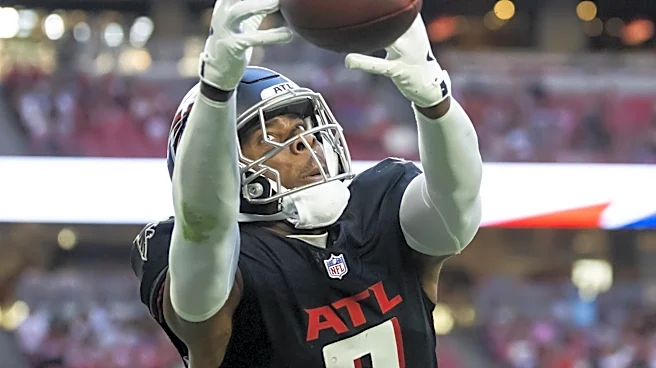

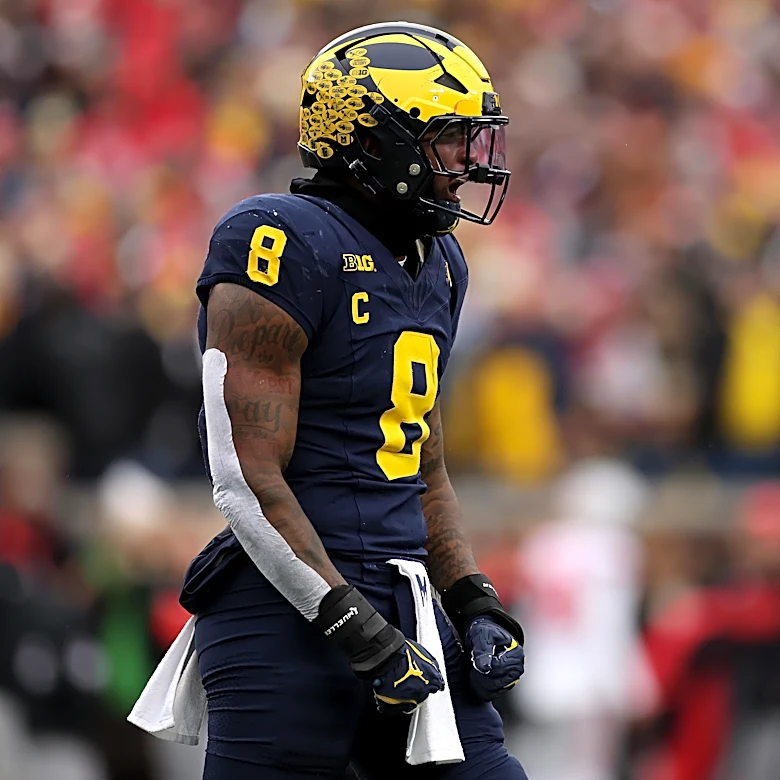





The Atlanta Falcons went out and drafted Zachariah Branch, one of the most well-regarded slot threats in this year’s draft class, which suggested they’d be rolling with three receivers often. They also signed Austin Hooper, a useful pass-catching threat at tight end, and already had Kyle Pitts and Charlie Woerner, which suggested they’d want to use two tight ends frequently. The signing of Brian Robinson, a high-end backup running back who brings a bruising running style and underrated hands, suggested they may
even want to go with two running backs on occasion.
Obviously, you can only roll 11 players out there on offense, so there will have to be mixing-and-matching here. Based on Kevin Stefanski and Tommy Rees’ history, though, what kind of splits can we expect from this Falcons offense in 2026?
The Falcons will use two tight ends a lot
Stefanski and Rees ran 85% of Cleveland’s 2025 plays out of two personnel groupings, per SumerSports. Their 11 (three wide receivers, one running back, one tight end) usage was their highest at 43.98%, which was 27th in the NFL. That was just below the 2025 Falcons, who ran with 11 personnel 45.13% of the time.
Their second-highest usage rate was for 12 personnel (two TEs, two WRs, one RB) at 41.17%, just ahead of the 2025 Falcons at 38.17%, as they leaned heavily on Harold Fannin and David Njoku. They also leaned on 12 personnel with one extra offensive lineman in place of a receiver on nearly 5% of their snaps, the fifth-highest rate in the NFL (the Falcons were 24th) and 13 personnel (three TEs, one WR, one RB) about 4%, or the 18th-highest rate in the league (the Falcons were 9th, thanks to Feleipe Franks and Teagan Quitoriano). The picture you should be getting from this is that the Browns were heavily reliant on their tight ends in 2025.
That wasn’t the case in years prior, when the Browns had one of the highest 11 usage rates in the NFL at 6th in 2024 and 11th in 2023. They were decidedly mixed-usage in 2022, but used a sixth offensive lineman at the highest rate in the league. What emerges is a picture of an offense that adapted to personnel, but readily embraced a reliance on tight ends when the personnel justified it.
I think it’s fair to assume two fundamental truths about this Falcons offense based on what we know of 2025 and earlier for Stefanski (and to a lesser extent, Rees). The first item is that the team will not be as reliant on two tight end sets as the Browns were last season, given that Cleveland had two high-end TE options and relatively weak receivers and the Falcons are a bit stronger in the regard with the addition of Jahan Dotson and Branch. The second truth is that they’re still going to heavily lean on 12 (and occasionally 13) personnel because of the relative strength of the tight end position, the multitude of ways they can deploy Kyle Pitts, and the Hooper signing representing a fairly obvious statement of intent.
The versatility of their personnel will help Atlanta keep things fresh. They can roll out Kyle Pitts and Austin Hooper as in-line options with Drake London and Jahan Dotson split out wide and have the credible threat of Bijan Robinson as a receiving option out of the backfield, or they can kick Pitts out wide opposite Dotson with London operating out of the slot and either Hooper or Woerner available to block or serve as an option of last resort. I expect we’ll also see Branch operating out of the slot at times with London and Pitts as your outside options. The fact that Hooper can still catch and blocks fairly well allows Atlanta to create doubt more effectively than they could last year with two tight end sets featuring Woerner, given that his presence was a frequent tell that the Falcons were about to run and he struggled last year.
While the Browns offense was ugly as sin last year, the underlying shift to two tight end usage was clearly intentional and fairly successful in the context of Cleveland’s struggles. The Hooper signing, last year’s trend lines, and the steady rise of 12 personnel usage should give us confidence the Falcons will draw from that grouping a lot with Pitts, Hooper, and Woerner.
What does that mean for Zachariah Branch and Jahan Dotson?
The Falcons will still probably utilize three receiver sets more frequently than 12 personnel, but as was the case for Cleveland a year ago, the gap between those two groupings may well be very narrow. That has obvious implications for Dotson and Branch, the team’s expected #2 and #3 wide receivers, especially because Branch’s size may limit how often he works outside in the pros. In three years of college ball with USC and Georgia, Branch operated out of the slot 76%-plus of the time each season.
Dotson has experience playing inside and outside in the pros, but has had an underwhelming career to this point, so he is not necessarily etched in stone as a volume option in this offense. The good news for both players is that there’s still going to be plenty of opportunity and plenty of playing time available, and Branch in particular was clearly acquired to play a prominent role in the screen-heavy passing game Stefanski and Rees favor. If Dotson keeps the #2 job all season he’ll end up playing between 60-70% of the team’s offensive snaps, while Branch is probably baked in to at least 40%. The team will have opportunities to go around.
But I do think, from a real life role and fantasy perspective, that Dotson and Branch have capped upside to an extent. Both are operating in an offense that’s going to lean heavily on the run, utilize two tight ends frequently, and are working on a roster where the top three targets are likely to be Drake London, Kyle Pitts, and probably Bijan Robinson. If Branch looks like a rookie and/or has his role a bit limited in year one because of size or readiness, and if Dotson doesn’t blossom in the Stefanski/Rees offense, there’s a real chance that the team will ratchet up their 12 personnel usage as the season goes on.
The rest we’ll need to wait to see, as summer talk from the coaching staff, usage in training camp and preseason, and a combination of health and readiness will give us clues as to how the offense will look ahead of the 2026 season. Ultimately, though, I’d expect an emphasis on versatility no matter the formation and personnel grouping, and a continued heavy reliance on 11 and 12 personnel.