


The San Francisco 49ers are penciled in to select an edge rusher, or add one via trade, at some point during draft weekend. When you’re picking at the tail end of the first round, the odds of you landing an impact player on the EDGE are slim. That’s not an opinion. That’s based on history.
In recent history, you’re looking at T.J. Watt in 2017, Chandler Jones in 2012, and Clay Matthews in 2009 as the “stars.” Realistically, recent history is a better example of the type of player you’re getting at the end
of the first round. Names like Jermaine Johnson, George Karlaftis, Myles Murphy, Nolan Smith, Chop Robinson, Felix Anuduike-Uzomah, and Darius Robinson make up the edge rushers from the previous three classes selected in the 20s in the past three classes.
Today, we’ll run through options for the Niners at edge rusher at each pick, but with a twist. We’ve looked at the EDGE players, the defensive coordinator, Raheem Morris, drafted during his time with the Falcons and the Rams.
That gives us a baseline to work with. The addition of Cam Sample backs up the small sample size that Morris doesn’t prioritize height and weight, but instead is looking at measurables that indicate an explosive athlete, like jumps–where Sample finished in the 86th percentile coming out of college.
We’ll use RAS(relative athletic score) paired with the consensus big board to see which prospects best fit the Niners.
Round 1 fits for the 49ers at edge rusher
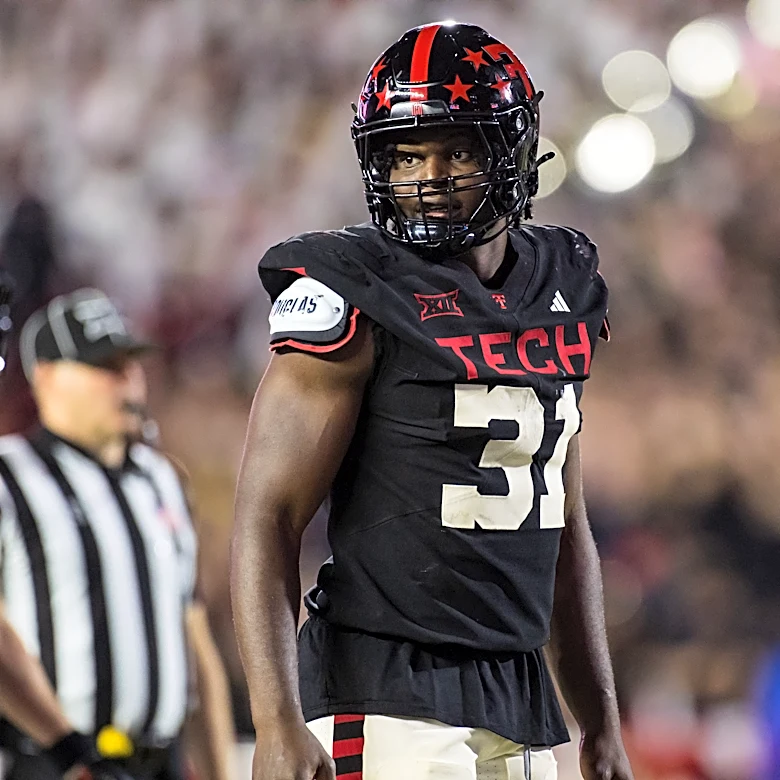
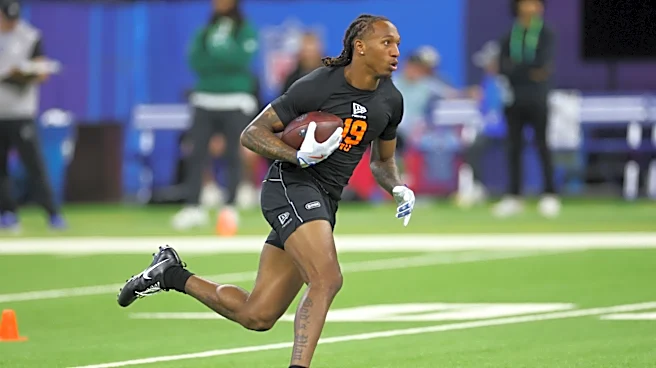
Let’s start with a player who was supposed to be selected in the top 10 in this upcoming draft. That is Clemson’s T.J. Parker, who ran fast at the NFL Combine:
Parker’s broad jump and 40 time put him in the low 70th percentile. Mockdraftable has Kayvon Thibodeaux as one of Parker’s athletic comparisons. Another comp for Parker? Justin Smith.
Parker was selected 8th in this preseason mock draft. The three-year junior was coming off a 12-sack season in 2024 with 46 pressures. Parker recorded only 5 sacks in 2025 but still registered 44 pressures. That tells me the production remained consistent.
You could do a lot worse than Parker. He’s not a flashy, bendy, twitchy kind of player, so Parker is never going to make waves on social media. But he does the football things that matter, like playing hard, setting the edge, playing with proper pad level, and using his length as an advantage. You’re hoping Kris Kocurek could continue to refine Parker’s counter moves to improve his pass-rushing bag.
It’s also worth noting that Parker has played in odd fronts when he was asked to stand up as a pass rusher. Parker only played in a three-point stance on 20 percent of his snaps in 2025, compared to 59 percent in 2024 and 84 percent in 2023.
He’d be a “safe” pick, but there is upside given the production early in Parker’s career. He’s a better player than just about every edge rusher that would be on the board if Parker makes it to No. 27.
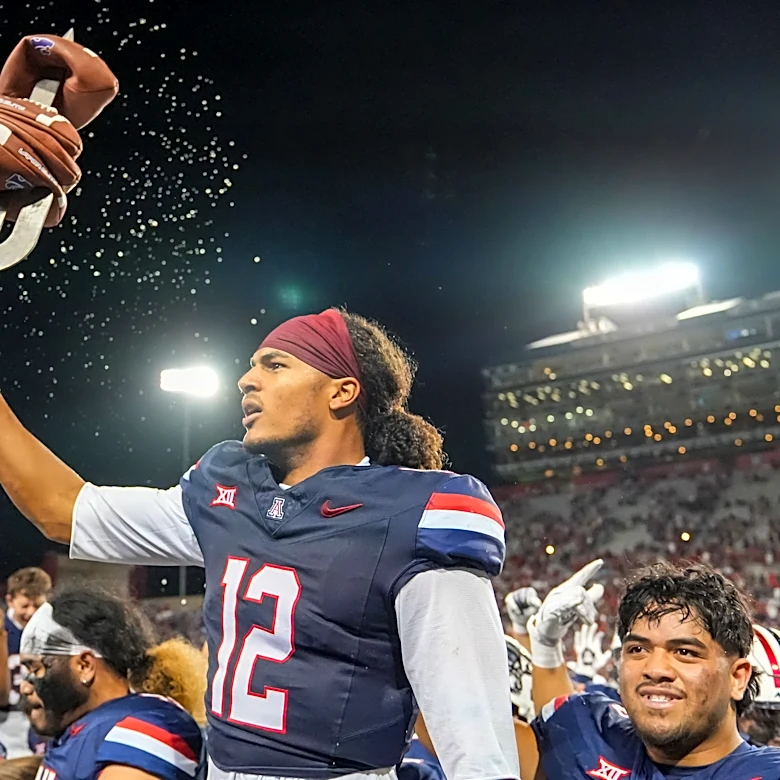
The other option is Keldric Faulk out of Arizona, who I cannot believe would be available for the 49ers in the first round. Another player who had a better statistical profile in 2024 than in 2025. Much like Parker, the pressure numbers remained consistent. Sack numbers are fickle. You can do everything but sack the quarterback on a player, and it could still be a dominant rep. Whereas you may be unblocked and get credit for a sack, but you didn’t do anything to contribute.
Faulk and Parker are similar in terms of athleticism. Faulk’s jumps were superior. He’s closer to being abnormally long, much like Arik Armstead, which makes him even more of an intriguing option in the first round.
If the 49ers leave Thursday night with Faulk and Parker, they’ve got better as a team.
Round 2 fits for the 49ers at edge rusher
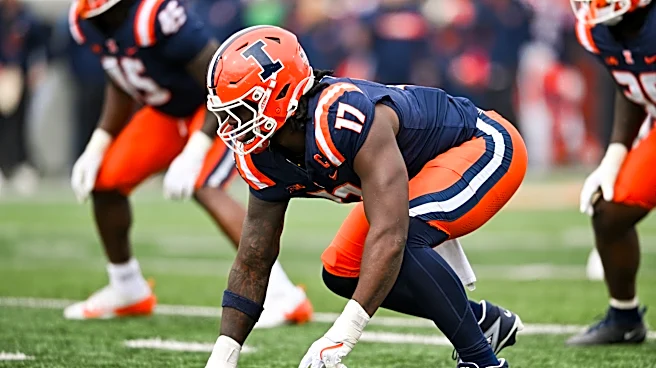
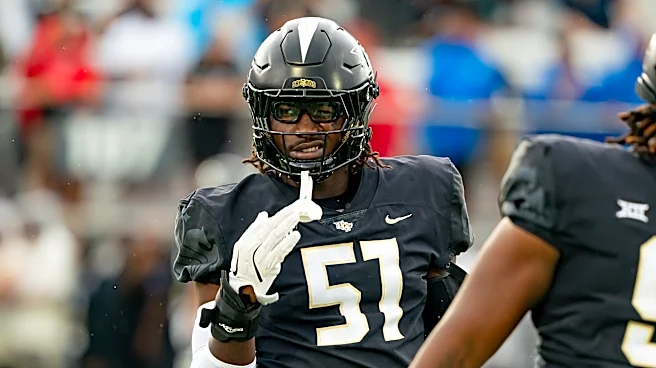
A player who might fit the 49ers in the second round is Illinois pass rusher Gabe Jacas:
That bench press number is impressive, and helped make Jacas one of the most athletic players in the class.
Jacas is another player who primarily played in a two-point stance in college. Last year, Jacas was in a three-point stance for only 20 percent of the time. It was 23 percent in 2024. Jacas had 10 and 8 sacks, respectively, in each of the previous two seasons. His pressures were consistent, too, with 37 and 42. Jacas’s pressure percentage of 17 was higher than both Parker’s and Faulk’s.
Jacas plays like a person who benched 225 30 times. He’s not just strong; he’s violent. That’s what you need in the NFL. It led to plenty of tackles for loss, ranking fifth in this class.
Jacas also showed productive hand usage that allowed him to control the player he was going against. He’s a fun player who should resonate with a team like the Niners.
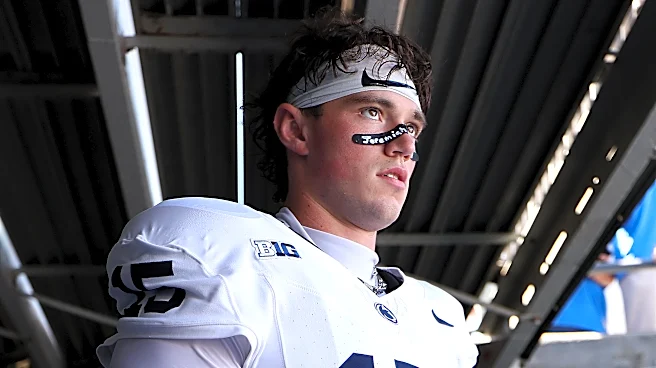
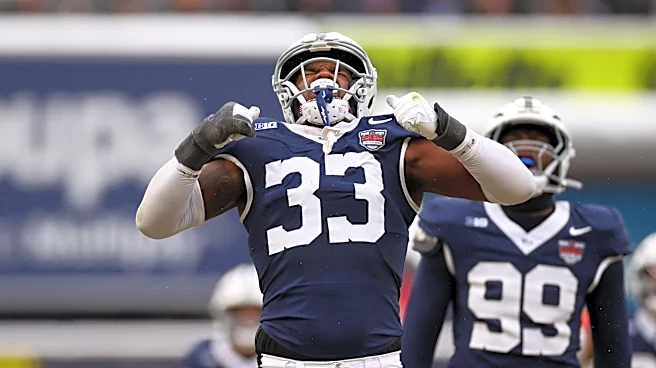
The other option is out of Penn State:
Dennis-Sutton’s height is in the 93rd percentile. Both his jumps and 3-cone were in the 90th percentiles. A 4.63 is good enough for the 85th percentile. A couple of his athletic comps include Brian Burns and Danielle Hunter.
Dennis-Sutton’s pressure rate was off the charts at 21 percent. His quick pressure rate of 6 percent is another eye-popping number. So why in the world would a 4-year senior with 8.5 sacks in consecutive seasons fall to the end of the second round? I’ll believe it when I see it. These Penn State prospects generally go in the top 50, closer to the early part of the second round.
Dennis-Sutton has 33 starts and played in 55 games. The body type might throw teams off. High-cut players don’t tend to change direction well. You can see some exposures of that when Dennis-Sutton attempts to bend the corner. Instead, he relies on the first step that he can turn into power. I’m a fan. Dennis-Sutton is a bit of a battering ram that may look reckless at times, but he’s disruptive.
These two high-end athletes would make the Niners better right away, filling the void left by Bryce Huff.