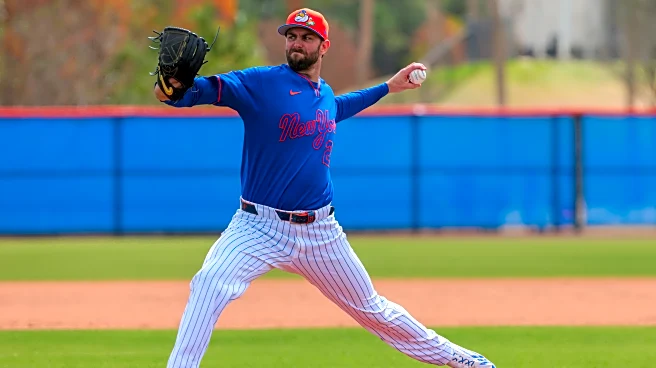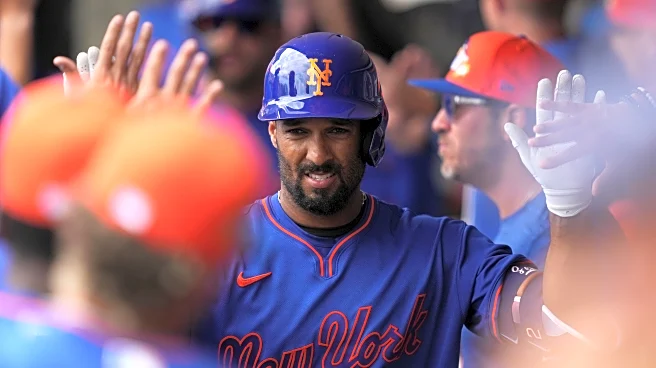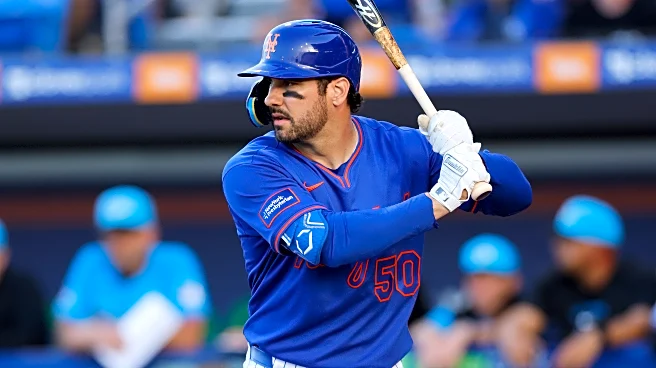

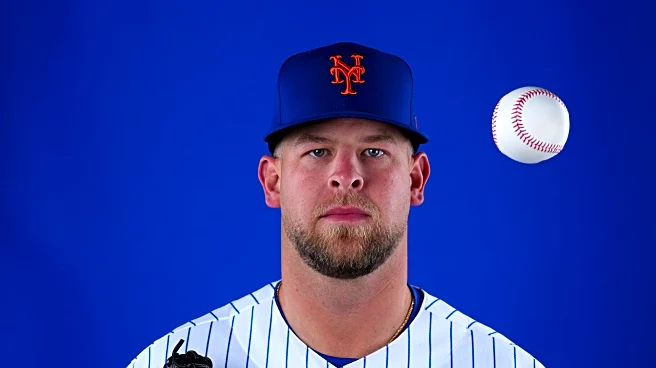
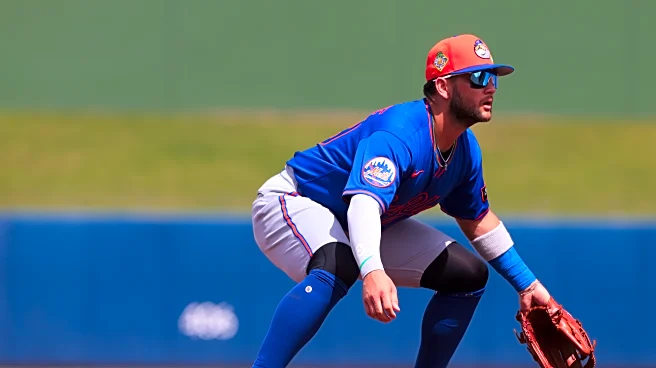
Bo Bichette and the Mets were a match that was made for a variety of reasons.
Following the departure of Pete Alonso and trade of Brandon Nimmo, the Mets had some open plate appearances to fill in, to say the very least. Nimmo will almost certainly be replaced by Carson Benge, as the rookie hit well in spring training games and his main competition, Mike Tauchman, has an injured knee. Alonso, however, did not have a clean replacement lined up.
David Stearns signed Jorge Polanco to help fill the void
at first base in the wake of Alonso departing to Baltimore, but the lineup was still lacking a right handed bat. The Mets chased Kyle Tucker—notably left-handed but extremely good all the same—who eventually decided to chase some rings with the Los Angeles Dodgers instead of taking the Mets’ ultra aggressive offer. They quickly pivoted to Bichette, signing him within 24 hours of missing out on Tucker. At first glance, the move was interesting.
In a world where the Mets did not acquire Luis Robert Jr. yet, the outfield was an unsettled group of Juan Soto, Tyrone Taylor, and Carson Benge. Bichette, a lifelong shortstop save for some second base innings last year, was not moving Francisco Lindor off his spot. Third base could have been handled by Brett Baty, and second base was occupied by Marcus Semien, who came over from Texas for Nimmo. The fit appeared weird.
But the fit is a little cleaner than people give it credit for. Bichette is an excellent hitter, as the 28-year-old comes to Queens with a 122 wRC+; and that is with his terrible, no good 2024 season which saw him have a 70 wRC+ while battling injury. While he is moving to a new position, it is a wise career decision for him to do so. He has a career -33 Outs Above Average at shortstop, and as he approaches 30 with some lower body issues, it is safe to say he would not improve defensively.
There also is the question of his contract, which I’d argue was the most enticing thing for the Mets. Under David Stearns, the Mets have shied away from medium-term commitments. They got Juan Soto on a massive 15-year contract, but the team has largely avoided those four-to-five-ish-year deals. They got out of Nimmo’s contract with five years left for the final three years of Semien’s deal. They shied away from Alonso, in large part due to the five-year commitment he received.
The Mets and Bichette agreed to the three-year deal, but in all actuality it is likely a one-year contract. Bichette, who will make $42 million this season, has player options for 2027 and 2028 at the same figure. In all likelihood, Bichette will perform well enough to forgo the $84 million left on his contract to chase long-term stability, which is part of the reason why the Mets were into him in the first place.
For the 2026 season, the Mets are getting a great bat in a very fun profile to watch. He does not strike out much, earning a sub-20% strikeout rate in each of the last four seasons. He also never walks, coming into the season with a career 5.7% walk rate. He relies on elite bat-to-ball skills, pitching in enough home runs (111 in 748 games) to be a hitter you who capitalizes on mistakes. He is cut from a different cloth than a lot of the modern game, focusing on putting the ball in play at an elite level instead of zoning in on the three-true-outcomes philosophy that dominates modern hitting.
This season preview comes with a bit of a warning label: Don’t get attached. Bo Bichette is an awesome and fun player, but the structure of his contract and the Mets’ preference on spending more money in the short term to keep the long term books relatively clean, this is likely a marriage of convenience rather than a long-term partnership. However, he makes the 2026 Mets better, the Mets allow him to showcase a newfound skill by playing third base, and perhaps they can create magic for a season together.