
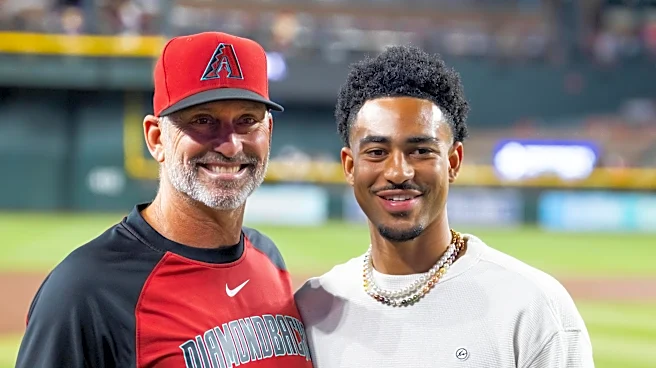


The Green Bay Packers’ defensive coordinator search began when Jeff Hafley, who coordinated the defense for two seasons, joined the Miami Dolphins as the head coach in January. At the time, sources reported the Packers had agreed to terms with Gannon on January 25, 2026, and the hire was officially announced on February 2nd, with LaFleur saying he was “thrilled” to add someone with Gannon’s experience as both a coordinator and a head coach.
LaFleur was intrigued by Gannon specifically because of the
difficulty he’d had game-planning against his defenses when Green Bay faced the Eagles in 2022 and the Cardinals in 2024 and 2025 — the interview ran a day and a half, and the hiring was expedited. A source told ESPN that LaFleur “loved the fact that Gannon has sat in the head coach’s chair” — making him the fourth defensive coordinator of LaFleur’s eight seasons in Green Bay, following Mike Pettine, Joe Barry, and Hafley.
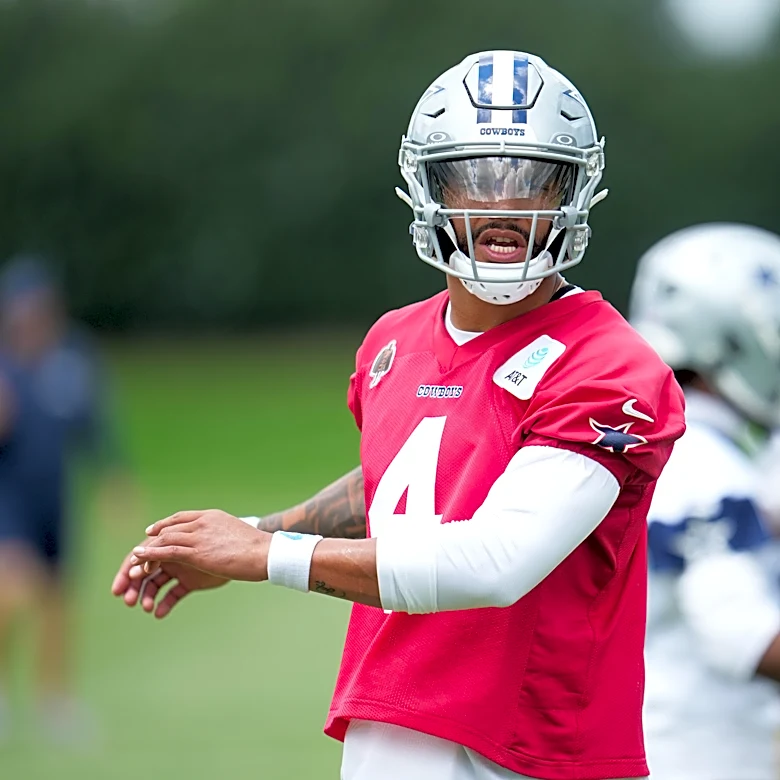
Over the following seven weeks, Green Bay completed a broader defensive overhaul: trading Rashan Gary to Dallas for a 2027 fourth-round pick on March 11th, signing Javon Hargrave to a two-year, $23M deal on March 13th, and finalizing the full coaching staff by March 19.
Who is Jonathan Gannon?
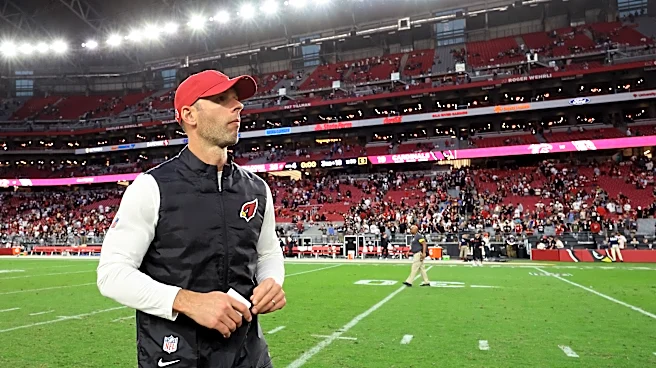
Jonathan Gannon comes over from a 3-year head coaching stint with the Arizona Cardinals, a job he took after coordinating the Eagles defense for two seasons, including one trip to the Super Bowl.
He had arrived in Philadelphia in 2021 as an unheralded defensive coordinator hire, a then 38-year-old who had spent his career as a defensive backs coach under Mike Zimmer in Minnesota and Matt Eberflus in Indianapolis. He had never called a defense at any level. What unfolded over his two seasons with the Eagles was a study in how scheme can be maximized by talent — and how devastating the absence of that talent can be.
Defensive philosophy
When Eagles head coach Nick Sirianni asked Gannon what scheme he planned to run at his interview, Gannon’s answer was straightforward and simple: “I don’t have a scheme.” His core belief — forged through years working under Zimmer and shaped by Vic Fangio’s influence (Fangio was an Eagles defensive consultant in 2022) — was that a defense should be built around its players, not the other way around.
That philosophy manifested in a Fangio-adjacent two-high shell system that prioritized disguise, discipline, and a patient reliance on the front four.
The cornerstone of Gannon’s coverage structure in Philadelphia was match-quarters — a hybrid form where cornerbacks transition from zone to man post-snap, and safeties bracket routes down the middle. The personnel base is 3-4.
Linebackers played a drop-and-rally style. The idea was not to force turnovers with aggressive gambles, but to eliminate explosive plays and make offenses earn every yard methodically. Gannon also brought Vic Fangio himself into the building as a consultant ahead of the Super Bowl run.
2021 and 2022 Philly overview
The first year was underwhelming by the numbers. The Eagles finished 25th in defensive DVOA per FTN — a below-average mark that reflected a roster still short on high-end pass-rush talent. The team blitzed at the fourth-lowest rate in the league, sitting at roughly 18% of dropbacks.
The passive posture exposed the coverage: opponents completed 70 percent of their passes against Philadelphia, the worst mark of any defense over the prior two seasons. EPA/pass allowed ranked poorly, and the run defense offered only modest improvement.
Still, the foundational elements were visible. Coverage bust rates were low, and Gannon’s players understood their assignments. The problem was simply that without quality pass rushers, the entire system was exposed.
A Fangio-style scheme demands that the front four win their individual matchups consistently — without that, even the most disciplined coverage breaks down under sustained pressure from opposing quarterbacks.
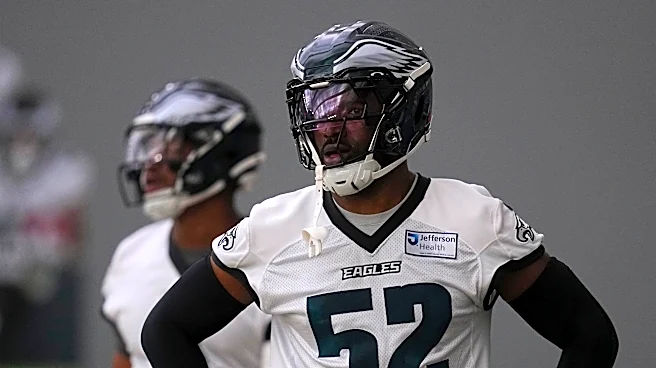
The 2022 Eagles were one of the most dominant defensive units in recent NFL history. Philadelphia added Haason Reddick, a premium edge rusher, to an already talented group featuring Brandon Graham, Javon Hargrave, and a deep interior. The effect on Gannon’s defense was transformative. The Eagles finished 2nd in defensive DVOA — a swing of 23 spots in a single season.
The pass defense numbers were historic. Philadelphia allowed just 179.8 passing yards per game, the best mark in the NFL, and ranked first in the league in sacks with 70 across the regular season and playoffs — the third-most in NFL history behind the 1984 and 1985 Chicago Bears.
They generated pressure on 25.5% of quarterback dropbacks, second-best in the league. EPA/pass allowed ranked among the elite, reflecting how comprehensively the pass rush neutralized opposing offenses before coverage was even tested.
Gannon’s defense achieved all of this while barely blitzing. The blitz rate remained at the fourth-lowest in the league — around 22% — meaning virtually all of the pressure came from four-man rushes. This was Fangio’s dream: passive, disguised, split-safety coverage behind a front four that won clean. EPA/rush allowed was respectable but never elite, a known structural feature of Gannon’s light-box scheme that accepted some vulnerability on the ground to maximize coverage depth.
The Structural Tradeoffs
Even in the peak 2022 season, Gannon’s approach carried inherent limitations that would later prove significant in Arizona. His light-box philosophy — splitting safeties high and trusting coverage to hold — is inherently kind to opposing run games. Teams that could establish the run and force those safeties down found holes in the scheme.
A notable tendency also emerged in the down-by-down splits: per Bleeding Green Nation’s in-season statistical breakdown, the Eagles actually preferred man coverage and blitzes on first down, inverting the conventional approach of saving pressure for third down — they ran closer to an even man/zone split on third down with blitz rates pulled back, opting to keep extra defenders in coverage instead.
The deeper truth of the Philadelphia run was this: Gannon’s scheme is a force multiplier, not a creator of talent. The 2022 Eagles had Reddick, Hargrave, Graham, and depth at every level of the defense. When those ingredients were present, the system produced a historically great pass defense. When they were not — as Arizona would quickly discover — the seams were brutally exposeAs far as coverage trends, we’ll cover that a bit more in-depth in later articles as we unpack the inner workings of Gannon’s scheme.
Legacy in Philadelphia
Gannon left Philadelphia after two seasons to become the Cardinals’ head coach, departing as a highly respected coordinator whose defense had reached the Super Bowl and transformed the Eagles into a legitimate contender.
Eagles head coach Nick Sirianni was effusive in his praise, saying that coaches from other teams routinely asked if Gannon was underappreciated in Philadelphia — and that the answer, somehow, was yes.
His Philadelphia tenure established his core identity: a patient, scheme-heavy coordinator who could build elite pass defenses through four-man pressure, split-safety disguise, and extraordinary coverage discipline — provided the front four could actually get home.
What He Told Matt LaFleur
When Gannon interviewed for the Green Bay Packers’ defensive coordinator vacancy in early 2026, he told head coach Matt LaFleur exactly what he had told Nick Sirianni five years earlier: he didn’t have a scheme.
“The point is the game adapts,” Gannon said at his first press conference as Packers DC. “I don’t really get caught up in 4-3, 3-4. We’re an NFL-style defense, hopefully. I just believe you’ve got to continually, every year, try to adapt and solve problems — and really with your guys in mind.” He added, with characteristic bluntness: “If we’re not good at this, just because I like to do it, we’re not going to do it.”
The declaration landed differently in 2026 than it had in 2021. Then, it was a curious posture from an untested coordinator. Now, backed by a Super Bowl defense in Philadelphia and three seasons of schematic reinvention in Arizona, it reads as a genuine philosophy with a track record.
Green Bay will run a 3-4 base front — a shift from the 4-3 Jeff Hafley had employed — but Gannon was emphatic that even that designation is fluid. “It really is the truth when I tell you guys this is going to be a new system this year,” he said. “It’s the 2026 Green Bay Packers. It’s awesome to me. It’s fun.”
He arrives with a Packers defense that ranked 12th in yards allowed per game and 11th in points allowed per game in 2025 — a reasonable foundation, even without a fully healthy Micah Parsons, whose torn ACL wiped out the back half of Green Bay’s season. If that front four can get home again the way the 2022 Eagles did, the Philadelphia version of Gannon’s defense may be closer than it appears.