


When the Cleveland Browns hired Todd Monken as their next head coach, they brought in a guy who has transformed every offensive unit he has been hired to run
.At Oklahoma State, the offense went from #88 to #11. While at LSU, a #42 ranking became a #9 ranking. Southern Miss? #112 to #13. At the University of Georgia, the offense moved from #49 to #5 and won two National Championships. And the past three years with the Baltimore Ravens, their offense shot from #16 the year before Monken arrived, to #1 in the league.
RELATED: BROWNS’ SMARTEST OFFSEASON MOVE
One aspect of Monken’s offenses is the ability to run the ball. He requires it. He loves a running quarterback.
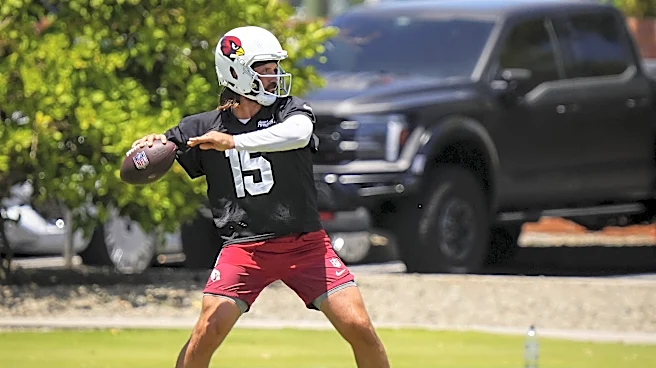
What if the Browns brought in a two-time Pro Bowl running back to pair with RB Quinshon Judkins? One who would run over defenders and become the goal-line go-to guy? Cleveland should consider trading for RB James Conner of the Arizona Cardinals.
A new offense
Under former head coach Kevin Stefanski, the quarterback situation never became solved. Turnover at this position was constant for several years without any stability.
After six years under Stefanski’s tutelage, the offense was ranked at the bottom of most categories this past season. Remember, Stefanski was an offensive coach, yet his offensive production was horrible as the team collected 26 losses in his final two seasons.
2025:
- Total offense: #30
- Passing offense: #31
- Running offense: #27
2024:
- Total offense: #28
- Passing offense: #22
- Running offense: #29
Monken is a teacher. He wants his players to succeed on the gridiron, but mostly in life. His approach to the game, as well as his ability to teach concepts, invariably gets the best out of his players.

Monken’s scheme is based upon a flexible, matchup-based system that uses player strengths rather than forcing them into an inflexible arrangement. He is not only a system guy, although he might have some preferences. He doesn’t design schemes for players that aren’t on the roster, but rather he looks at his roster talent and tailors his playbook to fit their talents.
He will attack defenses based on their structure and tendencies rather than forcing one system on every opponent. He likes to isolate linebackers in coverage.
He requires good pass-catching tight ends. He has to have accurate passers. He needs a solid offensive line. And Monken must possess running backs who are great athletes.
Conner can punish. He is 6’-1” and a beefy 233 pounds. He has never been the swiftest back, but he is quick.
Monken has six aspects that are a part of his teachings: Limiting negative plays, zero turnovers, positive third-down efficiency, a high percentage of Red Zone scoring, explosiveness, and employing athletic quarterbacks.
The Red Zone scoring is where Conner can become the most helpful. Last year, Cleveland was ranked #25 in getting into the end zone from when they drove into the Red Zone and scored points. If you examine the top of this list, there is one element that is apparent right away: playoff teams live here. The teams that get into the end zone when they are close are successful.
In his nine-year career, Conner has scored 60 touchdowns on the ground and 12 on pass receptions. He has very good hands and has been an integral part of the short passing game with 289 receptions for 2,255 yards.
This new offense will require a steady running game.
The new guy
The Browns already have a good running back room.
Quinshon Judkins was named to the NFL All-Rookie Team last year and was a dominant force before he suffered a fractured fibula and dislocated ankle, which ended his season. He was on track to gain 1,000 yards but missed the final three games with 827 yards on 230 carries.
When he landed in IR, it was up to Rocket Sanders, Trayveon Williams, and fellow rookie Dylan Sampson, who had been the SEC Offensive Player of the Year before landing in Cleveland.
With Judkins gone, the Browns rushed for 78 and 118 yards, respectively.
Judkins has healed and is expected to be fully recovered, going into July’s training camp. Sampson is expected to compete for the backup spot against Davon Booth, fullback Michael Burton, T.J. Harden, Ahmani Marshall, and Sanders. NFL teams typically retain 3-4 running backs on their final roster.
Last year, when Judkins was lost for the year, the run game suffered. Conner would cure that. He is a bruiser who plays physical ball with a battering-ram style. His style is to make the tackling process more of a two-way affair. Good blocker who is willing to leave his feet near the goal line.
Conner has shown the ability to come out of the backfield in short swing passes, wheel routes, and outs.
Last year, he had injury issues of his own. In Week 3 against the San Francisco 49ers, he was carted off the field with a gruesome foot injury. Surgery followed by extensive rehab. During the offseason, the Cardinals’ front office restructured the contract that allowed him to remain with Arizona.
But now he is fine. With the recent OTAs, he has attended each one. However, there is a situation with the Cardinals: they have too many good running backs.
Logjam
Conner was Arizona’s top running back the past two seasons, gaining 1,094 yards in 2024 and 1,040 yards in 2023. He was their bellcow. In the 2024 NFL draft, speedster Trey Benson out of Florida State was taken in the third round to supplement Conner. Benson became injured last year.
Not knowing the availability of Conner and Benson because of their injuries, in free agency, the Cardinals signed Tyler Allgeier away from the Atlanta Falcons. Allgeier was Atlanta’s starting back until they got Bijan Robinson in the first round of the 2024 draft. They also re-signed utility running back Bam Knight.
In this year’s NFL draft, the Cardinals selected Jeremiyah Love of Notre Dame with the third overall pick in Round 1.
That means that Arizona’s running back room has four guys who have NFL starts, plus the addition of Love. It is expected that Love and Allgeier will become their primary rushing attack, with Benson slotted at RB3 because he is the younger of the two backs. Although the front office and the fanbase love Conner, he is now 31 years old and coming off a severe injury.
With the franchise bringing in Love, he is going to receive the bulk of carries. Conner will want to play instead of doing spot duty. A new environment should be in order, and the Browns could use a hammer that will provide some rest for Judkins.
Not that the Cardinals are shopping Conner at the moment, or Benson for that matter. But if they only keep three or four backs, somebody will have to go. Conner would get carries in Cleveland, whereas he will rarely play with Arizona in 2026.
Conner originally signed a two-year, $19 million extension in 2024, which retains his services through the upcoming 2026 season. With the restructured deal, Conner took a $5 million pay cut with bonuses (such as playing time) that can bring his agreement back to sustainability. His base salary this year is now $2.355 million with just $2.1 million guaranteed.
The Browns could use him; he would come cheap, and he isn’t going to be utilized if he remains in the desert. If he isn’t going to get the snaps, he most certainly would love to move on.
By adding Conner, Cleveland is adding another weapon. Monken wants to run the ball effectively. It’s one of the reasons why now there is a fullback on the roster, and the team drafted two new tight ends.
Send a Day 3 draft pick to the Cardinals and give the Red Zone effort a huge boost.