

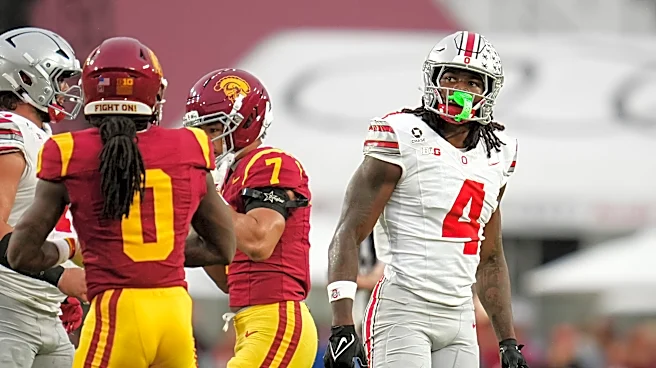

Coming into the Ohio State Buckeyes’ Halloween night road game against the USC Trojans, it seemed obvious that things were going to have to look different should OSU come out on top. Without Heisman Trophy finalist Julian Sayin under center, the Buckeyes were going to need the rest of the team to step up and compensate for the inevitable drop-off from a Heisman-caliber quarterback to a true freshman making his first collegiate start.
Unfortunately, not enough changed for the Buckeyes to overcome that
transition. The problems that have plagued Ohio State in nearly every big game in recent memory again reared their ugly heads, and instead of helping their inexperienced quarterback, the Buckeyes seemed determined to make his job as difficult as possible.
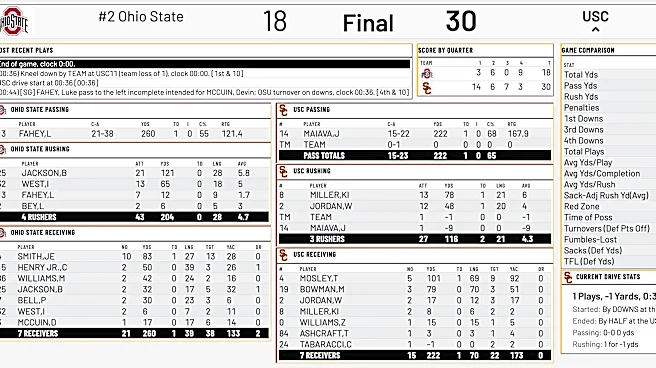
Despite outgaining USC by 126 yards, a nearly endless parade of penalties, continued red zone failures, dropped balls, defensive breakdowns, and lackadaisical coaching decisions resulted in USC controlling the game essentially from start to finish, culminating in a 30-18 victory over the second-ranked Buckeyes.
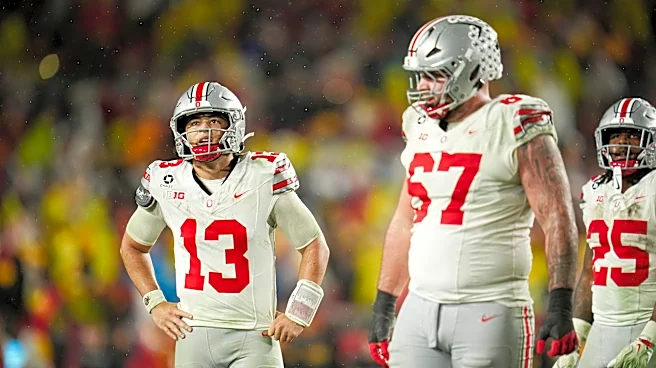
In his first start replacing the injured Sayin, true freshman Luke Fahey did an admirable job of keeping his composure and seemingly controlling the offense, but in an unusual Southern California rain that fell for nearly the entire game, he never seemed able to consistently put the ball in a catchable position for his receivers down the field. Whether it was the wet ball, nerves, or his inexperience, Fahey demonstrated a considerable lack of touch, especially when throwing beyond 10 yards, which seemed to frustrate the offense, especially its best player.
Fahey was not helped by a handful of drops from receivers in key moments, including one by running back Bo Jackson on what looked like it would be either a big gain or potentially a touchdown, and another by true freshman wide receiver Chris Henry Jr. that would have converted a third-and-5 in the fourth quarter.
While the first-time starter was nowhere near perfect, nor anywhere near what Ohio State would need to win a conference or national championship, he was far from the primary reason for the loss. Fahey finished the game going 21-for-38 for 260 yards and 1 touchdown.
Given the circumstances, that’s a performance the Buckeyes should have been able to work with. After all, with an increasingly healthy defense, one of the best receivers in college football, and a stable of talented running backs, the whole point was that Fahey wasn’t supposed to have to win the game by himself; he just shouldn’t be the reason they lost it.
Unfortunately, while he was doing his best, it felt like other members of the team and coaching staff were having trouble focusing on the things that should have helped make life easier for the freshman QB.
OSU’s most devastating issue over the past five or so seasons continued to haunt them on Saturday night. On four trips into the red zone, the Buckeyes settled for three field goals, practically giving away multiple opportunities to score touchdowns. Part of that was undoubtedly poor execution, but in my estimation, far more of the responsibility falls on play calling that seemed uninterested in relying on what routinely worked and an offensive approach that displayed remarkably little urgency for a team that trailed the entire game.
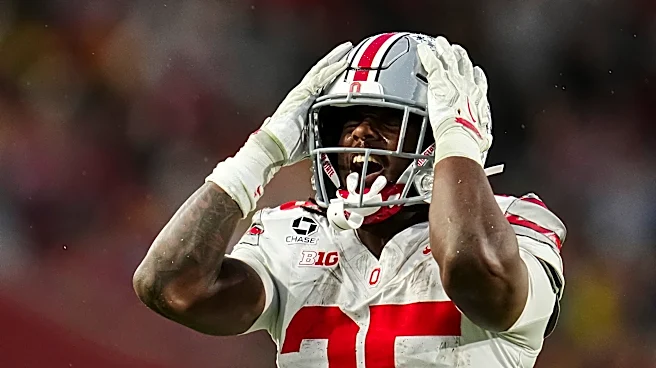
Ohio State’s best offensive weapon on Saturday was Jackson, who rushed for 121 yards on 21 carries, an average of 5.8 yards per run. Isaiah West also provided some effectiveness on the ground (13 carries for 65 yards), and while his second-half fumble in USC territory was an undeniably costly mistake and essentially got him pulled from the game, the Buckeyes’ running game was clearly capable of moving the ball.
And yet, when Ohio State needed to turn those yards into points, the offense routinely seemed to lose its identity, becoming tentative, predictable, and frustratingly ineffective. Then, when the Buckeyes needed to pick up the pace to get back into the game, it felt like the only plays offensive coordinator Arthur Smith could call were runs, draining the clock of the very time OSU needed to mount a comeback. The problem wasn’t necessarily running the football, but failing to recognize when the situation called for a different approach.
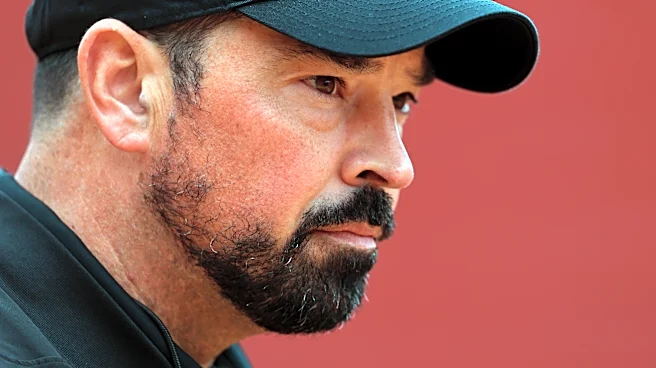
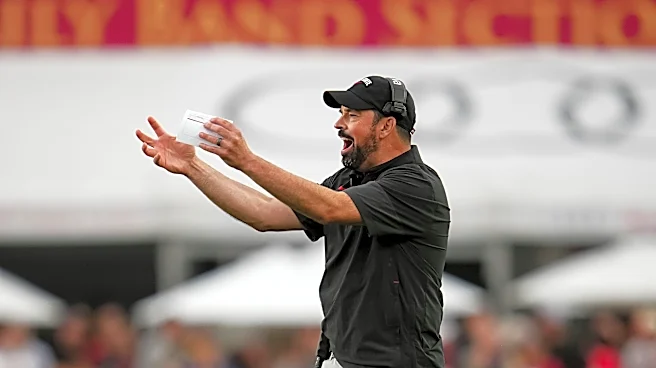
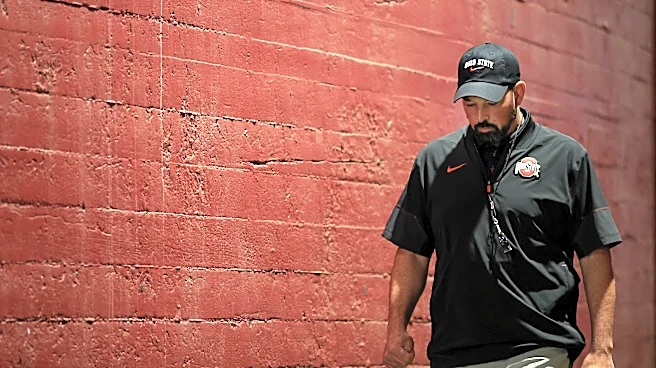
Ryan Day has often coached with a lack of urgency, but on Saturday night, it seemed even worse than normal. Perhaps he was trying not to speed things up for his first-time starter, or maybe the rain caused more problems than we realized, but after USC scored on the second play of the game, the Buckeyes never seemed in any sort of hurry to match the Trojans’ explosiveness or close the gap on the scoreboard.
There is certainly something to be said for protecting a young quarterback from being overwhelmed by the moment, but there is a considerable difference between keeping things manageable and coaching as if you’re afraid of what might happen should you actually try to win. And frankly, the latter is what Saturday night felt like far too often… another recurring trait in big games under Day.
The only thing Ohio State did with any impressive level of regularity on Saturday night was commit penalties, often of the procedural variety. On the night, the Buckeyes were flagged 11 times for 75 yards, with the offensive line responsible for a particularly egregious collection of mistakes, often at the absolute worst possible moments.
Perhaps the most infuriating example came late in the first half, after a review took a Fahey rushing touchdown off the board and put the ball on the 1-yard line for first-and-goal.
After a Jackson run netted no gain, tight end Nate Roberts was called for a false start on second down — even though the replay seemed to indicate that it was left tackle Luke Montgomery who got going too early. Regardless of who was responsible, the Buckeyes had once again turned a golden opportunity into an unnecessarily difficult situation. From there, the offense was unable to score and settled for yet another Connor Hawkins field goal.
The Baylor transfer connected on all four of his attempts on the evening, accounting for all 12 of Ohio State’s points until Jeremiah Smith caught a touchdown pass with 2:12 remaining in regulation.
Think about that for a second. Despite moving the ball for 464 yards, Ohio State went nearly 58 minutes without scoring a touchdown. Against a USC defense that gave up 24 to Wisconsin last week (yes, the same Wisconsin that lost 30-0 to Iowa today), that’s simply unacceptable.
Whether it was the USC defense, Fahey not having the same rapport with Smith, or a lack of play-calling creativity, the Heisman Trophy frontrunner was mostly held in check all night, finishing with 10 receptions on 13 targets for 83 yards and the aforementioned score. The vast majority of those targets were underneath with nearly no chance for explosive potential.
Of course, asking a true freshman quarterback to replicate the connection that Sayin developed with Smith over the past year was always going to be unreasonable. But that’s precisely why the coaching staff needed to find creative ways to get the best player in college football in advantageous situations, rather than simply hoping that something magical would occur just because they willed it to happen.
Instead, Ohio State appeared to have all of the ingredients necessary to put together a functional offensive performance, but absolutely no idea how to turn them into something resembling a winning recipe.
However, while Day, Arthur Smith, and the offense all deserve healthy portions of blame, the defense certainly deserves its fair share of the criticism as well.
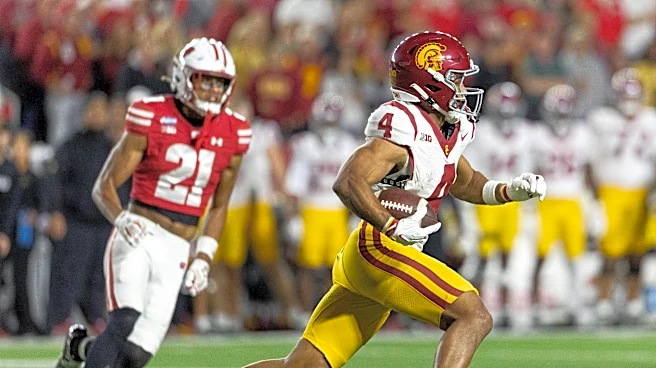
Despite allowing just 338 yards of offense, the Silver Bullets did not look up to the challenge of defending Lincoln Riley’s offense on Saturday. The Buckeyes were routinely gashed for big gains, beginning with Trent Mosley’s 69-yard touchdown on USC’s second offensive play, and continuing with missed tackles and defensive breakdowns that repeatedly put the Trojans in advantageous positions.
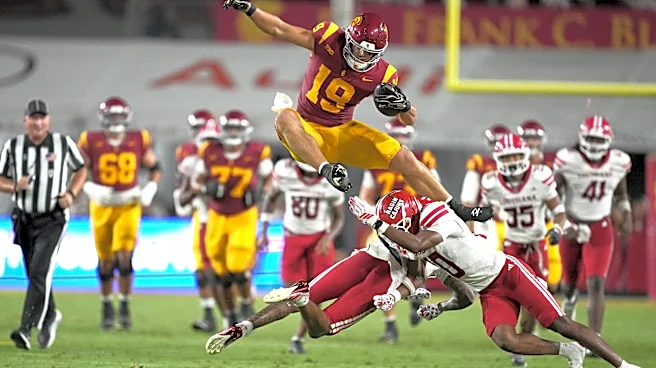
Perhaps no play was more back-breaking than tight end Mark Bowman’s 70-yard catch that saw him hurdle Jaylen McClain, shrug off Earl Little Jr.’s attempt to strip the ball rather than make the tackle, and then outrun nearly every defender before being knocked out of bounds inside the 5-yard line.
While that play was a massive defensive meltdown, it was also emblematic of the Buckeyes’ entire evening. Bowman caught the ball with no one within five yards of him, and then simply outworked, outmaneuvered, and outplayed everyone wearing white. By my count, four Buckeyes had an opportunity to tackle him before the freshman turned a chunk play into arguably the most impressive play of the weekend.
And thus was the story of the game: Ohio State was often in position to make something happen, but couldn’t close the deal. Whether it was missed tackles, dropped passes, untimely penalties, or an offensive possession that inexplicably stalled inside the 20-yard line, the Buckeyes continually failed to do the little things necessary to win a football game. And when you’re playing a talented opponent on the road with a true freshman making his first career start, those little things become exponentially more important.
The most frustrating aspect of Saturday’s loss is that so many of the issues we saw had absolutely nothing to do with Sayin’s absence. The penalties, questionable play calling, poor situational awareness, and defensive breakdowns are all things that Ohio State has struggled with before, even when it had one of the most accomplished quarterbacks in the country running the offense.
I don’t think it’s unreasonable to suggest that the Buckeyes might have won this game with Sayin under center. His accuracy, experience, and ability to make something out of nothing undoubtedly would have helped overcome some of the team’s self-inflicted wounds. But that’s also part of the problem, isn’t it?
For much of this season, Ohio State has relied on the extraordinary individual talents of Sayin and Smith to paper over the shortcomings elsewhere on the roster and coaching staff. As long as those two were capable of making enough spectacular plays, the rest of the team could get away with being merely adequate, and sometimes not even that.
Well, that luxury is gone, at least for the foreseeable future, and Saturday night was a pretty painful reminder of what happens when the rest of the team is asked to carry more of the burden and simply isn’t prepared to do so.
The loss drops Ohio State to 6-2, the first time the Buckeyes have lost two games this early in a season since 2011. And although the expanded College Football Playoff means their national championship hopes are not necessarily dead, the margin for error has completely disappeared. While anything can happen in the modern version of the sport, there is no reason to believe that any team with three losses — especially one with a quarterback who seems not yet ready for prime time — can count on a CFP berth.
Throughout much of Day’s tenure in Columbus, it has felt like Ohio State has entered its biggest games at a coaching disadvantage. Even when the Buckeyes have won, those victories have often seemed more attributable to overwhelming individual talent than to superior game management or strategic adjustments. With Sayin out, even if Fahey and the rest of the team continue to improve, if the Buckeyes are going to claw their way back into contention, they can’t be their own worst enemies, either on the field or on the sideline.
Ohio State didn’t need Luke Fahey to be Julian Sayin on Saturday night. It needed its coaches, offensive line, receivers, running backs, and defense to make sure that he didn’t have to be.
Instead, the Buckeyes asked their freshman quarterback to overcome the same mistakes that have plagued this program for years. And until those mistakes stop being treated as unfortunate exceptions and start being addressed as persistent problems, it won’t much matter who is taking the snaps.