

For as much fanfare that goes into a quarterback’s rookie year, Years 2 and 3 of their careers tend to tell the better story of what a quarterback will be in this league. For the 2024 first-round quarterbacks, Years 1 and 2 are in the books. More importantly, the tale of two “halves” has proved to be quite the story for all six quarterbacks this early in their careers.
While injuries will always play their role in a quarterback’s development, the chances that all six quarterbacks taken in the first
12 picks of 2024 would pan out were slim to none. Heading into 2026, each team will have two years’ worth of evaluations (for better or for worse) to go on. Heading into the offseason, it appears that all six are at least set to go into Training Camp as the starting quarterbacks, but there are a few different situations worth keeping an eye on.
Before we completely shut the book on our 2025 Season In Review series, let’s take a deeper dive into all six first-round quarterbacks from the 2024 class and where they are at heading into Year 3 of their NFL careers.
- Drake Maye (New England Patriots) No. 3 overall
By The Numbers: 17 Starts, 4,394 Passing Yards, 72% Completion Rate, 31 TDs, 8 INTs, 113.5 Rating, 77.1 QBR, +0.31 EPA/DB, 450 Rushing Yards, 4 Rushing TDs, 47 Sacks
Heading into 2025, many wondered how the marriage between veteran offensive play-caller Josh McDaniels and second-year quarterback Drake Maye would go. After all, McDaniels has established a reputation as one of the best offensive play-callers in the league, even though he failed miserably twice as an NFL head coach. That said, it had been a few years since McDaniels had taken the reins of play-caller, and it was worth wondering how a defensive-minded head coach would treat his second-year quarterback in Year 1 of a new regime.
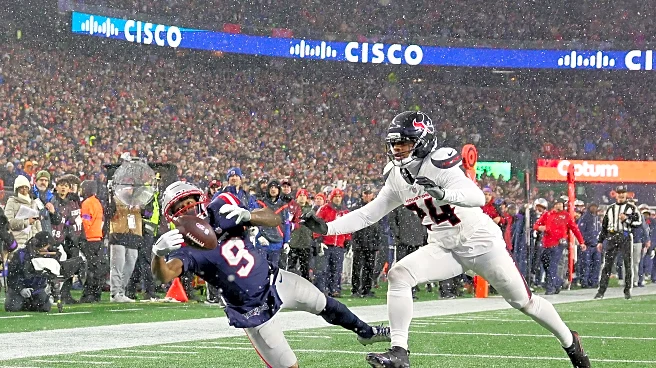
Playoff struggles aside, Maye finished the season as the best quarterback in this class by a long shot. I would argue that, for as impressive a rookie year as Jayden Daniels had, Maye’s sophomore campaign was better. In fact, his finishing one first-place vote short of tying for the MVP with Matthew Stafford might be all the proof my claim needs.
For one, Maye helped lead his team to a 14-3 record, which in most years would have been good enough for the top seed in either conference. Due to a strange tie-breaker, the Patriots went into the playoffs as the No. 2 seed, but that didn’t stop them from going all the way to the Super Bowl.
Now, I’m not going to put too much focus on Maye’s struggles in the playoffs for a few reasons. One, he’s never played a season this long. Two, a bad stretch of games doesn’t wipe out an MVP-caliber 17-game regular season. Some might argue that the Patriots’ regular-season schedule was historically easy, but even so, Maye put up numbers that only one other quarterback in the league did (Stafford). His development as a passer was outstanding, completing 72% of his passes while finishing with a league-high rating, QBR, and EPA per drop-back.
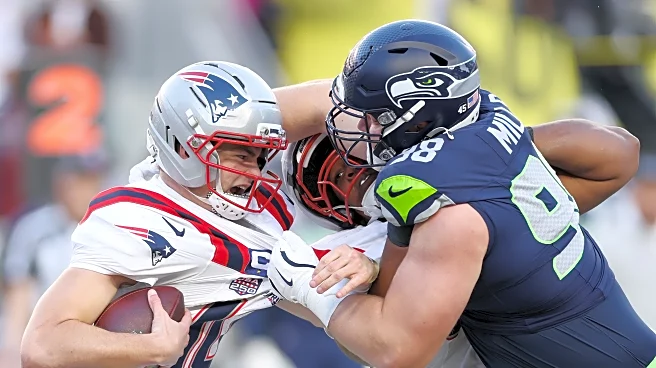
By all accounts, Maye was one of the best quarterbacks in the league, and contrary to (recent) popular belief, deserved to be as close as he was in the MVP voting. That said, there are always areas for a young quarterback to improve, which, for Maye, starts with his high sack rate. Despite being so efficient as a passer, he struggled with taking sacks all year. Now, some of that might have been on a below-average offensive line, but if we’re being honest, he also took some of the worst sacks of anyone in the league every week.
The next step in Maye’s development relies on his ability to grow from the pocket. He has the athleticism to extend plays and one of the best arms in the game. Still, outside of offseason improvements along the offensive line, his awareness and elusiveness need to improve drastically. Outside of that, there’s not a whole lot to critique in Year 2 for Drake Maye. I bet the Patriots are exceedingly thankful that they didn’t trade the No. 3 overall pick to the highest bidder, after all.
2026 Outlook: Walking On Sunshine.
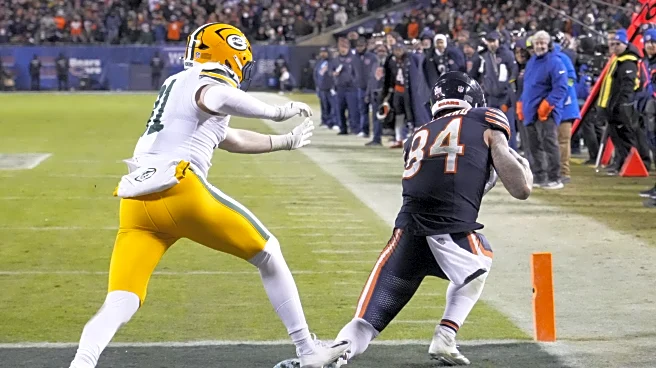
- Caleb Williams (Chicago Bears) No. 1 overall
By The Numbers: 17 Starts, 3,942 Passing Yards, 58.1% Completion Rate, 27 TDs, 7 INTs, 90.1 Rating, 58.2 QBR, +0.10 EPA/DB, 388 Rushing Yards, 3 Rushing TDs, 24 Sacks
It’s easy to argue that no quarterback faced greater pressure coming into the 2025 than Williams. Not only was he one year removed from being the draft’s No. 1 overall selection, but he came in with more fanfare than we’ve seen any quarterback have in quite some time.
Sure, some of that wasn’t on him, but Williams has never shied away from being himself. Coming out of USC, the arm talent, athleticism, and overall flash were undeniable. There was a reason many referred to him as a “generational talent”, even if the label has become overused and overplayed. That said, Year 1 in Chicago was less than ideal for Williamo. His offensive coordinator was fired mid-season. His head coach was out the door a few games later, and the hit pieces during the offseason were aplenty.
Despite the continued narrative that Williams was hard to coach and refused to play in a structured manner, the Bears landed the hottest offensive mind on the market in head coach Ben Johnson. In Johnson’s opening press conference, he made it clear that the young quarterback wouldn’t have it easy, and he needed to get comfortable being uncomfortable. The early returns through training camp and into the regular season were not pretty. Williams appeared to be thinking too much, and it was fair to wonder if Johnson and the offensive coaching staff had put too much on his plate.
Then the Cowboys game happened, and things seemed to click from there. There’s no denying that Williams’ accuracy and ball placement were erratic far too often in Year 2, but the flashes we saw in college came back. Despite many skeptics believing he couldn’t become a pocket passer, he did just that.
As a team, the Bears ranked second in quarterback snaps taken from under center (192). Considering Williams played the bulk of their snaps in 2025, that’s a credit to him as a young quarterback completely adjusting how he played the position. More importantly, Johnson came in with a plan to adjust his scheme to his players, Williams included. That meant not limiting his special physical abilities, including his ability to throw on the run, and his improvisational magical skills as a runner and passer.
Year 2 was far from perfect for Williams. Hell, I’d say it was far from consistent. With that said, the drastic improvements Bears fans saw from Week 1 through the Divisional Round of the playoffs should have everyone feeling great about 2026 and beyond. He was in complete control of the offense, his deep-ball accuracy returned, and the off-schedule plays became necessary, not just because. All the special traits we saw in college finally showed up at the NFL level. That’s not to say there isn’t plenty to improve on, because there absolutely is. Still, any time you break a single-season record for fourth-quarter comebacks by a second-year quarterback, there’s something to say about the special big-play ability. In Year 3, it will be about refining those skills, finding more consistency, and finally fulfilling the expectations that many had for him when he declared for the 2024 NFL Draft.
2026 Outlook: Get Into The MVP Conversation Or Bust.
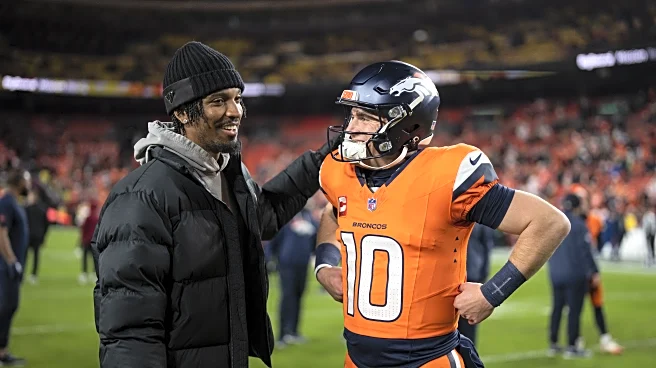
- Bo Nix (Denver Broncos) No. 12 overall
By The Numbers: 17 Starts, 3.931 Passing Yards, 63.4% Completion Rate, 25 TDs, 11 INTs, 87.8 Rating, 58.3 QBR, +0.09 EPA/DB, 356 Rushing Yards, 5 Rushing TDs, 22 Sacks
A common trend over the last five to ten years has been older college quarterbacks with four-plus years of experience entering the league and finding more success early in their careers than players with higher ceilings. A lot of that can be attributed to experience, but there’s a part that simply comes down to age and maturity that also helps them succeed earlier than most. That said, I came into 2025 with low expectations for Nix to follow up Year 1 with anything nearly as convincing.
While his numbers, at least on the surface, looked pretty similar to 2024, his play in the divisional round against the Buffalo Bills proved a lot. The Broncos are never going to be a team others look at and see as an elite quarterback who could be considered better than Patrick Mahomes, Josh Allen, or Lamar Jackson. That said, their defense is elite, and head coach Sean Payton continues to be one of the best offensive minds in the league. Because of that, he’s able to maximize Nix’s skill set, and even when things don’t go right for three quarters, Nix has proven multiple times that he’s capable of leading his team back for a win. Just look at the game against the New York Giants.
While I will continue to use the same grading scale as I did with both Maye and Williams, which included the playoffs, Nix outplaying Allen in the Divisional Round was enough to convince me that he’s already an above-average quarterback who is capable of playing within the confines of his team to be a serious contender every year. Now, that doesn’t mean I’m counting on them to win any Super Bowls or outduel Mahomes each game, but he proved he belonged after putting up another solid regular season.
The trick in evaluating Nix is understanding that while he doesn’t have elite physical tools or the ceiling that others in this class possess, he’s already developed enough to be considered “good”. In today’s NFL, especially with an elite defense, that tends to go a long way, year in and year out. I won’t compare his clutch gene to that of someone like Williams, but Nix has continued to prove he’s someone who can’t be counted out in the fourth quarter of almost any game. I’ll take it one step further: even with bad weather and all, if Nix hadn’t injured his leg, the Broncos would have been representing the AFC in the Super Bowl.
Ceiling has always been the question for someone like Nix, but he has proven for a second-straight year that the floor is much higher than almost anyone outside of Payton could have anticipated pre-draft. Considering he was the last of the six quarterbacks taken in Round 1, that’s pretty damn good.
2026 Outlook: Run It Back And Hope You’re Still Better Than The Kansas City Chiefs.
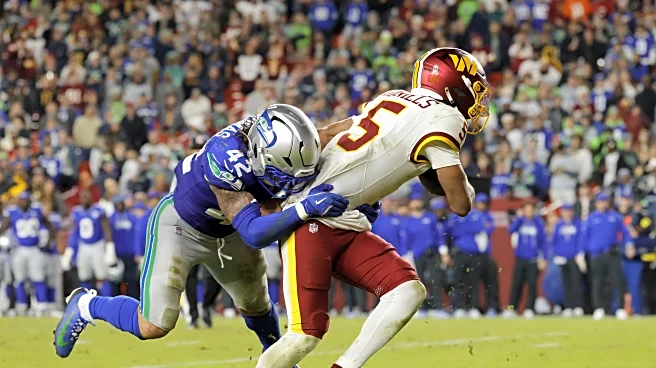
- Jayden Daniels (Washington Commanders) No. 2 overall
By The Numbers: 7 Starts, 1,262 Passing Yards, 60.6 Completion Rate, 8 TDs, 3 INTs, 88.1 Rating, 44.7 QBR, +0.04 EPA/DB, 278 Rushing Yards, 2 Rushing TDs, 18 Sacks
Far too often, the NFL world tends to put way too much stock into rookie seasons when it comes to the quarterback position. It doesn’t help that, in back-to-back years, C.J. Stroud and Daniels both put up historic seasons on their way to the playoffs in Year 1. At least in the case of Stroud, he has proven to be the best quarterback from his class, albeit a pretty disappointing one overall.
For Daniels, there’s still much to be learned. Year 1 was about as magical as it gets, winning Offensive Rookie of the Year en route to a trip to the NFC Championship game in Dan Quinn’s first year as the team’s head coach. That said, many around the league saw a team that far outplayed their talent level and needed a strong offseason to bolster their roster. Instead of adding younger players, the front office once again doubled down on aging vets, and the Commanders paid dearly for it in 2025.
More concerning is that an organization that failed to course correct with Robert Griffin III is now skating on dangerously thin ice a decade later with Daniels. Any objective observer who watched Kliff Kingsbury’s offense in 2024 knew that his approach wasn’t going to last. For as impressive as their numbers as a unit were, so much of what they did was unsustainable. For someone like Daniels, he needed a more NFL-style approach in Yer, but he didn’t receive it. tit That’s an organizational failure, not something that should be placed on his shoulders.
Anyone who has seen Daniels’ build, combined with his play style, knew that adjustments would need to be made for him to hold up throughout the season. Rushing for 891 yards as a rookie might look good on paper, but even for the most freakish of athletes, it’s not a sustainable approach long-term. Neither were the concepts in their passing attack. Looking at Kingsbury’s history as a play-caller, it should come as no surprise that after two years in Washington, the relationship soured. As harsh as it might sound, that’s been the story of Kingsbury’s career at the college and NFL level.
Not only did Daniels miss more than half the season due to various injuries, including a gruesome dislocated elbow, but his efficiency as a passer and a runner was simply not the same. Following a rookie season in which he posted a 69% completion rate, those numbers dipped to 60.6% in 2025. His overall efficiency as a passer dipped, as did his effectiveness as a runner.
Daniels, like Nix, fell into the category of players who came into the league with more-than-average experience. That said, the difference in Daniels’ and Nix’s games was night and day for the most part in 2024. Daniels was a playmaker with great efficiency numbers, a great deep ball, and very refined mechanics for a rookie quarterback. Couple that with his injuries, and that’s what makes projecting his 2026 season so difficult. Is there a world where he could return to action next season and pick up where he left off in his rookie season? Absolutely. There’s also a world, much like Stroud, where his rookie campaign might be the most personal success he’ll ever experience in the NFL.
There were concerning aspects to Daniels’ season, but none more than his lack of durability. Concerns about his passing efficiency could be quelled by a strong start to next season, but his skinny frame and reckless playing style are areas of concern that will stick with him until he proves that 2025 was a fluke. To make a long story short, 2026 feels like a crucial year in Daniels’ NFL career and one that hopefully the Commanders do not take lightly.
2026: Make Or Break (For Dan Quinn)—A Prove-It Year For Jayden Daniels.
- Michael Penix Jr. (Atlanta Falcons) No. 8 overall
By The Numbers: 9 Starts, 1,982 Passing Yards, 60.1 Completion Rate, 9 TDs, 3 INTs, 88.5 Rating, 57.9 QBR, +0.06 EPA/DB, 70 Rushing Yards, 1 Rushing TD, 13 Sacks
Penix comes in as the third “older” quarterback taken in the class, and one with the most physical concerns moving forward. Going back to his college career, Penix suffered two ACL tears and multiple upper-body injuries to his throwing shoulder. After starting less than half the season in his rookie year, Penix came in with a lot to prove in 2025. Not only did the Falcons eat the guaranteed money they gave veteran quarterback Kirk Cousins to hand Penix the starting job for this season, but the regime that drafted him had its future on the line heading into a “must-win” season.
In the end, Atlanta missed the playoffs for the eighth straight season. Part of that might have been easier to swallow if they exited the year knowing what they had in their quarterback, but thanks to a third torn ACL, Penix’s season was cut short after eight games. When he played, it was a mixed bag. Although his season debut against the Buccaneers went well, he failed to eclipse 200 yards passing or throw a touchdown in his next two games. Penix followed that bad stretch of games with 313, 250, 241, and 221-yard games, respectively. During that stretch, he threw for eight touchdowns to just one interception. His final two performances left plenty to be desired, including the game in which he left early with what was thought to be a minor knee injury.
Athletically, the Falcons knew they weren’t going to get a lot from their young(ish) quarterback. In terms of arm strength, he’s elite, but in terms of his ability to break the pocket or throw on the run, it wasn’t pretty. In many ways, that’s the product of having two torn ACLs before a player ever steps onto an NFL field. To complicate matters further, Penix will enter Year 3 at 26. Physically, he’s matured as much as he will, but mentally, he’s played in just 14 games over two NFL seasons.
With Kevin Stefanski taking over as head coach and a brand-new front office making personnel decisions, one could argue that the new regime in Atlanta is not tied to him whatsoever. With that said, their chances at landing another young quarterback, at least in the short term, are not great. That means it may be in both sides’ best interest to run it back in 2026 and hope it works out.
For five of the six quarterbacks in this class, you can squint hard enough and see a justification for optimism. Penix would be included in that, even if he’ll be returning from a third torn ACL in seven years. The Falcons have one of the better offensive lines in football, and enough weapons for most quarterbacks to succeed. With a better offensive scheme in place, there’s reason to believe that Penix can continue his growth in Year 3. Nothing in 2025 really flashed as shockingly good or horrifyingly bad. Everyone will have their views on what that should mean for 2026. Still, for a team like Atlanta, which has no first-round selection in April’s draft, their best bet is to run it back and hope a more capable offensive coaching staff can continue to chase his original ceiling.
2026 Outlook: Run It Back Because What Other Choice Do You Have?
- J.J. McCarthy (Minnesota Vikings) No. 10 overall
By The Numbers: 10 Starts, 1,632 Passing Yards, 57.6 Completion Rate, 11 TDs, 12 INTs, 72.6 Rating, 35.6 QBR, -0.08 EPA/DB, 181 Rushing Yards, 4 Rushing TDs, 27 Sacks
Injuries happen, so missing all of his rookie season was unfortunate, yet understandable on a football level. Most importantly, the developmental opportunities that he lost in Year 1 were a much bigger concern heading into 2025. Then the bad play started, followed by a knee injury (which was effectively a benching in favor of Carson Wentz), followed by more bad play, a concussion, OK play, and a hand injury that forced him to miss the majority of the final two games of the season. Did I get everything? I think so.
A few things you might notice when comparing his numbers to the rest of the field: McCarthy was the only quarterback of the six to finish the season with more interceptions than touchdowns, the lowest completion rate, and a negative EPA per dropback.
By all accounts, J.J.’s sophomore season was more of a disaster than missing his entire rookie campaign. That’s hard to do, yet here we are.
McCarthy had moments where he flashed, but for all of those ups, there were far more downs. Health was a big concern, as was his inability to complete passes as a whole. It’s one thing to have random bouts of turnovers; it’s another to throw as many interceptable passes as he did in a 10-game season. Combine that with being paired with one of the best offensive minds in football, and the cause for concern is real. Very real.
Could the former Michigan product completely turn his career around? Never say never, especially in a season where we just saw Sam Darnold go from being labeled a bust to becoming the first quarterback in the 2018 class to win a Super Bowl. That said, outside of maybe Josh Allen or Jalen Hurts, who has followed a similar trajectory at the NFL level with the same team?
Star receiver Justin Jefferson managed to break the 1,000-yard mark again, but it took an extreme amount of effort and three different quarterbacks to get him there. Listening to his teammates talk about the quarterback situation, it’s clear that not many agreed with letting Darnold walk in the offseason.
Head coach Kevin O’Connell seems like a patient person, but every man has his limits, and it’s easy to see a scenario where McCarthy doesn’t even make it to Week 1 as the starter. The biggest question heading into 2026 for Minnesota revolves around which veteran quarterback they can talk into signing with the team. In an ideal world, Kirk Cousins could make a triumphant return, even if he’s not the same quarterback as when he left.
The thing about McCarthy was that he was always seen as a “raw” despite plenty of starting experience at Michigan. It should always make someone wonder when a respected offensive mind (and former quarterback) like Jim Harbaugh simply did not trust his quarterback to be the focal point of a college offense. For all the respect he was given for his “advanced” understanding of the game, his play on the field has shown a player who is mentally much further from playing good football than his physical gifts can overcome.
Although I’m not fully ready to close the book on McCarthy’s tenure with the Vikings (or his NFL career as a whole), the Vikings face an uphill battle, similar to what the Indianapolis Colts did in 2025. Don’t be surprised to see McCarthy open camp as the starter, but remain on a short leash where an experienced veteran can easily overtake the role before the start of Week 1. No matter how you cut it, having these types of questions heading into Year 3 is a big red flag, and one most young quarterbacks don’t overcome with the team that drafted them. History is stacked against both sides.
2026 Outlook: Are You Sure Daniel Jones Doesn’t Want To Come Back?