

It’s January 2011 and the Yankees have narrowly missed out on the opportunity to defend their World Series crown, having been bounced out of the ALCS by the Rangers in six games. One of the players most responsible for their demise — and a personal white whale for general manager Brian Cashman — has just spurned their top-dollar offer in free agency, Cliff Lee taking a significant discount to rejoin the Phillies.
Stung by the rejection and perhaps in a last-gasp bid to make the most of the remaining
players from the turn-of-the-millennium dynasty, all of whom are in the twilights of their career, Yankees ownership pivoted. They already had a talented core in place after the offseason spending spree that netted them CC Sabathia, Mark Teixeira, A.J. Burnett, and a World Series title two winters prior. It was just a matter of adding in complementary pieces by diverting the money previously earmarked for Lee. Enter stage right, Rafael Soriano, and a moment of pure theater from a normally line-toeing GM.
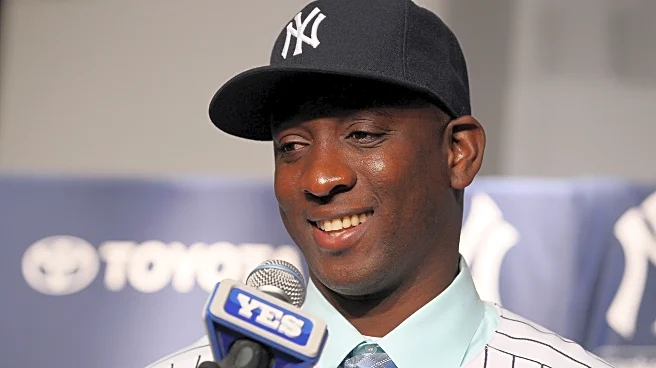
Rafael Soriano
Signing Date: January 18, 2011
Contract: Three years, $35 million
Rafael Soriano was born December 19, 1979, in San José de los Llanos, Dominican Republic, and was playing weekly baseball tournaments by the age of eight. However, after failing to impress in the Dominican baseball academy operated by the Cardinals, Soriano dropped out of school at the age of 16 to work full time in a carpentry shop. He caught the eye of a Mariners scout during a three-month tryout at the academy run by the Hiroshima Carp of NPB, and in 1996 signed for $5,000 as an outfielder.
After struggling for two seasons in the Arizona Rookie League, the Mariners coaches convinced him to convert to pitcher after noting his strong arm from the outfield. He could consistently throw between 87 and 90 mph and top out at 95, and in his first season at Low-A Everett, he led his team with a 3.11 ERA and 83 strikeouts in 75.1 innings. A steady rise through the system in 2000 and 2001 resulted in Baseball America ranking him as the 30th-best prospect in baseball for the 2002 campaign, and he recorded a save in his MLB debut on May 10th.
Soriano was added to the big-league rotation, but after eight rocky starts he went on the disabled list with a sore shoulder and would not return to the majors that year, instead being held at Triple-A to work on developing a reliable secondary pitch. He returned to pitch well in 2003 — a 1.53 ERA in 40 relief appearances totaling 53 innings — but underwent Tommy John surgery in 2004, limiting him to just 10.2 innings in the majors between 2004 and 2005.
Soriano was traded to the Braves following the 2006 campaign and pitched well in primarily a setup man role, logging a 2.95 ERA, 39 saves and 188 strikeouts in 162 appearances and 161.2 innings. Atlanta dealt him to the Rays prior to the 2010 season, and he reached a new level as the Rays’ unquestioned closer. He earned the Delivery Man of the Month Award in May, July and August en route to his lone All-Star selection as an injury replacement for Mariano Rivera. He threw an immaculate inning on August 23rd and finished as the AL saves leader with 45, earning the AL Rolaids Relief Man Award and finishing eighth in AL Cy Young balloting.
That brought Soriano and the Yankees to that fateful winter, the Bombers still smarting from their ALCS exit to the Rangers. To understand the events that would follow, we have to go back six months to the 2010 MLB Trade Deadline. The Yankees were clinging to a narrowly-held lead atop the AL East, but had a serious problem in their rotation with both Burnett and Javier Vázquez performing worse than replacement level.
Cashman had long coveted lefty starter Cliff Lee dating back to the 2009 World Series when the southpaw won both of his starts including a ten-strikeout complete game in Game 1. The Yankees thought they had a deal in place with the Mariners to acquire Lee at the deadline, agreeing to send Jesus Montero, David Adams, and Zach McAllister to Seattle to complete the trade. However, the Mariners balked after viewing the medicals on Adams’ injured ankle, and when Cashman refused to include either Eduardo Núñez or Iván Nova in the amended trade proposal, the Mariners pivoted that same day, trading Lee to the Rangers on July 9, 2010, for Justin Smoak, Blake Beavan, Josh Lueke, Matthew Lawson, and $2.25 million.
Fast-forward three months, and once again the Yankees were matched up against Lee in the postseason. The southpaw authored one of the greatest starts in recent playoff history, striking out 13 across eight scoreless, two-hit innings as the Rangers trounced the Yankees, 8-0, to take a 2-1 lead in the ALCS. This only seemed to heighten Cashman’s drive to acquire Lee, and that winter the Yankees launched a full court press to land Lee in the Bronx. However, they were fated to be spurned again, Lee turning down the Yankees’ seven-year, $154 million offer to instead rejoin the Phillies on a five-year, $120 million pact.
This final rejection led Cashman to dig his heels in for his plan for the rest of the offseason — appearing to signal a shift toward building for the future — with Cashman declaring that “I will not lose our No. 1 draft pick. I would have for Cliff Lee. I won’t lose our No. 1 draft pick for anyone else.”
Ownership had other ideas. On the orders of the Steinbrenner family, team president Randy Levine went around Cashman and negotiated directly with Soriano’s agent, Scott Boras, the two sides aligning on a three-year, $35 million contract just over a month after Lee left them jilted.
Cashman, as you can imagine, was less than pleased at having been circumvented, and in a stunning departure from the usual boilerplate responses that come out of the Yankees organization, let his feelings be known directly following Soriano’s introductory press conference:
I didn’t recommend it just because I just didn’t think it was an efficient way to allocate the remaining resources we had. We had a lot of debate about it. Like everything on the free-agent market and trade market, you discuss it, make your recommendations to ownership, and they choose what direction they prefer to go given the circumstances. My preference was waiting. They obviously acted, and we are better… I think it’s certainly a sign at times if Hal wants to go different directions that could happen. I think that’s certainly the case. This is their team. Does that happen often? Will it happen a lot? I just think it depends on the circumstances what the comfort level is taking place at the time. Not to say it won’t happen again, not to say it will. It’s hard to say.
Soriano made his Yankees debut on March 31st against the Tigers, pitching a scoreless eighth to set up Rivera for the save. He recorded his first save in pinstripes on April 20th against the Blue Jays, but his first few months with the Yankees were far from smooth sailing. He endured several blowup outings including giving up four runs to the Twins while recording just two outs on April 5th, and landed on the 60-day DL in mid-May after suffering an inflamed ligament in his throwing elbow. He was reactivated on July 29th and pitched six straight scoreless appearances to set up a strong finish to the season, Soriano ending his debut Yankees season with a 4.12 ERA, 3.97 FIP, and 36 strikeouts in 42 appearances totaling 39.1 innings.
That brought Soriano to his second taste of postseason baseball after having lost to the Rangers in the 2010 ALDS with the Rays. He went unused in the first two games of the ALDS against the Tigers before being brought on in relief of CC Sabathia in Game 3. The contest was knotted at four runs apiece after Sabathia and Justin Verlander got knocked around and Soriano was tasked with stopping the bleeding. He entered with a runner on third and one out in the sixth and escaped the inning unscathed. However, he surrendered the game-winning home run to Delmon Young in the seventh to put the Yankees in a 2-1 deficit in the series.
Soriano rebounded in Games 4 and 5, pitching 1.1 scoreless to earn the hold in the former and recording five outs without giving up a run in the latter, but it wasn’t enough as the Yankees were eliminated in five. All the same, this provided Soriano with some positive momentum to roll into the 2012 season.
Soriano was once again slated to be the team’s seventh-inning reliever in front of setup man David Robertson and closer Rivera. However, when Rivera tore his ACL while shagging fly balls during batting practice at Kauffman Stadium on May 3rd, the Yankees had to designate a closer for the rest of the season. Robertson was initially slated to take over the ninth inning, but after suffering a minor injury himself, Soriano was handed the closer job and would not relinquish it for the rest of the season.
He converted his first 12 save opportunities and would grow to become one of the most dependable relievers in baseball that season. Soriano finished the year with the third most saves in MLB (42), pitching to a 2.26 ERA, 3.32 FIP and 69 strikeouts in 69 appearances totaling 67.2 innings. He did so with some swagger too, memorably untucking his jersey with fervor immediately after recording the final outs. Despite not having Rivera, the Yankees had to feel good about the man they had assigned to the ninth inning heading into the playoffs.
Soriano began that postseason by recording the final out of the ninth and pitching a scoreless tenth in Game 3 of the ALDS against the Orioles, setting up Raul Ibañez’s walk-off home run in the 12th. The next day, Soriano faced the minimum in the ninth and tenth innings, though the Orioles won in 13 innings to force a Game 5. The Yankees advanced to the ALCS where they faced a rematch with their vanquishers from the prior postseason. Soriano made just one appearance as the Yankees were thoroughly trounced by the Tigers in a four-game sweep, pitching a scoreless tenth in Game 1 of an eventual 6-4 loss in 12 innings.
After such a successful season closing games, Soriano opted out of the final year and $14 million of his contract to become a free agent. With the Yankees confident that Rivera could return to full strength from his knee injury, they never showed much interest in re-signing Soriano, and he wound up agreeing to a two-year, $28 million pact to become the Nationals’ closer. He completed a successful two seasons in Washington, saving 43 games in 2013 and 32 games in 2014, and finished with a 3.15 ERA, 3.38 FIP, and 110 strikeouts across 132 appearances totaling 128.2 innings. However, he was removed from the closer role at the end of the season and only managed to sign a minor-league contract with the Cubs that winter, ultimately making just six appearances with a 6.35 ERA for the Northsiders. He was designated for assignment and released at the end of the season, and after visa issues forced him to miss spring training after signing a minor-league deal with the Blue Jays, Soriano announced his retirement on March 20, 2016.
Soriano’s time with the Yankees was often overshadowed by the two fan favorites at the back of the bullpen in Rivera and Robertson, in addition to the odd circumstances of his arrival with Steinbrenner overruling Cashman. He also just missed their last World Series win, and was instead part of a period of Yankees history that is more remembered as the final years of the Core Four than for postseason success.
That being said, Soriano stepped up in a huge way when Rivera suffered his season-ending injury, and on the whole pitched admirably in his two years in pinstripes, making 111 appearances with a 2.94 ERA, 3.56 FIP, 44 saves, and 105 strikeouts across 107 innings. Between 2009 and 2014, Soriano was one of the most productive late-inning relievers in baseball, his 191 saves second only to Jonathan Papelbon. Filling the shoes of the greatest closer in baseball history is no small task, and for one season, Soriano made palatable the loss of the future unanimous Hall of Famer.
See more of the “50 Most Notable Yankees Free Agent Signings in 50 Years” series here.