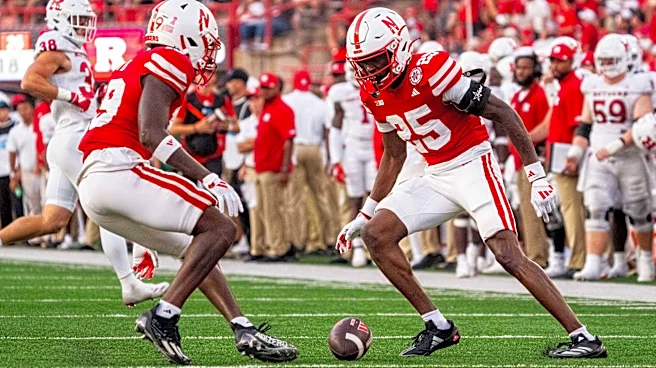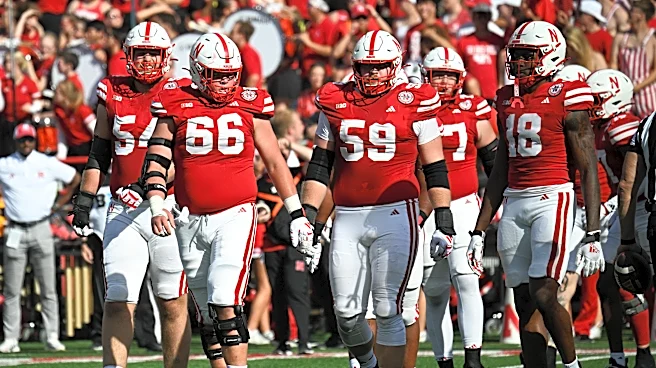


For the last ten years, Nebraska fans have had to endure anemic offensive line play, with quarterbacks running for their lives and running backs trying to squeeze through seemingly nonexistent holes.
During the glory years of the 1990s, the offensive line was arguably the strength of the Nebraska football program. The Huskers could line up against almost anyone in the country and impose their will at the line of scrimmage.
So where did it go wrong?
The recruiting figures over the last decade paint part
of the picture. Nebraska hasn’t necessarily failed to recruit offensive linemen. Instead, the bigger problem appears to be what happens to those players after they arrive in Lincoln.
The numbers suggest Nebraska has been caught between recruiting enough bodies and developing enough of them into high-level Big Ten offensive linemen.
There is hope that could finally be changing.
Geep Wade has arrived with a reputation for developing offensive lines and producing productive running games. But until the rubber hits the road, Husker fans will understandably remain in wait-and-see mode.
Numbers don’t lie
Looking at the last ten years of offensive-line recruiting alongside NFL Draft production paints an ugly picture for Nebraska.
When compared with some of the Midwest’s perennial hard-nosed, run-the-ball programs, Nebraska comes up short in almost every category.
Nebraska signed 34 offensive linemen during the period, compared with 32 for Iowa and just 26 for Wisconsin. Yet only three Nebraska offensive linemen were drafted.
The average recruiting rating of those Nebraska recruits was 86.9, compared with 88.4 for Iowa, 90.8 for Wisconsin and 91.2 for Michigan.
Minnesota’s average was lower at 84.3, but the Golden Gophers actually signed more offensive linemen than Nebraska, with 38.
The most striking number is what happened once those recruits entered college. Nebraska isn’t dramatically behind Iowa in recruiting quality. The difference between an 86.9 average and an 88.4 average isn’t insignificant, but it isn’t a chasm either.
Yet the production gap is enormous.
Iowa produced eight draft picks from 32 recruits. Nebraska produced three from 34.
Wisconsin is even more revealing. The Badgers signed only 26 offensive linemen, the fewest of the five programs, but produced nine NFL Draft picks.
That is the difference between recruiting offensive linemen and developing an offensive line program.
Michigan demonstrates that elite recruiting still matters. The Wolverines’ 91.2 average rating is comfortably ahead of Nebraska, and nine of their 39 recruits were eventually drafted.
But Iowa may be the most relevant comparison for Nebraska.
The Hawkeyes have shown that you don’t necessarily need to recruit the nation’s most coveted offensive linemen every year to consistently produce NFL talent.
You need to identify the right players, develop them and give them time.
Nebraska has struggled to do that consistently.
Chasing Iowa
Everyone knows Iowa is the Midwest example of how to create an offensive-line pipeline that is more reload than rebuild.
The interesting thing is how closely Nebraska’s recruiting numbers actually match Iowa’s.
Nebraska has signed slightly more offensive linemen over the past decade, while the average recruiting rating isn’t dramatically different.
The difference comes once the players get to campus.
Iowa has produced eight NFL Draft picks from those 32 recruits.
Nebraska has produced three from 34.
That should be the biggest red flag in the entire exercise.
Nebraska needs to pull up its socks on the developmental side, where Iowa has been producing NFL offensive linemen at a rate much closer to Wisconsin and Michigan.
There is another concern buried in the numbers.
Despite Nebraska’s history, facilities and resources, Iowa has actually recruited offensive linemen with a higher average rating than the Huskers over this period.
That shouldn’t be happening if Nebraska wants to establish itself as a premier Big Ten program.
Of course, recruiting rankings don’t tell the entire story.
The stability of the Kirk Ferentz era cannot be discounted. Iowa has had the same head coach overseeing the program for decades, allowing its developmental philosophy to remain consistent. Nebraska, meanwhile, has resembled more of a train station than a conveyor belt, with coaches coming and going and philosophies changing along the way.
That instability matters.
A 17-year-old offensive lineman recruited by one coach may develop very differently when his position coach, strength coach and offensive philosophy change multiple times during his college career.
Iowa’s model has benefited enormously from continuity.
There is also an interesting potential exception sitting in Nebraska’s current program.
Justin Evans entered college with a 79 rating, making him the lowest-rated ranked offensive lineman in Nebraska’s data set. Yet he has developed into a player generating early NFL Draft attention.
If Evans eventually hears his name called on draft weekend, he could become the perfect example of why recruiting rankings are only the starting point.
The real question is what happens after signing day.
The Geep Wade effect
That brings us to the pinprick of hope Husker fans have been holding onto.
Geep Wade.
Wade appears capable of attacking both sides of Nebraska’s trench problem: recruiting and development.
His recruiting connections in the South give Nebraska access to a different talent pool, while his work at Georgia Tech demonstrated that he can build productive offensive lines without simply relying on a roster full of elite recruits.
The running game is particularly important.
Nebraska doesn’t need an offensive line that merely keeps the quarterback upright. It needs an offensive line that allows the Huskers to dictate games.
That means creating movement at the point of attack, consistently winning first down and short-yardage situations and giving running backs enough room to get into the second level.
That’s the type of offensive identity Nebraska has been missing.
The 2027 recruiting class also provides reason for optimism. Rather than simply chasing star ratings, Nebraska is bringing in a significant amount of size and physical potential along the offensive line.
That gives Wade something he hasn’t always had in Lincoln: time to develop his own players.
That’s important because development doesn’t happen overnight.
An offensive tackle arriving on campus at 18 years old isn’t supposed to be a finished product. He needs to add strength, learn technique, understand leverage, adjust to the speed of college football and eventually learn how to handle some of the biggest and most athletic defensive linemen in the country.
The programs that consistently produce offensive linemen understand that process.
Nebraska needs to become one of them.
Development has to become the identity
The temptation in modern college football is to look for immediate solutions.
The transfer portal makes that possible.
Need a tackle? Find one.
Need a guard? Find one.
Need experience? Find a player with 20 career starts and bring him to Lincoln.
There is nothing wrong with using the portal. In fact, Nebraska probably needs to continue using it strategically.
But the portal cannot become the foundation of the offensive line.
That foundation has to be high-school recruiting and player development.
The numbers show why.
Nebraska has recruited 34 offensive linemen over the last decade. The problem isn’t a lack of bodies.
It’s that too few of those players became elite college offensive linemen, and even fewer became NFL-caliber players.
If Wade can change that ratio, Nebraska’s fortunes in the trenches could change dramatically.
Imagine Nebraska producing eight or nine NFL-caliber offensive linemen from its next 30 recruits instead of three.
That doesn’t require a recruiting class filled with five-stars.
It requires identifying players with the right physical and mental attributes, developing them properly and creating enough continuity for that development to take place.
That’s Iowa’s lesson.
That’s Wisconsin’s lesson.
And ultimately, that’s the lesson Nebraska needs to learn.
Conclusion
Nebraska doesn’t need to recruit 40 offensive linemen over the next decade.
It needs to turn the ones it recruits into football players.
The last ten years show that Nebraska’s offensive-line problem has been about more than recruiting rankings. The Huskers have signed more offensive linemen than Wisconsin and slightly more than Iowa, yet they have produced dramatically fewer NFL players.
That is a development problem.
Recruiting still matters, of course. Michigan’s numbers demonstrate that elite talent gives you an enormous head start. But Iowa has shown that development can close — and sometimes completely erase — the recruiting gap.
For Nebraska, Geep Wade represents the opportunity to change that equation.
If he can recruit the right players, develop them over several years and build genuine continuity along the line, the Huskers don’t need to become Michigan overnight.
They need to become Nebraska again.
A team that expects to win the line of scrimmage.
A team that can run the ball when everyone in the stadium knows it’s coming.
A team that develops offensive linemen rather than constantly searching for replacements.
The 1990s offensive line won’t magically return. But the blueprint for building the next one may have been sitting in the Midwest all along.
Now Nebraska has to prove it can follow it.
GBR