
5. Jared Thomas (476 points, 19 ballots)
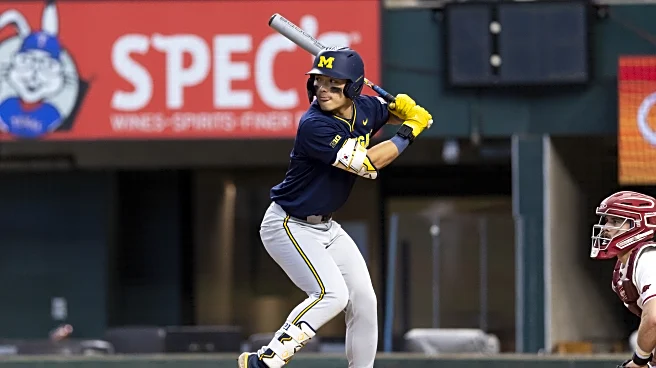
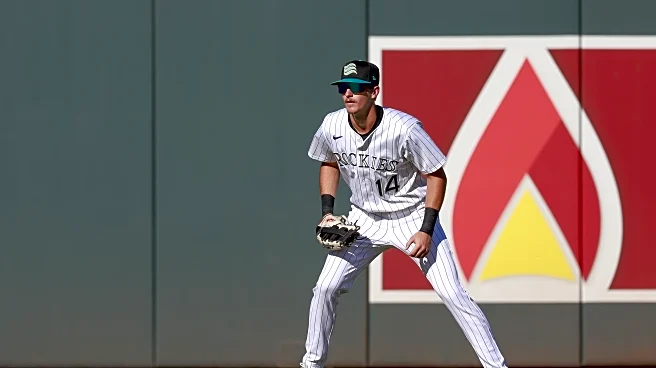
Thomas went 42nd-overall to the Rockies as a draft-eligible sophomore in 2024, signing for an under-slot $2 million. He got that bonus due to excellent bat-to-ball skills, some emerging power, and above-average speed that gives him a high floor offensively. The 22-year-old, 6’2” lefty spent most of his time defensively at Texas (where he played alongside fellow PuRP Max Belyeu) playing first base, but he has split his time in center and left field as a professional, with slightly more time in left.
Mid-season 2025 Rank: 8
High Ballot: 3
Mode Ballot: 4
Future Value: 45, second division regular outfielder
Contract Status: 2024 Second Round, University of Texas, Rule 5 Eligible After 2027, three options remaining
MLB ETA: 2027
After a freshman year at Texas where he hit a strong .321/.398/.484, Thomas traded some contact for power for his draft year. Though his strikeouts increased from 15% to 21% of his plate appearances, Thomas also saw his home runs quadruple from four to 16 — a part of an increase in slugging percentage of 151 points. His 2024 college line in 291 PA was .349/.435/.635 with 35 extra-base-hits, and he was a perfect 18/18 on steals.
A strong 2024 cameo in Low-A Fresno (146 wRC+) was cut to only eight games when Thomas went down with a quad injury, but the Rockies saw enough to bump Thomas up to High-A Spokane to begin 2025 (he was 1.3 years younger than league average). In Spokane, Thomas absolutely raked, hitting .330/.427/.495 with 11 homers among his 25 extra-base hits and going 22/24 on steals in 342 plate appearances (147 wRC+). His batting average led the Northwest League while his OBP was third and his OPS was fourth.
The Rockies promoted Thomas on July 1st to Double-A Hartford, where he was 2.5 years younger than league average. Facing upper-minors pitching, Thomas cooled down a bit, hitting a still respectable .245/.347/.374 with three homers among his 14 extra-base hits and 11 steals in 191 plate appearances, which is a 113 wRC+. Thomas struck out in 35% of his Double-A PA and had a decently large platoon split, producing a .726 OPS against lefties vs. a .874 OPS against righties (with a large home/road OPS split of .989/.696 as well). In the field, Thomas committed all six of his errors in left field but had four of his seven outfield assists from center field.
Thomas ended 2025 with a stint in the Arizona Fall League, during which he hit .302/.343/.524 with two homers (including a grand slam) among his nine extra-base hits with eight steals in just 67 plate appearances, but unfortunately a broken hamate bone ended his time in the AFL prematurely.
Here’s some video of Thomas at Fresno in 2024, including some slo-mo looks at the swing in the back half:
Baseball America recently ranked Thomas third in the system (so did Kiley McDaniel of ESPN.com) and project him to be the starting left fielder in 2029:
The 6-foot-2, 190-pound Thomas is an average athlete who moves well for his size. He began his pro career playing primarily center field, but when he moved to Hartford, he slid to left field, which is a better long-term fit. Thomas’ move to Double-A also exposed the key area of concern: swing-and-miss issues, particularly against better sequencing and breaking stuff. Still, when he makes contact, it is often loud contact—supported by consistently high exit velocities and quality barrel rates.
Keith Law of the Athletic ranked Thomas 80th before the draft and he ranked Thomas 9th in the system earlier this month:
Thomas can show you easy plus power — he hit a ball in the Arizona Fall League that probably hasn’t come down yet, putting it in the Charro Lodge in right field at Scottsdale Stadium, with an EV of 111 mph — but he doesn’t hold it through the year, wearing down in the second half before he got a break between the regular season and the AFL. He needs to keep that strength and muscle, and needs to really tighten up his approach; he misses a little too much in zone and swings a little too much at stuff out of zone, enough to add up to a 34.5 percent strikeout rate in Double A last year. He broke a hamate bone in the AFL, so his power may not be there when he returns this spring. There’s an everyday center fielder package here, somewhere, but he’s got to hit enough to get to it and show he can maintain that power through a whole season.
MLB Pipeline, who ranked Thomas 60th in their draft rankings, slotted Thomas 8th in the org as a 45 FV player with a 55 Hit, Run, and Arm grade last year:
Thomas showed off what a good feel he has for his left-handed swing. He has the chance to really hit at the next level, routinely finding the barrel and not trying to do too much. There’s some sneaky pop in there, and as he showed during his sophomore year, he can sacrifice a little contact for pop without completely selling out for it.
Thomas is a pretty good athlete who runs better underway and has the ability to play multiple positions. He played more first than anywhere else with the Longhorns, but showed he could capably handle center field as a sophomore and the Rockies will likely work him at all three outfield spots during his first full year of pro ball. He’s already opened some eyes across the industry as the Rockies were getting calls about him from other teams.
Eric Longenhagen of FanGraphs had Thomas 48th among draft prospects and ranks him 11th in the system at midseason as a 40+ FV player (up from 40 FV preseason) with a 60 future raw power grade:
Thomas has an ideal baseball frame at a super projectable 6-foot-2; he has above-average power to both gaps and is going to grow into more. His dynamic low-ball swing plays best when Thomas’ bat path is vertical; it tends to be too long when he has to flatten it out to catch fastballs away from him. His power can be neutered in the down-and-away part of the strike zone. Barring the shortening up of Thomas’ swing, what were average college contact rates will likely translate to below-average rates in pro ball, but he might grow into enough power for that to be alright. At Texas, Thomas played center field, left field, and first base. His reads in the outfield aren’t very good and unless they improve, his arm forces him to left. Thomas only has the two years of college experience, so it’s worth a shot to continue things in center for at least a little while, and the Rockies played him in left and center during his brief pro debut. Thomas’ realistic ceiling is as a power-over-hit 1B/LF platoon bat, and he requires a little more projection than is typical of a college hitter.
Shaun Kernahan of Three Quarter Slot wrote up Thomas after his AFL performance:
Smooth, compact left-handed stroke defines his game, producing consistent line drives and easy backspin from a polished, advanced approach. Thomas shows exceptional bat-to-ball skill and an ability to adjust mid-count without losing balance or intent, attacking hittable pitches with controlled aggression. The swing works gap-to-gap with emerging power that projects to reach average at peak, giving him a steady offensive profile built on timing and rhythm rather than raw strength.
A steady athlete with strong instincts, he moves well once underway and offers defensive flexibility across the outfield and at first base. He’s capable of handling corner outfield spots and even center in a pinch and has seen plenty of time at first where he is a quality defender. Advanced strike-zone awareness and refined baseball IQ give him a professional polish that fits neatly in Colorado’s system. The contact ability, approach maturity, and defensive versatility make him a high floor prospect for the team in the mile high city.
Thomas has progressed beyond my expectations for him in 2025, already producing at an above-average level in Double-A just a year after getting drafted. If that pace continues, it’s possible he could be a big league factor as soon as this season if he can distinguish himself from the Rockies’ outfield mob. Thomas’s ability to at least fake it in center field could be useful in setting him apart, but of course it’s going to be the bat that carries him to big league success. I was encouraged by how Thomas performed in his first professional season and ranked him fifth on my list as a 45 FV player (just behind Robert Calaz).
Please keep in mind our Purple Row Community Guidelines when you’re commenting. Thanks!