

It seemed to be borne of sheer frustration; a telltale sign of a player whose head wasn’t quite in the game at that particular moment and seemingly felt the need to vent — albeit in a misguided way.
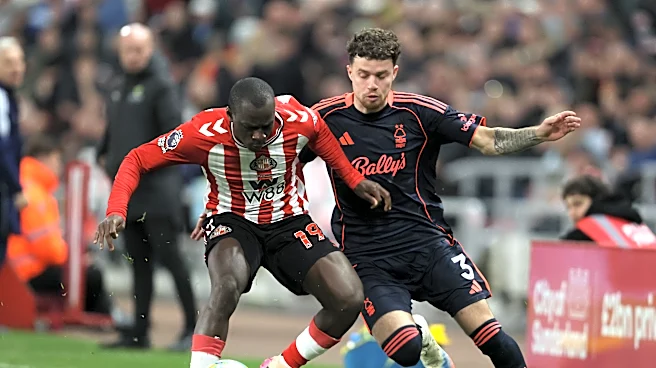
When Habib Diarra brandished an imaginary yellow card after a second half flashpoint during Sunderland’s dismal defeat to Nottingham Forest, I almost felt a touch of sympathy for him after the inevitable reaction of “Not now, Habib. Wrong time, wrong place, wrong gesture”.
There are ways of showing that
you care and that you understand what it means to play for Sunderland even when things are going wrong, and those kind of theatrics certainly weren’t it. Struggling to find your rhythm and trying to keep the crowd off your back? Don’t scythe an opponent down, don’t get careless and don’t wind up the referee. Instead, keep it simple, get the basics nailed down, and go from there.

It wasn’t the Senegalese midfielder’s finest moment in a Sunderland shirt and nor was it his finest hour in general, but the red and white midfield had all the resilience of a melted snowman against the rampant visitors, and last summer’s signing from Strasbourg wasn’t alone in failing to perform to the levels that we can and should remain confident that he’s capable of reaching.
The net result? Plenty of criticism on social media in the aftermath of the defeat, as well as murmurs and grumbling about how his price tag and his actual quality as a player were somewhat out of sync.
I don’t buy that at all, but I don’t think it’s an exaggeration to suggest that for his own benefit as well as the good of the team, Diarra probably ought to be withdrawn from the starting eleven for this weekend’s clash with Wolves. That’s two games in a row during which he’s learned about the harshness of life in a red and white shirt, and there’s a danger that if Régis Le Bris doesn’t make the call, it could easily develop into a trickier situation.
Being desperate to make amends and prove your worth after two turbulent games — was the miss against Aston Villa playing on his mind against Forest, perhaps? — can be hazardous and the last thing Diarra needs is to get involved in the kind of niggly on-field incidents that could lead to a dismissal, which is something that happens all too often with players who aren’t in the best of form.
Suffice it to say, Diarra’s 2025/2026 campaign (his maiden season in British football), hasn’t been plan sailing.

After catching the eye with a series of impressive early-season performances alongside Granit Xhaka and Noah Sadiki, an injury took him out of the reckoning for nine weeks and by the time he returned, he was off again — this time to AFCON — and has been fighting to regain his form and quite possibly his peak level of fitness ever since. It’s not that his displays have been poor — they’ve just not been as dominant and influential as we might’ve hoped for, but these things happen.
Many of our summer 2025 signings were instant hits and now look like absolute bargains. In contrast, Diarra’s taken more time to find his feet and has been inconsistent and at times frustrating to watch, but that doesn’t mean he’s destined to fail here and it’s absolutely essential that we don’t rush to dismiss him as a ‘flop’.
Rightly or wrongly, the spectre of that £30 million price tag seems to be hanging over Diarra during every game he plays, but it’s important to remember that due to Sunderland’s pre-Premier League frugality, £30 million in red and white currency is probably closer to £60 million to most top flight clubs and comparatively speaking, it was probably about a par fee for a midfielder of his potential.
We knew we would have to spend heavily in order to compete and his arrival was naturally the most scrutinised. Given that the likes of Nordi Mukiele and Omar Alderete arrived for comparative buttons and have established themselves as genuine game-changers, Diarra hasn’t yet hit those heights and maybe he won’t for a little while longer.
Should that be used against him? I don’t think so.
It wasn’t all that long ago that he caught the eye with a dominant performance for Senegal against England (a game played in Nottingham, somewhat ironically) so the talent is clearly there and perhaps we won’t see the absolute best of him until 2026/2027 — again, not particularly problematic as long as he remains committed, focused and able to ride the inevitable ups and downs in form.
In order to establish ourselves this season, we needed to boast a strike rate of around 75% from our summer intake. Diarra has been neither a categorical failure nor a resounding success, but I don’t think giving up on him is the right thing to do and I’m certain that Le Bris and his teammates will be thinking along the same lines.
Patience, not panic, is the way to go.